Key Takeaways
- Not all hitches are equal; selecting the wrong type can cause sway, braking issues, and accidents.
- Match the hitch to the vehicle and trailer, considering towing capacity, load weight, and frequency of use.
- Hitch type matters; light-duty hitches suit small trailers, while fifth-wheel or gooseneck hitches are for heavy loads.
- Proper setup is essential for correct installation, alignment, and suspension adjustments, which improve safety and comfort.
- Avoid common mistakes, such as ignoring weight ratings, DIY errors, or price-based choices, which can damage your vehicle and trailer.
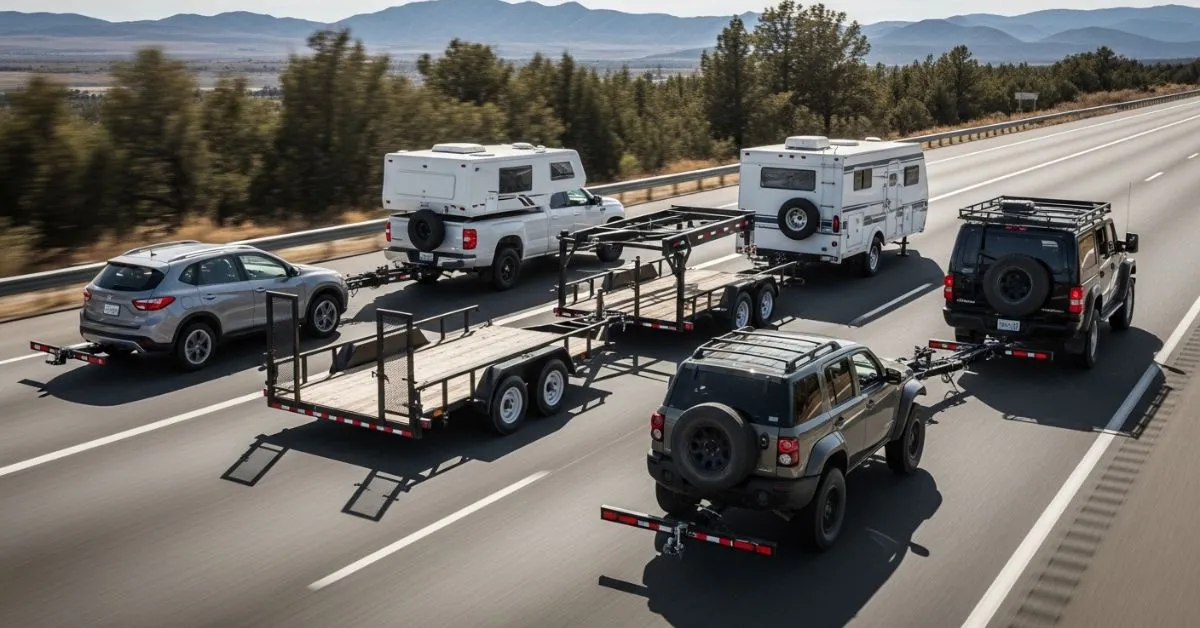
Towing may seem easy initially, and most individuals end up getting into trouble due to poor choices of setups. The thing is that not every hitch is equal. The incorrect one may cause trailer sway, loss of control, and even road accidents. This is why it is of great importance to learn about the types of trailer hitches in case you have to tow trailers, campers, or heavy loads on a regular basis.
A trailer hitch is not only a metal piece, but it is also a major component of your towing system that makes everything stable and safe. Varieties of trailer hitches are suited to different tasks. Some are ideal for light-duty, such as bike racks, and those that perform heavy-duty towing. Selecting the appropriate type of hitch is also an excellent way to secure the suspension of your vehicle and enhance the overall performance.
In Gresham 4 Wheel Drive, we have observed that with the proper hitch configuration, a huge difference in safety and comfort during driving may be observed. We will also discuss the different types of trailer hitches using easy language in this guide, so you can learn what fits your vehicle and towing requirements without any confusion.
What Is a Trailer Hitch
A trailer hitch is a connection that connects your car to a trailer, camper, or any other cargo load. It is more than a metal bar; it is a complete towing system that keeps your load safe and steady. To learn which trailer hitches suit your vehicle and towing requirements, it is better to understand what kind of hitch is available.
These are the hitch receiver, the ball mount, and the trailer coupler. A few of them also have weight distribution systems or sway control to make the towing process easier and also to eliminate the stress on your suspension. All the parts work in coordination to ensure that your trailer is balanced and safe.
In Gresham 4 Wheel Drive, we understand that an incorrect hitch or incorrectly installing it may result in a swaying trailer, braking, and spoilage of your car. This is why towing safety and the require professional hitch installation and selection of the right types.
6 Main Types of Trailer Hitches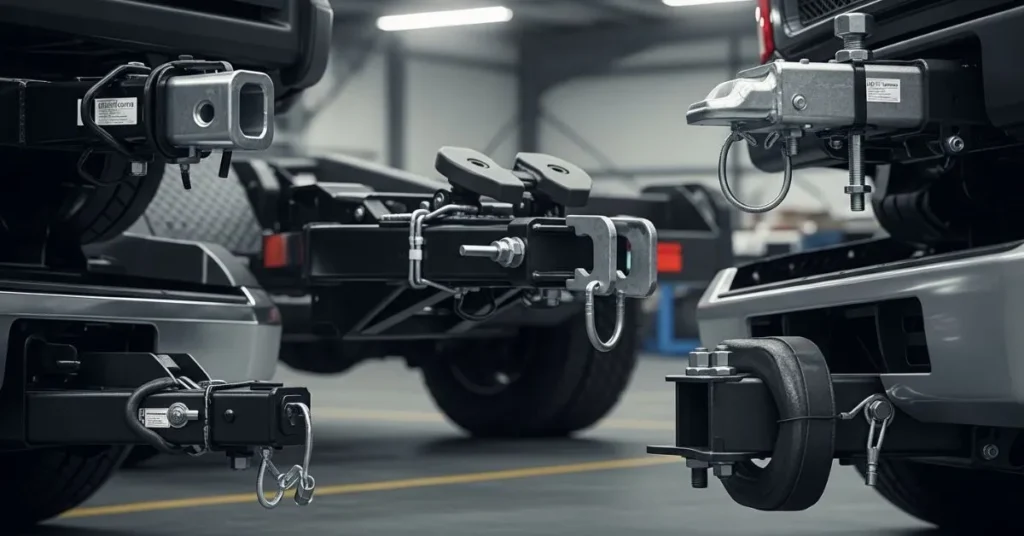
All hitches are not created equal when it comes to towing. hitches are available in different kinds, and each is customized to towing needs, vehicles, and loads. The choice of the right hitch is critical in regard to safety, performance, and comfort of towing. At the Gresham 4 Wheel Drive, we help drivers understand what types of trailer hitches would best fit their car, whether it is a small utility trailer or a heavy-duty trailer.
1. Receiver Hitches
The most popular and versatile one is receiver hitches on cars, SUVs, and trucks. They are offered in various classes, whereby Class I offers light-duty towing to Class V, which offers heavy-duty trailers. They are ideally suited to bike racks, cargo carriers, and small trailers, and slide into a square receiver tube that is attached to the frame of your vehicle.
2. Fifth-Wheel Hitches
Fifth-wheel hitches are made to fit on trucks and heavy towing, commonly on RVs and large campers. They can be attached to the truck bed, which gives a great level of stability and distribution of weight. This design minimizes trailer swings and makes it easier and less damaging to your vehicle suspension to pull a heavy load.
3. Gooseneck Hitches
Gooseneck hitches are designed for heavy-duty towing, typically to pull farm trailers, horse trailers, or large cargo trailers. They can be fitted right on the bed of a truck and give great weight distribution. This kind of hitch enables it to make tight turns and be more stable than the normal hitches, hence making it suitable for serious towing work.
4. Bumper Hitches
Bumper hitches are easy and lightweight, and they are attached to the bumper of the vehicle. They are ideal for small trailers and light loads, but cannot be used in heavy towing. They are easy to install, but not as stable, and may add additional stress to your vehicle’s frame and suspension.
5. Pintle Hitches
Pintle hitches are heavy-duty towing hitches that are commonly applied in construction and agricultural trailers. They have a hook-and-latch design that enables towing off-road. Although they offer a good connection and durability, they may offer better performance on roads than other types of hitches, and can be rougher.
6. Weight Distribution Hitch
Weight distribution hitches are created to even the tongue weight of the trailer on your car and trailer axles. They protect your vehicle suspension, steer better, and minimize its trailer sway. The hitch will be good on medium to heavy trailers, and it is safer and more stable on highways and long trips.
Explore More: Class 2 vs Class 3 Hitch: The Ultimate Showdown
How to Choose the Right Trailer Hitch for Your Vehicle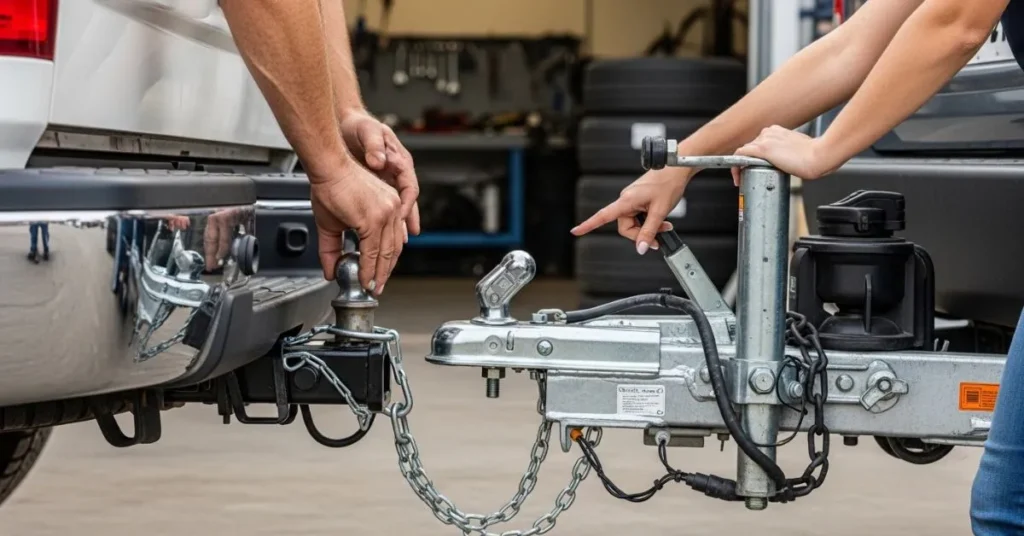
The trick behind choosing the right trailer hitch is not necessarily to take the first one that comes by. The right hitch will ensure that it is safe to tow, your car is not stretched, and you are more in control of the road. Different types of Trailer hitches, it is best to consider your car, the weight of your trailer, and the frequency of towing before settling on one.
- Determine your Vehicle Maximum Towing Capacity: Before selecting a hitch, find out your vehicle’s maximum towing capacity as specified by the manufacturer. Applying a hitch that has been rated to carry a heavier weight than your car is unsafe and can even be destructive. It is important not to exceed the hitching strength of your car to ensure a safe towing.
- Consider the Trailer Weight and Load: There are also small trailers and heavy RVs, which have different hitches that are constructed to carry a specific weight. Trailer weight matters as it will enable you to select the kind of hitch that will not overstrain the car frame and suspension. An exceeding of the hitch capacity can lead to braking issues and trailer sway.
- Decide the Hitch Type Based on Usage: According to your needs in towing, the hitch that fits your needs best is chosen. Light cargo trailers, as an example, can be used with a receiver hitch, whereas fifth-wheel or gooseneck hitches can be used with heavy RVs. The selection of the type is guaranteed to provide stability, safety, and easy towing.
- Evaluate Your Vehicle Setup: Some vehicles, including lifted trucks or SUVs, may need special installation to ensure the trailer angle is maintained, including long drop hitch mounts. Install a hitch that considers suspension, wheel positioning, and clearance. Proper positioning can guarantee equal wear and reduce the chances of trailer sway.
- Look for Extra Features: It has sway control, weight distribution, or adjustable height hitches. These are also safer and more comfortable to tow, and they are more appropriate to use during long trips. Such features as anti-sway bars or spring-assisted mounts can be used to increase the stability.
Also Explore: Pintle Hitch vs Ball Hitch: Best Option for Heavy Loads?
Common Mistakes People Make When Choosing Trailer Hitches
Many drivers do not realize the importance of selecting the correct trailer hitch, which may result in dangerous towing and injuries to vehicles. Installing it wrongly or in the wrong hitch may lead to swaying of trailers, braking imbalance, or suspension strain. Being aware of pitfalls can assist you in preventing such issues and having a less risky towing experience.
- Choosing a Hitch Based on Price Alone: Some individuals settle on the lowest-priced hitch without care of weight capacity of the vehicle. The poor quality of hitch can be cheaper in the short term, but may pose safety risks. Investing in a hitch that suits the requirements of your vehicle and is of a well-known brand is always a good idea.
- Ignoring Vehicle and Trailer Compatibility: Not all hitches will fit any type of vehicle or trailer, and a mismatch can result in issues. Incorrect types of trailer hitches may have an impact on the stability and control on the road. Always ensure that to manufacturer’s instructions so as to have a proper match of your vehicle, trailer, and hitch class.
- Overlooking Hitch Class and Weight Ratings: All hitch classes are engineered to carry a certain range of weight, and carrying more than that is risky. The neglect of class ratings may cause a strain on your vehicle’s frame and suspension. Proper weight ratings on a hitch are a guarantee of smooth and safe towing.
- DIY Installation Mistakes: DIY installations may cause improper fitting, loose bolts, or imbalanced trailer fitting. Installation errors enhance the potential of trailer sway and vehicle damage. Gresham 4 Wheel Drive is a professional installers who ensure that your hitch is firmly fixed and it is correctly aligned.
- Not Considering Suspension and Lift Kits: Drivers who have raised their trucks or changed their suspensions forget that the hitch must be correctly level. Poor installation may lead to unequal angles of trailers, which makes pulling them unstable. When choosing and installing a hitch, always consider the suspension and alignment of your vehicle.
Also Know About: Trailer Hitch vs Receiver Hitch: Shocking Differences Revealed
Upgrade Your Installation Setup with Gresham 4 Wheel Drive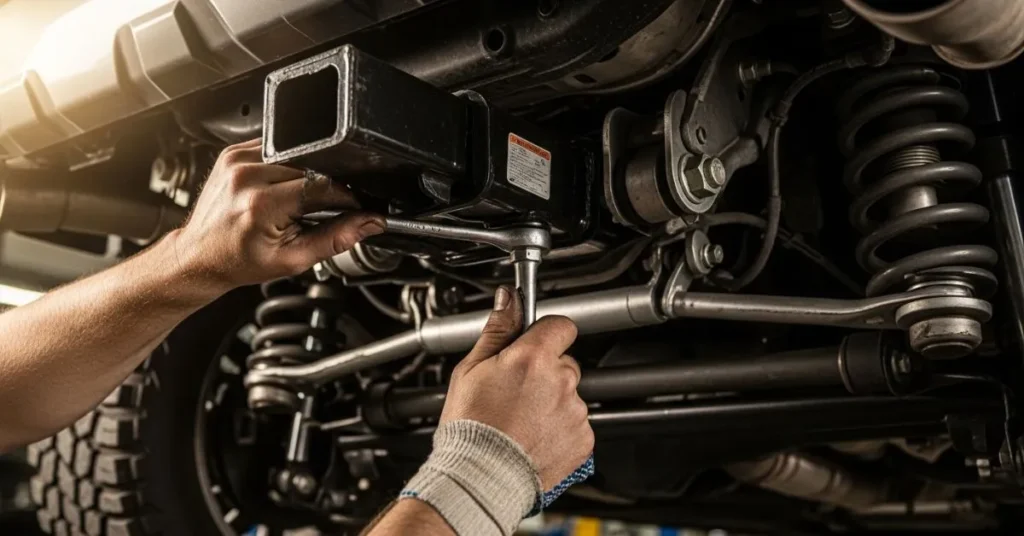
Safe towing is not only about finding the correct hitch, but it is also about installing it and having the correct setup of the vehicle. Trailer sway, braking unevenly, or poor handling are common among many drivers since their hitch was not attached properly or their suspension was not adjusted. All towing systems are safe, stable, and customized to your car.
We are the installer of the correct types of trailer hitches and aligning the lifted trucks or the modified 4x4s to the correct fit. We also provide wheel alignment services, lift kits installation, and suspension upgrades to help towing be easier and less stressful on your car.
Instead of buying a hitch with Gresham 4 Wheel Drive, you get a towing solution. All our trailers, campers, or heavy loads will have better control, safer towing, and long-term performance provided by our professional installation.
Conclusion
The selection of the appropriate hitch is the key to safe and comfortable towing. Knowing the types of trailer hitches and pairing them with your car and trailer is the way to be stable, to have control, and to perform long enough. Since light loads require receiver hitches, heavy-duty towing requires fifth-wheel or gooseneck hitches; the selection of the correct type is the difference.
Do not make such errors as choosing the inappropriate hitch class, overlooking weight limitations, or trying to install it by yourself. The most important components to prevent trailer sway, uneven braking, and strain on the suspension are professional installation and proper vehicle setup. Other varieties of services, like Gresham 4 Wheel Drive, provide professional installation, wheel balancing services, and parking suspension services to make sure that your towing is safe and effective.
By simply taking time to choose the right hitch and make the right investment in the right installation, you can tow without worry, protect your car, and have a wonderful trip. The experience and use of the right type of trailer hitches can give assurance, better work, and safe journeys on the road.
FAQ’s
Q: Can I Install a Trailer Hitch on Any Vehicle?
Yes, most cars, SUVs, trucks, and Jeeps can have a trailer hitch installed, but the type of hitch and towing capacity depend on the vehicle’s frame, engine, and factory towing specifications. Compact cars are typically limited to light-duty hitches, while trucks and SUVs can accommodate heavier towing setups. Professional installation ensures proper fitment, safety, and reliable towing performance.
Q: How Much Weight Can a Trailer Hitch Tow?
The amount of weight a trailer hitch can tow depends on its class and your vehicle’s towing capacity. A Class I hitch may tow up to 2,000 lbs, while heavy-duty Class V hitches can tow up to 20,000 lbs or more when paired with a properly equipped truck. Always follow the vehicle manufacturer’s towing limits and choose a hitch rated for your specific towing needs.
Q: What Is the Difference Between a Receiver Hitch and a Fifth-Wheel Hitch?
A receiver hitch mounts under the rear bumper and is commonly used for towing small to medium-sized trailers, bike racks, and cargo carriers. A fifth-wheel hitch, on the other hand, is installed in the bed of a pickup truck and is designed for heavy-duty towing, such as large RVs and gooseneck-style trailers. Fifth-wheel hitches provide better weight distribution and greater towing stability for heavy loads, while receiver hitches offer more versatility for everyday towing.