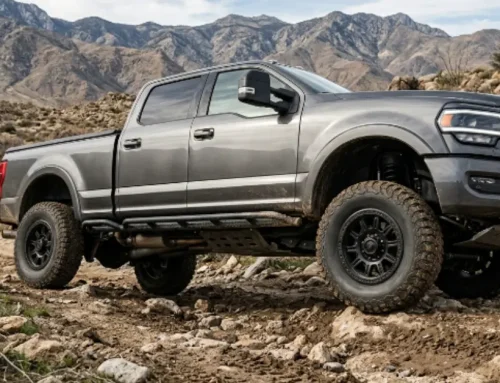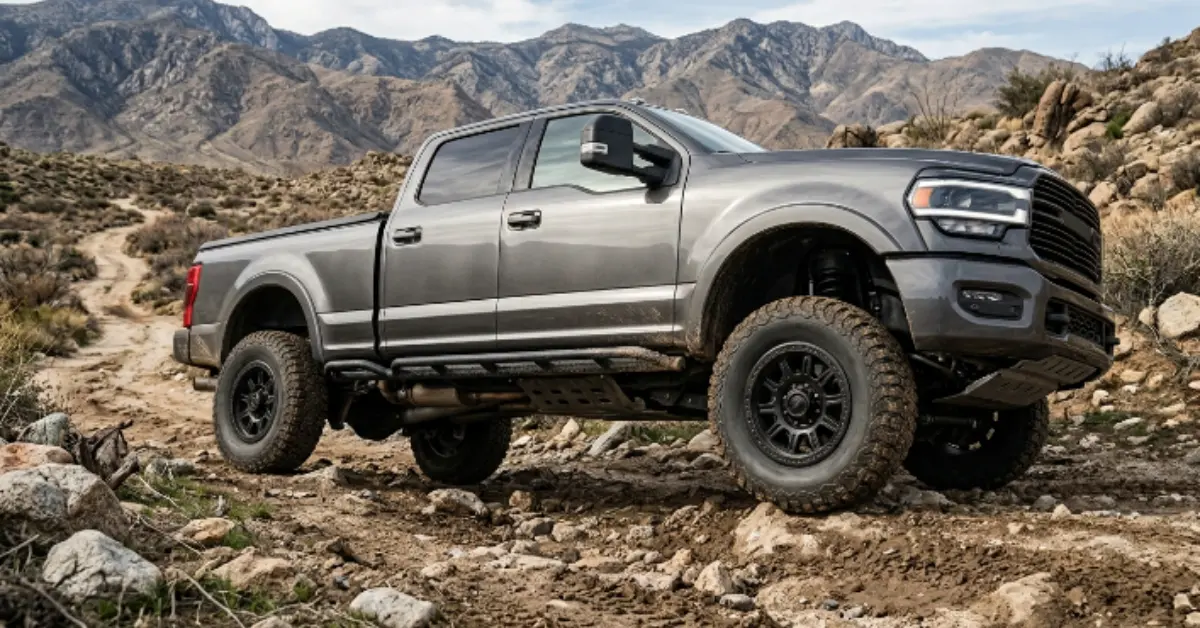
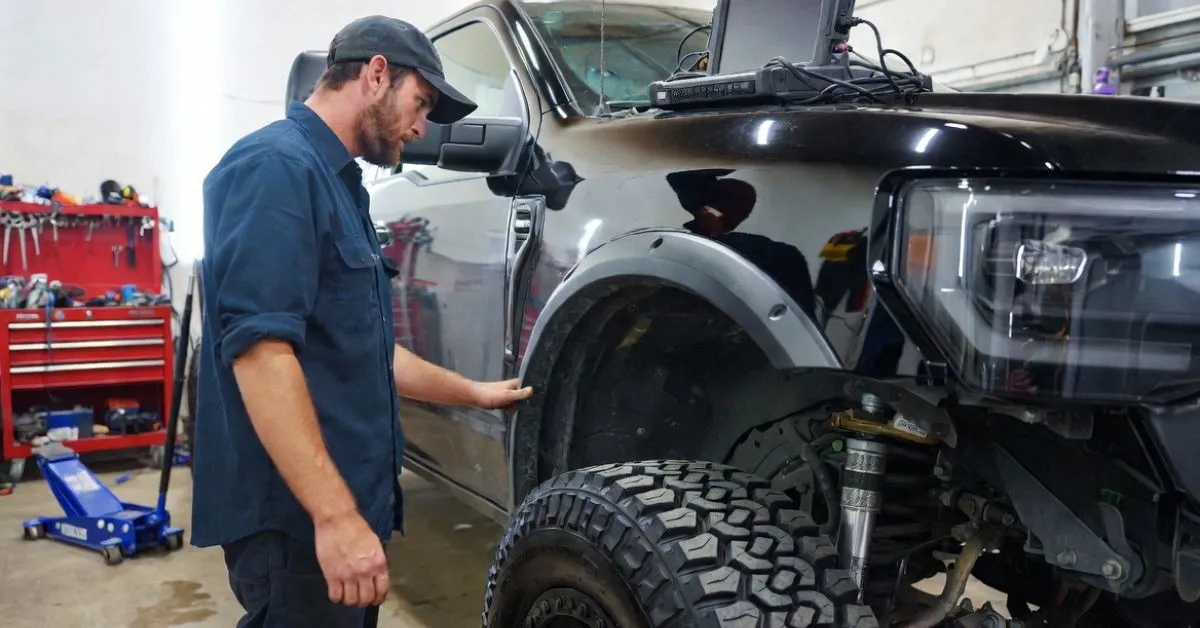
If you own a truck, you’ve probably noticed the front sits slightly lower than the rear. That’s factory design, built for towing and load support. But for many truck owners, it gives the vehicle a nose-down appearance and limits how large a tire you can run up front. That’s exactly why leveling kits have become one of the most popular and affordable truck upgrades available today.
The short answer: No, leveling kits are not bad for trucks when installed correctly. A leveling kit raises the front end one to three inches to match the rear, giving your truck a balanced, aggressive stance without the cost of a full suspension lift. The real problems people experience, uneven tire wear, rough ride, steering issues, rarely come from the kit itself. They come from improper installation, skipping the post-install wheel alignment, or ignoring worn suspension components before the kit goes on.
A leveling kit only alters your suspension angle slightly, which may affect your alignment, tire wear, and the overall quality of your ride unless done correctly. With proper installation by experienced persons and subsequent alignment of the wheels, a good number of trucks drive normally for several years. The issue of corner-cutting begins to manifest itself quickly. We are going to see everything in simple words in this blog. You will find out what leveling kits are, the actual advantages and disadvantages, as well as how to eliminate the drawbacks so that your truck can remain safe, good, and even smooth.
At Gresham 4 Wheel Drive, we’ve installed leveling kits on hundreds of trucks across Gresham and the greater Portland, Oregon area. In this guide, we’ll break down exactly what a leveling kit does to your truck, the real pros and cons, and how to avoid the mistakes that give leveling kits a bad reputation so you can make a confident decision for your specific truck and driving needs.
What Is a Leveling Kit
A leveling kit is a suspension upgrade designed to raise the front of your truck to match the height of the rear. From the factory, most trucks sit with the front end slightly lower, a deliberate design choice that helps maintain stability under heavy loads and towing. A leveling kit corrects this rake, typically lifting the front one to three inches for a more balanced, level stance.
There are a few main types of leveling kits, each working slightly differently. Spacer leveling kits also called leveling pucks are the most common. These are simple polyurethane or aluminum spacers that sit on top of the front struts or coil springs to add height without replacing any factory components. They’re affordable, straightforward to install, and work well for most half-ton trucks at 1.5 to 2 inches. Strut extension kits replace the factory strut top mount for a cleaner, more OEM-style lift. Adjustable coilover kits offer the most flexibility, allowing fine-tuned height adjustment and often improved ride quality over basic spacers.
Regardless of type, the goal is the same: to raise the front end while leaving the rear at factory height. What changes is how your suspension geometry responds. When the front is lifted, components like control arms, ball joints, and CV axles operate at slightly different angles than factory spec. This is why professional installation and a post-install wheel alignment aren’t optional; they’re what separates a smooth, long-lasting leveling kit setup from one that causes problems down the road.
An installed leveling kit with a professional wheel alignment improves tires and appearance without damaging performance. However, when fitted improperly, such modifications may cause ride, steering, and tire problems. To find out what a leveling kit actually is, it explains why people ask whether leveling kits are bad or good for trucks.
Explore More: Difference Between Lift and Leveling Kit for Vehicle
Are Leveling Kits Bad for Trucks or Is That Just a Myth
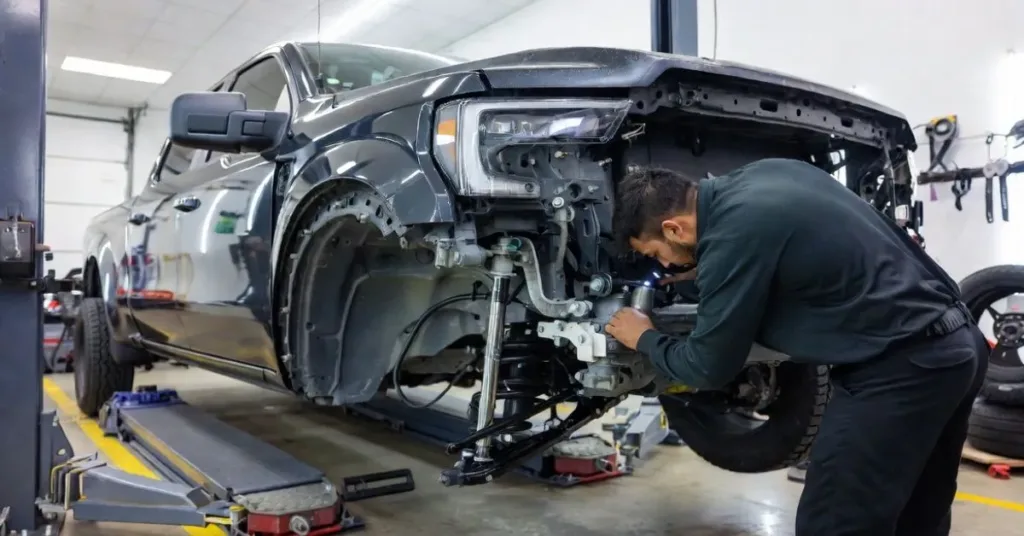
Ok, it is time to cut the fat and state the obvious: are leveling kits bad in a truck? The pure truth is not necessarily. A leveling kit alone is not a bad thing, and there is absolutely no reason why it would ruin your truck as soon as it is installed. The leveling kits are utilized by thousands of truck owners daily,y and they drive without any problems. The issue is that they are usually installed improperly by the people; they are not aligned, and the people select the cheapest components without paying attention to the functionality of the suspension. This is when the leveling kits become slandered.
Imagine it, as putting on shoes that do notfit. The shoes are not bad, but when they tighten, you will be in pain. The leveling kit is the same case. The angle of the suspension changes when you lift the front of your truck. Your truck can still drive, but the parts are not in the same location as they were. Excessive stress may manifest itself more quickly as the kit is excessively tall, or the suspension itself is worn out. There are those who can see a less smooth ride, a bit more of a bounce, or a different steering. And when it is not adjusted immediately after installation, then your tires can begin to wear unevenly, and this can be costly in the long run.
The actual solution is such that leveling kits can only be bad when they are fitted without any proper planning and attention. The addition of a leveling kit can be a safe upgrade to most trucks if you select the correct kit, install it correctly, and have a professional perform a wheel alignment. However, when one runs the job when the health of the suspension is neglected or when someone is trying to find a way to evade the expenses of aligning the truck, it will tell them that something is wrong. We will take a closer look in the following section to ensure that you know the actual advantages and disadvantages so you can determine whether a leveling kit is worth it for your truck or not.
Is a 2-Inch or 3-Inch Leveling Kit Bad for Your Truck?
One of the most common questions truck owners ask is whether kit size matters, and the answer is yes, it does. Here’s the straightforward breakdown:
- 2-inch leveling kit — This is the most popular and safest choice for most half-ton trucks. A 2-inch lift keeps suspension angles within a manageable range, meaning ball joints, CV axles, and control arms don’t experience excessive stress. For daily drivers like the F-150, Ram 1500, and Silverado 1500, a 2-inch leveling kit is generally safe as long as it’s professionally installed and followed by a wheel alignment.
- 3-inch leveling kit — This is where things get more sensitive. A 3-inch lift pushes suspension geometry further from factory spec, which increases stress on ball joints and CV axles, particularly on trucks that don’t have adjustable upper control arms (UCAs). On some models, a 3-inch spacer kit without upgraded UCAs can accelerate wear on these components noticeably. If you’re going 3 inches, many mechanics recommend pairing it with aftermarket UCAs to keep suspension geometry correct and avoid premature wear.
The rule of thumb: Stick to 2 inches or less for daily driving without extra upgrades. Going to 3 inches? Budget for UCA upgrades and a professional alignment, it’s the difference between a smooth, long-lasting setup and one that wears parts ahead of schedule.
Pros and Cons of Installing a Leveling Kit on Your Truck
It is worth learning that not all leveling kits are bad before jumping to conclusions. The reason why the question is about leveling kits being bad in the trucks is that there are people who have had bad experiences with the product, and others have never had problems. The variation normally reduces to the installation of the kit, alignment, and the operation of the truck after its installation. To simplify this, we shall break this into the actual advantages and disadvantages so that you can appreciate both sides of the coin.
Pros of Installing a Leveling Kit on Your Truck
- Enhances the general look of the truck as the lifting of the front side is done to match the height of the back to make the truck more balanced and appealing.
- Allows slightly larger tires to be installed without rubbing with the wheel wells, especially in the front, which is awesome with off-road or aggressive installations.
- Gives the truck a more aggressive and all-around look without the need to raise it completely, and is a decorative feature that does not demand major alterations.
- When fitted with good quality parts, its stock feel of ride is pretty, and it has the needed lift.
- It is cheaper than a full suspension lift kit; therefore, it is a cheap upgrade to the majority of truck owners who would desire to have a better stance, yet do not necessarily have to spend a lot of money.
- Helps also assists in a better front view, particularly on rugged roads or during off-road cases, so that the drivers can have a clearer view of the obstacles and terrain.
Cons of Installing a Leveling Kit on Your Truck
- Suspension angles can also change, which can cause extra stress to the ball joints, control arms, and other suspension parts, and could decrease their lifetime without careful observation.
- May create imbalanced wear on the tires in case of failure to align the wheels after fitting, and which results in increased replacement and control problems.
- The ride may be a bit harsher or tighter, particularly when the spacer-type leveling kits are used, which lack improved shocks or springs.
- It does not suit much towing or hauling since the rake, which was fitted in the factory to secure the load, is altered, and this may affect the way it handles under the load.
- The steering can be problematic, can produce vibrations or even unusual wear of the suspension because the truck has not been installed properly, and that is why it is not a comfortable and safe car to be driven.
- Small band-aid solutions, like the low-cost leveling kits or self-installation, can cause chronic problems that are more expensive and difficult to control at a later date, such as damage to the alignment and suspension.
Explore More: How Much Is a Leveling Kit? Cost and Benefits Guide
Leveling Kit Problems by Truck Model
Different trucks respond differently to leveling kits based on their factory suspension design. Here’s what to expect for the most popular models:
- Ford F-150 — One of the most leveling-kit-friendly trucks on the market. A 2-inch kit is well-tolerated on most F-150 generations. Going above 2 inches without upgraded UCAs can cause CV axle binding and accelerated ball joint wear on some model years.
- Chevrolet Silverado 1500 / GMC Sierra — Spacer-type leveling kits generally work well up to 2 inches. The Silverado leveling kit problems most commonly reported are vibration and uneven tire wear, almost always traced back to a skipped wheel alignment, not the kit itself.
- Ram 1500 — The Ram’s coilover front suspension makes it one of the smoother trucks to level. A 1.5-inch to 2-inch kit maintains a comfortable ride. Common Ram leveling kit problems include front-end shimmy, which is typically a sign of worn ball joints or tie rod ends that were already marginal before the kit was installed.
- Toyota Tacoma / Tundra — The Tacoma handles leveling kits very well at 1 to 2 inches. The Tundra is also generally problem-free at 2 inches. Going higher on either model without addressing the upper control arm angle can cause CV axle wear over time.
- Ford F-250 / F-350 — Heavy-duty trucks are built with stiffer, more heavy-duty suspension, which means leveling kits can make the front ride feel noticeably firmer. Ford F-350 leveling kit problems are most often ride quality complaints rather than mechanical failures. Pairing the kit with upgraded shocks helps significantly.
- Chevy Colorado / GMC Canyon — These midsize trucks handle 1.5 to 2-inch leveling kits well. The Trail Boss models come factory-level, so aftermarket kits are rarely needed.
Do Leveling Kits Cause Tire Wear and Alignment Problems?
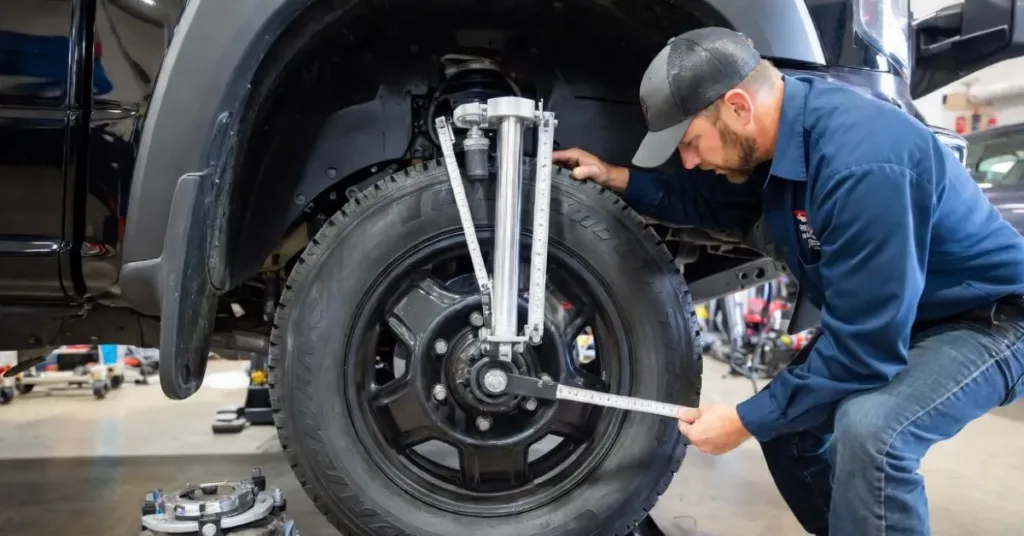
Admittedly, leveling kits may bring about tire wear and alignment issues; however, that is only under the circumstances that the installation is not performed properly. As you put your front truck higher, even a little, you vary the angles of suspension. That influences the positioning of the tires on the road. Your truck can have a good feel at the beginning of the course, but the tires can wear unevenly over time. It is among the largest motivations that cause individuals to search for leveling kits for trucks, as they fit a kit, and do not perform any alignment, and then see their tires being ruined more quickly than usual.
The major problem is normally alignment angles, such as camber and toe. When the camber is not correct, one tire will lean either toward the inside or the outside, and this will wear one side of the tire more than the other. In case of the toe being erroneous, the tires may just grate the road rather than rolling forward, thus leading to quicker wear, which may also influence the steering. Other motorists are aware of having a truck that slugs to one side, the steering wheel lopsided, or an unstable ride at highway speeds. These are the usual symptoms that indicate that your truck requires a decent wheel alignment with a leveling kit. And yes, your truck may have a perfect appearance, but it may also be somewhat off-center.
The good thing is that this issue can be highly avoided. A leveling kit will not ruin your tires as long as they are properly installed and then taken to a professional to be aligned. Actually, the majority of stores insist on performing an alignment right after fitting a leveling kit, and rechecking it in a few weeks after driving due to the settling of the suspension. Also, in case your truck already has damaged suspension components such as ball joints, tie rods,s or control arm bushings, leveling them may cause the weak ones to display problems sooner. Then, and since you want your tires to wear longer, your truck to drive in a straight line, you can have neither alignment nor inspection as optional, and do the job properly.
You Must Know About: Driving with Bad Wheel Alignment: How to Fix It
How to Avoid Problems When Installing a Leveling Kit
The most effective method of avoiding issues with a leveling kit is to begin with the appropriate plan, and not simply the suitable parts. The reason is that many problems arise due to the rush when making the decision or selecting the most inexpensive kit by the truck owners. The suspension must be seen to before any installation to ensure that such parts of the suspension as ball joints, control arm, shocks, and tie rods are in good condition. When these components are already worn,n then with the help of a leveling kit, the issues may appear sooner. It is also important to select a quality leveling kit that suits your model of truck and purpose of use, which could either be daily driving or light off-roading.
When you take the Leveling Kit Professional installation service, it makes a huge difference in the way your truck performs after leveling. An appropriate installation positions everything correctly, with the correct torque and at the correct angle. Failing to trim corners or do a hastily made DIY may result in an uneven lift, steering problems, or unwanted vibrations. Immediately after installation,n a professional wheel alignment is necessary. One of the most common reasons why people would eventually complain and seek to know whether leveling kits are bad for trucks is because of skipping alignment. It is impossible to have your tires on the road correctly unless they are in alignment, and this means that they will wear out rapidly and will handle poorly.
When you have installed and tuned your truck, then maintaining it is the key to running it smoothly. Suspension components are to be inspected every now and then, particularly after a few weeks of driving, since the suspension tends to settle. The tire pressure and tire rotation should also be paid close attention to so that they wear evenly. Whenever you notice a change in the feel of steering, the noises and vibrations, it is advisable to make sure that you check on them early enough before they lead to the expensive-cost repairs. A leveling kit is not a problem, but a safe and reliable upgrade as long as it is installed and maintained in a proper way.
Conclusion
So, are leveling kits bad for trucks? No, not when they’re done right. A leveling kit is one of the most cost-effective upgrades you can make to your truck’s appearance and stance, and when installed professionally with a proper wheel alignment, the vast majority of trucks run smoothly for years without any issues.
The problems people associate with leveling kits, uneven tire wear, rough ride, steering complaints, almost always trace back to the same root causes: improper installation, a skipped wheel alignment, or worn suspension components that were already marginal before the kit went on. The kit isn’t the villain. The shortcuts are.
A properly installed leveling kit gives your truck a cleaner, more aggressive look, opens up room for larger front tires, and improves your front-end ground clearance all without the cost of a full lift kit. But suspension geometry matters more than most people realize. Even a small change in ride height shifts how your ball joints, CV axles, and control arms are loaded, which is why professional installation isn’t just a recommendation, it’s the difference between an upgrade that lasts and one that causes headaches.
Whether you’re planning a leveling kit installation or you already have one and something feels off, the right move is to have your suspension inspected and aligned by technicians who specialize in trucks. At Gresham 4 Wheel Drive, we handle leveling kit installations, post-install alignments, and full suspension inspections for trucks, Jeeps, and 4×4 vehicles across the Gresham and Portland, Oregon area with transparent pricing and no pressure. With the appropriate services of a leveling kit, you will not damage your truck; however, you will enhance it. Instead of inquiring whether leveling kits are harmful to trucks, the more appropriate question is: Was it done and kept properly? And when the answer is yes, your truck will thank you, yes.
📞 Call us at 503-400-7646 or stop by for a free estimate. Done right, a leveling kit won’t hurt your truck; it’ll make it better.
FAQ
Q: Will a 2-inch leveling kit damage my truck?
A 2-inch leveling kit will not damage a truck that has healthy suspension components and is professionally installed with a post-install wheel alignment. It is the most common and safest leveling kit size for half-ton trucks like the F-150, Silverado, and Ram 1500. Problems occur when the installation is skipped for proper alignment, when suspension parts are already worn, or when a low-quality spacer kit is used. Done right, a 2-inch kit is a straightforward, safe upgrade.
Q: What are the most common leveling kit problems?
The most commonly reported leveling kit problems are uneven tire wear, front-end vibration, and a slightly stiffer ride. Almost all of these trace back to one of three causes: skipping the post-install wheel alignment, using a low-quality spacer kit, or installing the kit on a truck with already-worn suspension components like ball joints or tie rods. These problems are preventable, not inevitable, with proper installation and alignment.
Q: Are spacer leveling kits bad for your truck?
Spacer leveling kits are not inherently bad, but they are the most basic type and carry the most risk when quality is cut. A cheap, low-quality spacer can crack, cause vibration, or sit unevenly on the strut, creating handling issues over time. Quality spacer kits from reputable brands installed professionally are safe and reliable for most trucks up to 2 inches. For lifts above 2 inches, strut extension or adjustable coilover kits are generally a better long-term choice than simple spacers.
Q. Will a leveling kit ruin my suspension?
A leveling kit will not ruin your suspension but it will change how your suspension components are loaded and angled. The parts most affected are ball joints, CV axles, and upper control arms, since raising the front end shifts their operating angle away from factory spec. Whether this causes problems depends on two things: the size of the kit and the condition of your suspension before installation. If your ball joints, tie rods, or control arms are already worn, a leveling kit adds stress that can cause them to fail sooner. If your suspension is in good shape and the kit is professionally installed with a post-install alignment, these components typically last their normal service life without issue.