As a driver with a 4X4 or a lifted truck, or even a daily-use SUV, you are already aware of one fact: when your car does not feel good on the road, something is not right. Perhaps the steering wheel is snagging on one side, or your new tires are wearing out sooner than you thought. These minor indications usually lead to a single major problem, which is wheel alignment. Any alignment will not suffice. The best wheel alignment is what the majority of drivers actually require when suspension upgrades, lift kits, and off-road driving are involved.
Most individuals believe that wheel alignment is a common, one-size-fits-all service. That’s where problems begin. Lifted and 4-wheel-drive cars are extremely different from stock cars. Their suspension angles vary, the weight is relocated, and their handling demands greater degrees of accuracy. This is the reason why you should comprehend the alignment of your wheels before you leave your car in the care of any store. Such a bad fit not only impacts comfort but can cut tire life by up to 25 percent and fuel efficiency by about 10 percent, according to automotive maintenance research.
The best alignment of the wheel does not consist of making haste. It is concerning the understanding of how camber, caster, and toe complement each other following a lift kit installation. It is also about the use of equipment and on-the-job training on trucks and off-road vehicles. When not only the streets of the city but also the tracks of the more demanding routes are to be traversed, it becomes all the more important to choose the best location to get the wheel alignment.
In this guide, we shall break down wheel alignment in a clear, simple manner- no terms and conditions, no sales pitch. Real data, nothing more, nothing less, that can make you take care of your tires, enhance the handling, and continue driving your 4×4 the way you should.
Understanding Wheel Alignment
The best way to achieve the best wheel alignment is to understand the meaning of and the importance of Alignment, particularly to the 4×4 and lifted cars. The wheel alignment can be described as the way of positioning your wheels and the front of your car on the road. Understanding wheel alignment also makes sure that your vehicle is on the straight, your steering is easy, and your tires also wear in a balanced manner, but when misaligned, it will make even a well-maintained vehicle seem wobbly.
The three angles under consideration in the alignment are: the camber (tilting the wheel), the caster (wheel balance and stability), and the toe (inwards or outwards following of tires). In the case of lifted trucks or off-road vehicles, such angles vary following a lift kit, and therefore, standard alignment does not always apply. However, without appropriate adjustment, steering pull, vibration, or uneven tire wear may be observed within a few thousand miles.
The best tire alignment is not just a set of numbers on a machine, but rather a matter of how the vehicle should behave on the roads and rough roads. Handling, safety, and tire life (up to 20) are enhanced, and fuel efficiency is increased by up to almost 10%. Feel and accuracy are the most crucial in maintaining a good suspension and tires in optimal use and safeguarding your capital.
Also Explore About: Difference Between Wheel Alignment and Wheel Balancing
Why Is Wheel Alignment Important?
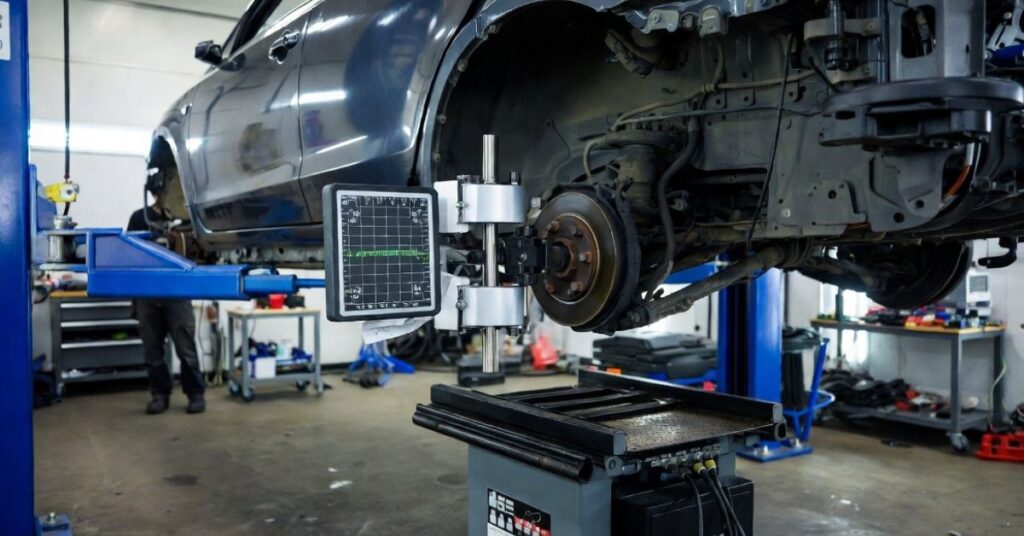
Alignment of the wheels may be a trivial issue; however, it affects nearly all areas of vehicle driving. Wheels that are in an inappropriate position cause tiring, suspension, and steering strains that might be expensive to repair, and they can cause unsafe driving. This is why it is necessary to have the best wheel alignment, particularly for 4X4 and lifted cars.
The alignment helps in keeping your tires in good health, and they will have the same touch to the road and will not wear out unevenly; this will save you 20-30 years of tire life. It also enhances steering and control- cars move in straight lines, the response is very smooth, and they are stable even when driving at high speeds. The steering pull may be experienced, and the vehicle may be out of control, so that it is always correcting itself during driving, which is further pronounced in lifted trucks that have a greater center of gravity.
Another significant determinant is safety. An unbalanced car will act erratically when you suddenly brake or when you make an emergency turn, making it less grippy and the distances that it covers during stopping longer, particularly on wet or corrugated roads. Alignment also enhances the fuel economy since it saves up to 10 percent of the fuel cost because of the rolling resistance.
To conclude, correct wheel alignment will not only save tires but also increase safety, conserve fuel, and enable one to drive comfortably and in control, thus it is a must to add to the overall best wheel alignment experience.
Signs Your Vehicle Needs Wheel Alignment
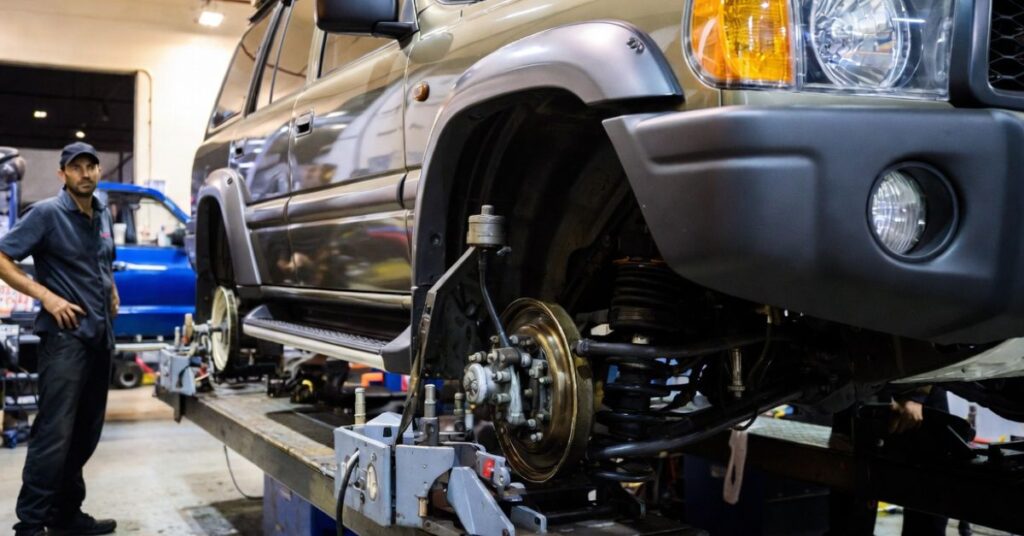
A car will always provide the warning signs when the wheels are not in order, and all one has to do is understand how to interpret those signs. These symptoms do not present themselves instantly. They are built up line by line, and the majority of motorists do not take them seriously until it is too late. Early detection of them can save your tires, cushion your suspension, and assist you in keeping your car in the optimum wheel setup, particularly when driving a four-wheel drive or raised truck.
Uneven or Fast Tire Wear
Uneven tire wear is one of the most widespread indications of alignment problems. When the inside or outside edge of your tires is more worn than the rest of the way, then you are not sitting at the right angle in your wheels. You may even have found that in some instances, you have a feathered effect by rubbing your hand across the tire. This occurs since there is a dragging of the tire rather than rolling over. When the misalignment is as much as a third of the tire life, this becomes costly in case you happen to have large or off-road tire treads.
Car Jerks to One Side when Driving
When you are driving on a straight road, and your car drifts either to the right or left, it is a good indication that your car is not in its right position. You will be tempted to correct the steering wheel every time you are in your lane. This pulling is more evident on highways, and it gets progressively worse with time. In the case of lifted cars, one slight error of alignment may result in significant steering imbalance.
Steering Wheel Is Off-Center
When you don’t drive straight, even with your steering wheel, it is a sign that there is a problem with the alignment. Although the car is moving, you might even discover that the wheel is leaning slightly, though the wheel is moving. This would be annoying initially, but eventually it will lead to bad handling and even the loss of steering components.
Loose or Shaky Steering Feel
The steering is either loose, unstable, or shaky due to the issues in alignment. You will feel that you are shaking in the steering wheel or wandering the road. This happens especially after hitting a bump on a pothole, on the curb, or on a road trail. This indicator cannot be neglected in the case of trucks with changes in suspensions.
Bad Turning or Rough Road Handling
The issue of finding alignment could be the case if your car is vibrating during a turn, or it moves away after turning. This is what off-roaders will notice at one time or another when their vehicle loses control on rough roads. Correct alignment assists in maintaining all four wheels to work in unison to enhance control and confidence.
These indicators are a request by your automobile. With them, it results in increased wear and tear, lack of safety, and increased repair expenses. Early correction of the alignment problems will keep the performance of your car on track and keep your car in motion.
Read About: Average Wheel Alignment Cost: What You Need to Know
How Proper Wheel Alignment Improves Tire Life, Fuel Efficiency & Safety
Well-adjusted wheels significantly contribute to the life span of your tires, the amount of fuel your car consumes, and the safety of your car when using it on the highway. Whenever you have all the wheels in place, every tire is in contact with the ground, you can roll, rather than drag, or scrape against the ground. This contact is even to avoid uneven wear to the tire, and this is one of the most common causes of tires having a short lifespan. Actually, a car with good alignment will experience an increase in tire life of up to 2025 percent, which is particularly significant in 4×4 and lifted 4×4 trucks, which require larger tires that are more expensive.
Also, direct is fuel consumption and wheel alignment. When the wheels are not in line, they add additional rolling resistance, and the engine, therefore, may have to exert more effort in making the vehicle go straight. This extra work adds fuel consumption to the extent of 10 percent in the long run. With the ideal alignment of the wheels, you will be assured of an easy ride with less drag, and you will be able to improve your mileage, particularly in the event that you are on the highway and on a lengthy journey.
Good wheel alignment also has another great advantage: safety. A car in tune is fast and responds to the steering movement, and this is required when there is an abrupt braking, a sharp turn, or an emergency. Misaligned wheels lead to pulling, poor handling, and a longer stopping distance, especially on wet or rough roads. Adequate adjustment will make all four wheels work together to maximize traction, balance, and control in general.
Gresham 4 Wheel Drive: Best Place To Get Wheel Alignment
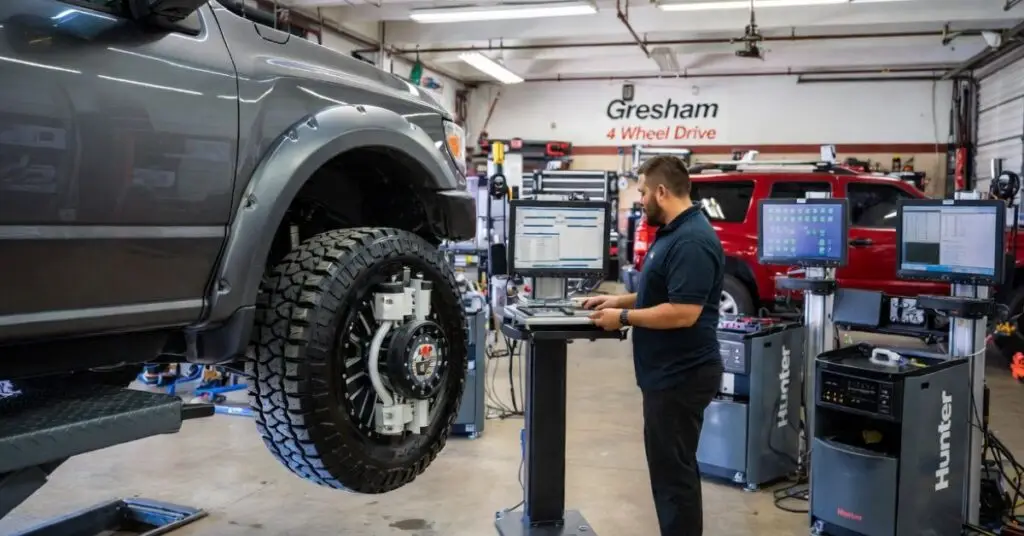
The performance and the lifetime of your vehicle can be huge when you find the best wheel alignment shop. Gresham 4 Wheel Drive is the place to bring your truck, SUV, or lifted 4X4 truck to have it precisely aligned so that you can have a safe, smooth, and well-balanced ride.
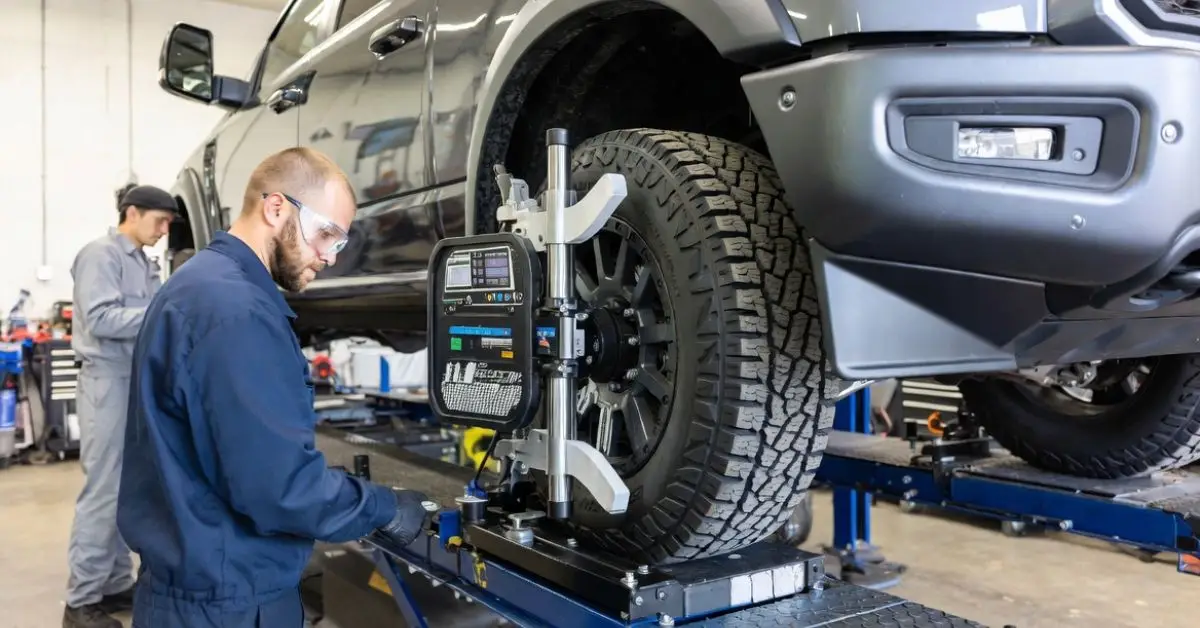
Trucks on the lift and off-road vehicles should have custom alignment settings, which are usually unavailable in the normal shops. Our staff will change camber, caster, and toe to suit your vehicle and driving patterns. All services begin with a comprehensive check of suspension, steering, and tires, and then state-of-the-art machine calibration to produce an ideal fit of the machine.
Immediate benefits are noticed by drivers: tires wear more evenly, the steering is smoother, fuel economy is better, and the handling is safer. In the case of trucks, lifts, or off-road rigs, Gresham 4 Wheel Drive offers quality, customized alignment to ensure that your vehicle is still doing its best.
Conclusion
Performing the best wheel alignment is not only routine maintenance, but a very essential procedure to save your tires, save on fuel, and ensure that you have safe handling of your vehicle. Daily SUVs, 4×4s, lifted trucks, all these come together at proper alignment, making your wheels turn in the correct direction, uneven tire wear, and undue strain on the suspension and steering elements are avoided.
Knowing how to align a wheel, knowing when to check its alignment, and choosing the best place to get wheel alignment, you are investing in the long-term performance and safety of your car. Professional service, fine-tuning, and real-life experience can provide you with the ability to ride more easily and more in control, and more confident every time you get behind the wheel, be it on the highway or off-road paths. Aligning is not only a way to drive straight but also the way to drive smart, efficiently, and safely.