Key Takeaways
- The cost to install a tow hitch usually ranges between $200 and $600, depending on vehicle type, hitch class, and labor.
- Choosing the right hitch (Class I–V) is important because it affects towing capacity, safety, and overall installation cost.
- Installation time typically takes 1 to 3 hours, but heavy-duty hitches or wiring can increase the time.
- Factors like vehicle type, labor rates, wiring, and accessories can significantly change the final cost.
- Professional installation ensures safety, proper fitting, and long-term reliability, especially for heavy-duty towing needs.
If you’re wondering how much it cost to install a tow hitch, here’s the direct answer: most professional hitch installations run $150 to $500 total, including the hitch hardware and labor. The range varies based on your vehicle type, hitch class, and whether trailer wiring is included.
A Class I or II hitch on a sedan or crossover typically comes in at the lower end, $150 to $300. A Class III hitch on a truck or SUV, which covers most people’s towing needs, runs $250 to $450. Heavy-duty Class IV and V hitches for large trucks start at $400 and go higher depending on labor complexity.
The most common mistake truck and SUV owners make is budgeting for the hitch only and then getting surprised by labor and wiring costs at the shop. This guide breaks down every cost factor so you know exactly what to expect before you book an installation.
At Gresham 4 Wheel Drive, we make this process easy and understandable to you. You will find all the information about the cost to install a tow hitch in this guide, and you will be able to select the appropriate one without mistakes.
What is a Tow Hitch?
A tow hitch is a metal device and is fitted on the frame of your car to enable pulling of trailers, boats, or additional cargo. It is a necessary device for a person who has to tow safely and effectively. Consumers usually look up the price of a hitch receiver or trailer hitch price to know how much they will invest in one.
Tow hitches are available in different classes and sizes depending on the weight you are planning to tow. A Class I or II hitch might be adequate to tow light-duty loads, and heavier loads require Class III, IV, or V. The type of hitch also has an impact on the cost of installation of a tow hitch, since a large hitch may need more labor and equipment.
Gresham 4 Wheel Drive also deals in professional tow hitch installation of trucks, SUVs, and off-road vehicles. Our team makes sure that all the hitches are fitted in a safe way; therefore, your car is towing-ready. The correct hitch and the installation technique will save you some harm and make the most of your investment.
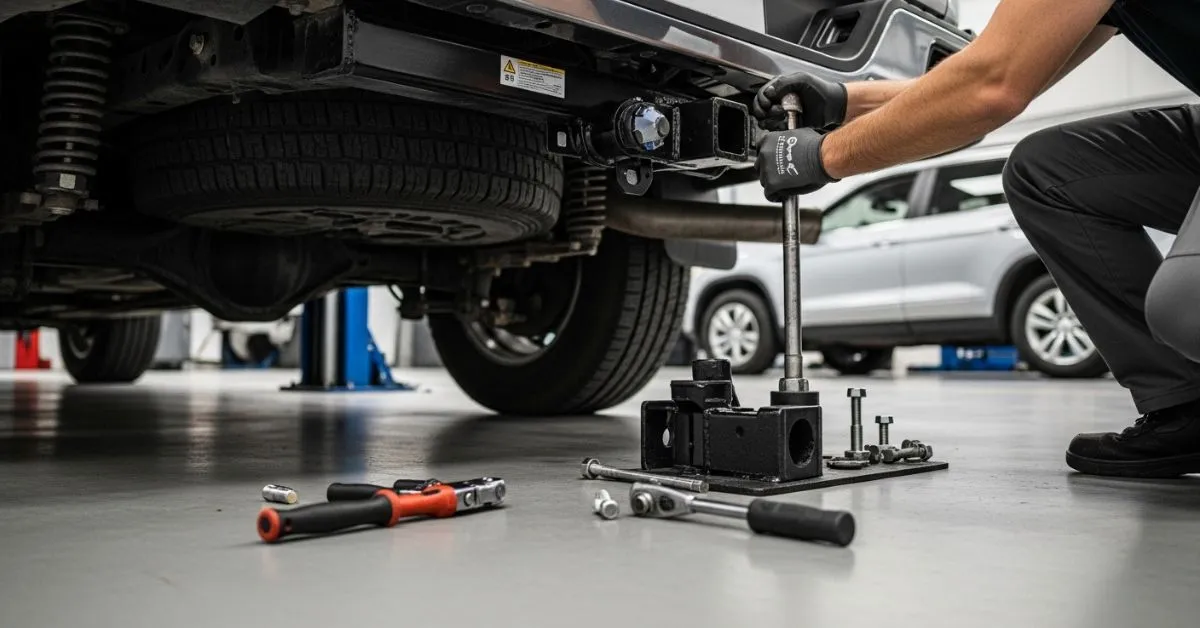
How To Install a Tow Hitch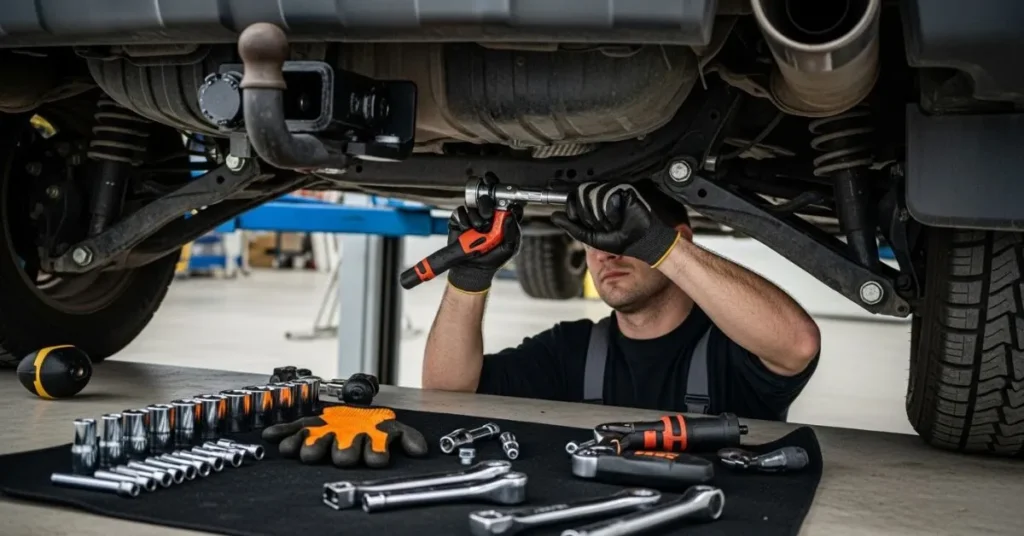
It may be thought that putting up a tow hitch is a complex process, yet with the right equipment, as well as a manual, it can be a piece of cake. It could be either the act of renovating your SUV, truck, or off-road vehicle, but understanding how to do it would save you some time and cash. We are also providing professional installations in Gresham 4 Wheel drive so that your hitch is safe and that it is towing ready.
- Step 1: Choose the Right Hitch: Choose the right kind and size of hitch to use on your car and what you need to pull. Consider your car type, towing capacity, and towing trailers, bikes, or carrying carriers. The correct decision has an impact on the price of the tow hitch and the performance.
- Step 2: Find Tools and Materials: You have the necessary tools and materials, including a torque wrench, sockets, and other safety equipment, in place before you can go ahead with it.
- Step 3: Prepare the Vehicle: Park in a flat area and attach the vehicle’s wheel. clear out any, e.g., spare tires or panels, which block the space of the hitch mounts. The elimination of dirt in the frame area also helps in fitting the hitch as well as preventing corrosion.
- Step 4: Mount the Hitch: Pick up the Hitch and safely place it with the frame mounting holes of the vehicle. In this case, the bolts are loosely installed to allow easy manipulation. To be safe, all the bolts must be installed correctly with the correct torque as specified by the manufacturer.
- Step 5: Final Check: Again, it is important to make sure that all bolts are tightened and the hitch is tightened. One more time, check the hitch receiver and wiring to be sure that everything is alright. Final inspection will be done properly in order to be towed safely without being damaged on the way.
This is done step by step, so you can be aware of what kind of money you will spend to get a tow hitch installed, either you have someone to do the job at Gresham 4 Wheel Drive, or you will do it yourself, knowing the correct procedure.
Also Explore: Pintle Hitch vs Ball Hitch: Best Option for Heavy Loads?
How Much Does the Average Cost of installing a Tow Hitch Cost?
Installation of a tow hitch may be expensive, depending on the type of vehicle, type of hitch, and whether you hire or do it yourself. The majority of drivers are paying between 200 and 600 dollars for a complete setup, including the hitch, labor, and basic wiring. Whenever one wants to upgrade their towing, he or she is likely to search for words such as install tow hitch cost or trailer hitch installation price.
Key Features Affecting Average Cost:
- Price of Hitch: A simple Class I hitch is available at least at $50 to 150, but a Class III or Class IV heavy-duty hitch can range all the way to 200 to 400.
- Labor Cost: Professional installation will cost you between 100 and 300 dollars, depending on your vehicle and the complexity of the installation.
- The Wiring and Accessories: Trailer wiring and ball mounts, and other accessories can add an extra $50-150.
- Vehicle Type: SUVs and trucks are commonly cheaper to install, and this may save on the cost of labor, which is possible with compact cars being harder to install.
At Gresham 4 Wheel Drive, we have no hidden charges, so you can be assured of the price you are going to cost to install a tow hitch, with quality services and safe and trustworthy installations.
Here’s a clear breakdown of what trailer hitch installation actually costs in 2026, by vehicle type and hitch class:
| Vehicle Type | Hitch Class | Hitch Cost | Labor Cost | Total Estimate |
|---|---|---|---|---|
| Sedan / compact car | Class I or II | $80 – $150 | $75 – $150 | $150 – $300 |
| Crossover / small SUV | Class II | $100 – $200 | $100 – $175 | $200 – $375 |
| Full-size SUV | Class III | $150 – $300 | $125 – $200 | $275 – $500 |
| Half-ton truck (F-150, Silverado, Ram) | Class III | $150 – $350 | $100 – $200 | $250 – $550 |
| Heavy-duty truck (F-250, Ram 2500) | Class IV | $200 – $400 | $150 – $250 | $350 – $650 |
| Add trailer wiring (4-pin) | Any | $25 – $60 | $50 – $100 | +$75 – $160 |
| Add trailer wiring (7-pin) | Any | $40 – $80 | $75 – $150 | +$115 – $230 |
Labor rates vary by region and shop. These estimates reflect typical rates in the Pacific Northwest — shops in higher cost-of-living areas may run 15–25% higher.
Types of Tow Hitches
Tow hatches are available in various classes and designs that fit particular towing requirements and vehicle capacity. The correct type is the guarantee of safe towing, improved performance, and influences the overall cost. Knowing these kinds will guide you towards choosing the hitch that will easily suit your car and towing needs. Below is a detailed look at the main types of tow hitches
1. Class I Hitch
Class I hitches are lightweight and can be used in small cars or minivans. They are normally pulled behind up to 2,000 pounds so that they fit on bike racks or smaller trailers. They are easy to install, requiring minimal tools because of their simplicity. The low weight also makes the cost cheaper than other classes.
2. Class II Hitch
Class II hitches are used with moderate towing requirements, typically to 3,500 pounds. They are usually applied to sedans, SUVs, and small trucks to carry small trailers or cargo carriers. The installation is very simple and might need support brackets. It is a little more expensive than Class I with additional material and labor.
3. Class III Hitch
Class III hitches are also universal and can fit most SUVs and trucks that have up to a 5,000-pound capacity. They can pull boats, campers, and other heavier weights. Proper alignment of the installation and mounting bolts, which will boost labor time and final cost, is required. These are the most common towing hitches.
4. Class IV Hitch
Class IV hitches are heavy-duty and fit large trucks and SUVs and have the capability of pulling up to 10,000 pounds. They fit best on trailers, RVs, or utility vehicles. The process of installation is more complicated and may involve the services of professionals and other means. The design makes it durable in the long run when it comes to heavy towing.
5. Class V Hitch
Class V hitches are the most powerful and are designed to be used in commercial trucks or vehicles that are over 10,000 pounds. They fit well in the fifth-wheel trailers and other heavier loads. Installation is connected with specific equipment and qualified technicians. They are the most costly to install because of their size, strength, and complexity.
These types can assist you in making the correct decision on a hitch that fits your towing requirements, and it also provides a clear idea of the average cost of installing a tow hitch by Gresham 4 Wheel Drive.
Also Explore: Types of Trailer Hitches That Will Change Your Towing Game
How Long Does It Take to Install a Tow Hitch?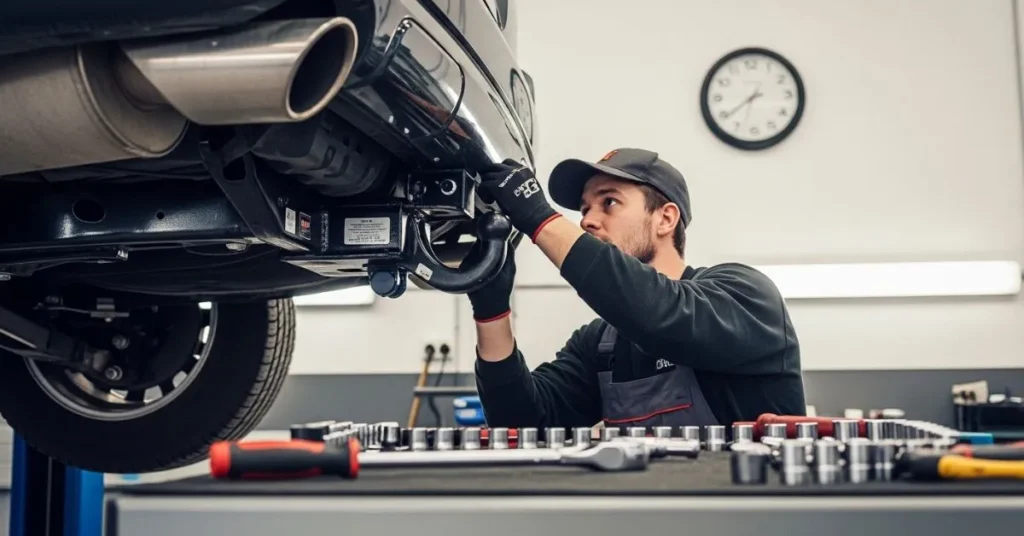
The installation time will take more or less time depending on the type of vehicle, the type of hitch, and whether wiring or not. A professional installation (with hitch mounting and trailer light connection) requires an average of 1-3 hours. It can provide a decent estimate when it comes to scheduling.
Class I or II hitches on small cars or SUVs are light-duty and are generally quicker to install, and typically need 1-1.5 hours. These hitches use fewer bolts and adjustments, making the process to be easier. DIY installations may be more time-consuming when you are not familiar with how to use the tools or what the frames of the vehicles are.
Class III, IV, or V Heavy-duty hitches, especially on trucks or large SUVs, can take up to 2-3 hours or longer. Additional wiring, brake controllers, or panel removal can be used to increase the time. Safety and durability need correct installation, which means that one should give sufficient time to get the job done in a proper way.
Factors That Affect the Cost to Install a Tow Hitch
The general price of setting up a tow hitch can be elastic to several major aspects. With your understanding of such factors, you can be in a position to budget and avoid unexpected expenses. The following are the key factors that determine the total cost to install a tow hitch.
- Vehicle Type: Various vehicles need varying installation methods. Pre-drilled frames are common in trucks and SUVs, and installation can be faster, whereas compact cars might require additional effort. The frame of your vehicle is also of a great influence on labor time and cost as well.
- Hitch Class and Size: The kind of hitch you use will determine the materials required and the ease of installation. Stronger mounting and even extra support brackets are often needed by heavy-duty hitches. Larger hitches naturally take more time and effort to install.
- Labor Rates: Labor prices differ by the shop and area. Senior technicians might be more expensive, but they can complete the installation process successfully. The rates of stores in the costly areas are normally increased per hour, and this affects the final cost.
- Wiring and Electrical Work: Wiring improvements: Trailer wiring or brake controllers add to the complexity of installation. All lights and brakes should be properly wired so that they are safe. The longer the wiring required, the longer the time to install, and the more expensive it will be.
- Brand and Quality of Hitch: Higher-quality hitch brands may be more expensive at the start of purchase, but may be more durable and feature-rich. Lower-priced hitches can help to save money now, but may need to be replaced earlier. The correct balance is a decision that influences installation and long-term worth.
- Additional Accessories: Ball mounts, hitch covers, or cargo carriers may be added to the total cost. Certain installations might need additional hardware or brackets to be installed. These can be included in advance to prevent unexpected costs.
The combination of these aspects defines the overall investment required to install a tow hitch to enable you to plan and achieve the best results.
Also Explore: Class 2 vs Class 3 Hitch: The Ultimate Showdown
Why Choose Gresham 4 Wheel Drive for Tow Hitch Installation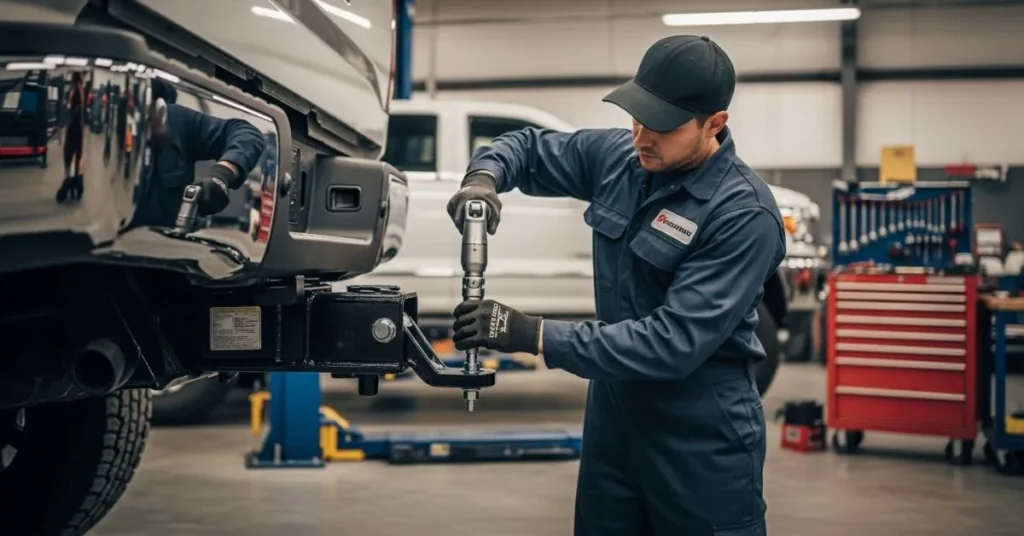
The selection of the appropriate service to install a tow hitch is vital to its safety and reliability. Gresham 4 Wheel Drive deals with professional truck, SUV, and off-road vehicle installations, making sure that all the hitches are properly fitted. We have our experience and avoid making errors that may result in expensive repairs or unsafe towing.
Our team applies quality tools and follows the manufacturer’s specifications to all hitches. Such care will make sure that your vehicle is in a towing condition without the risk of being damaged. We do all the work, including the hitch and wiring of the trailer lights, and make it a hassle-free job.
Customer satisfaction is also of great importance to us, and so we provide clear prices and advice on the best hitch to use on your car. You will save time, eliminate trial and error installation, and be sure that your tow hitch is installed safely and professionally using our expertise. This is why Gresham 4 Wheel Drive is a reliable option when it comes to towing services.
Conclusion
The cost to install a tow hitch ranges from $150 to $650, depending on your vehicle, hitch class, and whether wiring is included. The most important thing isn’t finding the cheapest installation, it’s making sure the hitch is properly matched to your vehicle, mounted to spec, and wired correctly if you plan to tow.
A properly installed hitch is a long-term investment. Class I and II hitches on sedans and crossovers have handled bike racks and small cargo carriers for years with zero maintenance. Class III hitches on trucks and full-size SUVs handle regular towing for the life of the vehicle when mounted correctly. Where problems arise is always in the shortcuts, wrong fitment, under-torqued bolts, or missing wiring that causes trailer light failures at the worst possible time.
At Gresham 4 Wheel Drive, we install tow hitches for all vehicle types across Gresham and the greater Portland, Oregon area with transparent pricing, vehicle-specific fitment, and no surprise costs at pickup.
📞 Call us at 503-400-7646 for a free hitch installation quote or stop by, and we’ll confirm the right hitch and total cost for your specific vehicle.
FAQ’s
Q: Can any car get a trailer hitch installed?
Most cars, crossovers, SUVs, and trucks can have a trailer hitch installed, but not every vehicle has a factory-rated towing capacity. Vehicles without a dedicated tow rating from the manufacturer can still have a hitch fitted for light-duty use (bike racks, cargo carriers, small trailers under 1,000 lbs), but towing a loaded trailer on a vehicle not rated for towing can stress the transmission, cooling system, and brakes beyond their design limits. Before installing, check your owner’s manual for your vehicle’s tow rating. If it has no listed tow rating, use the hitch only for accessories, not loaded trailers.
Q: How long does trailer hitch installation take?
A standard Class I or II hitch installation on a sedan or crossover typically takes 45 minutes to 1.5 hours. A Class III hitch on a truck or SUV takes 1 to 2 hours. Adding trailer wiring (4-pin or 7-pin) adds 30 to 60 minutes to the total. Heavy-duty Class IV hitches on large trucks can take 2 to 3 hours when wiring and brake controllers are included. Most professional shops can complete a standard installation the same day. Call ahead to confirm availability and whether an appointment is needed.
Q: Is UHaul hitch installation cheaper than a dedicated shop?
UHaul offers hitch installation as a service, typically at competitive prices for basic setups. Where dedicated shops like Gresham 4 Wheel Drive have an advantage is in vehicle-specific expertise, particularly for trucks, lifted vehicles, and SUVs, where proper fitment and torque specs matter more. For a sedan, getting a bike rack receiver, UHaul’s pricing can be fine. For a truck you plan to actually tow with, a shop with truck expertise is worth the comparison.