Key Takeaways
- Running boards make it easier and safer to enter and exit trucks, SUVs, and lifted vehicles while also improving their appearance.
- Most modern vehicles have factory mounting holes, making running board installation a simple bolt-on process with minimal modifications.
- Proper tools, such as a socket set, torque wrench, mounting brackets, and hardware kit, are essential for a secure installation.
- Common installation mistakes include incorrect alignment, loose hardware, over-tightened bolts, and skipping the final safety inspection.
- Whether you choose DIY or professional installation, proper fitment and alignment are critical for safety, durability, and long-term performance.
Quick Answer: Installing running boards typically involves locating factory mounting holes, attaching mounting brackets, positioning the boards, and securing everything with the provided hardware kit. Most modern trucks and SUVs have built-in mounts, so the process is usually a simple bolt-on job without drilling. Running boards improve vehicle access, protect against road debris, and enhance appearance, especially on lifted trucks and SUVs.
Running boards are a popular upgrade for trucks, SUVs, or lift up vehicle is the running boards, as they help in making the vehicle an easy way in and out of the vehicle and enhance the overall vehicle appearance. Most drivers install aftermarket running boards in order to add utility and safety to their vehicles, particularly when combined with other enhancement features such as larger tires and lift kits.
In case you are asking how to install running boards, be thankful to know that most of the modern vehicles have built-in mounting holes that can easily be installed by simply screwing them in place with a bolt. Most truck owners should be able to install running boards with no serious alteration using the appropriate tools, mounting brackets, and hardware kit.
We shall demonstrate the clear step-by-step guide in installing the running boards in this guide, the tools to use, the costs of installation, and the general mistakes to be avoided. The professionals at Gresham 4 Wheel Drive are ready to minimize your running board installation hassle, whether it is a DIY project or you would prefer to hire someone to install the boards safely and professionally.
What are Running Boards?
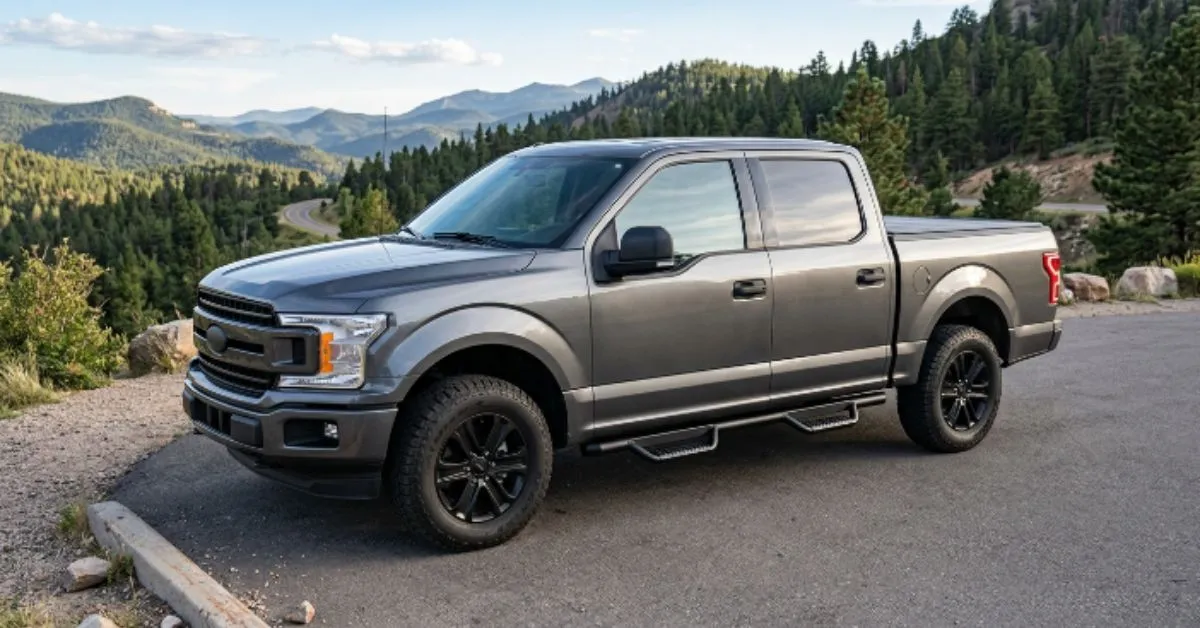
Running boards are flat boards that are attached to the sides of trucks, SUVs, and other larger vehicles. They are also like a level stepping platform, so that drivers and passengers find it easier to get in and out of the vehicle. They particularly come in with lift trucks as well as with vehicle clearance on the ground.
Running boards normally reach the length of the vehicle, in contrast to conventional side steps, to provide more space and comfort. They are also available in various materials and designs that would meet the different driving requirements and designs of vehicles, such as aluminum, stainless steel, and heavy-duty steel.
Today, aftermarket running boards are considered to be among the most widespread truck accessories due to their capability of enhancing functionality as well as appearance. They can also serve the purpose of protecting the lower part of the body against road debris and other normal wear and tear, and make access to a vehicle easier. Running boards are also often combined with lift kits and other upgrades, which are available at Gresham 4 Wheel Drive for many truck owners.
Why Do Drivers Install Them?
Running boards are also used by a lot of drivers as they help access the truck or SUV more easily. This could particularly assist lifted trucks, kids, and anyone seeking a more secure exit from the vehicle.
Another popular truck accessory is running boards, since it also makes the typical car more attractive. They also make trucks and SUVs look more sleek and sophisticated, and can be likened to other customizations such as lift kits, customized wheels, and oversized tires.
Besides comfort and good looks, running boards prevent the lower part of the vehicle from being hit by rocks, mud, and road debris. The fact that they have a non-slip surface is an added advantage, which gives them even more safety and permits running boards to be an even more reasonable addition to everyday driving.
Tools and Materials Needed Before Installing Running Boards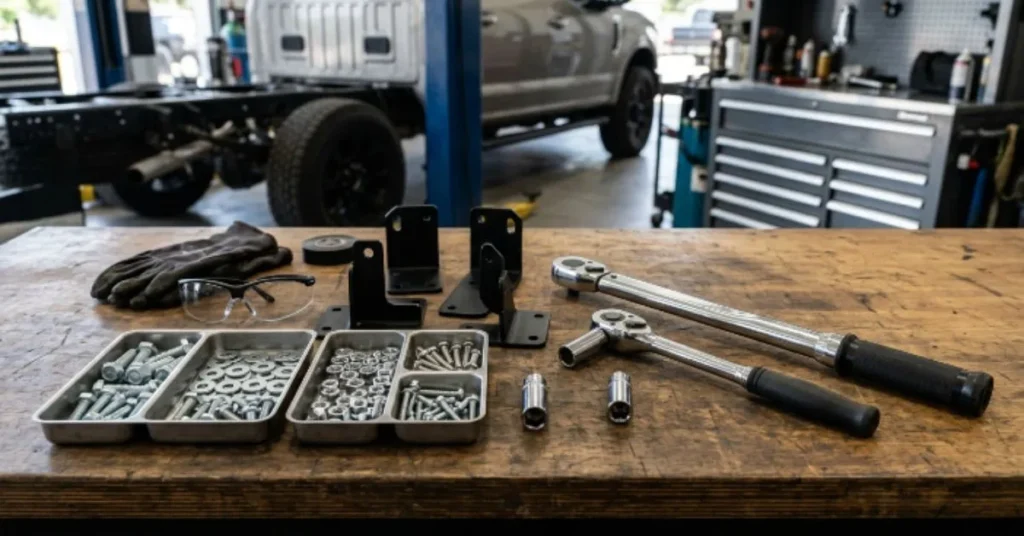
The first step before initiating the running board installation is to make sure that all the tools and materials are sent. Being prepared is going to be much easier, less time-consuming, and will help to ensure running boards are put into place safely. Most of the time, aftermarket running boards come with a hardware kit and mounting brackets, but it is always important to be able to check beforehand that you have a hardware kit and mounting brackets.
There are items and equipment you might need, and these include:
- Socket set
- Ratchet and extension
- Torque wrench
- Screwdrivers
- Safety gloves
- Safety glasses
- Conductor mounting brackets of the board.
- Board hardware kit running.
- Vehicle owner’s manual
- Cleaning cloth or brush
Most trucks and SUVs will have factory mounts, and therefore, the use of most bolt-on running boards will not need any type of drilling. It can be helpful to take a few minutes and arrange your tools ahead of time, and make the process of installation less difficult and allowing you to save time that can be devoted to some meaningful activity during the project.
How Much Does a Running Board Installation Cost?
Building prices will depend on your vehicle, the kind of running boards you prefer, and the manner in which you install them or employ the professional services of someone to do it. Makes of simple bolt-on running boards are usually less expensive to install, with some premium versions featuring electric versions and powered versions, possibly needing extra work and being even more expensive.
The approximate costs are as follows:
- Basic running boards: $100–$300
- Powered or high-end running boards: $300 -1,500 and up.
- Professional installation labor: $75–$250
- Replacement brackets or hardware: $20-100.
Although a DIY running board installation is more cost-effective than professional installation, professional installation has the potential to prevent improper fitment and damage to the working board in the long-term. Professional installations at Gresham 4 Wheel Drive can assist in ensuring your running boards are properly mounted and aligned so that they are safe in everyday operation.
Step-by-Step Guide: How to Install Running Boards 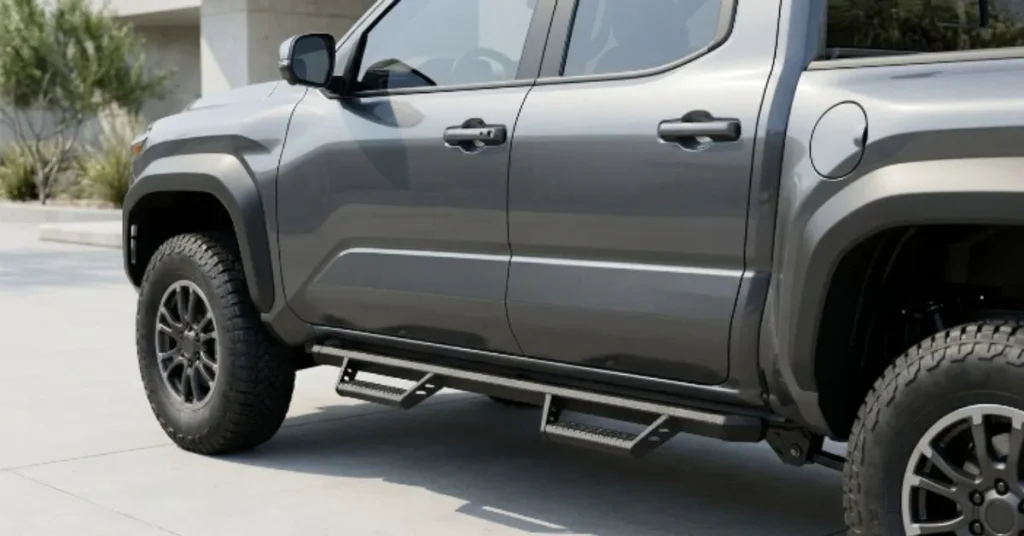
After collecting the equipment and hardware that you need, the process of running board installation. Most cars, trucks, and SUVs have an existing mount-point; therefore, it is possible to know how to install running boards without drilling modifications to the vehicle.
- Step 1: Determine the Driver and Passenger Side: It is important to examine the running boards and brackets to identify which side of the car is the driver’s and passenger side. To make sure that the parts are not installed in an inappropriate manner and fit, most manufacturers indicate the parts accordingly.
- Step 2: Locate Factory Mounting Holes: Turn the car and find factory mounting holes on the frame panel. These ready-made mounting holes are intended to fit running board brackets and are made easier and more reliable to install.
- Step 3: Install the Mounting Brackets: Use the bolts in the running board hardware kit to securely install the mounting brackets onto the factory mounting holes. To begin with, the bolts should be tightened in moderation so that they can be turned when the process of aligning the plane is taking place.
- Step 4: Position the Running Boards: Attach the running boards to the brackets installed and make sure that they are facing upwards. Always have the boards on the car lying flat, and have room to step on each door.
- Step 5: Attach with Provided Hardware: The running boards are attached with the bolts, washers, and nuts that are provided. Install the hardware so it can be attached in place to facilitate the ultimate positioning, and then screw everything.
- Step 6: Fit the Running Boards into Place: Pin the running boards by taking straight positions until they are uprightly positioned on each side of the vehicle. The alignment to the right also enhances the look, the ease of access, and may possibly prevent the unfair loads on the mounting brackets.
- Step 7: Torque All the Bolts: Once bolted to the running boards properly, make sure you give all the bolts a good torque per the recommended amounts of the manufacturer. There would be a possibility to use a torque wrench to make sure that the hardware is there without over-tightening.
- Step 8: Final Safety Checks: Examine all brackets, mounting points, and all bolts, and ensure that all is safe. Periodically check different parts of the running boards to ensure that they are not in motion, as well as ensuring that they are safe to use daily.
Common Running Board Installation Mistakes to Avoid
The fitting of running boards is normally a simple thing to install; however, minor errors may result in illumination, decreased security, or damage that may cause lasting harm. Spending time to install and check everything so that it is correct can be helpful in making your running boards as secure and useful as possible, even years down the road.
- Fitting the Running Boards on the Wrong Side: Running boards are made to be mounted either on the passenger side or on the driver’s side. Locating them elsewhere may lead to a problem of alignment and influence their beauty and utility.
- Omission of the Bracket Alignment Process: When the mounting brackets are not properly aligned with one another, the running boards could turn out to be uneven or not stable. When using any hardware, remember to check the distance through which it is threaded before tightening the hardware.
- Excessively Fastening Hardware: When the hardware is over-tightened, the tightening bolts can cause harm to the hardware or mounting points. To retain the components, when the specifications do not exceed the recommended values, it is not to overstrain the components.
- Ignoring Loose Bolts and Connections: Loose bolts can lead to the movement of the running boards or lead to their insecurity over time. Make sure that all hardware is properly installed and check it periodically after use.
- Not Performing a Final Safety Check: It is not a requirement, but some installers may hurry through the final check after the running boards have been installed. Testing stability and inspecting all mounting points can help identify problems before the vehicle is driven.
Why Choose Gresham 4 Wheel Drive for Running Board Installation?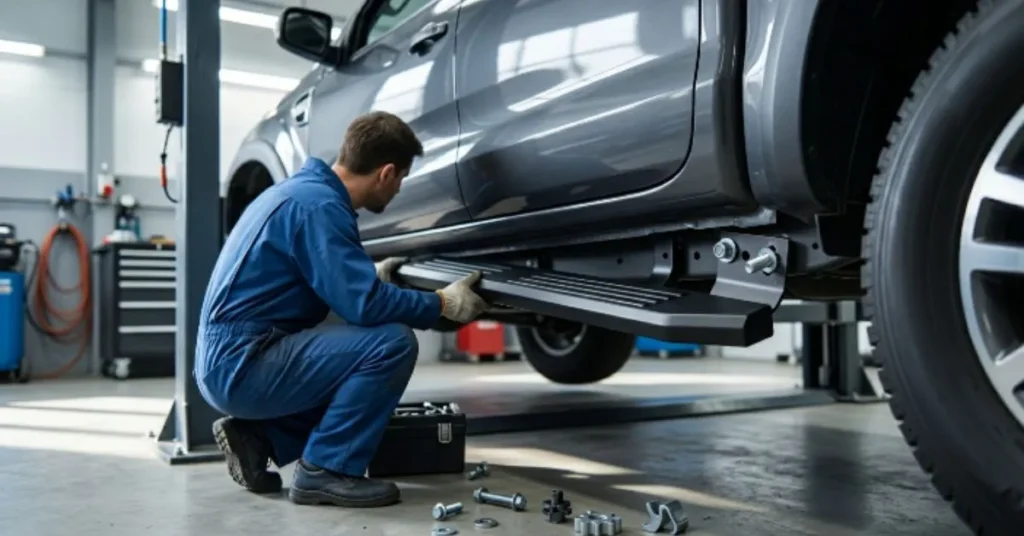
The selection of how to install running boards is important since it is correctly installed, and this will influence safety, comfort, and long-term performance. We pay attention to Gresham 4 Wheel Drive, and our installers will ensure the correct positioning of your running boards, which will not be lost or shift their position on the truck or SUV.
Our team will be knowledgeable about the truck, lift kits, wheel improvement, and off-road configuration, and so we are aware of the various customizations that would have on the running board installation. We ensure the side steps are installed with the right mounting point and hardware to securely fit on your vehicle, regardless of whether it is stock or lifted.
We simplify the installation process and make it stress-free. Checking compatibility with the final safety inspection, all is done with great care to ensure you obtain a clean, solid, and reliable product that enhances both accessibility and appearance of your car.
Conclusion
It is not as hard as it may seem to learn how to install running boards in the right way using the right tools. Since choosing the mounting points up to fitting the last bolts, every single process is significant in ensuring that your running boards are safe, stable, and durable.
Running boards are a limited upgrade, which can increase accessibility of your vehicle, provide some level of protection, and can also enhance the general appearance of your truck or SUV. Regardless of the method you use, either DIY or professional installation, good alignment and safe fitting are the best way to achieve the best results.
When properly installed, running boards will last several years in service with no problems and allow you to make daily life more convenient and comfortable. The end justifies the means; taking time to do it right always ensures safety, durability, and appearance.
FAQs
Q. How long does it take to install running boards on a vehicle?
Installing running boards typically takes about 1 to 2 hours for someone following the bolt-on process with factory mounting holes already in place. The time can vary depending on the vehicle type and whether any additional adjustments are needed for a lifted truck. Rushing through alignment steps to save time often leads to uneven fitment, so it’s better to work carefully.
Q. Do running boards affect a vehicle’s ground clearance?
Running boards themselves don’t significantly reduce ground clearance since they’re mounted along the sides rather than beneath the vehicle’s underbody. However, poorly positioned or overly low-hanging boards could potentially scrape on very rough or uneven off-road terrain. Choosing boards designed for your specific vehicle height, especially if lifted, helps avoid this issue.
Q. Are running boards compatible with all types of lift kits?
Most running boards can be adapted to work with lift kits, but the mounting height and bracket length may need adjustment to properly match the increased vehicle clearance. Some running board brands offer lift-specific kits designed to accommodate raised suspensions without compromising step height or stability. Checking compatibility with your specific lift kit before purchasing helps avoid fitment issues.
Q. Can running boards be removed and reinstalled if needed?
Yes, since most running boards use a bolt-on mounting system, they can typically be removed and reinstalled without permanent damage to the vehicle. This makes them convenient for those who want to swap styles, perform maintenance underneath the vehicle, or transfer them to another compatible vehicle. It’s important to reuse or replace hardware properly to maintain a secure fit upon reinstallation.
Q. Do running boards require any special maintenance after installation?
Running boards generally require minimal maintenance, though periodically checking for loose bolts and cleaning off dirt, mud, or road salt helps preserve their condition and prevent rust. Materials like stainless steel or aluminum tend to hold up well with basic cleaning, while other finishes may need occasional protective treatment. Regular inspection also helps catch any hardware issues before they become safety concerns.