Key Takeaways
- Change brake fluid every 2–3 years or 20,000–30,000 miles. This applies to most vehicles, though the exact interval depends on fluid type, driving conditions, and your owner’s manual.
- Moisture is the real enemy, not time alone. Brake fluid absorbs humidity over time, lowering its boiling point and causing internal corrosion in lines, calipers, and the ABS module.
- Watch for a spongy pedal, dark fluid, or unusual smells. These are the earliest and most reliable warning signs that your brake fluid needs attention.
- A brake fluid change is affordable, typically $80–$250. It’s a small cost compared to repairing a corroded caliper or a failed ABS module later.
- Lifted trucks and 4x4s need extra attention. Bigger tires, added weight, and rougher terrain put more strain on the hydraulic brake system, making regular checks even more important.
Quick Answer: How often do you need to change brake fluid? Most vehicles need a brake fluid change every 2 to 3 years, or roughly every 20,000 to 30,000 miles, whichever comes first. Brake fluid absorbs moisture over time, lowering its boiling point and reducing stopping power. Trucks, towing vehicles, and lifted 4x4s often need it sooner. Always check your owner’s manual for the exact interval.
You press the brake pedal, and it feels a little softer than usual. Not alarming, just different. Most drivers brush that off, since brake fluid sits inside a sealed hydraulic brake system, quietly doing its job out of sight until something feels wrong.
If you’ve searched how often to change brake fluid, you’re already ahead of most drivers who never think about brake fluid maintenance until a warning light comes on. It’s a smart question, because brake fluid isn’t just another fluid under the hood; it’s what connects your foot on the pedal to your brake pads actually gripping the rotors. Over time, it absorbs moisture, its boiling point drops, and it slowly loses its grip, leading to a spongy pedal or longer stopping distances.
In this guide, the team at Gresham 4 Wheel Drive & Alignments breaks down exactly how often to change brake fluid, the warning signs of contaminated fluid, and what a typical brake fluid flush costs no jargon, just what you need to know to keep your brakes reliable.
Why Brake Fluid Needs Regular Changing
Brake fluid is hygroscopic, a fancy way of saying it absorbs moisture from the air over time, even inside a sealed system. Tiny amounts of humidity work their way in through brake lines, seals, and the reservoir cap, little by little, every day your vehicle is on the road.
Here’s why that matters: fresh brake fluid has a high boiling point, which you need when your brakes generate heat. But as moisture builds up, that boiling point drops. If you push your brakes hard on a steep grade, with a heavy load, or in stop-and-go traffic, moisture-contaminated fluid can boil and create air bubbles in the lines.
Unlike fluid, air compresses, and that’s the moment your pedal goes soft or sinks toward the floor. Moisture also causes corrosion from the inside out, slowly damaging brake lines, calipers, and the ABS module with no obvious warning sign.
So changing your brake fluid isn’t really about the fluid itself; it’s about protecting the entire hydraulic braking system from years of slow, invisible wear. It’s exactly why the team at Gresham 4 Wheel Drive & Alignments checks fluid condition as part of every brake inspection, not just when a customer asks for it.
Unusual sounds can also indicate brake problems, so our guide to common brake noises explains what different sounds may mean and when your brakes may need attention.
How Often Do You Need To Change Brake Fluid? Simply Explained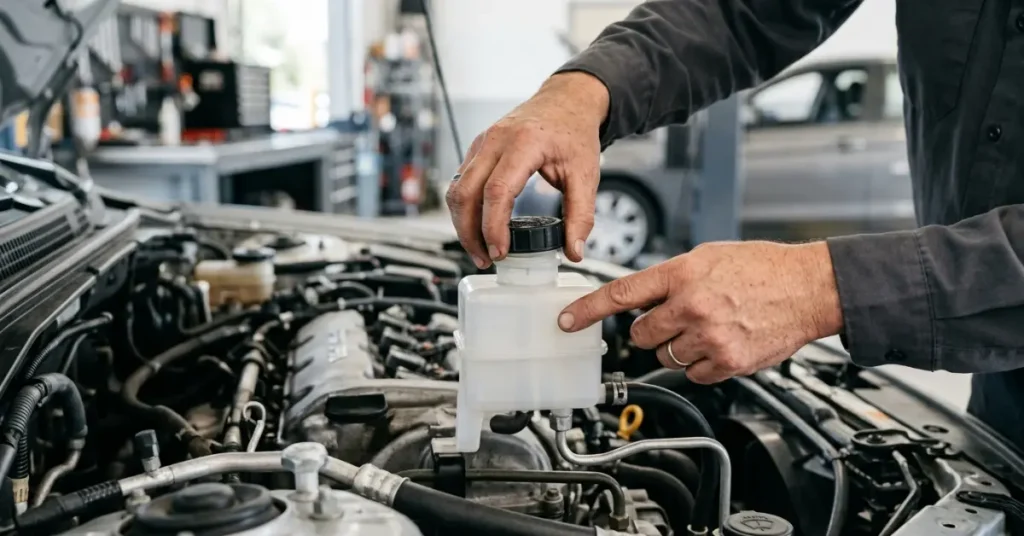
Here’s the short answer: most vehicles need a brake fluid change every 2 to 3 years, or roughly every 20,000 to 30,000 miles, whichever comes first. But the exact brake fluid change interval for your vehicle depends on a few factors, so here’s what to keep in mind:
- Check your owner’s manual first. Manufacturers like Honda and many European brands list a specific mileage or time interval. Others simply say “inspect regularly,” which means it’s on you to stay ahead of it.
- Fluid type matters. DOT 3 and DOT 4 brake fluid absorb moisture faster and typically need changing every 2 years. DOT 5.1 fluid resists moisture better and can often stretch to 3–5 years.
- Driving conditions shorten the interval. Towing, off-roading, mountain driving, or frequent stop-and-go traffic all put extra heat and stress on your brake system, meaning the fluid breaks down faster than average.
- No manual guidance? Use this rule. Change your brake fluid every 2 years, or whenever you replace your brake pads, whichever comes first, so you’re never running fluid older than the components it protects.
If you drive a lifted truck or 4×4, this becomes even more important. Bigger tires, added weight, and rougher terrain all put extra strain on your hydraulic brake system, which is something we pay close attention to at Gresham 4 Wheel Drive & Alignments during every brake inspection.
If you’re comparing brake pad options, see our guide to carbon-fiber ceramic vs. ceramic brake pads to understand the differences in performance, durability, and cost.
Signs You May Need to Change Your Brake Fluid
Your brake fluid rarely announces itself when it starts going bad. There’s no dedicated warning light on most dashboards, no obvious smell at first, no sudden change you’d notice overnight. It quietly loses its effectiveness in the background, which is exactly why knowing the signs matters more than waiting for something dramatic to happen.
- A Soft or Spongy Brake Pedal: This is usually the first and most noticeable sign something’s off. If the pedal sinks lower than usual or feels less firm under your foot, moisture or air may already be affecting your brake fluid.
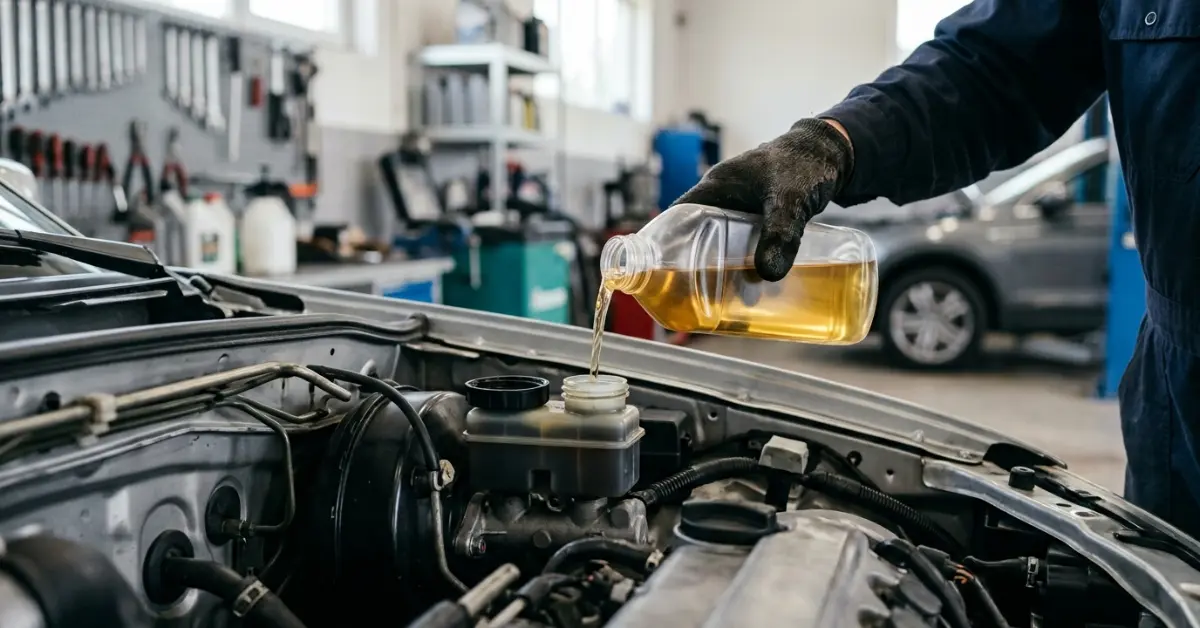
- Dark, Murky, or Cloudy Fluid: Fresh brake fluid should look clear to light amber, almost like fresh cooking oil. If it looks brown, dirty, or hazy when you check the reservoir, it’s absorbed moisture and contaminants over time.
- A Burning or Sweet Smell After Braking: A strange odor after heavy braking, especially after a long downhill drive or hard stop, often points to overheated or degraded brake fluid struggling to do its job properly.
- Longer Stopping Distances Than Normal: If your vehicle seems to take a bit longer to stop than it used to, even slightly, it could mean your brake fluid has lost some of its ability to transfer pressure efficiently.
- An ABS or Brake Warning Light On: While not every vehicle detects fluid condition directly, a lit ABS or brake warning light can sometimes signal fluid-related issues within the hydraulic system that need immediate attention.
How Much Does Brake Fluid Change Cost?
This is usually the first question that comes up right after “how often,” and for good reason: nobody likes surprise repair bills. The good news is that a brake fluid change is one of the more affordable maintenance services you can get, especially compared to the cost of repairing damage caused by neglecting it.
- Average Cost Range: A standard brake fluid change typically costs $80-$150 at an independent shop. Dealerships or larger vehicles with bigger brake systems can push that range up to $150–$250.
- Labor Costs: Labor usually makes up the biggest portion of the price, generally running $60 to $120 depending on your location and how accessible the brake system is.
- Fluid Type and Amount: Most vehicles need just 1 to 2 quarts of brake fluid, which typically costs $15 to $30. Specialty fluids like DOT 5.1 can run slightly higher than standard DOT 3 or DOT 4.
- Full Flush vs. Partial Change: A full four-wheel flush costs more than a simple top-off, usually landing between $100 and $250, but it removes all old fluid instead of just a portion of it.
- Vehicle Type and Complexity: Trucks, SUVs, and 4×4 vehicles often sit at the higher end of the cost range due to larger brake components and longer brake lines compared to standard sedans.
At the end of the day, a brake fluid change is a small expense compared to what you’d pay to replace a corroded caliper, a damaged ABS module, or deal with a brake failure caused by fluid that was never changed. It’s one of those services that’s easy to put off, but cheap enough that there’s really no good reason to.
How to Check Your Brake Fluid Yourself (Quick Tips)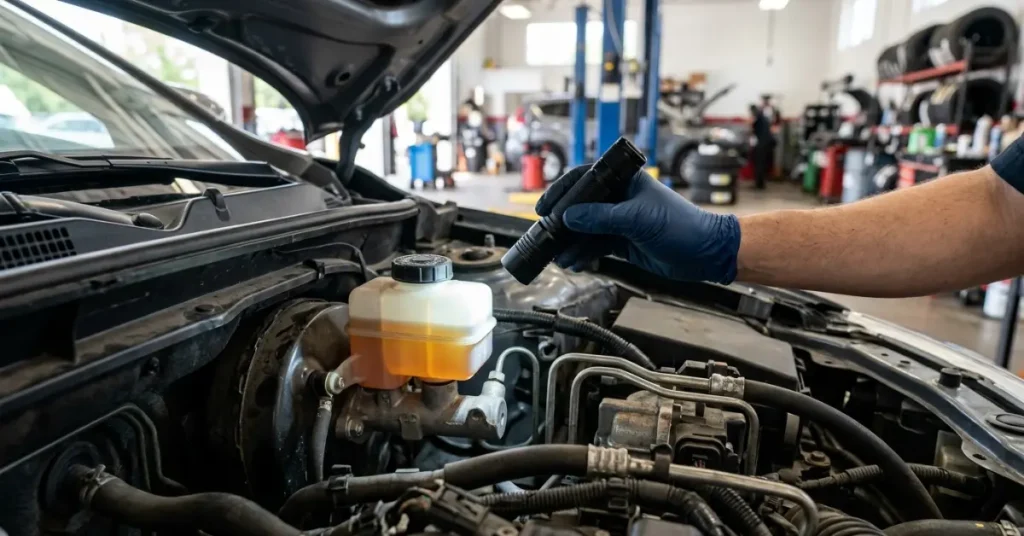
Checking your brake fluid doesn’t require any tools or mechanical experience just a few minutes and a look under the hood. Most vehicles have a translucent reservoir near the back of the engine bay, usually marked with a brake symbol. Here’s what to look for.
- Find the Reservoir: Locate the brake fluid reservoir, usually a small plastic container near the firewall on the driver’s side. It’s typically marked with a brake symbol or the word “brake” on the cap.
- Check the Fluid Level: Look at the side of the reservoir for the “MIN” and “MAX” lines, and make sure the fluid sits somewhere between them. A level near or below “MIN” could mean a leak or worn brake pads.
- Look at the Color: Fresh brake fluid is clear to light amber, almost like light cooking oil. If it looks brown, dark, or cloudy, that’s a clear sign it’s time for a change.
- Inspect for Debris or Cloudiness: Hold a flashlight up to the reservoir and check for tiny particles or haziness. Contaminated fluid often looks slightly murky compared to clean fluid.
- Test the Pedal Feel: With the engine off, press the brake pedal a few times and note how it feels. A soft, sinking, or spongy pedal often points to air or moisture in the system.
If your brake pads are due for replacement, our guide to the cost of changing brake pads explains the typical parts and labor expenses you may encounter.
Is Power Steering Fluid The Same As Brake Fluid
Brake fluid is glycol-based (DOT 3/DOT 4) or silicone-based (DOT 5), and it’s built to handle the extreme heat your brakes generate when stopping without boiling. It also absorbs moisture over time, which is why it needs regular changes. Power steering fluid, on the other hand, is usually a petroleum or synthetic hydraulic fluid made to lubricate your steering system under completely different pressure and temperature conditions.
Because these two fluids are chemically different, using the wrong one in either reservoir can break down seals and hoses fast, leading to leaks or system failure. If you’re ever unsure which reservoir is which under the hood, it’s safer to check your owner’s manual first.
At Gresham 4 Wheel Drive & Alignments, we check both fluids as part of any suspension, alignment, or lift kit service, since a truck that steers well also needs to stop reliably. If you’re not sure what’s in your reservoirs or when either was last serviced, it’s worth having us take a quick look.
Common Mistakes Drivers Make About Brake Fluid Maintenance
Over the years, a handful of mistakes seem to come up again and again when it comes to brake fluid care. Most of them aren’t due to carelessness; they’re simply things drivers were never told. Understanding these common slip-ups can save you from unnecessary repairs down the road. Here are the ones worth knowing about.
- Assuming No Leaks Means No Problem: A lot of drivers check for leaks and figure everything’s fine if they don’t see any. But brake fluid degrades from moisture absorption, not just leaks. A system with zero leaks can still have badly contaminated fluid sitting inside it.
- Topping Off Instead of Replacing: Adding fresh fluid on top of old fluid seems like an easy fix when the level looks low. It slightly dilutes the moisture content, but it doesn’t solve the real problem. It’s a short-term patch, not an actual solution.
- Mixing Different Fluid Types: Not all brake fluids are compatible with each other, even though they might look the same in the bottle. Mixing DOT 3 with DOT 5, for example, can cause the fluid to separate and fail. Always check what your vehicle requires before topping off.
- Ignoring Fluid Color Entirely: Most drivers never think to open the reservoir and actually look at the fluid. It takes less than a minute and tells you a lot about its condition. Skipping this simple check means missing an early warning sign.
- Waiting for a Warning Light: Not every vehicle has a sensor that detects brake fluid condition specifically. Waiting for a dashboard alert that might never come is a risky approach. It’s safer to go by time and mileage instead of relying on a light.
Why Choose Gresham 4 Wheel Drive & Alignment for Brake Fluid Service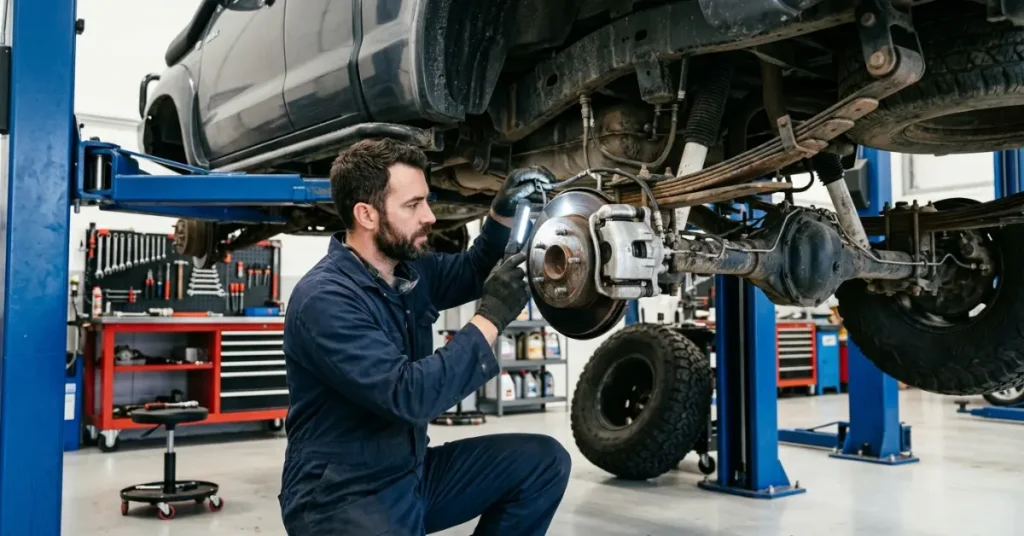
This is exactly the kind of maintenance the team at Gresham 4 Wheel Drive & Alignments focuses on every day. Working on lifted trucks, off-road builds, and 4×4 vehicles means dealing with braking systems that work harder than the average commuter car. Bigger tires, added weight, and rougher terrain all put extra strain on brake fluid and hydraulic components.
Every brake fluid service goes beyond a simple top-off. It includes a check of fluid condition, moisture levels, and the overall health of brake lines and calipers, especially important on vehicles that have been lifted or modified, since changes in ride height and suspension geometry can affect brake line routing and stress points over time.
If you’re already coming in for a lift kit installation, wheel alignment, or suspension work at Gresham 4 Wheel Drive, a brake fluid inspection is an easy add-on worth doing. It’s a quick check that can catch a problem long before it turns into a spongy pedal on the highway or reduced stopping power out on the trail.
Conclusion
Brake fluid doesn’t ask for attention the way a check-engine light does, but it deserves it just as much. As a general rule, plan on how often do you need to change brake fluid every 2 to 3 years or every 20,000 to 30,000 miles, and sooner if you tow, off-road, or drive in heavy stop-and-go traffic on a regular basis. Skipping this simple service is one of the easiest ways to end up with a much bigger repair bill later.
Watch for a soft or spongy pedal, dark or cloudy fluid, longer stopping distances, or a burning smell after braking, and don’t wait for those signs to get worse before doing something about it. Whether you drive a daily commuter or a lifted 4×4 built for the trail, staying ahead of your brake fluid change interval protects both your safety and your wallet, and it’s a lot cheaper than replacing a corroded caliper or a failed ABS module down the road.
If it’s been a while since your last brake fluid service, the team at Gresham 4 Wheel Drive is happy to check it for you. It only takes a few minutes to inspect fluid condition and catch early warning signs, giving you real peace of mind every time you get behind the wheel.
FAQs
Q. Which brake fluid lasts the longest?
DOT 5.1 brake fluid generally lasts the longest among common types, often going 3 to 5 years before needing a change. That’s because it resists moisture absorption better than DOT 3 or DOT 4 fluid, which typically need replacing every 2 years. Always check your owner’s manual before switching fluid types, since not all vehicles are compatible with every DOT rating.
Q. Is changing brake fluid necessary?
Yes. Brake fluid absorbs moisture over time even inside a sealed system, which lowers its boiling point and can lead to a soft pedal, corrosion inside brake lines, and reduced stopping power. Skipping brake fluid changes doesn’t just affect performance; it can shorten the life of expensive components like calipers and the ABS module.
Q. What happens when brake fluid is low?
Low brake fluid usually means either a leak somewhere in the system or worn brake pads, since caliper pistons extend further as pads wear down, using up more fluid. A low level can trigger your brake warning light, and if it drops too far, it can lead to a spongy pedal or reduced braking power. If your fluid keeps dropping, it’s worth having the system inspected right away rather than just topping it off.