Key Takeaways
- Most drivers pay about $300 to $800 for running boards, while basic nerf bars start near $150 and power boards can reach $2,500 or more.
- Installation usually adds $75 to $500. Simple bolt-on boards cost less, and power boards that need wiring cost more.
- The type of board has the biggest effect on price. Nerf bars are the cheapest, fixed side steps are the best value, and power running boards cost the most.
- Cab size, material, and a lift kit all change your final cost. A crew cab, a stronger material, or a lifted truck can raise the total.
- Check fitment, skip extras, and never buy on price alone. This helps you avoid paying twice for a weak board or a wrong fit.
How much do running boards cost? On average, drivers pay $300 to $800 for the boards, with basic nerf bars near $150 and power running boards above $2,500. Installation adds roughly $75 to $500. Cab size, material, brand, and lift height can change the total. Before you buy, check fitment and compare full quotes. That way, you avoid surprise fees later on. Gresham 4 Wheel Drive & Alignment helps truck, SUV, and Jeep owners choose and install the right boards.
You walk up to your truck after a long day, lift your foot for that big first step, and think, “There has to be an easier way.” That is usually when people start asking, how much do running boards cost? Most running boards cost between $150 and $2,500 for the parts, and most drivers spend around $300 to $800. Professional installation usually adds $75 to $500.
The price swings so much because a simple nerf bar is very different from power running boards that slide out on their own. OEM vs aftermarket parts, fitment for your cab size, and a lifted truck that needs taller steps all change the final running board cost.
At Gresham 4 Wheel Drive & Alignment, we install lift kits, align wheels, and fit truck accessories every day, so we know how ride height and ground clearance affect your choice. In this guide, I will break down the real prices and share simple tips to help you avoid overspending. Let’s start with the average cost.
How Much Do Running Boards Cost on Average?
Cost is usually the first thing drivers ask about before choosing a set of side steps. The price gap between a basic nerf bar and a power board is large, and it shows up both in the product itself and in the installation bill, so it helps to break it down before you buy. So, how much do running boards cost on average? Most drivers pay about $300 to $800 for the boards alone, and $400 to $1,000 once installation is included.
Key cost points to keep in mind:
- Basic nerf bars and fixed boards: lower upfront cost at about $150 to $400, which makes them the budget-friendly choice for work trucks and older vehicles
- Mid-range side steps: about $400 to $800, offering a wider stepping surface and better materials for daily drivers and families
- Power (retractable) running boards: higher upfront cost at $800 to $2,500 or more, due to motors, sensors, and wiring
- Installation cost: usually $75 to $250 for simple bolt-on boards, and $200 to $500 or more for power boards that need wiring
- Bolt-on kits keep the job simple, since they rarely need drilling and take only an hour or two
- Crew cabs and large SUVs cost more, because they need longer boards and stronger brackets
- A lifted truck can raise the total, since taller steps or drop brackets may be needed to match the new ride height
- Total cost of ownership depends on material and use, not just the sticker price, because a weak board that bends or rusts means paying twice
At the end of the day, the average running boards price should be your starting point, not your final number. For most daily drivers, a quality mid-range side step delivers the best value, while power running boards only justify their higher cost when comfort, looks, and ground clearance are top priorities. At Gresham 4 Wheel Drive & Alignment, we help you match the right board to your vehicle and budget before any work begins.
Before choosing running boards, consider their benefits and potential drawbacks. Our guide to the pros and cons of running boards explains what to consider before making a purchase.
Running Boards Price by Type
The type of running board you choose has the biggest effect on your final bill. A simple tube bar and a motorized step may both be called running boards, but they are built very differently, and so is their price. Search how much running boards cost; this is usually the part that explains the gap.
Key cost points to keep in mind:
- Nerf bars and step bars: about $150 to $500, making them the budget-friendly choice for work trucks and off-road builds. They are round or oval tubes with a narrower step, so they feel less stable for kids and older passengers.
- Fixed running boards and side steps: about $200 to $700, with a wide, flat surface that runs along the doors. They give the best footing for families and daily drivers.
- Hoop steps: about $150 to $450, offering a small step near the door. They work well on tall trucks where you only need a boost at the entry point.
- Power (retractable) running boards: about $1,000 to $2,500 or more, due to motors, sensors, and wiring. They slide out when you open the door and tuck away when you close it, which adds ground clearance.
- Installation is higher for power boards, usually $200 to $500 or more, while bolt-on fixed boards often cost $75 to $250.
- Nerf bars vs running boards: nerf bars usually cost less, but running boards give more foot space and a safer step.
Reviews of this topic agree that electric running boards tend to be the most expensive option. That matches what I see in the shop. You are paying for convenience and a clean look, not extra strength.
The type of running board you choose can affect the overall installation cost and functionality. Compare running boards or side steps to find the option that best suits your vehicle and budget.
How to Choose Running Boards Without Overspending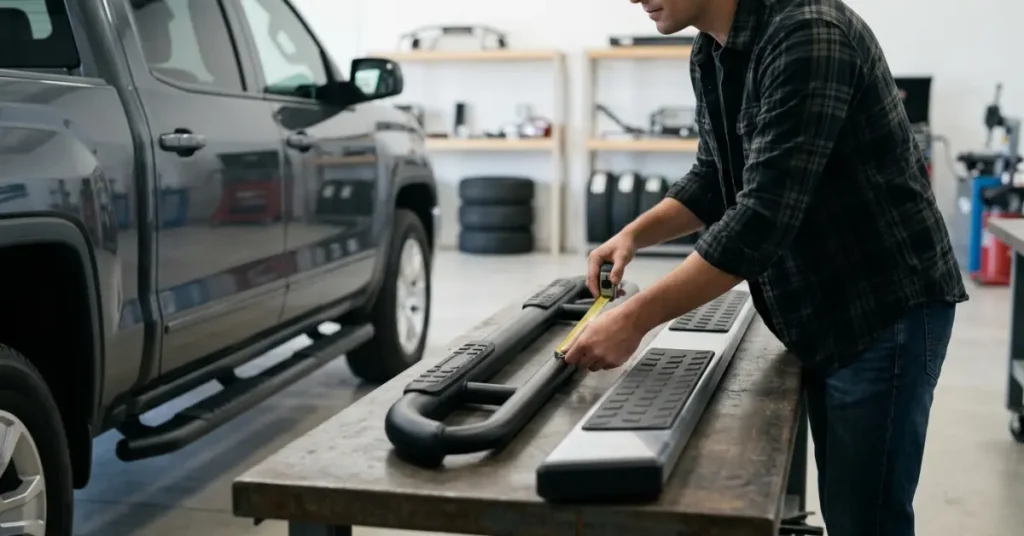
Picking the right set is where most drivers either save money or waste it. Once you know how much running boards cost, the next step is matching the board to your needs. A few simple checks can keep your running board cost under control without hurting quality.
- Start With Who Uses the Steps: Think about who steps on the boards the most, such as kids, older family members, or just you. A wide side step is safer for families, while a simple nerf bar is enough if only you use it.
- Match the Board to Your Exact Vehicle: Always check your make, model, year, and cab size before you buy. Good fitment avoids returns, extra drilling, and a second installation visit.
- Skip Features You Will Not Use: LED lights, fancy finishes, and motors look nice, but they raise the running boards’ price. If you do not need them, spend that money on a stronger material or a better warranty.
- Choose the Right Material for Your Budget: Aluminum is light, rust-resistant, and fairly priced, while powder-coated steel is tough and affordable. Stainless steel looks great but usually costs more, so pick based on how you drive and where you live.
- Compare the Total Cost, Not Just the Price Tag: A cheap board that needs extra brackets or a longer installation can cost more in the end. Ask what the kit includes and get a full quote for parts and labor before you decide.
If you’re comparing different styles before buying, our guide to nerf bars vs. running boards explains the key differences in design, accessibility, and everyday use.
What Factors Affect the Cost of Running Boards?
Two sets of running boards can look alike and still have very different price tags. Knowing what drives the running board cost helps you read a quote with confidence. It also answers the big question behind: how much do running boards cost for your own vehicle?
- Material and Build Quality: Aluminum, stainless steel, powder-coated steel, and composite all come at different prices. Stronger and more rust-resistant materials cost more upfront but usually last longer.
- Vehicle Make, Model, and Cab Size: A crew cab needs longer boards than a regular cab, so it costs more. Large SUVs and heavy-duty trucks also need stronger brackets, which raises the running boards price.
- OEM vs Aftermarket Options: Factory boards are made to match your vehicle exactly, but they often cost more. Quality aftermarket boards can offer similar strength for less, as long as they have a clear weight rating and warranty.
- Features and Board Type: LED lighting, motors, and sensors add cost fast, which is why power running boards cost much more than fixed ones. A simple bolt-on board stays at the lower end of the range.
- Lift Kits and Installation Costs: A lifted truck may need taller steps or drop brackets, and that adds to both parts and labor. Installation costs also rise when drilling or wiring is involved.
Are Running Boards Worth the Money?
After looking at prices and cost factors, the real question is whether the spending makes sense. When drivers ask how much running boards cost, they are really asking if the benefits justify the price. In my experience, for most drivers, the answer is yes. A solid step gives you a stable place to land on wet or icy days, which helps kids, older adults, and anyone climbing into a tall truck. It also protects your lower doors and rocker panels from mud and road debris.
Looks and resale value matter too. A well-fitted set gives your truck or SUV a clean, finished look and can make it more appealing to buyers. If you want comfort and extra ground clearance, power running boards can be worth the higher running boards price. If you want the best value, a quality fixed board does the same job for much less.
There are a few downsides to keep in mind. Some larger styles can slightly lower fuel economy, as some traditional running boards may decrease fuel mileage. Low-hanging boards can also scrape on rough trails. At Gresham 4 Wheel Drive & Alignment, we help you pick a board that fits your vehicle, your budget, and the way you drive.
Power running boards offer convenient automatic operation, but repairs can add to their long-term cost. Learn about common problems with power running boards and what may affect maintenance expenses.
Common Running Board Buying and Installation Mistakes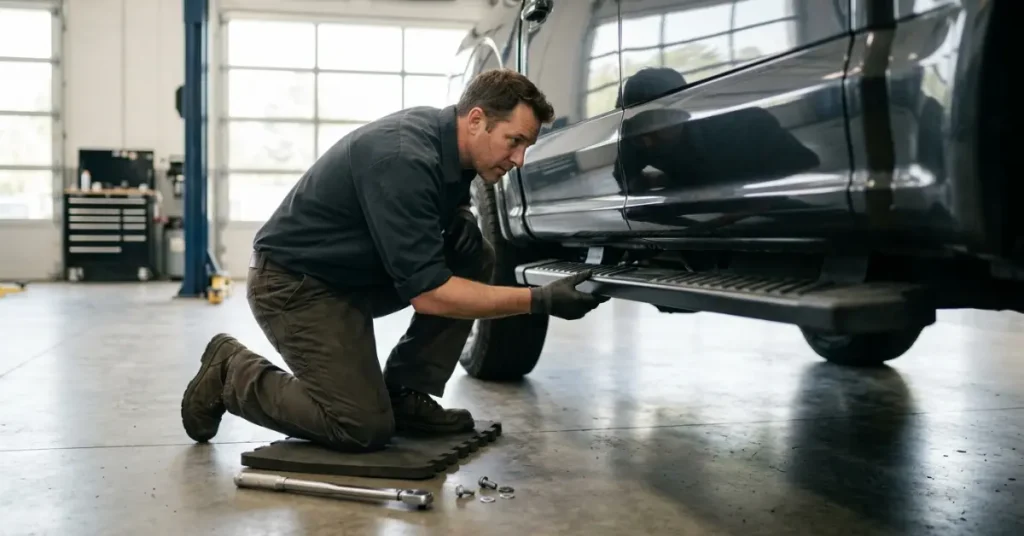
Even a good set of boards can cause trouble if the choice or the install is rushed. Many drivers who ask how much running boards cost focus only on the price and miss the small details that save money later. Avoiding these common mistakes keeps your running board cost fair and your boards working for years.
- Buying by Price Alone: A very cheap board may bend, rust, or loosen after a short time. You often end up paying twice, once for the cheap set and again for a better one.
- Ignoring Fitment: The wrong cab size or model year means returns, delays, and extra fees. Always confirm that the board matches your exact vehicle before you order.
- Forgetting About Your Lift Kit: Owners of a lifted truck often buy standard boards, then find the step is still too high. Tell your installer your lift height so you get taller steps or drop brackets from the start.
- Skipping Torque Specs and Rust Protection: Loose bolts rattle, and over-tight bolts can strip threads or crack brackets. If you drill or scratch the coating, touch it up so road salt and moisture do not cause rust.
- Rushing Power Board Wiring: Poor connections can make the motor fail or drain your battery. Wiring power running boards is best left to an experienced installer, since a bad job can raise the cost to install running boards later.
Why Choose Gresham 4 Wheel Drive & Alignment for Running Board Installation?
Once you know how much running boards cost, the next question is who should install them. A good running board installer helps you avoid costly mistakes and get the most from your money. At Gresham 4 Wheel Drive & Alignment, we work on trucks, SUVs, and Jeeps every day, so running boards are a natural fit for our skills.
We install lift kits regularly, so we understand how ride height changes step height and ground clearance. That means we can recommend boards that truly suit your lifted truck, not just a stock setup. You also get a clear quote for parts and labor before any work begins, including running board cost.
Our installs are careful and clean, with proper torque, rust protection, and neat wiring on power running boards. If your vehicle is lifted or modified, we can check your wheel alignment during the same visit. Having Gresham 4 Wheel Drive & Alignment as your one trusted shop saves you time, stress, and money.
Conclusion
So, how much do running boards cost? Most drivers pay about $300 to $800 for the boards alone, while basic nerf bars start near $150 and premium power running boards can reach $2,500 or more. Professional installation services usually add $75 to $500, depending on whether the job is a simple bolt-on or needs wiring.
The smartest way to set your budget is to think about who uses the steps, how you drive, and whether your truck is lifted. Choose a board that fits your exact vehicle, skip the extras you will not use, and never buy on price alone. A good set protects your doors, makes entry safer, and saves you from paying twice.
If you want a clear answer for your own truck, SUV, or Jeep, Gresham 4 Wheel Drive & Alignment is ready to help. Contact us today for a quote, and we will recommend the right running boards for your vehicle and your budget.