Probably you have had a taller, more aggressive-looking car when you are a car owner of a truck or an SUV, which can go through off-road tracks without any issue. But you have also noticed how some of the trucks are taller in the back than in the front of the truck, or how some of them appear flat, that is, parallel. That is where the lift-in kits and the leveling kits come in. Most truck owners are confused by the two because both of them can raise your vehicle, but the point, price, and consequences are very different.
Installation of a lift or leveling kit is not merely cosmetic, but it may alter the ride, tire, towing capacity, and even the safety. The recent statistics show that more than 35 percent of the truck owners in the U.S. customize their suspensions, with the lift kits and leveling kits being the most widespread upgrades. At Gresham 4 Wheel Drive, we are a specialty company dealing with lift kit installations, wheel alignment, and other 4 Wheel services to make sure that your truck can perform in a safe and efficient manner following any of the upgrades.
Here, we will dissect the Difference Between Lift and Leveling Kit, their pros and cons, and give you good advice on which of the two suits your truck. You will see the difference, though it might be slight, yet significant enough at the end, so you can easily make the smartest decision regarding your vehicle.
What is a Lift Kit
The lift kit is a suspension customization that lifts your truck higher. As opposed to leveling kits that slightly raise the front of your vehicle, lift kits can raise your vehicle up by 2-12 inches, depending on the kind and quality of the kit. Lift kits can be of two principal types, namely the body lifts and the suspension lifts.
- Body lifts: This is done by inserting spacers between the frame and body to lift the truck without modifying the suspension. This is cheap, and it does not improve the off-road performance.
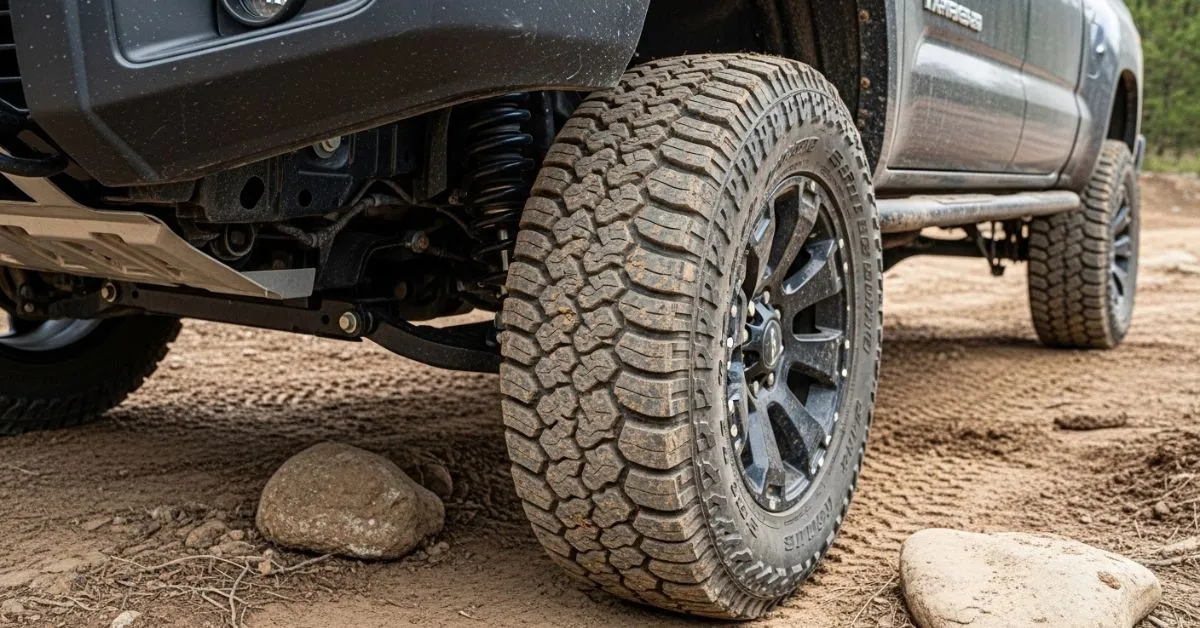
- Suspension lifts: Reconfigure or alter suspension components, such as shocks, springs, and control arms, to larger tires and provide increased off-road clearance.
Lift kits are not only cosmetic, as they increase the vehicle’s ground clearance, which allows the trucks to be capable of passing through tough trails, mud, and rough roads with ease.
According to the recent industry surveys, the transportation survey has found that the suspension lift kit-equipped trucks have up to 30% better off-road capabilities than stock setups. However, lift kits also need other forms of work, such as wheel alignment and possible brake line loosening. It is the reason why it is strongly advised to install lift kits professionally.
What is a Leveling Kit
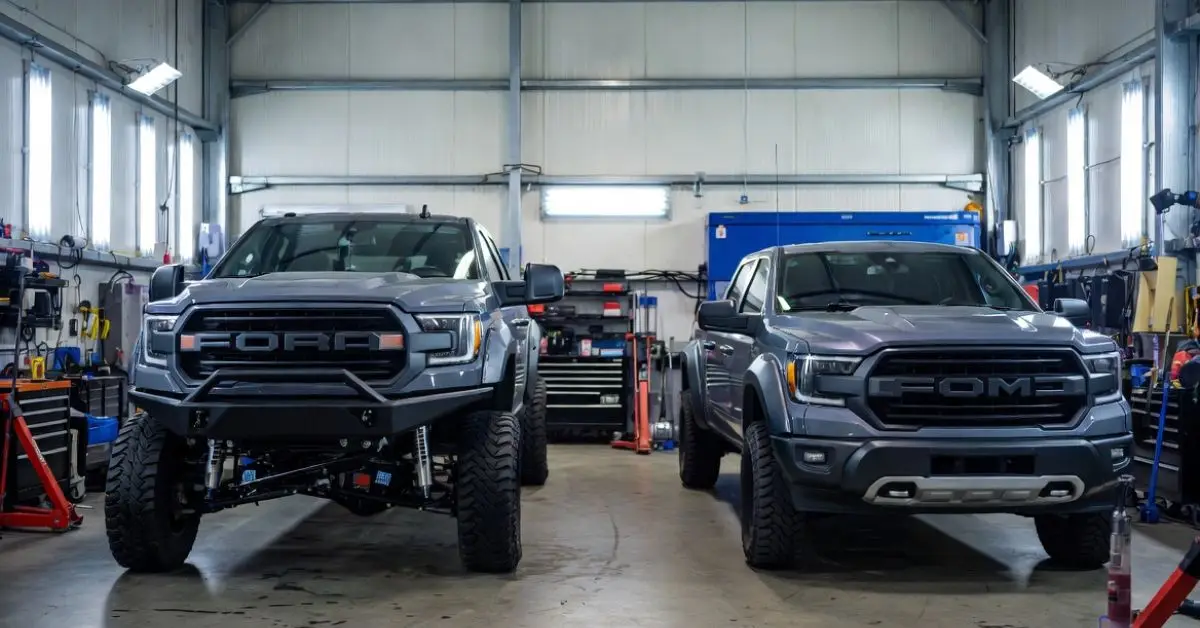
A simple suspension upgrade is a leveling kit, in which the front part of the truck is raised, completely removing the factory rake. A good number of trucks are manufactured slightly lower at the front end, which is comfortable for towing. This can be fixed with a leveling kit, which normally elevates the front by 1 to 3 inches to ensure that the truck is level.
Leveling kits, unlike the lift kits, are meant only to improve the appearance as well as some minor performance enhancements, but not serious off-roading. They give the truck a more balanced appearance and can be used to allow slightly bigger front tires with only slight modifications to the suspension.
Leveling kits have the following advantages:
- Increased front-end appearance (level stance).
- Minor increase in ground clearance.
- Upgrades to tires without seeking significant changes.
- Relatively cheap and easy to install.
Leveling kits are highly popular among the owners of trucks whose key driving routes are on the highway or in the city, yet they would wish their vehicles to have a slightly raised appearance. They do not alter suspension geometry much, which means that the ride quality and towing performance should not be affected.
Recent news also shows that more than 40 percent of the leveling kits consumers appreciate the daily comfort of driving rather than an extreme off-road capability, which makes it a viable option among most truck lovers.
Difference Between Lift and Leveling Kit

A lift kit and a leveling kit may be a challenging choice to make; thus, dividing these distinctions into specific categories is handy. Here’s a detailed look:
Purpose and Function
- The major difference between a lift kit and a leveling kit is the intention. A lift kit is aimed at trucks requiring additional elevation in order to perform off-road, use bigger tires, and be more aggressive-looking. It lifts the suspension and the body of the truck and provides a better ground clearance to be able to cope with rocks, mud, and rough surfaces.
- A leveling kit is, however, more of a cosmetic. It lifts the front of the truck enough to bring it equal to the rear to remove the factory rake. Leveling kits do not add much to the off-road performance; they are meant to be used by trucks that mostly operate on the roads and have a balanced level position.
Height Increase
- The other difference is that the height that each kit offers is also a major difference. Depending on the type of lift kit, the lift kits may raise a truck 2 to 12 inches or even higher. This allows the owners to accommodate larger tires and increased off-road clearance.
- The leveling kits are relatively small, and they mostly lift the front by 1 to 3 inches. This slight increase in height adjustment mainly levels the appearance of the truck; it does not appear that it is tilted anymore, but there is still no need to make significant changes to the suspension.
Ride Quality and Handling
- Lift kits can change the geometry of the suspension, and this may affect the quality of the ride, handling, and steering. Cases of the trucks that have lift kits being less stable may be occasioned by improper installation. This is the reason why a lift kit should be installed by a professional to provide safety and performance.
- Leveling kits, though, do not typically affect the handling and comfort of the truck. Since it is a small change, you will have the benefit of maintaining a level stance with no impact on the day-to-day performance of driving.
Complexity and Cost of Installation.
- Lift kits are not as easy to install. They might need new shocks, changing of brake lines, and adjusting. Prices can be as much as 1,000-5,000 and above, depending on the kind of lift and its height.
- Leveling kits are less complicated and less expensive, and typically cost between $100 and $400. Installation is usually a simple process that requires just the front suspension, hence it is very fast and convenient for most owners of the truck.
Appearance and Style
- Lift kits provide trucks with a large, aggressive appearance suitable for off-roaders. The tires and the height of the vehicle make it stand its ground and be prominent in the landscape.
- Leveling kits make the front rake even to give a clean and balanced look. This is a minor enhancement, but it is sufficient to make your truck appear proportional without making the whole composition look radically different.
To put it short, the distinction between lift and leveling kit reduces to purpose, height, ride quality, cost, and appearance. Lift kits are used in serious off-road performance, and overly large tires and leveling kits are used for a balanced appearance and slight front-end clearance. The decision made will rely on your driving style, the road you are going on, and the level of aesthetics.
Explore More: Best Lift Kit Brands for Off-Roading Trucks & Jeeps
Advantages of Lifting and Leveling
Lift kits and leveling kits have their own advantages as far as modifying your truck is concerned. Although the primary objective may be the looks, these enhancements may also be related to performance, comfort, and utility. The selection of the appropriate kit is based on what is most important to you, which includes off-road ability, a balanced stance, or both. Here is a better examination of the benefits of lifting and leveling your truck:
Advantages of a Lift Kit
- Better Ground Clearance: Lift kits raise the entire truck, and this gives more space between the car body and the ground. It will also be of great benefit in the moments when you are on an off-road adventure, as your truck will be able to drag over the rocks, mud, tree stumps, and rocky terrain without breaking the important parts.
- Ability to accommodate bigger tires: Lift kits allow the space to accommodate bigger tires, since they elevate the height of the suspension. The larger tires will increase the grip and handling on the rough roads and provide your truck with the capability to deal with the extreme conditions in a better manner.
- Better Off-Road Performance: Lift kit trucks can overcome any obstacles and bad roads. A lift kit that has been installed correctly tends to get a recommendation, as testified by off-road fans who claim a 30 percent increase in clearance and obstacle clearance.
- Dominating Image: The lifted trucks are gaudy and dominating, and they would get attention on the roads. High ride and larger wheels give your car a more aggressive and conspicuous appearance.
- Greater Visibility: The elevation also improves the visibility of the driver on the road and the traffic around, which contributes to the overall safety during on-road and off-road driving.
Advantages of a Leveling Kit
- Balanced Truck Appearance: The leveling kits level the factory rake and have the front of the truck level with the rear. This provides your truck with a clean, proportional appearance that does not require significant changes.
- Minor Ground Clearance Boost: Leveling kits do not give it a drastic elevation, but they still lift the front, giving it an advantage over low obstacles and eliminating tire rubbing.
- Affordable Upgrade: Leveling kits can be much more affordable compared to lift kits and thus are a low-cost method to make your truck look better and work better.
- Retained Ride Quality: Since leveling kits have a minimal change in the front suspension, there is not much change in ride quality, handling, or towing capabilities.
- Quick and Easy Installation: Leveling kits are easy to fit and may only require the adjustment of the front-end. This is due to the fact that it is an easy upgrade for truck owners who are interested in quick results without having to make significant modifications.
Disadvantages of Lifting and Leveling
Even though there are lots of advantages to lifting or leveling a truck, there are also negative aspects that must not be ignored when making a choice. Each type of suspension alteration alters the way your truck drives, feels, and wears out. Being aware of these drawbacks can make the decision-making process fully avoidable and make a much more reasonable decision than the one that means spending more or less.
Disadvantages of a Lift Kit
- Increased Cost Generally: Lift kits are costly as opposed to leveling kits. On top of the kit, you can also require new tires, new wheels, new shocks, and professional installation. It may increase in price very rapidly, and in particular with tall suspension lift kits.
- Differences in Ride Quality: As it is a lifted truck, it may feel more or less comfortable, especially on city roads. In the absence of the lift kit installed or appropriately tuned, you may feel more vibration, body roll, or steering change as you drive on a daily basis.
- Stress on Suspension Components: Raising a truck exerts additional pressure on such components as ball joints, control arms, CV axles, and steering components. This may cause a quicker wear and a higher maintenance rate in the long run.
- Fuel Economy Can Reduce: Larger tires and a higher ride height add to the wind resistance and weight of the vehicle. The owners of most of the lifted trucks complain that there is a great decrease in fuel economy when they have installed a lift kit.
- Needs Proper Wheel Alignment: When a truck has been lifted, it is important that the wheel alignment is undertaken. Unless so in place, the tires will not wear evenly, and the handling will not be safe. This contributes to additional cost and maintenance liability.
Disadvantages of a Leveling Kit
- Minimal Performance gain. Leveling kits do not significantly improve off-road performance. A leveling kit may not be what you want to hear when driving seriously through the trails or to get involved in rock crawling.
- Front-End Stress: When one raises the front only, it makes suspension angles change slightly. This can eventually cause stress to front suspension parts in case low-quality parts are employed.
- Possible Minor Ride Stiffness: Other leveling kits, in particular spacer-type kits, may make the front suspension a little firmer, especially when going over bumps and potholes.
- Fewer Appearances: The leveling kits do not change much, but the difference is minimal. Owners of trucks that want to have a bold or aggressive appearance might be disappointed.
- Not Applicable to Large Tires: Leveling kits can only be used with small tires. Fitting tires that are excessively huge might result in rubbing problems unless further adjustments are made.
Learning these drawbacks of lifting and leveling can help you make a wiser choice and avoid problems in the long-term perspective. The trick is to select good components and professional installation to limit such demerits.
Also Explore: Does Adding a Lift Kit Void Warranty? Explained Guide
Why Should I Level or Lift My Truck?
This is one of the questions that many truck owners will ask themselves before they upgrade their suspensions. Lifting a truck or leveling it is not only about appearances but also about getting your truck to perform better to meet your special needs in terms of driving. Lifting or leveling can be a practical feature for your truck, irrespective of what you are using it for, daily commuting, towing, off-road adventure, etc., as long as they are not done under the wrong intentions.
Reasons to Lift Your Truck
- Better Off-Road Capability: When you are on rocky paths, muddy lanes, or rough surfaces, the truck provides additional ground clearance so that you would not scrape or even damage the underbody. It renders off-road driving safer and enjoyable.
- Room for Bigger Tires: A lift enables one to fit bigger tires that offer good traction on dirt, sand, and snow. Large tires will also improve the road performance of your truck in hard road conditions.
- Improved sightlines: The higher the seat, the better you will be able to see the road in front of the vehicle. This can boost confidence and awareness, especially when one is in a rushy area or on the highway.
- More Aggressive Appearance: A lot of people raise their truck just because they like the aggressive image. A lifted truck is visible and has a powerful on-the-road, as well as off-the-road appearance.
- Off-road: Lifting will cushion the delicate parts of the car, such as the oil pan, exhaust, and suspension, against the rocks and debris so that they are not damaged when the car takes an off-road adventure.
Reasons to Level Your Truck
- Fix the Factory Rake: The majority of the trucks are not as high at the front as they are at the rear. Leveling incorporates the front to the back of your truck to create a well-balanced and clean appearance of your truck.
- Improve Front-End Clearance: Leveling slightly elevates the front, and this allows tire clearance and an enhanced front clearance of the vehicle over speed bumps and rough road surfaces.
- Keep Daily Driving Comfort: Leveling kits allow preserving the quality of the ride offered by the factory, and they would make this solution an ideal choice for those drivers who prefer a better view without compromising comfort and handling.
- Cost-Effective and Easy Upgrade: Leveling kits are relatively cheaper and can be installed without much hassle, hence they are low-cost and simple upgrades to those owners of a truck who would prefer new effects without the need to change a lot.
- Perfect in the Streets and Light Applications: In case the truck is mostly used on the roads, highways, or light trails, leveling will provide you with the appearance upgrade you desire without having to make any unrelated changes.
Raising or rendering your truck must forever relate to the way you ride and the expectations you have of your truck. The right option can assist you in achieving the best performance, comfort, and value of your upgrade.
Which One Is Better for Your Truck?
The decision to either go with a lift kit or a leveling kit is based on your application of the truck and what you wish for it. It does not have a universal solution, as all the drivers have varied needs. In the case of most off-road trips, rock trails, or rough roads, a lift kit is normally the preferred one. The increase in height enhances ground clearance, gives the truck space to use large tires, and also safeguards important components at the bottom of the truck. The lift kits are particularly useful to drivers who enjoy outdoor games, off-roading, or driving in places where the roads are not necessarily smooth and paved.
However, in other cases, such as when you drive your truck mostly on a daily basis, commuting on a highway, then it could be smarter to use a leveling kit. Leveling kits enhance the looks of your truck by correcting the factory rake to allow the front to be at the same level as the rear. This makes the truck look clean and well-balanced without altering the driving characteristics. The increase in height is not so much, and hence, the ride comfort, handling, and fuel economy remain near factory levels, which most drivers like to use in their daily lives.
Another consideration is budget, which is necessary to determine the better alternative. Lift kits are more expensive and, in most cases, necessitate other upgrades such as new tires, suspension parts, and professional wheel alignment. Leveling kits are cheaper and easier to install and are therefore a viable upgrade option for any owner of a truck who would like to see results but not to spend heavily. Ultimately, the decision that suits your driving style, budget, and long-term prospects is the superior decision. Being informed about the distinction between a lift and a leveling kit, one can simply pick a combination that would enhance performance and the looks without any needless concessions.
Conclusion
Lift vs. Leveling Kit can guide you to a better choice to make regarding your truck, not only on appearance but on performance, comfort, and durability. A lift kit will suit drivers who require serious ground clearance, bigger tires, and improved off-road capability, whereas the leveling kit suits drivers who want to have a balanced stance and look clean, yet have no effect on the way the truck performs its day-to-day activities. Each of the two alternatives has both its pros and cons, and neither of them is superior to the other, provided it suits your needs, budget, and expectations in driving.
The first consideration before deciding on a choice is how you will actually utilize your truck, whether it is for daily driving, towing, off-roading, or a combination of all of these. The correct installation and wheel alignment will be significant in safety and performance following any suspension upgrade. Lifting or leveling your truck can be done in a way that will enhance the look, the performance, and the confidence you have when you are behind the wheel. Knowing the difference between lift and leveling kit, you will be able to select the appropriate solution, which will suit your lifestyle and allow your truck to continue working for many years.