
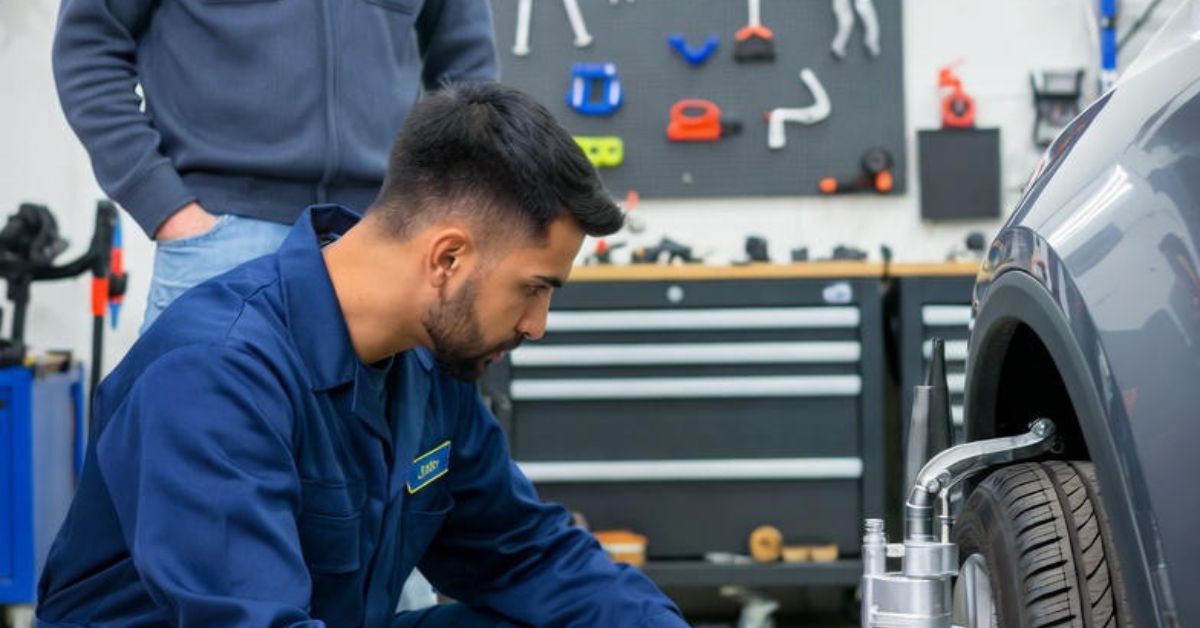
Being able to preserve the performance and safety of your vehicle does not simply end with regular oil changes and tire rotations. Wheel alignment is one of the most important, but at times neglected, facilities associated with vehicle maintenance. Knowing the significance of how important is wheel alignment, you can even wear out tires, have poor handling, and incur expensive repairs over time.
Wheel alignment helps in making sure that your tires go on the road at the right angle, your steering becomes responsive, and your suspension system works at its best. The advantages of wheel alignment are not only in the area of safety and cost-effectiveness, but also in the reduced tire wear, fuel efficiency, and general driver comfort. Having a 4×4 off-road vehicle or a daily commuter car, learning when and why to check your wheel alignment is a prerequisite for any vehicle owner.
What Wheel Alignment Really Means
Tire alignment or wheel alignment is an activity that involves the realignment of the suspension system of a vehicle to an ideal state of the recommended manufacturer specifications. It is considered to make sure that all four wheels are facing the right direction and the right angles to one another and to the road.
Wheel alignment angles are of 3 major types:
- Camber: This is an inward or an outward tilt of the wheels as observed at the front of the automobile. Wrong camber may result in uneven wear of tires on a single side.
- Toe: This means the extent to which tires move inwards or outwards when looking up. Misalignment of toes may produce tire scrubbing and mishandling.
- Caster: This is the angle of pivot of the steering that influences the stability of the vehicle, steering, and cornering.
Proper wheel alignment is not about using your tires straight. It is very important for the handling of your car, safety, and tire life. Wheels that are out of alignment may make your car pull to the right or left, your steering wheel may shake, and your tires may wear out very fast, and thus one day you would have to pay huge amounts of money in repairs.
To any person who drives on a regular basis, it is important to know what wheel alignment actually implies in order to provide not only a good driving experience and optimal fuel consumption, but also the durability of tires and suspension parts themselves.
Signs That Show How Important Wheel Alignment Really Is
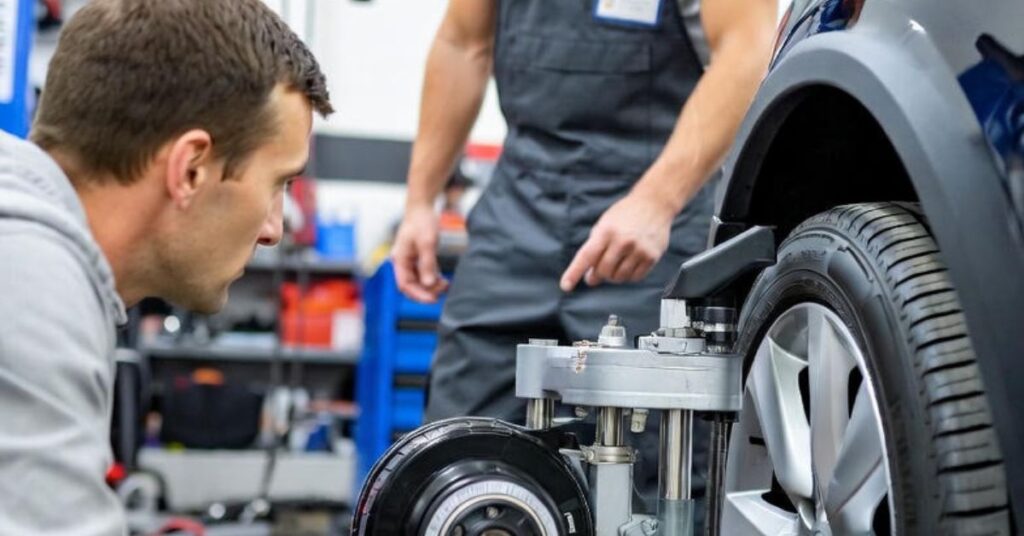
Disregard of the wheel alignment may cause serious problems to the performance of your vehicle as well as your safety. Wheels that are misaligned not only make your tires wear out more easily, but they can also compromise the steering control, the fuel efficiency, and the handling of your car altogether. With the early identification of the symptoms, you will prevent expensive repairs as well as have a safer and more comfortable ride. These are a few obvious signs that demonstrate the fact that wheel alignment is as important as it is:
- Uneven Tire Wear: Tires that wear on one side of the vehicle show that they are misaligned, and this may decrease the life of the tires.
- Pulling to One Side of the Vehicle: In case your car is weaving on either side of a straight highway, then there is a possibility that your tires are not aligned.
- Steering Wheel Off: Centre. When driving straight, a bent steering wheel is a typical indicator of misaligned wheels.
- Vibrations when Driving: Vibrations and Misalignment. There is a possibility of shaking or vibrating your car as a result of vibration, mostly when traveling at high speeds.
- Ineffective Fuel Economy: The misaligned wheels involved in the process of rolling result in high consumption of fuel.
- Difficulty Steering: In case the steering is hard or unresponsive, this might be due to the alignment.
Wear Misalignment Frequent Suspension Wear Misalignment places extra stress on the suspension parts, resulting in early wear.
Explore: How Long Does a 4 Wheel Alignment Take? Shocking Truth!
Benefits of Proper Wheel Alignment
Not only is it a maintenance step, but it actually affects the performance of your car, its safety, and even the driving experience itself, once the wheels are set in the right way. When you manage to get your wheels in the right position, you will not only have a running car that is easy to drive, but also a car that will not need many unnecessary repairs and maintenance, and may also save you some money in the long run. There are so many improvements, and they begin with the increased fuel efficiency and better steering control. The key benefits of proper wheel alignment are:
- Long Tire Lifespan: By ensuring all the tires are properly aligned, they will never wear out in a lumpy manner, and hence you will save on the cost of buying tires.
- Enhanced Fuel Economy: We have wheels that are well aligned, so the rolling resistance is minimised, and thus your car runs on less fuel.
- Better Vehicle Control: Aligned tires ensure easy steering, better cornering, and overall vehicle handling.
- Improved Security: Improving alignment will remove risks of accidents through pulling, drifting, and a lack of balance in braking.
- Less Suspension Wear: Also saves unnecessary stress on the suspension parts, which contributes to its longer life.
- Smoother Ride: No vibrations are felt anymore, and the ride is very comfortable.
- Reduced Repair Costs: Avoids untimely tire and suspension damage, as it eventually saves money in expensive repair fees.
Also Explore: Difference Between Wheel Alignment and Wheel Balancing
How Often Should You Check Wheel Alignment to Avoid Bigger Problems?

It is not just that it is pleasant to keep your wheels straight to make driving easy, but also good for the life of your tires and the safety of your vehicle. Regulatively, there is a recommendation that you ensure that your wheel alignment is done at least once a year or every 12,000 to 15,000 miles. But these times may be different due to your driving style and the nature of the road that you drive a lot.
Some scenarios require a quicker response. To take the example of a previously known example, when you have recently hit a pothole, curb, or any road obstacle, it is always prudent to check your alignment because such hits can easily cause the knock out of your wheels. On the same note, once you have undergone some suspension or steering system repairs, you have to realign the car due to the fact that the steering systems can influence the angles of your wheels. Gresham 4 Wheel Drive ensures all alignment adjustments are precise and tailored to your vehicle’s setup.
You should also watch the way your vehicle drives. The symptoms, which include: Being drawn to one side, the steering wheel not straight, or the tires not worn in a straight pattern, are some of the obvious symptoms that your vehicle is not in alignment. The alignment can be checked even when carrying out the simplest of maintenance, such as tire rotation. In order to achieve tire rotation, wheel alignment will also help in maximizing the life of tires, as well as guaranteeing smooth performance.
The slight and innocent wrong alignment can be rectified as it grows to become a huge problem by taking charge and making sure that the alignment is periodically reviewed. Proper alignment not only ensures that the car is easy to handle and steering is easy to respond to, but also makes the car more fuel-efficient, the parts of the suspension less worn, and, finally, makes the repairs less expensive. In a nutshell, ensuring that your wheels are aligned is not a big deal. Concisely, it is a little action that requires maintaining a balance in your wheel, which gives great long-term returns.
Also Explore: How to Select Tire Size for Lift Kit: Expert Tips
Final Words on How Important is Wheel Alignment
Wheel alignment is a topic that is not taken seriously; however, it has a crucial bearing on car safety, performance, and durability. Knowing the significance of how important is wheel alignment helps you to avoid having to replace tires that wear unevenly, steering components, loss of fuel efficiency, and expensive repairs in the future. Being informed on the indications of misalignment, maintaining proactivity through frequent checks, and using the services of professional correctors where you feel that you need them will ensure that you have a better, safer, and more efficient drive.
By spending a few minutes and effort in ensuring that your wheels are properly aligned, you are not only saving your tires and suspension system but also improving the overall performance of your vehicle. No matter whether you are using the daily commuter model of a car or the rough 4X4, maintaining the wheels aligned is a relatively easy process that provides long-term payoff. You should not wait until there are some tiny problems with alignment and make it a bigger, more costly problem; make sure that you prioritize the task of wheel alignment and drive with confidence.