You are a Jeep lover, and you are well aware that off-roading is all about adventure, freedom, and believing in off-road driving. One of the easiest modifications to be done to enhance the performance and look of your Jeep is a lift kit. A lift kit will not only make your Jeep look more domineering and aggressive, but it will also raise the ground clearance, allow larger tires, and expand your off-road performance as well.
You might be on rocky roads, muddy roads, or you just want your Jeep to be seen on the road, but you must know how to install a lift kit on a Jeep. This can appear to be an uphill task to undertake, but with the right tools, strategy, and guidelines, it can be done without any hitches or risks.
This guide shall also accompany you through all the information you need to know, the type of lift kits, the tools to install, and a process-by-process guide on how to install the lift kits, and the hints that you can avoid making a mistake when installing the lift kits. The final result is that you will have the confidence to make your own judgment on whether you want to install it yourself or use professional assistance.
What is a Lift Kit and Why Jeep Owners Install One
A lift kit is a modification that is made to a Jeep aftermarket to elevate the height of the body, the suspension, or both. In effect, it raises the gap between the chassis and the ground, providing your Jeep with better room as well as a cooler attitude. Lift kits are available in an array of sizes and models; hence, the owners of the Jeeps can tailor their ride to suit their requirements, be it off-roading activities or cosmetic enhancement.
- Greater Off-Road Performance: When Jeep vehicle owners install the lift kits, they do it in large numbers due to the fact that they require greater off-road performance. The more space is cleared on the ground, the higher the jeep will travel up and down the rocky formations, steep slopes, deep mud, and yet rough tracks without destroying the undercarriage.
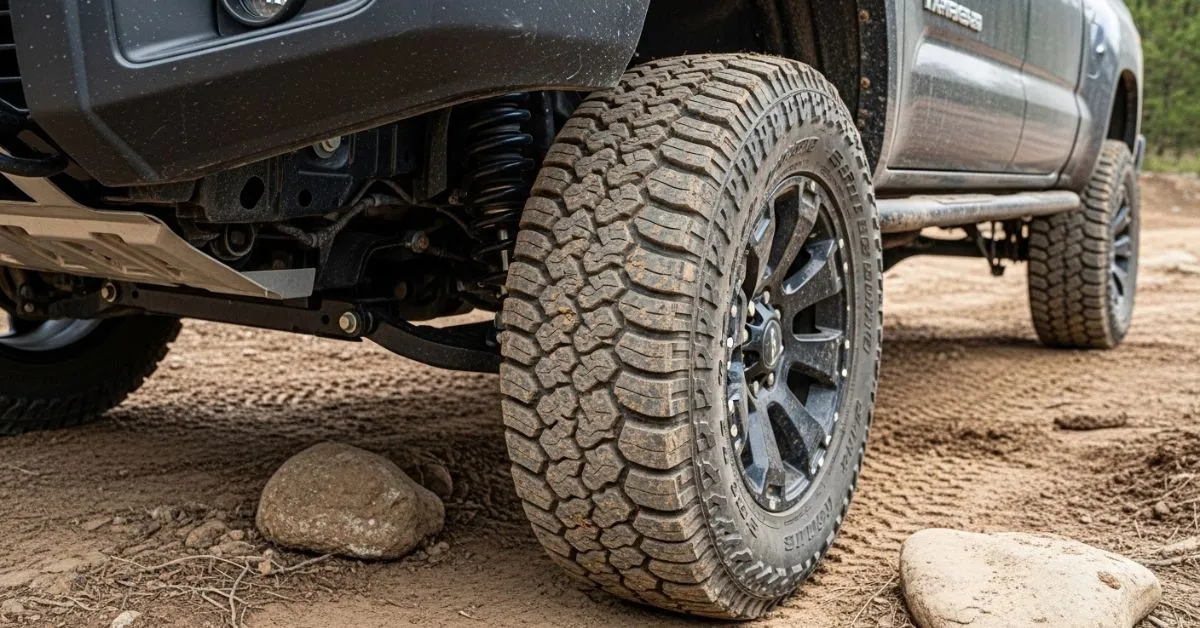
- Increase in the Tire Fitment Capacity: As you raise the vehicle, you can have larger tires. It will ensure that your Jeep has better traction and off-road performance in addition to making it look more daring and aggressive.
- Better Vehicle Sophomore: Lift kit provides numerous Jeep enthusiasts with an aesthetic enhancement. A hoisted Jeep is more rugged, authoritative, and adventure-ready. It is an expression of individual fashion and off-road preparedness.
- Customization and Personalization: Lift kits have become a common method for Jeep owners to customize their cars. Whether riding trails on the weekend, camping, or competing in car shows, a lift kit will enable the owner to be different and personalize their Jeep to their way of life.
- Improved Rough Road Test: You might not be riding extreme trails, but still, a lift kit can make rough roads and bad roads smoother and easier to control as it provides your Jeep with greater suspension travel and stability.
Fitting a lift kit is not only a cosmetic enhancement, but it is a practical one, acting as a performance as well as an off-road success factor. However, the lift must be chosen, and the installation must be versatile, safe, and dependable.
Read About: Driving with Bad Wheel Alignment: How to Fix It
Types of Lift Kits for Jeeps (Body Lift vs Suspension Lift)

Lift kits come in different varieties, and in the event you wish to upgrade your Jeep, then you should be knowledgeable of the different types of lift kits. The most popular are Body Lift Kits and Suspension Lift Kits. They both have their applications, merits, and deliberations, and, therefore, the insight into the distinctions will assist you in choosing the right one to suit your Jeep.
Body Lift Kit
A body lift kit lifts the body of the Jeep up off the frame with the help of spacers or brackets without changing the suspension system. Basically, it is a Jeep frame and suspension; only the body is raised higher and produces additional clearance.
The Benefits Of the Body Lift kit are:
- Economical: Body lifts tend to be less expensive than suspension lifts.
- Simple to install: The majority of body lift kits are simple to install and do not require any special tools.
- Preserves Ride Quality: The Jeep is not being subjected to an overhaul of its suspension, and thus, it still has its original handling and ride quality.
- Allows Bigger Tires: It can be changed to wear bigger tires with minimal adjustments.
There are also some Limitations, such as:
- Limited Ground clearance: This is a simple lift of the body, hence there is a small gain in off-road clearance.
- Does Not Enhance Suspension Capabilities: To do serious off-roading, a body lift does not contribute to better suspension articulation or handling.
- Visual Only: It appears to be aggressive, but it might not make any significant difference to off-road ability.
The body lift kit is ideal for Customers who purchase Jeeps because they desire an affordable lift and may slightly upgrade their tires. Everyday commuters who would like to enjoy a straightforward lift without losing comfort.
Suspension Lift Kit
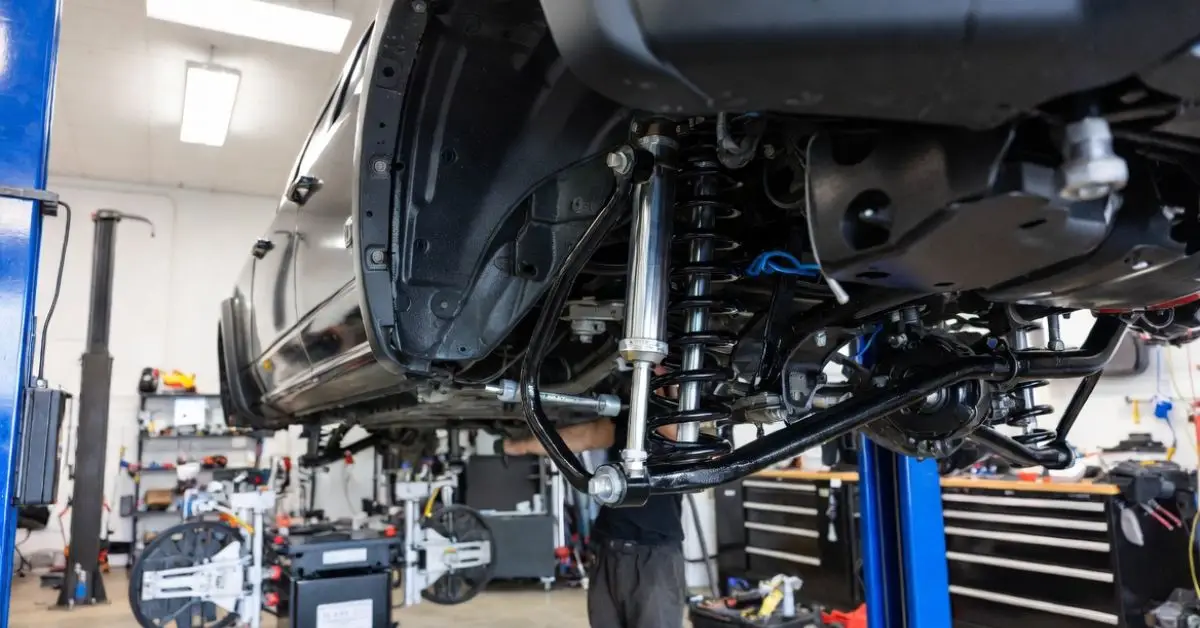
Suspension lift kit is an addition of parts of the suspension: springs, shocks, control arms, and, in some cases, sway bars, in order to lift the vehicle. Such a lift also enhances body height and suspension height, which provides more ground clearance and makes it capable of going over rough terrain.
Some Benefits of a suspension lift kit are:
- The highest Off-Road Ability: gives you a better ground clearance, and this is what gives you the ability to confront rocks, mud, and rough terrains with your Jeep.
- Helps install Larger Tires: Suspension lifts have the ability to install much larger tires in the case of extreme off-roading.
- Enhances Articulation in Vehicles: It increases the suspension travel and off-road capability.
- Customization-Friendly: Allows the possibility of upgrading in the future,e such as heavy-duty shocks or steering components.
There are also some Limitations, such as:
- Increased Cost: There is a higher cost of suspension lifts because of the added components and labor.
- Complex: This type of installation typically needs professional installation or specialized mechanical skills.
- May Affect Ride Comfort: Lifting heavier or taller can make slight adjustments in handling and ride comfort.
- Further Adjustments May Have to be: Brake line extensions, driver’s shaft modifications, or realignment.
Ideal For Those who own Jeeps and want serious off-road performance, and need to have maximum tire clearance. Adventure lovers are interested in overcoming difficult paths and obstacles. In the case where you do not know what lift kit to order, take into consideration the nature of your driving habits and objectives. A body lift is ideal to make it pretty and have small enhancements. To perform extreme off-roading and serious performance, a suspension lift should be the choice.
Also Explore: Difference Between Lift and Leveling Kit for Vehicle
Tools and Equipment Pre-Installation Checklist (Safety)
Preparation is the first stage prior to the actual process of installing a lift kit in a Jeep. It will be easier to install the relevant equipment and avoid accidents or damage to your car as the corresponding safety regulations will be taken into account.
Lift Kit Installing Tools.
The tools that will be required by the individual to install a lift kit properly include:
- Socket set and wrenches: To loosen and tighten nuts and bolts.
- Screwdrivers: Flathead and Phillips to take off clips and small components.
- Torque Wrench: To make sure that the bolts are screwed according to the manufacturer’s standards.
- Jack and jack: To effectively lift and support your Jeep. Never rely solely on a jack.
- Spring compressors: Only required in the case of installing and removing coil springs safely, in case there is a suspension lift.
- Pry bars: Assists in the handling of the suspension components or the body mounts.
- Impact wrench (optional): The removal and installation of bolts will be faster, but this comes at the expense of caution.
- Rubber mallet: This is helpful in the soft-touch movement of parts without breaking them.
The Safety Equipment You Must Wear
- Gloves: Do not reach sharp objects and hot objects with your hands.
- Protective clothing: You must not use loose clothing, as it can get entangled in the tools.
- Wheel chocks: This is to make sure that your Jeep does not go under the lift.
Installation Pre-Installation Safety Checklist
To make sure that you are safe and productive before lifting your Jeep, you should use the following checklist:
- When the park is on a well-balanced surface, then there is a possibility that it will not be pushed over.
- Switch on the parking brake, and place tire contacts on the ground using wheel chocks.
- The battery should never be left in place; it should be removed to avoid a short-circuit.
- In case the park is laid on a balanced surface, it does not stand a chance of being overturned.
- Turn on the parking brake and put wheel chocks on tires that are in contact with the ground.
- Always remove the battery in order to get rid of any short-circuit.
Never rush the installation. The first reason is that slowness with proper organization will prevent costly mistakes, reduce the risk of injury, and ensure that your lift kit functions correctly.
Step-by-Step Guide on How to Install a Lift Kit on a Jeep
The right tools and keenness will require installing a lift kit on a Jeep. The kind of steps that would be necessary will depend on the kind of lift you are installing, whether it be a body lift or suspension lift, but the steps as discussed below are a general guide on the best practices and steps in ensuring a safe and successful installation.
Pre-Installation of Your Jeep
- Park your Jeep on a flat, even standing surface.
- Use the parking brake and put tire wheel chocks behind the tires
- Unplug the battery to prevent electrical problems.
- The lug nuts should be loosened slightly, and then the vehicle lifted.
- Lift the Jeep with a jack and hold it with jack stands – never use the jack alone.
Before beginning, read the instructions that the manufacturer of the lift kit provides.
Take out the Wheels and factory parts
- To access body mount components or suspension, remove all wheels
- To lift the body of the car, find and loosen the bolts on the factory body mount.
- On suspension lifts, start unloading factory shocks, springs, sway bar links, and control arms.
It is best to maintain all bolts and hardware in order to prevent confusion in reassembly.
Assembly of Lift Kit Parts
For a Body Lift Kit:
- Slide the lift spacers into the body and the frame.
- Well-placed spacers prevent misalignment of the body.
- Install the extended bolts that come with the kit and tighten them in line with the torque requirements.
For a Suspension Lift Kit:
- Install new shocks, coil springs, and control arms in the kit.
- Replace sway bar links and track bars where necessary.
- It should also have everything fitting in places before tightening.
Remember not to tighten the suspension bolts to the maximum until the Jeep is stopped.
Re-lock and Attach Everything
- Reconnect any detached brake lines, steering parts, and sway bars.
- When changing the wheels, repeat the last step by reinstalling them and tightening the lug nuts by hand.
- Strain the Jeep back on the ground.
Install all bolts and lug nuts to the specifications of the manufacturer using a torque wrench.
Inspected Alignment and Steering Parts
Check steering angles, drive shaft, and tension of the brake line.
- After lift kits have been installed, it is strongly recommended that the alignment of the wheels be performed by a professional.
- Inability to match your Jeep may cause tire treads and handling issues.
Test Drive and Final Inspection
- Begin with a slow test drive of your neighborhood.
- Hear some strange sounds or vibrations.
- Test after the initial drive, loose bolts or moving parts should be verified.
- Tighten all bolts after 50 100 miles of driving.
In case of steering problems, vibrations, and braking difficulties, which occur after a car is installed, do not drive your vehicle and examine your Jeep or seek the help of a professional mechanic.
Also Explore: Best Lift Kit Brands for Off-Roading Trucks & Jeeps
Common Mistakes to Avoid During Jeep Lift Kit Installation
A lift kit on a Jeep may possibly make it look and work significantly better, but it is only possible with a properly installed lift kit. A lot of Jeep owners commit preventable errors, which may cause safety problems, handling problems, or very expensive repairs. These are the most frequent mistakes that should be understood to achieve a successful and efficient lift kit installation.
- The Wrong Lift Kit to Choose on your Jeep Model: Not every Jeep is compatible with everything in a lift kit. Fitting a kit that does not fit the year, model, or trim of your Jeep may result in alignment problems, poor fit, and early wear. Avoid it by always checking compatibility with your particular Jeep model, And Verifying the specifications of manufacturers.
- Vaulting Oversight of Adequate Safety: The use of jack stands, wheel chocks, or protective gear may not be used, leading to serious injuries. Avoid it by using jack stands that must be heavy-duty and of the correct weight for your Jeep, and putting on gloves and safety glasses during the construction.
- Failure to adhere to the instructions by the manufacturer: Each lift kit possesses its own elements and torque. The impact of disregarding the instructions may include improper installation and failure of parts. Avoid it by following the installation manual to the letter. And adjusting the torque precisely as stipulated. Then, checking the
- Insufficient Tightness of bolts: One of the most widespread and hazardous errors is incorrect bolt torque. Avoid it by tightening all the essential fasteners with a torque wrench and re-checking after the test, drive, and check the bolt torque.
- The Forgotten Wheel Alignment: Once a lift kit is installed, the factory settings of alignment are not accurate anymore. Straight jackknife driving may result in poor tire wear and loss of control. Avoid it by having wheel alignment by a professional as soon as it has been installed.
- Disregarding Brake Line and steering Adjustments: Suspension geometry when lifting a Jeep is prone to straining brake lines and steering parts. Avoid it by Fitting extensions of brake lines where necessary. And making sure of steering angles and positioning the track bar.
- Tensioning of the Suspension Parts When the Jeep is Lifted: Workers should not tighten suspension bolts when the Jeep is off the ground, as it will result in poor ride quality and early wear of the bushes. Avoid it by not loosening the elements of the suspension, unless the Jeep is on the ground.
- Missing the Test Drive and Final Inspection: Most installers think that once the lift is installed, the job is complete; however, little problems can be noticed during the initial drive. Avoid it by performing a slow test drive, checking for clunking, vibration, or steering problems, and re-torquing bolts 50-100 miles.
When you are not sure about something during the installation procedure, it would help to stop and seek the advice of a professional instead of losing your Jeep or putting your life in danger.
You also need to know about: Does Adding a Lift Kit Void Warranty? Explained Guide
DIY vs Professional Jeep Lift Kit Installation
In making a choice on how to install a lift kit on a Jeep, there are a significant number of owners who consider whether to install it themselves or seek the services of an expert. Self-installation of lift kits may be an inexpensive and enjoyable option for those who are not only skilled in the use of tools and the technical aspect of the car but also possess the appropriate time and space.
It is also hands-on and can be cost-effective (saving labor), but there are also risks like improper installation, safety, and possible destruction in case of errors made. Professional installation of a Jeep lift kit, on the other hand, carries with it a feeling of security, professional workmanship, quicker installation, particularly in more intricate suspension lifts, whereby specific alignment and adjustment of parts are necessary.
Professionals like Gresham4wheeldrive make sure that there is proper torque, suspension geometry, and safety, and in most cases, provide a warranty to support their work. Finally, when the lift is small and your mechanical abilities are not so strong, DIY installation can be effective, but when you want to install a larger lifter or want it to be reliable over time, professional installation will be a better and safer decision.
Final Conclusion
Fitting a lift kit on a Jeep is among the most ideal methods of improving the appearance, as well as the off-road capabilities of the vehicle. You may be looking to fit bigger tires, gain ground clearance, or you could be just wanting a more aggressive appearance, but regardless, you should know how to install a lift kit on a Jeep that would be safer and more reliable over time. The difference between the successful installation of the lift kit and the major error made is based on proper planning, starting with the selection of the type of lift kit to purchase, the tools to use, and the steps required to implement, among other factors.
Although the DIY method can be used by skilled Jeep owners, more complex suspension lifts and reliable outcomes can be achieved with the help of professional installation services. A proper installation of your lift kit will give you a better ride, better handling, and the ability to go anywhere in your Jeep and know that you are safe on that trail or road.