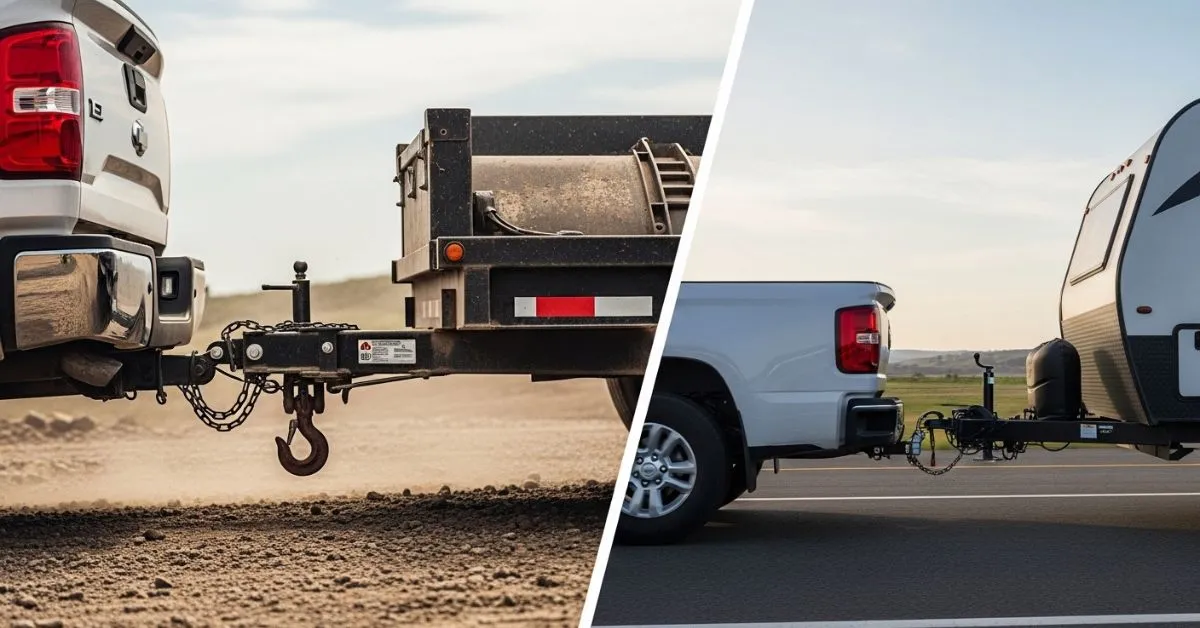
When it comes to towing with your truck, choosing the right hitch isn’t just about convenience; it’s about safety, control, and protecting your load. Pintle hook hitch, trailer ball hitch, or heavy-duty towing hitch are some of the terms that confuse many truck owners. An understanding of the Pintle Hitch vs Ball Hitch can save you the trouble of managing any problems, sound problems, or even unsafe towing conditions.
A pintle hitch is built to withstand heavy towing and rough roads and will therefore suit any construction trailer, farm implement, or off-road hauling. A ball hitch, on the other hand, is better in daily towing applications such as campers, boats, or small trailers, as it is a much smoother ride with fewer difficulties in attaching. Each of these two hitches has its particular benefits; however, the correct selection of one of them is based on the weight of the load, the type of terrain, and the frequency of towing.
Even a superior hitch may not work when it has not been installed correctly. This is why such working services as Gresham 4 Wheel Drive are needed. Their professional staff would make sure that your towing hitch system is installed in a safe and proper manner and that it is ready to be used over a long period of time. In this guide, we shall discuss all about Pintle Hitch vs Ball Hitch to be able to choose the appropriate hitch that would fit your truck and towing requirements.
What Is a Pintle Hitch?
A pintle hitch is a heavy-duty towing system that is often applied in construction, farm work, and off-road hauling. It is hooked to the towing vehicle, and the trailer has a ring; when the two join, it forms a very strong and flexible connection. This arrangement renders the pintle hitches excellent in dragging exceptionally heavy weights, in which strength and frequency are more crucial than a smooth ride.
The high weight-carrying capacity of the pintle hitch is one of the greatest benefits of this hitch. Most of them can manage 10,000 to more than 60,000 lbs, hence they suit well in military trailers, construction machinery, and heavy farm machinery. The hook-and-ring system is also more movable than a ball hitch, which will assist trailers in remaining attached in various environments.
Nevertheless, pintle hitches are noisy, and the ride is not as smooth as a ball hitch. Safety is an essential factor that requires proper installation and maintenance, and this is why professional services such as Gresham 4 Wheel Drive are relevant. Their crew makes sure your pintle hitch is mounted the right way and is fitted with all the heavy-duty towing you need over an extended period of time.
What Is a Ball Hitch?
The most popular kind of towing hitch is a ball hitch that is suitable for the daily towing requirements, such as campers, boats, or even small trailers. It comprises a ball that is attached to the towing vehicle and a coupler on the trailer that slides over the ball. This easy design enables attachment and removal easily, and thus is convenient in most cases for most drivers who do not do a lot of towing.
A ball hitch is one of the largest advantages of a hitch that is easy to tow, and it is quiet. The ball and system does not cause as does a pintle hitch; also, the trailer can move freely, giving a comfortable ride on highways and roads. Also commonly found are ball hitches, which are easy to maintain and can be used in lighter loads, typically between 2,000 and 30,000 lbs, depending on the size.
But ball hitches cannot be relied upon in very heavy loads or on rough and uneven surfaces. The wrong hitch that is used in heavy-duty towing may lead to damage. This is the reason why it should be professionally installed, such as the services provided by Gresham 4 Wheel Drive. Their crew makes sure that your hitch balls are correctly installed and adjusted in place and that they are safe to be used in everyday towing.
Compare Pintle Hitch vs Ball Hitch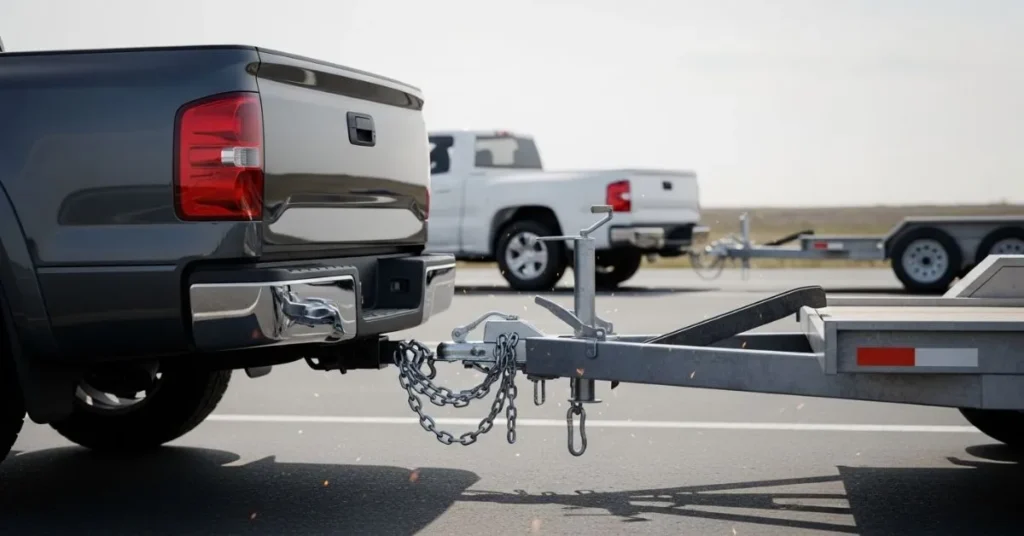
The decision between a pintle hitch vs ball hitch when it comes to towing may have drastic implications on the performance of your truck, the safety of your truck, and the overall experience of the towing process. The two types of hitch are used to accomplish the same fundamental task of joining your trailer to your car, but their situations of application are completely different. These are the primary differences that will help you make the right decision as to which one to use when towing.
1. Weight Capacity
Pintle hitches are constructed to be heavy-duty towers. They are capable of carrying very huge weights, which may be between 10,000 lbs and even more than 60,000 lbs. This renders them the best choice in construction equipment, farm products, and off-road trailers. They have a hook-and-ring tie system that is more flexible in through rough settings and makes the trailer securely attached even on roads.
Conversely, ball hitches are built to tow in cases of light to medium duty, which in most cases involves between 2,000 and 30,000 lbs, depending on the model. They suit trailers, campers, or boats that are used on a daily basis. Although they do not carry the extreme loads of pintle hitches, ball hitches are a smooth and non-noisy ride, particularly on paved highways, and are therefore best used in casual towing.
2. Ride Smoothness
The ride may be rough and noisy with a pintle hitch, as the hook ring slide against each other. This can be noted especially when speeding or on the highway. The pintle hitch will do well in off-road or rough road conditions, but the trade-off is the lack of comfort in the normal driving situation.
A ball hitch, in contrast, provides a smoother ride. The ball and coupler system minimizes the clanking of the sounds, as well as enabling the trailer to pivot easily when turning corners. This renders ball hitches to be more in daily towing, and family trailers in which comfort and convenience are of the essence.
3. Terrain Flexibility
Pintle hitchs are bright on rough and rough terrain. The hook-and-ring system means that the trailer can be moved both vertically and horizontally without straining the connection. This allows pintle to be the most popular product when it comes to off-road trailers, heavy machinery, and other military towing applications.
Ball hits are even more terrain-constrained. They work best on smooth roads and are not suitable for highly uneven surfaces and off-road surfaces. They are designed to be stable and comfortable at a lower weight, but are not able to be flexible enough to be used in heavy-duty or rough towing.
4. Installation and Maintenance
The installation of a pintle hitch is precise and needs frequent maintenance. The hook-and-ring system should be aligned correctly and examined regularly in order to assure safe towing. Any unsecured attachment may lead to safety risks and therefore, professional installation should be considered highly, especially when it is going to be used in heavy-duty applications.
Ball hitches are less difficult to install and maintain. The ball and coupler system is simple and can be installed with minimum requirements by the majority of the truck owners. Wear and lubrication checks also should be made regularly, but the Hubs maintainability is much more easily met than a pintle hitch. The professional installation, such as the services offered by Gresham 4 Wheel Drive, would make both of these types of hitches safe and usable.
Pro Tips to Choose the Right Hitch
When it comes to selecting the correct hitch that fits your truck, there is a lot of feeling of being overwhelmed by the choices available in the market, like the pintle hitch vs ball hitch. It depends on what type of trailer you are pulling, what type of ground you are on, and the weight you are carrying in order to make the proper choice. Any wrong choice may cause a safety hazard, inefficient towing, and unwarranted truck wear. The following are some professional tips that will guide you in choosing the right hitch to use in the process of towing.
- Know Your Towing Weight: With a towing hitch, it is always essential to determine the gross trailer weight of what you are going to tow. Pintle hitches can be used on quite heavy loads, and ball hitches can be used in cases with lighter trailers. When hitching your trailer, make sure that the capacity has been matched to your trailer weight, or your connection may result in damage due to overloading.
- Consider the Terrain: Think where you will be towing the most. When you are likely to drive off-road, on rough or uneven surfaces, you should use a pintle hitch, as it provides flexibility and strength to take care of rough terrain. In the case of smooth highways and normal roads, a ball hitch will be quieter and more stable in towing.
- Evaluate Ease of Use: A ball hitch is usually simpler to attach and detach, which makes it convenient to use to tow on a daily or casual basis. Stronger, but potentially more time-consuming and less precise, are the pintle hits. Depends on the ease or the power you require, or the number of times you are going to tow.
- Check Trailer Compatibility: Not every trailer is compatible with either of these hitches. Recreational trailers have a coupler with a ball hitch, whereas pintle trailers have a lunette ring. When your trailer and hitch are compatible, things are safe, and towing is also safer.
- Factor in Professional Installation: The finest hitch will not work when installed improperly. Professional services will mount your hitch correctly and perfectly, and will also prepare it to withstand long-term towing. Both pintle and ball hitches have performance that is maximum performance and risk that is reduced risk through expert installation.
- Plan for Maintenance: It is important to ensure that hitches are inspected regularly. Pintle hits are also prone to lubrication and regular inspections as the metal touches metal, and ball hits require less intensive maintenance. Maintenance planning would make sure that your towing outfit remains good in the long run.
Common Mistakes People Make When Choosing a Hitch
Making a poor selection of a hitch may have grave consequences, such as unstable towing and expensive destruction of your truck or trailer. A vast majority of truck owners are simply concerned with its convenience or affordability and are not concerned with such important factors as the load capacity, the terrain, and the compatibility. Knowing the most frequent pitfalls may assist you in circumventing such problems and make a better and smarter decision when it comes to your towing needs.
- Ignoring Weight Capacity: It is one of the greatest errors of owning a hitch that overlooks the weight capacity of the hitch and the weight of the trailer. A pintle hitch can work with very heavy loads; however, working beyond its capacity may result in swaying or a lack of control and even detachment. It is always a good idea to verify the rating of the manufacturer before towing as a precaution.
- Overlooking Terrain Conditions: There is the common perception that any hitch can perform in all terrains. Pintle hitches are suited to rough and off-road conditions, whereas ball hitches are suited to paved highways. Towing with the wrong type in your routine driving environment may be uncomfortable, noisy, or even unsafe.
- Ignoring Trailer Compatibility: There are those truck owners who attempt to install hitches by themselves to cut costs. Inappropriate installation would affect safety, alignment, and stability. Professional services make sure that your hitch is fitted properly and safely, and you have the assurance that you have the right hitch at the right place on any occasion you travel.
- Skipping Professional Installation: Even the most perfect hitch will fail on the condition that it is not maintained. Pintle hitsches require frequent lubrication because of metal-to-metal contact, whereas ball hitches only need to be checked occasionally to ensure wear and excellent tightness. By neglecting to do maintenance, you may only reduce the life of your hitch and expose more dangers in towing.
Which Hitch Is Right for You?
Whether you are going to use a pintle hitch or a ball hitch is a decision that shall be determined by your requirements in towing, the type of trailer, and the kind of road you mostly use. The explanation for the formation of the pintle hitches is because it is heavy-duty and applicable in rough road conditions, compared to the ball hitches that are made to support light loads and in the normal road conditions encountered in ordinary everyday life. The choice of the hitch ensures the safety, stability, and a more pleasing towing experience.
The pintle hitch is the most appropriate hitch when you are operating construction equipment, farm gear, or off-road trailers that will be frequently moved. Its hook and ring construction means that it can carry more weight and that it can be used on uneven surfaces, hence it is ideal for tasks with heavy demands. It might be quieter, but the ride has more strength and is reliable to be used in heavy-duty towing.
A ball hitch is preferable for lighter towing requirements, such as campers, small trailers, or boats. It is easy to ride, quiet, and has a smooth ride; it fits easily on the paved roads, and it can be attached and detached easily. Gresham 4 Wheel Drive will install your hitch professionally and have it correctly installed and ready to be towed safely and over the long term.
Upgrade Your Towing Power with Gresham 4 Wheel Drive Hitch Installation Services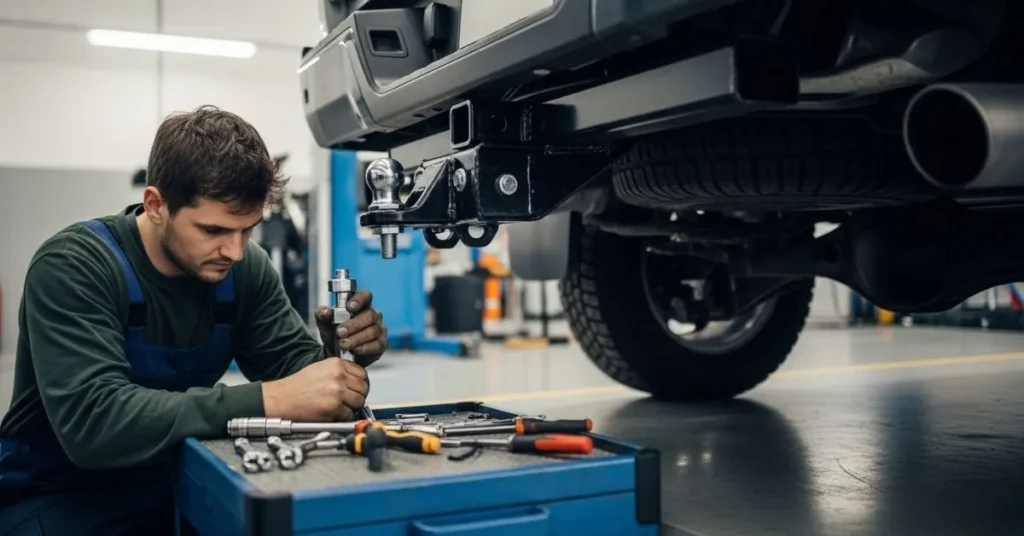
It is not enough to select the appropriate hitch in order to make your truck tow safely and efficiently. Adequate installation and professional setup are significant in terms of performance, stability, and safety in the long run. At Gresham 4 Wheel Drive, we will provide professional hitch installations on pintle hitches vs ball hitches so that you have a secure towing setup that is capable of any task.
Our crew is aware of the variations between the heavy-duty and the non-heavy-duty towing. Be it a pintle hitch to fit the rough road and heavy equipment or a ball hitch which would suit the lighter trailer, boat, or the campers, we ensure that your hitch is installed correctly. We maintain the proper alignment, secure mounting, and proper maintenance checks, so you can be sure every time you roll on the road.
Towing upgrade process using professional services not only increases your performance but also safety. You will be able to haul heavy loads, travel over rough roads, or even go on family trips without the fear of unsafe trailers or unsuitable hitch fittings. The towing system of your truck will be reliable, long-lasting, and capable of participating in any adventure with the professional installation.
Conclusion
Choosing the right towing setup comes down to understanding the differences between a pintle hitch vs ball hitch and how each fits your specific needs. Pintle hitch is perfect for tough towing and rough road transportation where there is a need to have strength, flexibility, and durability. Ball hitches are suitable for daily towing, which offers a smoother and quieter movement of trailers, campers, and boats. It is important to know what hitch fits your truck and makes it a safer and more efficient towing.
The installation of hitches is also essential, as is the selection of the hitch. The most powerful pintle or the smoothest ball hitch is not going to do a good job when it is improperly mounted. Services such as Gresham 4 Wheel Drive make sure that your hitch is installed safely and properly aligned and is ready to be used in the long term. Professional installations minimize risks, enhance performance, and give you a sense of relaxation whenever you are towing.
Finally, the correct option is determined by the weight of towing, road conditions, and the frequency of use. Knowing the major distinctions, listening to the advice of professionals, and professional installation will help you be sure that you have chosen the best hitch for a truck. The right hitch and correct arrangement by Gresham 4 Wheel Drive make all the towing experiences safe, smoother, and more reliable.