Key Takeaways
- A tonneau cover latch problem is usually caused by dirt, rust, loose hardware, or a damaged cable, and most issues can be fixed without replacing the entire cover.
- Understanding how the latch mechanism works helps truck owners quickly identify problems like a stuck truck bed cover latch or a tonneau cover not closing properly.
- Basic tools such as screwdrivers, a socket wrench, and lubricant are often enough to repair or adjust a tonneau cover latch at home.
- Regular maintenance, like cleaning, lubrication, and checking latch alignment, can prevent most latch failures and extend the life of your truck bed cover.
- For complex repairs or professional installation, experts at Gresham 4 Wheel Drive can handle tonneau cover repairs, upgrades, and other truck modifications.
The short answer: Most tonneau cover latch problems are caused by one of four things: dirt and debris buildup, rust or corrosion on the latch mechanism, a worn or stretched cable, or misaligned hardware. Cleaning, lubricating, and realigning the latch fixes the majority of issues in under 30 minutes with basic hand tools. A full latch replacement when the mechanism itself is damaged or worn out typically costs $20 to $80 in parts and takes about an hour.
A tonneau cover is one of the most popular accessories for any pickup truck. It protects your cargo from rain, dust, and theft. But once the latch fails, that protection disappears fast. A cover that won’t close properly leaves your truck bed exposed. Most truck owners searching for how to fix a tonneau cover latch want a quick, reliable fix they can do themselves, without paying for a shop visit.
The latch might be a small part of the tonneau cover system, but it’s the single point of failure for security. Over time, dirt, rust, loose bolts, or a damaged cable can stop the locking mechanism from working. In most cases, a quick repair or adjustment solves the problem; you rarely need to replace the entire cover.
This guide walks you through diagnosing and fixing a tonneau cover latch step by step, the common causes, the tools you’ll need, and solutions like repairing a latch cable or replacing a worn latch. If the problem turns out to be more than a DIY fix, the team at Gresham 4 Wheel Drive can handle the repair or upgrade for you.
Understanding How a Tonneau Cover Latch Works
Before you start fixing anything, it helps to understand how the latch actually works. The latch is what keeps your tonneau cover closed, protecting your cargo from weather, dust, and theft. Once you understand the mechanism, problems like a stuck latch or a cover that won’t close become much easier to diagnose and fix yourself.
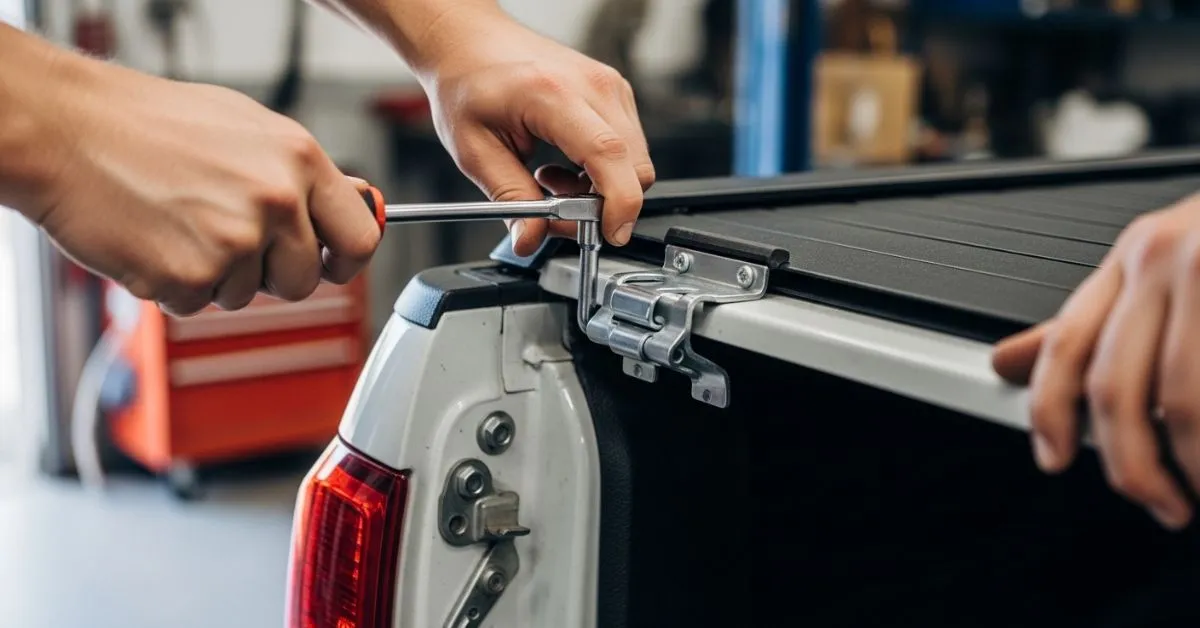
Most latches are made up of the same core parts: the latch mechanism itself, a cable, a striker plate, a release handle, and mounting hardware. When the cover is closed, the latch hooks onto the striker plate; pulling the release handle pulls the cable, which releases the latch. Dirt, loose hardware, or a worn cable are the most common reasons this system fails.
The slight variations in the latch design of soft and hard tonneau covers are not that significant; however, the idea stays the same: ensure that the cover is secure. Soft and hard tonneau covers use slightly different latch designs, but the goal is the same: keep the cover secure. Understanding how your specific system works makes troubleshooting much easier and helps you get the latch locked correctly every time.
Soft Covers vs Hard Covers: Latch Differences:
Soft roll-up and folding tonneau covers typically use a slam trigger latch, a spring-loaded mechanism that automatically engages when you press the cover down onto the striker plate. These are simple and fast to use, but are more prone to spring fatigue over time, which causes the cover to pop open unexpectedly at highway speeds. Hard tonneau covers use a more robust manual latch or a cam-action locking system that requires deliberate engagement.
These are more secure but have more components that can misalign or corrode. Knowing which type you have matters when diagnosing the problem: a cover that won’t stay closed is almost always a slam trigger spring issue on soft covers, while on hard covers it’s more likely a misaligned striker plate or loose hardware.
Also Explore: Topper vs Tonneau Cover: Find Out Which Is Worth It
Tools You Need Before Fixing a Tonneau Cover Latch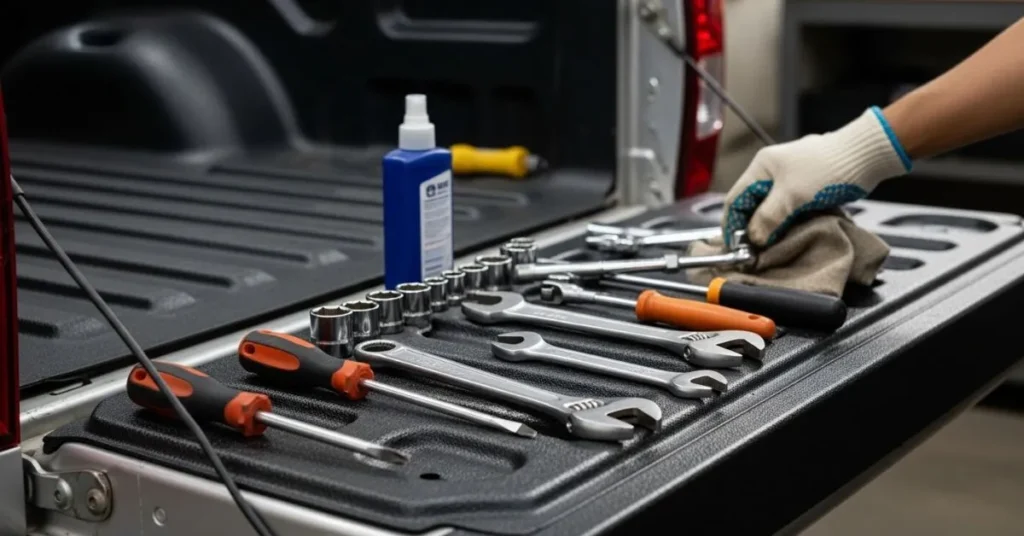
Having the right tools on hand makes the repair process faster and helps prevent further damage to the latch or cover. Most common problems, a stuck latch, a cover that won’t close easily, can be fixed in under 30 minutes if you’re prepared. There are a number of latch problems, such as a truck bed cover latch being stuck or a tonneau cover not closing easily, which can be resolved in a short time as long as you are ready.
The simple tools that you will require are as follows:
- Screws: Flathead screwdriver and Phillips screwdriver.
- Socket wrench set for bolts.
- Tilting fittings wrench.
- Lubricating spray to loosen rusty or hard parts.
- Washing cloth or a brush to get dirt off.
- Spare latch cable or components, where necessary.
Keeping these tools on hand saves time once you start the repair. Soft cover latches usually need fewer tools, while hard covers may require extra wrenches for hinge and bracket hardware. With the tools at hand, you can then continue with the repair process efficiently and safely.
Explore More About: Does a Tonneau Cover Save Gas? Experts Explain
Step-by-Step Guide on How to Fix a Tonneau Cover Latch
Fixing a tonneau cover latch can seem intimidating, but with the right approach, it’s a simple, straightforward job. Knowledge of the locking system and the essential equipment can enable you to overcome such common problems as a truck bed cover latch becoming stuck, the tonneau cover being fastened improperly, or the latch system being loose. In the following section, you will follow step-by-step procedures of fixing your tonneau cover latch, checking it, cleaning it, adjusting it, and repairing small parts that may need to be replaced in the future.
Step 1: Inspect the Latch Mechanism Carefully Before Doing Anything
Before touching any tools, take a close look at the latch and surrounding parts. Check whether dirt, rust, or debris has built up anywhere that could be stopping the latch from working. Examine the latch cable, screws, and brackets to see whether they’re in good condition. Pinpointing the actual cause, a loose bolt, a misaligned striker plate, or something else, is the key first step before any repair.
Step 2: Clean the Latch System Thoroughly to Remove Dirt and Debris
Wipe down the latch mechanism with a soft cloth to remove dust, dirt, and any old, gummed-up lubricant. Apply a small amount of fresh lubricant to the moving parts if they feel stiff. A clean latch system resolves most sticking or locking issues on its own, and it also makes the next step adjustment much easier. Cleaning is also done well to allow adjustments to be made to the latch and for it to run more smoothly.
Step 3: Adjust the Latch Alignment and Test Its Functionality
Check whether the latch hooks line up correctly with the striker plate. Loosen the mounting screws if needed, reposition the latch until it fits properly, then re-tighten the hardware. Pull the release handle to confirm the latch opens and closes smoothly. If the cover still won’t close properly, check whether the latch cable is worn or damaged. A minor tonneau cover latch can fix alignment issues easily and make sure that your truck bed cover is locked each time.
Step 4: Repair or Replace the Latch Cable if Necessary
If the latch cable is loose, torn, or stretched, it may cause the latch not to work. Carefully cut the old cable and place a new cable. Ensure that the cable is in place; it fits in the latch and the release handle. Proper repair of the tonneau cover cable will ensure that the latch will work properly once again, and the tonneau cover will never fail to close, thereby adding to the overall security of the truck bed.
Step 5: Test the Latch System Thoroughly After Repairs
Once you’ve cleaned, aligned, and (if needed) replaced the cable, test the latch several times. Slowly open and close the cover to confirm it locks every time, with no gaps or shifting. Testing thoroughly now saves you from a surprise failure on the road later. Frequent testing ensures that your tonneau cover repair lock is effective, and it helps avoid troublesome situations in regard to your truck bed cover in the future.
Explore More: Lomax Tonneau Cover vs BakFlip Tonneau Cover Full Review
When to Replace a Tonneau Cover Latch Instead of Repairing It
Not every latch problem is worth repairing. Here’s a straightforward guide to help you decide:
Repair is the right call when:
- The latch is stiff or sticky. Cleaning and lubrication will fix it
- The cover won’t close evenly; latch alignment adjustment needed
- The cable is loose or stretched; cable replacement restores full function
- Hardware is loose; tightening screws and bolts resolves it
Replace the latch when:
- The latch body is cracked or physically broken
- The internal spring has failed, and the latch won’t engage at all
- Corrosion has seized the mechanism beyond what lubrication can fix
- You’ve repaired the same issue more than twice. Repeated failure means the latch itself is worn out, not just misaligned
How to find the right replacement latch:
Most tonneau cover manufacturers sell replacement latch kits specific to their covers. Generic replacement latches are available for $20 to $50 and work on most standard soft covers. Brand-specific hard-cover latches run $40 to $80 and are worth buying OEM to ensure proper fit and seal alignment.
Replacement latch installation follows the same process as latch adjustment: remove the old latch hardware, position the new latch on the striker plate, and test alignment before fully tightening. Most replacements take 30 to 45 minutes.
Simple Maintenance Tips to Prevent Tonneau Cover Latch Problems
It is always easier to prevent issues with your tonneau cover latch as opposed to dealing with them in the future. Routine maintenance ensures that your truck bed cover is functioning well and that problems such as a tonneau cover being stuck or a truck bed cover latch not closing do not arise. Basic measures such as cleaning, lubrication, and servicing can prolong the life of the latch system as well as diminish the necessity of tonneau cover latch repair.
- Clean the Latch System Regularly to Remove Dirt and Debris: It is among the easiest ways of preventing latch issues. All you have to do is clean the mechanism and remove the dirt and debris. Clean the latch, striker plate, and release handle using a soft brush or a cloth that cleans dust, dirt, and other debris. Keeping the latch clean prevents stiffness and sticking and means you’ll rarely need to troubleshoot it at all.
- Lubricate Moving Parts Every Few Months to Avoid Rust and Stiffness: A light lubricant should be applied to the latch mechanism and cable to prevent rust and corrosion, which can lead to the latch becoming stuck. Pay attention to all the moving parts, striker plate, latch hooks, and cable joints. Consistent lubrication prevents the stuck situation with a truck bed cover latch and facilitates the tonneau cover latch fitting in the future.
- Check Hardware and Alignment to Maintain Proper Function: Check screws, bolts, and brackets on a periodic basis to check whether or not they are tight and in position. The cover may not latch or lock correctly due to loose or loose-fitting hardware. Frequent check-ups will avoid the need to repair tonneau cover latches and make sure your cargo is properly covered, as the cover will always close properly.
- Check the Latch Cable: Latch cables can stretch out, fray, or wear out and thus may not be able to work smoothly. Check the cable and replace it frequently when required in case of any damage. This is the simplest check that may prevent an emergency in the case of the tonneau cover cable repair and ensure the right cover opening and sealing.
- Check Seasonal Maintenance Before Bad Weather: Before either the winter or rainy seasons, check the latch system in a hurry to ensure that it is not rusted or filled with dirt. Soft and hard tonneau cover latches are both vulnerable to wear and tear as a result of moisture and heat. Seasonal service makes sure that your tonneau cover works properly, so that the tonneau cover does not open when it is needed, and it also gives good assurance that your truck bed is well covered.
Most Common Reasons Why a Tonneau Cover Latch Stops Working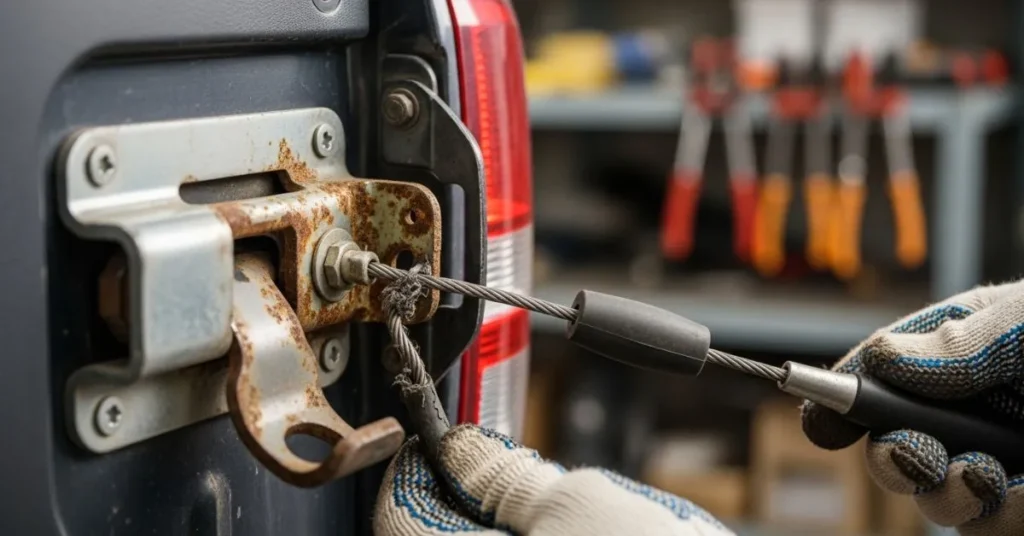
The latch issue may still develop even with maintenance. Knowing the most frequent causes of a tonneau cover latch to lose its effectiveness will allow you to spot and correct the problem in the quickest time possible. Some of the common problems encountered by many truck owners include a stuck latch of a truck bed cover, a broken tonneau cover that fails to close, or a worn latch, which can be resolved in most cases by simple tonneau cover latch repair methods.
1. Dirt and Debris Buildup Can Cause the Latch to Stick
Dirt, dust, and particles that are caught in the mechanism are among the most common reasons for latch issues. In the case that the latch system has been blocked, the cover will not lock or unlock easily, and this results in a truck bed cover latch stuck scenario. This can be avoided by cleaning the truck’s tonneau cover regularly, which makes troubleshooting far simpler before it becomes a big problem to repair.
2. Rust and Corrosion Weaken the Latch Mechanism Over Time
Rust and corrosion of the latch parts may occur as a result of exposure to moisture, rain, and road salt. Rusty parts make the latch difficult or sometimes impossible to operate. Corrosion can be solved early, before it becomes a problem, by the use of a lubricant or a small repair of the tonneau cover latch, which will ensure the latch is working well and will not result in the tonneau cover not closing properly.
3. Broken or Worn Latch Cable Prevents Smooth Operation
The latch cable is used to join the release handle to the locking mechanism, and with time, it may stretch, fray, or break. A broken cable can cause the latch to refuse to open or close properly, causing frustration and restricting access to a truck bed. The most common tonneau cover cable repair is usually the replacement of a frayed cable that has never been restored to its original latching capacity.
4. Loose Screws and Misaligned Brackets Lead to Latch Issues
Hardware that becomes loose or has misaligned brackets may cause the latch to fail to lock. The misalignment leads to either an uneven closure or an inability to open easily, and the cover appears broken, although the latch is okay. Tonneau cover latch adjustment is necessary to make sure that all components are properly aligned and the tonneau cover closes easily and successfully each time.
5. Worn or Damaged Locking Mechanism Requires Repair or Replacement
The internal latch components may become worn out through years of use, and in this case, the latch cannot engage completely. When cleaning, lubrication, or cable replacement does not help, then the latch might require a total tonneau cover latch repair or replacement. Early identification of the worn parts will save time and avoid recurring cases of the stuck, locked latch of the truck bed covers.
6. Tonneau Cover Keeps Popping Open: Slam Trigger Spring Failure
If your tonneau cover closes but keeps popping open, especially at highway speeds, the problem is almost always a worn slam trigger spring rather than the latch mechanism itself. The slam trigger spring is what creates the tension that holds the latch engaged against the striker plate. When this spring fatigues or breaks, the latch can’t maintain enough pressure to stay closed under wind load.
This is one of the most common issues with soft roll-up and folding covers after 2 to 3 years of regular use. The fix: replace the slam trigger spring or the full slam trigger assembly. Most brands sell these as a separate part for $15 to $30. If a replacement spring isn’t available for your cover brand, a full latch replacement is the next step. In the meantime, avoid highway driving with the cover on; a cover that pops open at speed can become a road hazard.
Also Know About: The Smart Way to Know How to Choose a Tonneau Cover
Get Professional Tonneau Cover Installation and Truck Upgrades at Gresham 4 Wheel Drive
Although a large number of problems that involve latching can be solved at home, there are cases where professional help is necessary. Gresham 4 Wheel Drive has been working with all kinds of tonneau covers and does repairs on tonneau covers, tonneau cover latch repairs, tonneau cover cable repairs, and replacements of tonneau cover latch systems. With appropriate equipment and skills, it is easy to make sure that your truck bed cover is going smoothly and dependably.
The professional installation and repair services would help avoid repeat problems, such as the latch of a truck bed cover becoming stuck or a tonneau cover not opening correctly. The tonneau cover latch adjustment and alignment can also be done by our team in order to ensure your cover locks securely and keeps your cargo safe. With this grade of care, your truck bed accessories will be able to last longer before they wear out and remain in optimal condition.
Besides tonneau cover services, Gresham 4 Wheel Drive also provides a complete list of truck upgrades. Installing lift kits, wheel alignment, and other installations on 4-wheel vehicles are just some of the installations we do to improve the performance and the appearance of your truck. Using professional services not only saves time, but also ensures your truck runs safely and efficiently, as well as ensures all aftermarket accessories you have on it are in excellent condition.
Conclusion
How to Fix a Tonneau Cover Latch doesn’t have to be complicated if you understand how the system works and use the right tools. Following the cleaning, inspection, and repair steps above resolves the vast majority of latch problems, whether that’s a cover that won’t close properly or a latch that’s stuck.
Regular cleaning and lubrication prevent most latch problems before they start, giving you years of trouble-free use from your truck bed cover. The latch should be checked, and the cables, screws, and alignment should be checked to make sure that your cargo is secure whenever you hit the road.
For more complex issues or professional installation, the technicians at Gresham 4 Wheel Drive offer professional tonneau cover installation, cable installation, and upgrades for the truck. It might be only a latch you need to adjust, or you may need to install the entire set of truck accessories; whatever the case may be, using professionals will ensure that what you have is a cover and truck accessories that work to perfection, not to mention that you will save time and trouble.
FAQs
Q. Is the latch mechanism different between soft and hard tonneau covers?
Yes, soft roll-up and folding covers typically use a slam trigger latch, a spring-loaded mechanism that engages automatically when pressed down. Hard tonneau covers use a more robust manual latch or cam-action locking system that requires deliberate engagement. This means diagnosing the problem depends on knowing which type of latch your cover uses.
Q. Is it normal for a tonneau cover latch to need repairs every year?
No, repeated failure of the same issue more than twice typically means the latch itself is worn out, not just misaligned. Regular maintenance like cleaning and lubrication should prevent most yearly repair needs. If problems keep recurring despite proper care, a full latch replacement is likely the better long-term solution.
Q. Can towing or hauling heavy cargo in the truck bed indirectly affect the tonneau cover latch?
Yes, heavy loads can cause slight flexing or settling in the truck bed and frame over time, which may shift the position of the bed rails relative to the cover and latch. This is more noticeable in trucks that regularly carry maximum payload or tow heavy trailers. If latch alignment issues appear after periods of heavy use, checking both the bed condition and latch adjustment together is a good idea.
Q. Does seasonal weather affect how often I need to maintain my tonneau cover latch
Yes, checking the latch system before winter or rainy seasons is recommended since moisture and heat can accelerate wear on both soft and hard cover latches. Rust and corrosion are more likely to develop during wet seasons if the latch isn’t properly maintained. Seasonal checks help ensure the cover stays secure through changing weather conditions.
Q. Can I install a replacement latch myself, or does it require a professional?
Most replacement latch installations follow the same process as adjustment: removing old hardware, positioning the new latch, and testing alignment, which most owners can do themselves. This typically takes 30 to 45 minutes with basic tools. For more complex issues or if you’re unsure about the process, professional installation ensures proper fit and function.