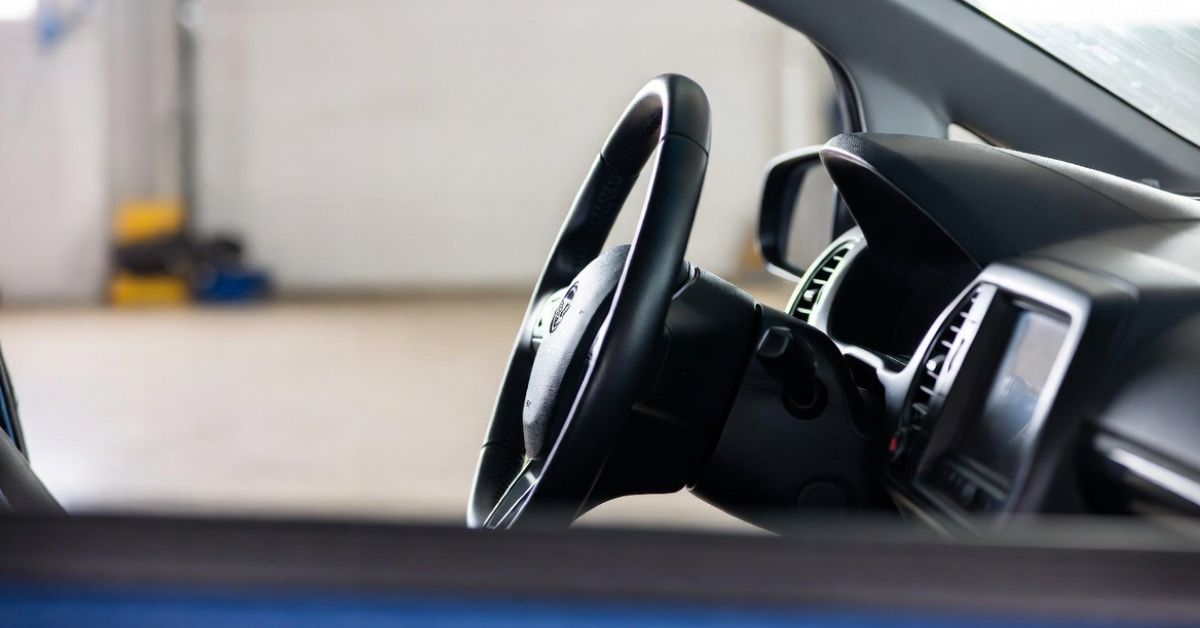
Have you ever picked up your car after a wheel alignment only to realize that your steering wheel remained crooked after alignment? It is annoying, particularly when you thought that your steering was going to be straight. This issue is surprisingly widespread, especially with lifted trucks, SUVs, and 4×4 automobiles, where alignment not only consists of the straight tires but also of the fact that steering and suspension should work in harmony.
The steering wheel can be crooked, leading to uneven tire wear, steering pull, and even long-term suspension problems should it not be addressed. The alignment machine may sometimes indicate green, but the slightest of changes, like centering of the steering wheel or deteriorated suspension parts, can turn out to be the difference. You will know why your wheel is not centered, and this allows you to avoid recurring alignment problems.
We are going to explain why your steering wheel still crooked after alignment, the most common ones, and how your steering wheel is expected to be repaired in professional shops. It may be as simple as an ill-fitting fit, the consequences of a lift kit, or a damaged part, but you will know what to check and how to have your steering wheel squarely centered in the middle again.
What Does It Mean When Your Steering Wheel Is Still Crooked After Alignment?
In the event that you realize that even after aligning your steering wheel, it is still crooked, then chances are that there is a mechanical hitch somewhere in your steering or suspension system in the vehicle. The majority of people even assume that a wheel alignment is just a way of straightening the tires, but in a real sense, what they are doing is to make sure that there is a good rapport between the steering wheel, the tires, and the angles of the suspension.
Any one section of this mechanism out of action causes the wheel to lean after being brought into position. Alignment adjusts three angles: toe, camber, and caster. The toe determines the direction of your tires, whether they point in or out; the camber is the incline of the wheels, and the caster is the stability of the steering. When the steering wheel has not been centered properly at the time of alignment, and the angles have been adjusted properly, then the wheel may be left tilted. Similarly, the tires can be adjusted, and the wheels will not be able to sit flat because of the worn or damaged suspension parts, e.g., tie rods, ball joints, or control arms.
This is more common in raised trucks and 4X4s. Lift kits adjust the geometry of your suspension, and that could change the camber and caster angles. Your steering wheel will seem to be out of place unless the alignment is adjusted to suit such changes. Moreover, current models that have steering angle sensors require resetting after an alignment; otherwise, the wheel may still be steering crooked. Essentially, a twisted steering wheel following alignment is an indicator that one of them was overlooked during the alignment, one of the parts is worn, or the geometry of the vehicle has altered, particularly in lifted or modified cars.
Read About: Driving with Bad Wheel Alignment: How to Fix It
Most Common Reasons Your Steering Wheel Is Still Crooked After Alignment
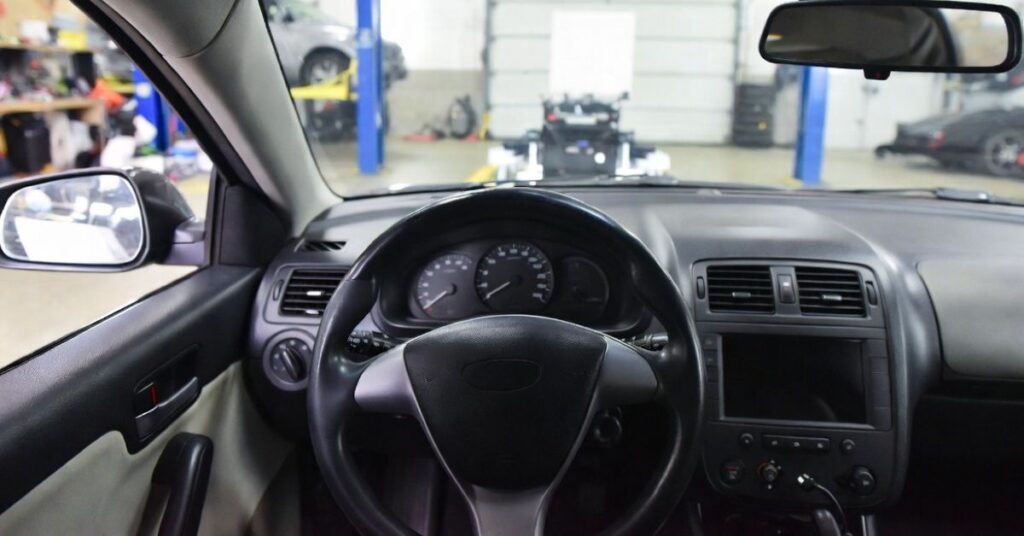
Why is my steering wheel crooked after alignment? However, when the steering wheel still turns out after an alignment, without having been straightened, that does not necessarily mean that the alignment shop did such a poor job. Although the alignment is done, they still have numerous occasions when there are underlying issues that affect the steering wheel position. Having known these common causes, you will probably know what is wrong and drive safely and comfortably in your car.
Steering Wheel Was Not Centered During Alignment
In certain instances, technicians make the adjustments to the tires and the angles, but they do not adjust the steering wheel back to the center. Any slight inaccuracy of the steering wheel may render it crooked as soon as the alignment process is done.
Toe Adjusted, But Steering Wheel Not Reset
The angle of the toe that can either point the tires inwards or outwards might be adjusted appropriately, but unless the steering wheel is returned to center afterward, you might have a wheel that is not centered. It is a rather frequent misstep that is made during alignment processes.
Worn or Damaged Suspension Parts
Your steering wheel will not be left in the center with frayed tie rods, ball joints, or control arms. These parts could be even when perfectly aligned under the load, and your steering will be unstable or asymmetrical.
Lift Kit Installation Changes Geometry
The lift kit usually causes an alteration in the caster and camber in lifted trucks and SUVs. Unless these changes are considered in the course of alignment, even after having it professionally aligned, your steering wheel would remain in an off-center position.
Steering Angle Sensor Not Recalibrated
In modern cars, the steering angle sensors are electronic and require recalibration when the car is aligned or when any aspect of the suspension is changed. Unless this step is done correctly, the wheel will seem crooked, and stability control systems can be compromised.
Bent or Damaged Components
Steering or suspension parts can be bent by any influence of potholes, curbs, and off-road driving. A moderately bowed tie rod or control arm may cause the wheel center to come off so that the steering wheel looks bent after the wheel is straightened.
Explore More: Wheel Alignment vs Steering Alignment
How to Fix a Crooked Steering Wheel
When you still find your steering wheel crooked at the time of the alignment, then do not panic. The problem is, most of the time, fixable without the need to change huge components of your car. Whether you are in a car, it is always important to know how to get your steering wheel back to center, and this is only achieved by ensuring that you find the root cause and take the right measures. Professionals do it in the following way:
- Positioned in the center before a wheel alignment: The easiest workaround is to ensure the Steering Wheel is fully centered before a wheel alignment is performed. The properly adjusted suspension will cause the wheel to get crooked whenever the wheel is not straight when adjusting the suspension.
- Properly Adjust Toe and Caster Angles: The proper adjustment of the toe, camber, and caster angles is required so as to ensure that the wheels move straight and the steering wheel does not turn. In most cases, the crooked wheel problem can be resolved altogether by some slight adjustment of these angles.
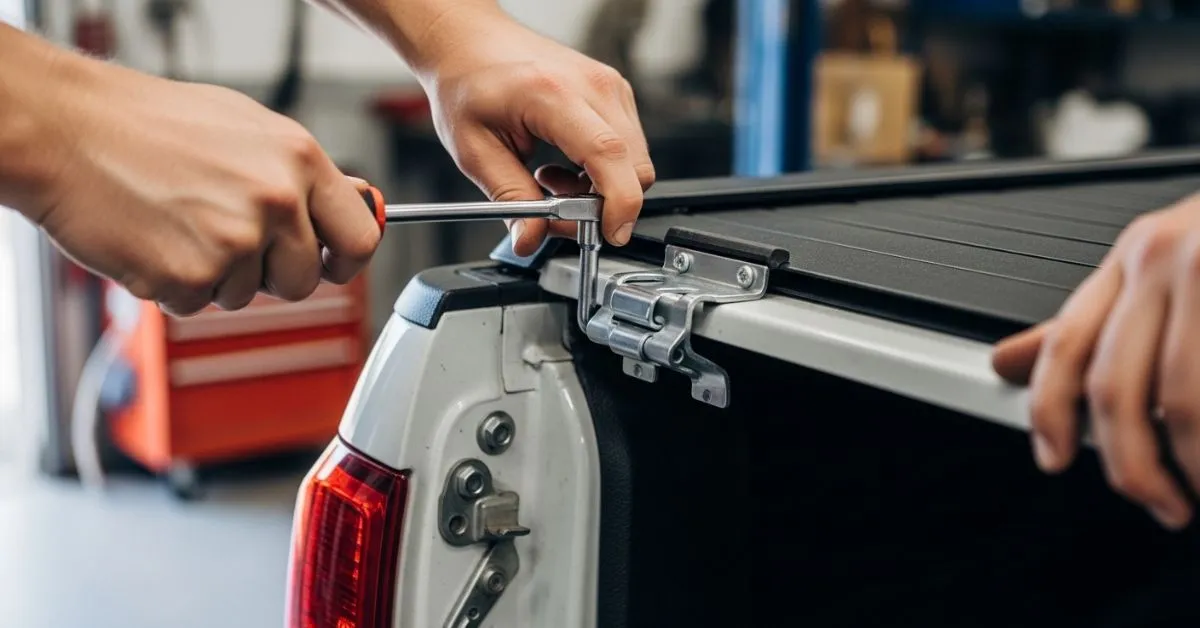
- Check and Refit Worn Suspension Parts: The steering wheel would not always stay straight because of worn tie rods, ball joints, or control arms. There should be a comprehensive check and substitution of any parts that are damaged or worn out. When these are fixed, one can perform the alignment properly.
- Adjustment of the Steering Angle Sensor: More modern cars have an electronic steering sensor, allowing control of stability and alignment indicators. The steering wheel can still be observed to be crooked in case the steering angle sensor is not recalibrated after an alignment or alteration of the suspension. Professional stores have the means to set this correctly.
- Recheck Lift Kit/ Tire Changes: Lifted trucks and SUVs require special alignment adjustments. Once a lift kit or larger tires are installed, it is important to test and road test and have a 4-wheel alignment to make sure the steering wheel is centered.
- Professional Road Test: The last step is a road test, which ensures that the wheel is in the correct spot. There are cases when some minor adjustments may be required after the initial drive, and professional technicians will be able to perform some final work to remove steering pull or misalignment.
The ability to fix your steering wheel that has been made straight following the steps will guide you on how to stay safe, correct your steering wheel, and have a smooth driving time, evenly worn tires, and an improved performance of your 4×4 or lifted truck.
Is It Safe to Drive If the Steering Wheel Is Crooked After Alignment?

When you are sure that your steering wheel remains crooked after aligning, then you may be left wondering whether to drive. The brief response is: it depends, though in the vast majority of cases, it is not ideal to underestimate. The steering wheel can be crooked, and this may have effects on the vehicle control, as well as result in uneven wear of the tires and may also result in permanent suspension damage in the long run.
- Wear in tires: The tires might not follow a straight path, thus wearing in a non-uniform manner. Lop-sided tire wear not only ends up reducing the life of your tires, but it may also interfere with the traction and braking performance. As per the recent reports in the industry, tires may die out if their wheels are not aligned, which may cost a lot in the long run.
- Steering pull: There is a tendency to have a crooked wheel when driving, an indication of your vehicle pulling to one side. This may complicate control, particularly at faster speeds or when on wet highways. In the case of vehicles that have electronic stability control, the steering wheel may be misaligned, which will disrupt the system, and thus it will not be effective in emergency cases.
- Damage to suspension and steering components: A continuous drive with a crooked wheel may cause additional stress to the tie rods, ball joints, and control arms, which will ultimately result in more costly repairs.
Simply put, although you can still drive your car, with a crooked steering wheel, the issue is not to be turned a blind eye to. By having a professional check and adjustment of your suspension parts, you can be sure that your car will be riding fine, your tires will wear evenly, and that your steering wheel is in the right place.
Also Explore: How Long Does a 4 Wheel Alignment Take? Shocking Truth!
How a Professional Alignment Shop Fixes a Crooked Steering Wheel the Right Way
When your steering wheel remains crooked, even after you get your vehicle straightened, you may take your vehicle to a professional alignment shop such as Gresham4WheelDrive, and they can fix the issue in a short time. Professionals, unlike the standard alignments, take a whole system approach, where all the parts of the steering and suspension system are correctly adjusted. This begins by centering the steering wheel, and then alignment is done. A single misalignment during this phase may make the wheel crooked, hence specialists always ensure that they do this step again.
A comprehensive 4-wheel alignment is then performed with fine-tuning of the toe, camber, and caster angles. The machines, which are now more sophisticated, can help technicians measure these angles and make corrections, not only to the tires but also to any other changes made, like the lift kits or the bigger tires, which can change the steering geometry. In conjunction with this, aged suspension parts such as the tie rods, ball joints, or control arms are also checked thoroughly and replaced if needed. By attending to these components, there is a guarantee that the alignment is in the right place and the steering wheel is at the center.
There are also steering angle sensors, which are fitted in modern vehicles, and they regulate electronic stability and alignment readings. The sensors are recalibrated in professional shops after the realignment and ensure that the steering wheel is centred and the electronics of the vehicle are operational. Lastly, a road test is done to ensure the wheel does not go off course when it is under actual driving conditions.
Minor modifications are provided in case of necessity, particularly in relation to the lifted trucks and the 4×4 car; the changes in suspension can change the positioning of the wheels. This comprehensive methodology would guarantee an alignment from a professional service shop, such as Gresham 4 Wheel Drive, that your steering wheel remains crooked even after fixing the problem of steering wheel straightening in a proper way, which would ensure you have a smoother ride, your tires wear evenly, and that your steering wheel is centred.
Final Conclusion: Steering Wheel Still Crooked After Alignment
Steering wheel still crooked after alignment is not simply a cosmetic case, since there might be issues when driving, such as uneven wearing of tires and long-term suspension. It is because of steering wheels that are not aligned, deteriorated suspension parts, incorrect toe, camber, or caster configurations, and additions like lift kits. The issue may cause a pull in the steering and sudden tire wear, as well as costly repairs; it would be better to establish the reason for the problem and act accordingly before it gets out of control.
The best alternative exit is visiting a professional alignment shop like the Gresham 4 Wheel Drive. Experts also ensure that the steering wheel is centered; by doing so, the angles of the alignment are also corrected, and the parts that are worn are replaced, and steering angle sensors are also recalibrated. Specialized alignment is necessary in the case of the lifted trucks and 4×4 vehicles due to the alteration in the suspension geometry. With proper professional modification and road test, great driving, safe and long life tires, and a perfectly centred steering wheel are ensured every time.