Key Takeaways
- Leveling kits help balance your truck’s stance by raising the front to match the rear, giving your vehicle a more aggressive and professional look.
- There are different types of leveling kits, including spacer, coil spring, torsion key, strut, and rear leaf spring kits, each designed for specific lifting needs and vehicle types.
- Professional installation is crucial for safety and performance, and experts like Gresham 4 Wheel Drive ensure the kit is fitted correctly while maintaining proper suspension geometry.
- Wheel alignment after installation is essential to prevent uneven wear, maintain smooth handling, and ensure your truck drives safely on and off the road.
- Choosing the right leveling kit improves both performance and appearance, allowing larger tires, better off-road handling, and a balanced stance that enhances your truck’s overall functionality.
If you’re trying to figure out which type of leveling kit is right for your truck, the answer depends on your suspension type, how much lift you need, and what you use the truck for.
The short answer on types: There are four main types of leveling kits for the front of your truck: spacer kits, strut extension kits, replacement strut or coil spring kits, and torsion key kits. Spacer and strut extension kits are the simplest and most affordable, and they keep the factory ride for light lifts of about 1 to 2.5 inches. Replacement strut and coil spring kits cost more but swap in new components and can improve ride quality. Torsion key kits are for trucks with torsion bar front suspension, such as GM heavy-duty models. Rear leaf spring kits are a separate category that addresses rear sag, not front leveling.
The most common leveling kit mistake isn’t choosing the wrong brand. It’s choosing the wrong type for your truck’s suspension setup. This guide walks through every type, how each one works, and how to pick the right one for your specific truck and driving needs.
At Gresham 4 Wheel Drive & Alignment, we install all types of leveling kits for truck owners across Gresham and the Portland, Oregon area.
What Is a Leveling Kit?
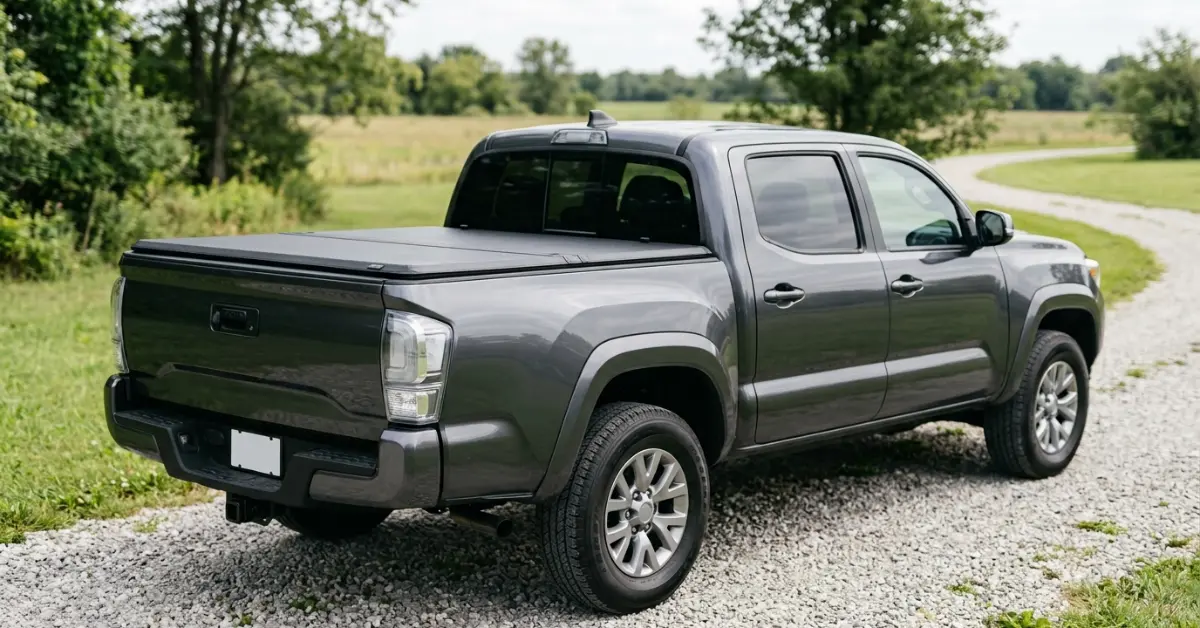
A leveling kit is a truck modification that raises the front of your vehicle so it sits level with the rear. Most trucks leave the factory with the front slightly lower than the rear, a difference known as rake. Rake helps the truck sit level when it’s loaded or towing, but it can make an empty truck look nose-down and limit tire size options. A leveling kit fixes that, giving your truck a more balanced, aggressive look and a little extra front clearance, which helps avoid scrapes on bumps and trails.
There are several types of leveling kits, built for different suspension setups and goals. Some use simple spacers for small lifts, while others replace struts or springs, or adjust the torsion bars, to get different ride results. Leveling kits aren’t only about looks. They also make room for slightly larger tires. Installation matters, though. A wheel alignment after installation prevents uneven tire wear and keeps the truck driving smoothly.
Also Explore: Are Leveling Kits Bad for Trucks or Safe When Installed Correctly?
How Does a Leveling Kit Work?
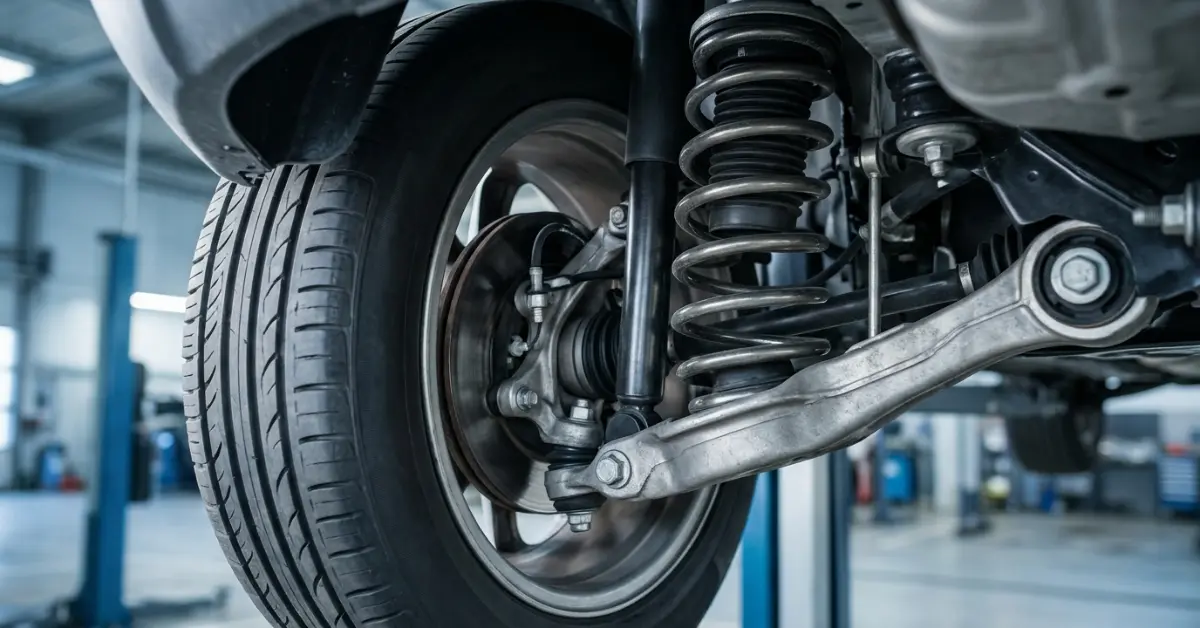
A leveling kit works by modifying one or more front suspension components to add ride height at the front of the truck, bringing it level with the rear. The specific mechanism depends on which type of leveling kit is used and what front suspension your truck has:
- On trucks with strut-based or coil-over front suspension (most half-ton trucks, such as the F-150, Silverado 1500, and Ram 1500): A spacer or strut extension sits between the factory strut and the strut tower mount. The strut compresses the same amount as stock, but the spacer shifts the entire assembly upward, raising the front ride height by the thickness of the spacer, typically 1 to 2.5 inches.
- On trucks with coil spring front suspension: New coil springs with a slightly taller free height replace the factory springs. The taller spring raises the front end while maintaining full suspension travel, often improving ride quality over the factory setup.
- On trucks with torsion bar suspension (such as GM Silverado and Sierra HD models and some older trucks): The torsion bars connect the frame to the lower control arm and support the vehicle’s weight by twisting. A torsion key leveling kit replaces the factory adjustment key with one that allows greater preload on the torsion bar, raising the front end. Over-preloading creates a harsher ride, which is why correct adjustment, not maximum adjustment, is critical.
- On trucks with a solid front axle (such as the Ford Super Duty, Ram 2500/3500, and Jeeps): Leveling uses coil spacers or replacement coil springs up front, and add-a-leaf packs on leaf-sprung setups. This is a different process from leveling a half-ton.
In all cases, raising the front end changes the suspension geometry, specifically the camber, caster, and toe angles. This is why wheel alignment is non-negotiable after any leveling kit installation. Even a 1-inch lift shifts these angles enough to cause uneven tire wear and steering pull if not corrected.
Types of Leveling Kits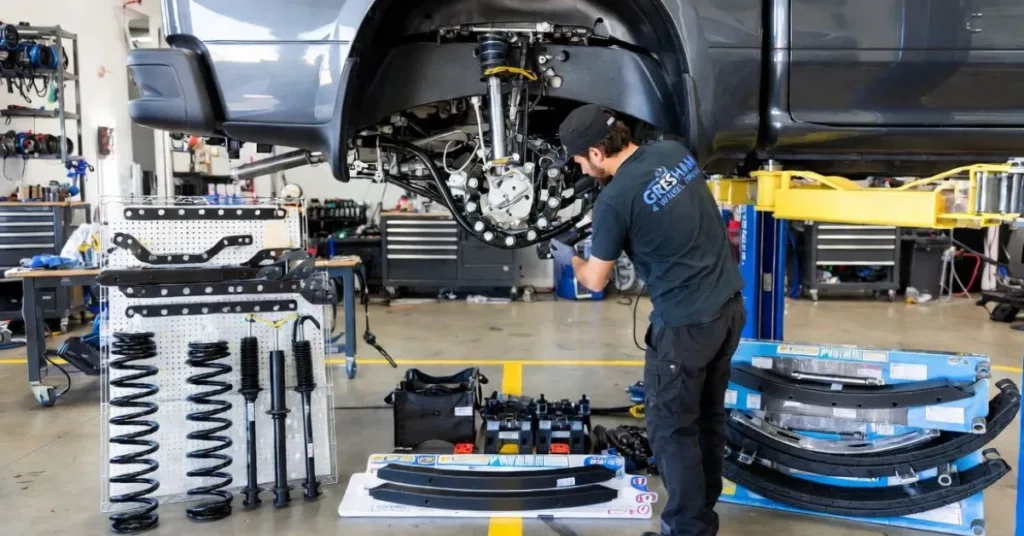
Not every leveling kit works the same way. The right one depends on your truck’s front suspension, your budget, and how you drive. Here are the main types, who each one is for, and what each costs installed.
1. Rear Leaf Spring Leveling Kits
Rear leaf spring leveling kits are meant to raise or lower the height of the rear suspension of the truck. They are used to lift trucks that sink in the back because of heavy loads or towing. These kits make the truck stand up better and avoid the appearance of the truck being too low in the front. They also make them more stable when transporting cargo or going off-road, and are therefore an effective alternative for work or adventure trucks.
Such kits typically presuppose the installation of lift blockers or the installation of changes to the existing leaf springs to reach the required height. They would best suit trucks that have already lowered the rear end or those trucks that carry heavy loads on a regular basis. When the rear suspension is installed properly, it will be efficient with no effect on handling. A wheel alignment is also advised after the installation of the wheel to ensure a safe and smooth ride.
2. Spacer Leveling Kits
Spacer leveling kits have become the most favoured type of leveling kits that can be used by the owners of a truck, in case they want to have a small front lift. The kits involve the use of metal or polyurethane spacers that are mounted on the struts or springs of the factory to lift the front part of the automobile by 1 to 3 inches. They are cheap and simple to set up and constitute a fast method of remediating the factory rake without significant alterations.
These kits are ideal in this case for drivers who would wish to even out their trucks to give them a stylish look or to accommodate slightly bigger tires. Nevertheless, spacer kits do not enhance the ride quality like the more advanced kits, and they are best enjoyed in light-duty trucks. Although they are easy, they should be installed by a professional to be safe, and after installation, it is recommended to align the wheels.
3. Coil Spring Leveling Kits
Coil spring leveling kits are coil springs that substitute or alter the coil springs in the front of the truck to provide a larger lift. They are more comfortable to ride on than spacers and can be used in moderate to heavy-duty lifting. Coil spring kits are also great when it comes to trucks that require greater height when off-roading or when requiring larger tires, but still have good handling and stability.
Most of these kits can enhance the performance of the suspension as they can modify the geometry of the vehicle in addition to improving the weight distribution. They are pricier than spacer kits but offer superior long-term outcomes. The leveling kits for coil springs should be installed by a professional to ensure safety and proper alignment. Once installed, the trucks have a smooth ride with greater tire clearance and off-road abilities.
4. Torsion Key Leveling Kits
The torsion key leveling kits raise the vehicle by changing the torsion bars in the front suspension. They are typical of older trucks, and they work well with smaller to mid-sized front-end lifts. These kits are a cost-effective means of leveling the vehicle by twisting the torsion bars and do not require changing any significant parts.
The kits have been favoured by truck owners who desire to have a lift that is factory compatible and would not affect the quality of the ride. Torsion key leveling kits are strong and can carry heavier loads as compared to spacer kits. Nevertheless, excessive tightening may influence the comfort of the ride, and therefore, it is preferable to install it professionally. The torsion bars must be adjusted,d and then a wheel alignment is necessary to prevent uneven wear of the tires.
5. Strut Leveling Kits
Strut-leveling kits are available on trucks and SUVs that have strut-based front suspensions. They employ longer struts or extensions in order to lift the front end to give it a clean and level appearance. Strut kits are able to support heavier loads than spacers and provide superior ride quality; thus, they are suitable for off-road enthusiasts.
They are more advanced kits and typically are more expensive than other kinds of leveling kits. They enhance handling, suspension travel, and tire clearance, which is excellent in trucks that carry large loads or in off-road driving. Installation is a very important factor, and after installation, wheel alignment is necessary, as it provides smooth operation and the tires wear evenly.
Read More: Difference Between Lift and Levelling Kit for Vehicle
How to Choose the Right Leveling Kit for Your Truck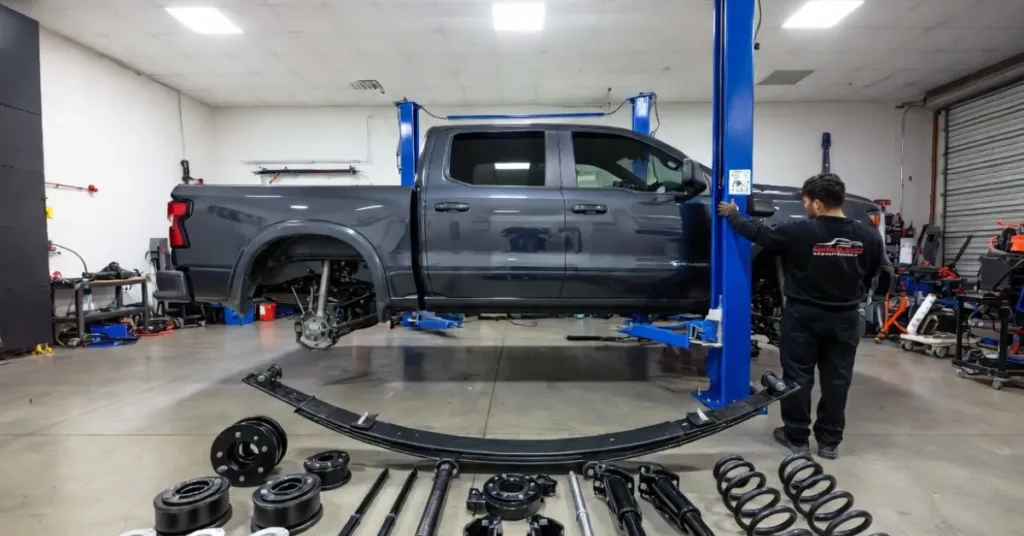
With so many options, picking the right leveling kit can feel confusing. The right kit depends on the type of vehicle you have, your budget, your driving style, and how you use your truck. Here are the main things to consider:
- Determine Your Desired Lift Height: Decide how many inches you want to raise the front. Spacer and strut extension kits suit light lifts of about 1 to 2.5 inches. If you want more than that, a lift kit may be the better route. Consider off-road needs and tire upgrades too.
- Know Your Front Suspension: Leveling kits don’t fit all trucks. Find out whether your truck has struts or coil-overs, torsion bars, or a solid front axle, because that determines which kit to buy.
- Think About Ride Comfort: Spacer kits keep the factory ride, while replacement strut or coil spring kits can improve it. Pick a kit that matches how you drive.
- Check Your Shocks: Spacers keep your factory shocks, so tired shocks will be more noticeable after leveling. If your shocks are worn, consider a replacement strut kit.
- Assess Your Driving Needs: If you off-road, tow, or carry heavy loads, a more durable replacement kit may suit you better. Light lifts work fine for daily driving or a cosmetic upgrade.
- Budget Considerations: The cost of leveling kits ranges from affordable spacers to pricier replacement strut or coil spring kits. Budget for installation, extra parts, and wheel alignment, not just the kit.
- Professional Installation: Kits should be installed correctly for safety and performance. Torsion key, coil spring, and replacement strut kits especially benefit from professional installation.
- Plan for Wheel Alignment: An alignment is necessary after every leveling kit. It prevents uneven tire wear, protects handling, and keeps the ride smooth.
- Warranty and Brand Reputation: Choose well-known brands that offer warranties. A good kit lasts and gives long-term satisfaction.
- Future Modifications: Think about whether you’ll add bigger tires, a lift kit, or other suspension upgrades later, since that can affect which leveling kit is the best fit.
- Safety First: Make sure the kit doesn’t negatively affect braking, handling, or suspension parts.
Common Mistakes to Avoid When Installing Leveling Kits
Installing a leveling kit can seem easy, but many truck owners make mistakes that affect ride quality, safety, and how long the modification lasts. Here are the ones to avoid:
- Skipping Professional Installation: Many drivers try to install kits themselves, which can lead to poor alignment or damaged parts. Professional installation makes sure the kit goes on correctly and safely.
- Ignoring Wheel Alignment: Wheel alignment is important after installing a leveling kit. Skipping it can cause uneven tire wear, poor handling, and lower fuel efficiency.
- Selecting the Wrong Kit for Your Truck: Leveling kits don’t fit all trucks. An incompatible kit can affect suspension geometry, ride quality, and safety. Always check compatibility with your vehicle first.
- Over-Lifting or Uneven Lifts: Raising the front too high or unevenly can stress suspension parts and affect braking, steering, and tire wear. Stick to the recommended lift height.
- Not Considering Ride Comfort: Some kits, such as basic spacers, can make the ride feel stiffer or rougher. Think about how the kit will affect everyday comfort before you choose.
- Ignoring Load Capacity: Towing or hauling heavy loads without considering the kit can cause sagging, unstable handling, and extra strain on suspension parts. Choose a kit that fits your load requirements.
- Skipping Quality Checks: Cheap or poor-quality kits can wear out or fail in use, which affects safety. Buy well-known brands with warranties and positive reviews.
- Not Planning for Tire Upgrades: If you plan to install bigger tires, make sure the kit provides enough clearance. Otherwise, tires can rub or damage the fenders.
- Ignoring Suspension Maintenance: A leveling kit can call for follow-up suspension adjustments. Skipping maintenance can hurt ride quality and wear out components early.
Which Leveling Kit Type Is Right for You?
| Your Situation | Best Kit Type | Why |
|---|---|---|
| Half-ton truck (F-150, Silverado 1500, Ram 1500), want 1–2″ lift on a budget | Spacer kit | Simplest, most affordable, good for light daily use |
| Half-ton truck, want 1.5–2.5″ lift with better ride quality | Coil spring kit | Better suspension travel, improved ride vs. spacers |
| Half-ton truck with struts, want a clean OEM-style look | Strut extension kit | Cleaner install, maintains factory ride feel |
| Older HD truck (F-250, Ram 2500) with torsion bar suspension | Torsion key kit | Designed specifically for torsion bar suspension |
| A truck that sags in the rear under load or towing | Rear leaf spring kit | Corrects rear sag, not front leveling |
| Off-road truck needing maximum front clearance | Coil spring or strut kit | More suspension travel, better geometry for trails |
| Daily driver on a tight budget | Spacer kit | Lowest cost, easy to install, good enough for the street |
What size leveling kit do you need? For most half-ton truck owners, 1.5 to 2 inches is the sweet spot; it eliminates the factory rake completely, allows 1 to 2 tire sizes larger, and keeps suspension geometry within safe operating range without requiring upgraded upper control arms. Going to 3 inches requires more careful component selection and is best handled by a professional.
How Much Does Leveling Kit Installation Cost by Type?
Cost depends on the type of kit, your truck, and local labor rates. Spacer and strut extension kits are generally the most affordable, and torsion key installs usually sit in a similar range. Replacement strut or coil spring kits cost more because you’re buying new components, and they take a bit more time to install.
Whatever type you choose, budget for the wheel alignment, since it’s required after every leveling kit. If you’re adding larger tires at the same time, that adds cost too. For more detail, see our guide to the cost of a leveling kit.
Perfect Leveling Kit with Professionals at Gresham 4 Wheel Drive & Alignment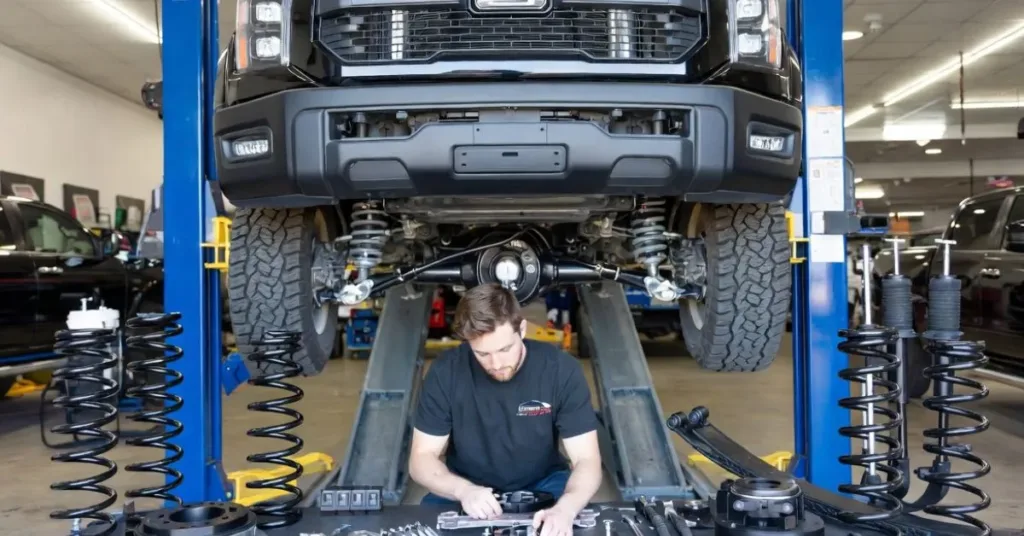
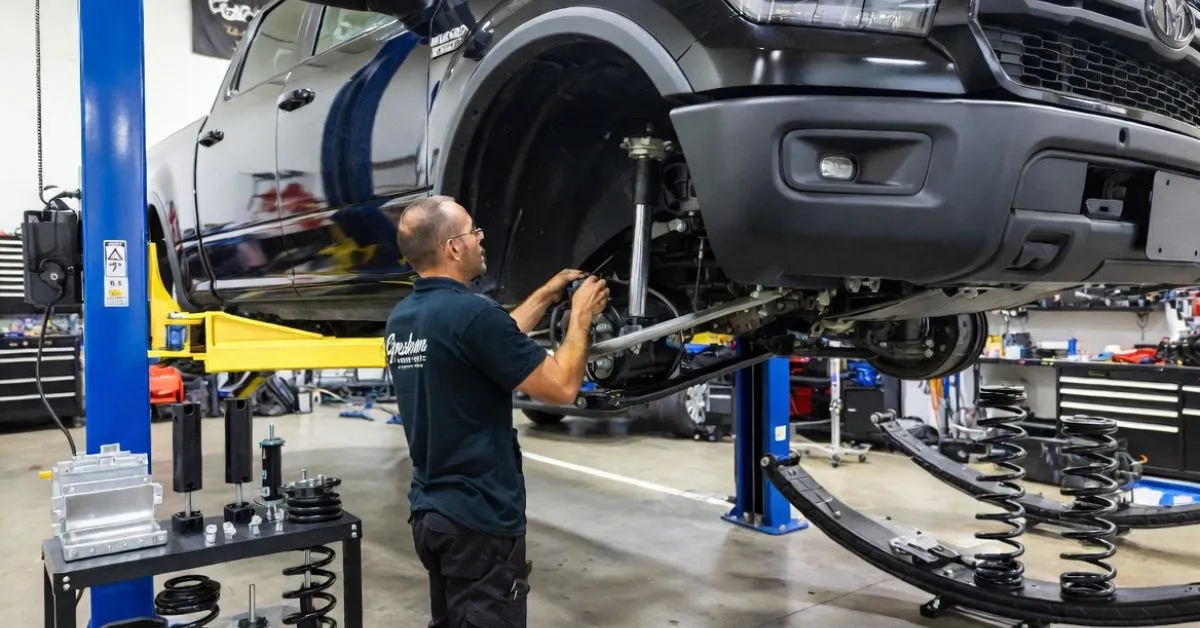
The leveling kit may be easy to install, but to get the ideal lift, it is necessary to be skilled and experienced in installing the lift, as well as using the correct tools. We at Gresham 4 Wheel Drive & Alignment specialise in assisting the owners of trucks and 4x4s to attain the right stance by having professionally installed leveling kits. It is not that you need to make your truck look better, install bigger tires, or perform more off-road; our crew is behind you to make sure that each part of the kit is installed properly and safely.
Employing the services of professionals such as Gresham 4 Wheel Drive & Alignment, it ensures that your truck has good suspension geometry and ride quality. We evaluate your car with care, advise you on the type of leveling kits that suit you best, mount them, and do so in a meticulous manner. Spacer, torsion key kits, coil spring, and strut leveling kits all the big choices are available to meet the requirements of your truck. Our professional staff also performs wheel alignment after installation so that tires do not wear unevenly on the car, and we also ensure that the car handles well on the road and off-road.
Gresham 4 Wheel Drive & Alignment does not simply come with installation, but with comfort. Our priority is safety, performance, and customer satisfaction, and we ensure that your truck not only looks good but also drives without problems. Through collaboration with professionals, you can prevent such mistakes as over-lifting, improper alignment, or incompatible kit usage. Whether you are a commuter, an off-roader, or just want a balanced and aggressive truck attitude, our department has a fit-up for each purpose.
We provide the expertise, premium quality kits, and professional installation to provide your truck with the ideal leveling kit configuration at Gresham 4 Wheel Drive & Alignment. Surely no one can afford to make such DIY errors. Leave your vehicle with us, and we will improve its performance, appearance, and safety.
Conclusion
Every truck and 4×4 owner should understand the types of Leveling Kits. Spacer kits, strut extension kits, replacement strut and coil spring kits, and torsion key kits each have their own advantages and disadvantages, depending on your vehicle, your driving, and your goals. The right kit makes your truck look better, and it also provides more tire clearance and, in some cases, better ride quality. Once you understand how each type differs, you can make an informed decision based on your budget, needs, and vehicle compatibility. Correct installation and wheel alignment are the final steps that deliver safety, durability, and good handling.
For the best results, leave the installation to professionals like Gresham 4 Wheel Drive & Alignment. Our team helps you choose the right kit, installs it precisely, and aligns the wheels afterward to help you avoid the mistakes covered above. Whether you want a better stance, bigger tires, or more capability off-road, a professional setup keeps your truck looking good and driving well. With the help of expert services, a leveling kit improves performance, avoids damage, and gives your truck the right balance of style and function.
At Gresham 4 Wheel Drive & Alignment, we install all types of leveling kits for trucks across Gresham and the Portland, Oregon area, with a pre-install suspension inspection, correct torque to manufacturer specs, and post-install alignment included on every job.
📞 Call us at 503-400-7646 for a free leveling kit consultation, or stop by, and we’ll tell you exactly which type is right for your truck.
FAQs
Q. Can I install a bigger lift than 2.5 inches with a spacer kit?
Generally not recommended; spacer kits are best suited for light lifts of about 1 to 2.5 inches at most. Going higher without upgrading other suspension components can strain the geometry and affect ride quality. For lifts beyond this range, a lift kit is a safer choice.
Q. Are rear leaf spring kits necessary if I only want a front lift?
No, rear leaf spring kits are specifically for correcting rear sag caused by heavy loads or towing, not for front leveling. If your truck doesn’t sag in the rear, a front-focused kit like spacers or coil springs is the appropriate choice. Mixing up these purposes can lead to unnecessary modifications.
Q. Can I upgrade to bigger tires later after installing a leveling kit?
Yes, but plan ahead, since your leveling kit should provide sufficient clearance for future tire upgrades. Without enough clearance, larger tires can rub against fenders or suspension components. Considering future modifications before installation helps avoid this problem.
Q. Does the brand of leveling kit really make a difference in durability?
Yes, well-known brands with strong reputations and warranties tend to offer more durable, reliable components. Cheaper or unknown brands may wear out faster or fail during operation, creating safety risks. Checking reviews and warranty coverage helps ensure a longer-lasting investment.
Q. Do all leveling kits require the same level of professional installation expertise?
No, installation complexity varies by kit type; spacer kits are generally simpler, while torsion key, coil spring, and replacement strut kits often require more specialized knowledge. More advanced kits benefit significantly from professional installation to ensure proper suspension geometry. This helps avoid common mistakes like misalignment or component damage.
Q. What are the different types of leveling kits?
The main types of leveling kits for the front of a truck are spacer kits, strut extension kits, replacement strut or coil spring kits, and torsion key kits. The right one depends on your front suspension: struts or coil-overs, torsion bars, or a solid front axle. Rear leaf spring kits are a separate category that corrects rear sag rather than leveling the front.
Q. Which type of leveling kit is best?
There’s no single best type. Spacer and strut extension kits are the most affordable and keep the factory ride, which suits most daily drivers. Replacement strut and coil spring kits cost more but give you new components and can improve ride quality. The best choice depends on your truck, budget, and how you drive.
Q. Can you level a Super Duty or Ram 2500?
Yes, but the process is different from leveling a half-ton. These trucks use solid front axles, so leveling typically means coil spacers or replacement coil springs up front, and add-a-leaf packs on leaf-sprung setups. Professional fitment is a good idea because of the heavier loads and different geometry.
Q. How much can a leveling kit raise a truck?
Most leveling kits raise the front about 1 to 2.5 inches, enough to remove the factory rake. Past that height, you’re changing suspension geometry enough that a lift kit with supporting hardware is the better choice.