One of the most thrilling modifications that one can make to his or her truck or 4×4 is to install a lift kit. In the next moment, your car becomes more aggressive, it has increased ground clearance, and it is ready to go off-road. But exciting as it is to have your car lifted, there is more to it than the lift kit being installed. It is essential to know what to do once you install a lift kit in regard to the safety, performance, and even the life of your truck.
Most motorists believe that as soon as a lift kit is installed, they can simply get on the road without any kind of inspections. However, a lifted car does not ride just as easily, and the inability to take the required measures after the installation can lead to tires wearing out, or the suspension can break, or even to an accident. It is the reason why one should understand how to care, maintain, and inspect.
After having installed a lift kit, it might appear that your truck is now able to tackle any sort of situation; howeve,r unless you have properly adjusted it, adjusted the tires, and addressed the safety concerns, you can find yourself getting into trouble on the road and off-road.T his guide will include all the things you should do right after you install a lift kit, starting with inspection of your suspension and finishing with changing tires, safe test-driving, and maintenance log.
At the conclusion of this blog, you will understand what to do after installing a lift kit next steps to take once you have installed a lift kit, in easy steps that can be applied even by novices. You are either planning to go off the road on the rugged trails or simply tour around town, the tips will make sure that the lifted truck will be safe, impressive, and perform well.
Why Lift Kit Installation is Important
Lift kits are not only about the appearance of your truck, making it seem taller or more aggressive, but also have a number of practical applications that result in improved performance and versatility of your vehicle. The lift kit also provides the ability to have a greater ground clearance, such that you can drive over rocks, logs, mud, and rough roads without ruining the undercarriage of your truck. This will be particularly significant to off-road lovers who desire to venture into trails, mountains, or desert trails without any form of danger.
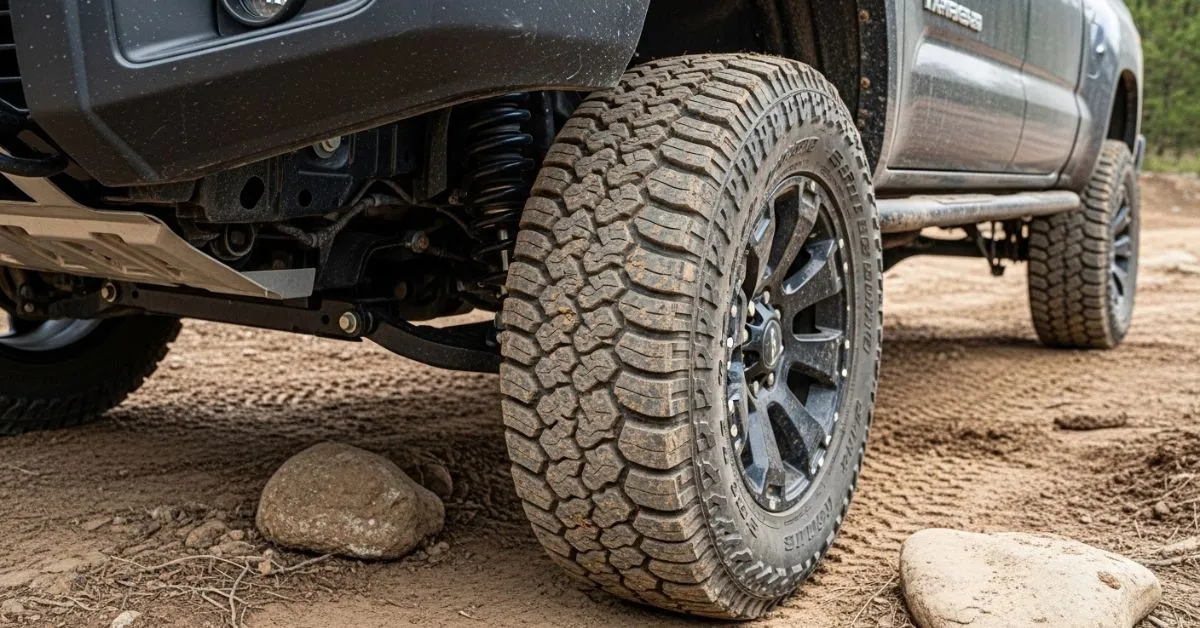
One more important factor in lift kit installation is the possibility of installing bigger tires. Increased tires promote traction, stability, and overall handling, whether on sand, snow, or even on rough tracks. There is also a more dominant look on the road of your vehicle, which may increase visibility and safety. Lift kits are used to improve the performance of the suspension. Installation of a lift kit will take the strain off your shocks and struts during off-road driving, and the bumps will be better absorbed, as well as the ride will be smoother. Also, jacking your car can enhance approach, departure, and breakover angles, which are important in going up steep slopes and down steep slopes without banging your bumper or bottom against the surface.
Safety-wise, a lift kit fitted by a professional will guarantee the proper alignment of all the suspension, steering, and brake parts, as well as reinforcement to a structurally sound position. This will minimize the chances of accidents that take place due to unstable manipulations or asymmetric tire degradation. Concisely, lift kit alteration is not only cosmetic, but it is also significant in the performance and safety, as well as the long-term viability of your truck.
You Must Know about: Is Wheel Alignment Worth It? What Happens If You Skip It
What to Do After Installing a Lift Kit
After installing a lift kit, your job isn’t finished yet. A lifted vehicle needs proper inspections, adjustments, and follow-up care to ensure safety, smooth handling, and long-term performance. The steps below will guide you through everything you should do after a lift kit installation to protect your vehicle and get the best driving experience.
Inspect Your Vehicle Thoroughly After a Lift Kit Installation

After installing your lift kit, the first thing that you should do is check your car. It may cause issues to be skipped, and a lift kit alters the geometry and height of the suspension, which impacts bolts, joints, steering parts, and brake lines.
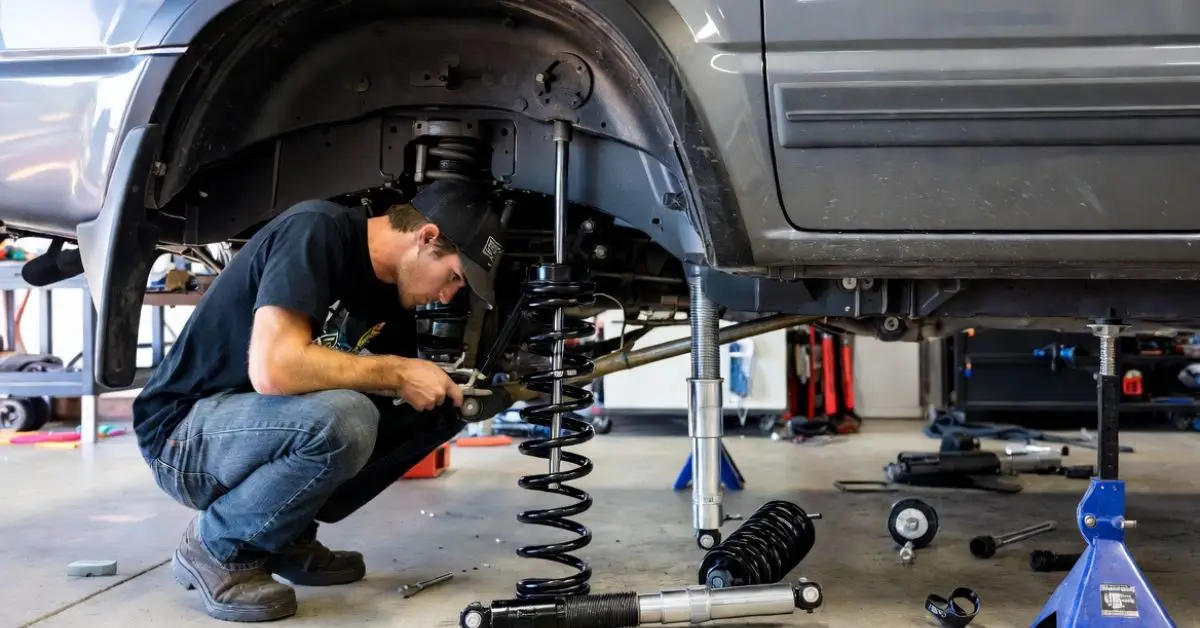
Start with suspension: shocks, struts, control arms, sway bars, and bushings. Ensure all the bolts are tightened to the demanded manufacturer specifications to prevent the rattling and lumpy tire treads or even the breaking down of the suspension.
The second one is to inspect steering parts, including tie rods, drag links, and ball joints. Lift kits can alter the steering geometry and, thus, ensure that nothing is bent or loose to avoid vibration and handling problems.
Brake and fuel line checking is also to be made. They can be hard in lifting, and in this respect, care must be taken not to overwork them; otherwise, there may be leakage or beak failure.
Quick inspection checklist:
- Test any suspension bolts and fasteners.
- Check struts, control arms, and shocks.
- Check sway bars and bushings.
- Check steering: tie rods, drag links, ball joints
- Slack and leaks. Check brake and fuel lines.
- Pay attention to strange sounds or vibrations.
It has been recorded through statistics that almost a quarter of the suspension failures in lifted trucks can be attributed to the absence of post-installation inspections. 30-60 minutes of checking your car will guarantee safe driving, easy handling, and increase the life of the lift kit.
Perform a Careful Test Drive
Once you have a lift kit installed on your truck and you have inspected it, you are going to want to take it on a test drive, but you should take extra precautions. The low pace of driving would enable you to observe any problems that could be overlooked in the process of installation or analysis.
New suspension Watch steering response- trucks lose their responses differently. Feel the rigidity/laxity or right/left pulling while doing this, as this may be an indicator that alignment /steering corrections are needed.
Braking performance, especially with larger tires or alternative brake lines, will make sure that the truck stops without vibrations. Suspension of checks and shocks on rattling, clunking, or other noises, and checking of tire characteristics as to unequal wear or vibration on turning.
Test drive checklist:
- Take your time during the first 5-10miles.
- Monitor steering and handling.
- Under safe conditions, test brakes.
- Hear suspension sounds.
- Check tire action and vibration.
- Note any adjustments needed.
One should also get a good test drive done since this will assure you that your lifted truck is safe, reliable, and that it will be capable of going anywhere along the road or off-road, and will save you the expensive costs of repairs.
Monitor Suspension and Steering Components Regularly
Once the lift kit is installed, initial and current check and test drives have been made, there is a need to check the suspension and steering parts regularly. Lifted trucks result in the overloading of the shock, strut, control arm, and steering link, and therefore, regular checkups are very important to safety and performance.
Loosened or damaged components such as the tie rod, drag link, and sand ball joint, among others, might loosen at a significant rate much quicker than the original parts. Check the shock, sway bar, leak/crack/or other unusual sound, and Bushings. The checks of the off-road lifted trucks can be conducted every 3,0005000 miles, and this will avoid the high repair costs.
Maintenance checklist:
- Struts and check shocks are ruptured.
- Squeaky wash bars and bushings.
- Talk about tie rods, drag link, and ball joints.
- Bolts to correct torque.
- Note peculiar noises on the highway.
- Keep a history of inspection and maintenance.
Regular checkups also help in planning upgrades like heavy-duty shocks, reinforced control arms, or upgraded steering stabilizers. The frequent checkups will ensure easy handling, safe driving, and the stability of your raised truck.
Adjust Headlights and Brake Systems
Once you have a lift kit in place, you will have to re-align your Headlights and brake system. The trucks are raised up, and this might raise the headlights excessively high and thereby less visible, thereby blinding the other motorists. When there is a night, tilt the headlights on a flat surface to make sure that the lights are properly aligned.
Another issue that should be addressed is the brake systems. Higher weight and larger tires apply pressure to brake lines, pads, and rotors, and this affects the stopping distance. Make sure that brake lines are loose, pads and rotors are in good shape. This is recommended in case of a high lift of the truck, the brake lines or rotors should be replaced or upgraded to be of more power.
Headlight & brake checklist:
- Regulate headlights in the dark on a flat surface.
- Check brake lines, no pinching, slack.
- Rotors and check brake pads.
- Test brakes safely
- Consider the heavy-duty upgrades of the bigger tires.
Tilting of headlights as well as keeping of brakes keeps your raised-up truck safe, dependable, and roadworthy, regardless of the highways, urban streets, and off-road environments.
Also Explore About: Difference Between Lift and Leveling Kit for Vehicle
Keep Track of Maintenance and Vehicle Records
Keeping documentation of both the maintenance and the vehicle is among the greatest steps in what to do after installing a lift kit. Lifted trucks are also known to cause certain additional loads on the suspension, steering, and brakes; thus, there is always a need to have a certain amount of maintenance to ensure that there is no impact on the safety and performance.
The history of tire replacement, brakes, and suspension checkups can be used to trace the wear, identify prevailing problems, and create solutions. It is also another plus in the future when you might sell your truck.
The significant maintenance activities to observe:
- Tire rotations and balancing: To avoid the instance of uneven wearing, tires need to be rotated after 5,000-7,000 miles.
- Suspension checks: Arm control, sway bar, check shocks and struts, and bushings.
- Check pads, rotors, and brake lines: Have brake checks frequently.
- Wheel alignment records: Suspension adjustment, track alignment. Oil and fluid records: Deposit the oil, differentials, and other fluid records.
Record keeping will assist in future upgrades planning, eliminate unexpected failures, and keep your lifted up truck safe, reliable, and adventure worthy.
Schedule a Professional Wheel Alignment
Wheel alignment is another step that is very important in what to do after installing a lift kit. Camber, caster, and toe are angles of your wheels that change when you raise your truck or 4×4. Even with a lift kit installed flawlessly, it will upset your alignment of the wheels, which means that you will be subjected to tires that wear unevenly, poor handling, and poor fuel economy. This is why there is a need to have a professional alignment immediately after it has been installed.
Lifted vehicles with misaligned wheels may pose a number of issues. As an example, you can have a pull to one side of your truck during driving, looseness of the steering, and tires wearing out more than usual. Not only is the life of your tires being reduced by uneven tire wear, but also the entire safety and performance of your truck. Correct alignment also guarantees that your tires are in contact with the road in a uniform manner, thus enhancing traction, control, and fuel consumption.
The following are the expectations of a professional wheel alignment post lift kit:
- Four-Wheel Alignment: This is the work of a technician who will make sure that the wheels are in their correct positions, like camber, caster, and toe.
- Suspension Inspections: The mechanic will also perform a check of the steering and suspension parts when carrying out the alignment procedure to identify wear and damage.
- Corrected Handling: After alignment, you will have a straight driving truck that does not pull and that correctly reacts to steering actions.
- Better Tire Life: Correct alignment will lessen the uneven wear and increase the tire life of your tires.
Most of the lifted trucks also include off-road or heavy-duty alignment modifications, based on the size of tires and lift height. Aggressive lifts or bigger tires may alter the suspension geometry greatly, and this is even more reason why you should have your alignment adjusted by a professional.
Experts suggest that you plan to align your vehicle as soon as you install your lift kits and also after every 6,000-10,000 miles or when you are done with heavy off-road driving. In doing so, you are certain that your lifted truck is going to be safe to drive, it will handle correctly, and your tires and suspension parts are going to be safe.
Explore About: Best Lift Kit Brands for Off-Roading Trucks & Jeeps
How to Maintain Your Vehicle After Lifting
Once you put a lift kit on your truck, you have just begun a lifting adventure. One should understand how to maintain their vehicle after lifting in order to be safe, reliable, and in the best conditions of operation. Lifted trucks place more pressure on tires, suspension, and steering components, and hence, regular service is highly essential. Some of the tips that may be adopted in order to take care of your lifted car are as follows:
- Frequent Suspension Inspections: Check wear, struts, control arms, sway bars, etc.: The checks are ascertained to tighten bolts and other fasteners in line with manufacturer recommendations. Look at the check bushings and joints, and determine whether they are cracking or loosening.
- Wheel Alignment and Tires: Tires and wheels are professionally aligned after being picked and checked on a regular basis. To obtain tires of the same type, rotate your tires after every 5,000-7,000 miles. Measuring tire pressure at intervals, particularly when you possess colossal off-road tires.
- Brake System Check: Inspect the wear of the brake lines, pads, and rotors. Ensure brake lines are not pinched, and after the lift, they are long. Install high-endurance brake parts in cases of the use of larger tires or off-road.
- Checking of steering parts: Tie rod, drag link, ball joints: looseness or wear. Be careful on the road in the car when there is an odd driving sound, e.g, Bumps. Repair or replace damaged or old parts as soon as possible to enhance handling safety.
- Record a Maintenance Log: Record all the inspections, alignments, brakes, and tires. Record the upgrade or part replacement dates. Record keeping aids in the detection of persistent problems and also enhances resale value.
- Test Drives Following Maintenance: When any inspection or alteration has occurred, take a test drive. Note creating, braking, and reaction to suspension. Take necessary action against abnormal performance at any given time to prevent permanent harm.
With these steps regularly taken, you will be sure that your raised vehicle will be safe, reliable, and efficient both on the road and off-road. After lifting your truck, you also need to take good care of it, which will increase the life of your lift kit and save you a lot of money in repairs in the future.
Also Explore: Does Adding a Lift Kit Void Warranty? Explained Guide
Get the Best Performance with Professional Lift Kit Installation Services
When you are looking to make your lifted truck do its best, you possibly face one of the most significant choices when hiring professional services for the installation of lift kits, such as Gresham4wheeldrive. The first step to knowing what to do after installing a lift kit is having a lift kit installed. Professional installers install a suspension, steering, shocks, brake lines, and so on, all of which are properly installed to provide maximum performance, safety, and longevity to your truck.
It is important to have a professional lift kit installed because of a number of reasons:
- Proper Installation: All bolts, fasteners, and suspension parts are installed by certified techs in accordance with the specifications of the manufacturer. Poor installation is one of the primary reasons for lift kit failures.
- Safety Checks: A professional service consists of a complete check of the brake lines, steering parts, tie rods, and bushings. They do not make anything stretched, pinched, or misaligned, which minimizes the chances of accidents.
- Correct Wheel Alignment: Most professional service offerings suggest that wheel alignment should be done immediately after installation, which is very important in the tire life, handling, and overall performance of the car.
- Upgrade Recommendations: Experts may recommend compatible upgrades like heavy-duty shocks, sway bars, or reinforced steering stabilizers, depending on your lift height and expected use.
- Warranty Protection: Other lift kit manufacturers have made it mandatory to hire professional work to warrant the lift kit, so that your money is not wasted in case of defects or failures.
Besides, lift kit service is professionally installed, which makes sure that your vehicle is prepared to perform on the streets and off-road. You can be going through rocky roads, muddy roads, or even the city roads. Your truck will drive better, brake safely, and drive all around.
You have to require after all post-installation procedures, despite having paid for a professional installation service, to achieve the most favorable long-term operation of your lift kit, and you have to inspect, test drive, check tires, and watch the suspension, etc.
Conclusion
A lift kit is an upgrading process that gives your truck or 4×4 a new appearance, performance, and ability. However, it is equally important to know what to do after installing a lift kit, just as it is the installation itself. Through inspection of your suspension, service of professional wheel alignment, tire inspection, and adjustment of headlights and brakes, to check steering parts and maintenance records, all these will ensure that your lifted vehicle is safe, reliable, and ready to explore any adventure.
An installation followed by a thorough test drive to identify problems at an early stage, and routine maintenance and checkups to ensure that life is not too difficult at the end of the road. Performance and off-road performance can be further enhanced by optional upgrades, which include heavy-duty shocks, reinforced control arms, or upgraded sway bars. Professional lift kit installation services will ensure the accuracy, safety, and optimum performance, which is peace of mind and a vehicle that works as intended.
You are not only saving your money, but also lengthening the life of your lift kit, enhancing handling, and realizing all the advantages of your lifted truck by taking the following steps. Driving on highways, city roads, or overcoming unattainable off-road paths, the knowledge of what to do after installing a lift kit is the secret to safe, comfortable, and enjoyable driving.
Keep in mind, a lift kit can be considered not only an aesthetic modification, but also a performance and safety one. With appropriate maintenance, frequent check-ups, and appropriate installation, your truck will add to the best performance and reliability for many years.