Key Takeaways
- Choosing the right class 2 vs class 3 hitch depends on your towing needs and vehicle type.
- Class 2 hitches are best for light-duty use, while Class 3 hitches handle heavier loads safely.
- Always check towing capacity, receiver size, and vehicle limits before selecting a hitch.
- Common mistakes like overloading, wrong size, and poor installation can lead to serious safety risks.
- Professional installation ensures proper fit, safety, and long-term performance of your towing setup.
When comparing a class 2 vs class 3 hitch, the decision comes down to two things: what you’re towing and what your vehicle can handle.
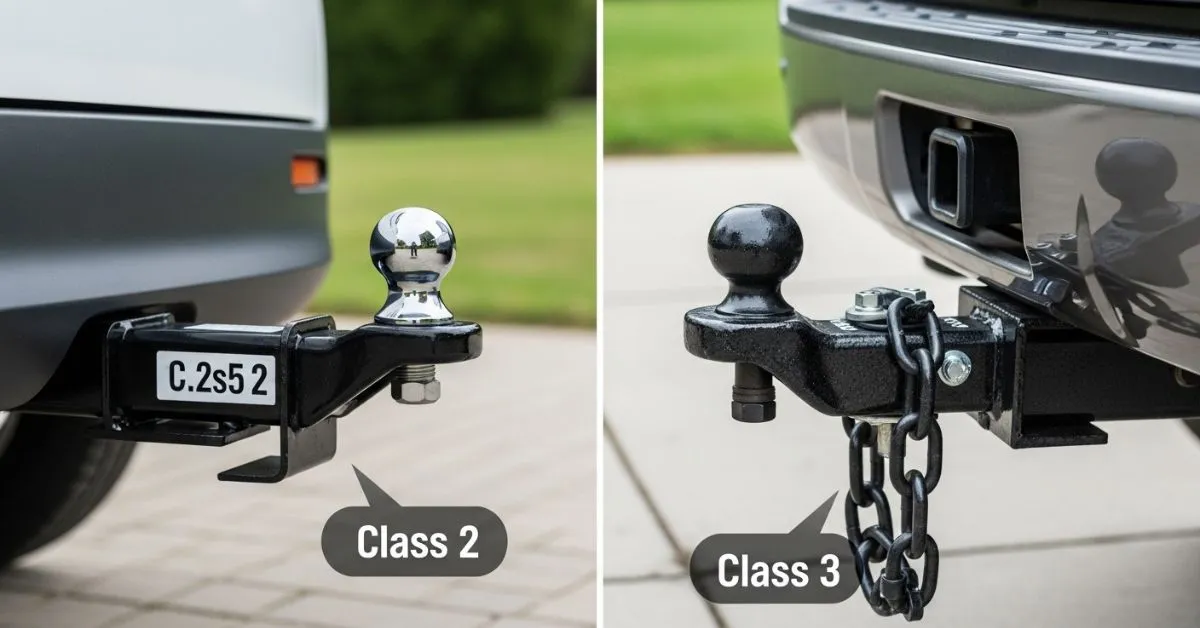
The short answer: A Class 2 hitch handles up to 3,500 lbs gross trailer weight with a 1.25-inch receiver right for light loads like bike racks, small trailers, and cargo carriers on sedans and crossovers. A Class 3 hitch handles up to 8,000 lbs with a 2-inch receiver right for trucks, full-size SUVs, and anyone towing campers, boats, or heavy utility trailers.
Choosing the wrong class doesn’t just mean a poor fit; it’s a safety risk. Overloading a Class 2 hitch, or using a Class 3 on a vehicle not rated for it, can cause trailer sway, frame stress, and hitch failure. This guide gives you the numbers, the differences, and a clear decision framework so you can choose the right hitch the first time.
This is where we find this confusion at Gresham 4 Wheel Drive, and that is the reason why we need to understand class 2 vs class 3 hitch. We will be straightforward and understandable in this guide, allowing you to make the correct choice of hitch with the necessary sense and prevent all the pitfalls.
What Is a Trailer Hitch?
A trailer hitch is a heavy metal fitting attached to the rear of your car to enable you to tow trailers, bike racks, or cargo carriers. It is the primary connection between your car and the object you plan to pull. Towing can be safe and effective when done properly. The receiver hitch is a square-shaped hole that is used in most current vehicles and is intended to receive the various towing accessories. It has quite simple transitions between a ball mount, cargo carrier, or even a bike rack, depending on the requirements.
This implies that it is a versatile choice during normal use and occasional towing. Each hitch has its particular towing capacity and is designed with specific loads. Others are designed to do light-duty towing, and others are designed to do heavy work. This is the reason why you should know the fundamentals before making a comparison between such options as a class 2 vs class 3 hitch, in order to select the appropriate one to fit your car.
What Is a Class 2 Hitch?
A Class 2 hitch is a lightweight type of hitch used in smaller cars such as sedans, crossovers, or small SUVs. It is generally a 1.25-inch receiver and middle-grade towing, normally around 3,500 pounds. This is ideal in day-to-day activities like transporting bike racks, small trailers, or cargo carriers without straining your car.
A key benefit of the Class 2 hitch is that it is much more flexible for lighter loads. It can be installed easily and does not need methods or tools of great strength, and most vehicles do not need any alteration. It is commonly used by drivers travelling on weekends, small boats, or light trailers, which allow them to tow without the hassle of having to buy a bigger hitch when they do not require such a large hitch.
In Gresham 4 Wheel Drive, we suggest a Class 2 hitch to drivers who want it to be reliable in light towing but do not desire any additional weight and complexity. It is a secure and convenient option to use on a daily basis, and your vehicle will remain balanced while hauling moderate loads. The correct choice of class prevents any stress on your car and makes your towing system very simple and effective.
What Is a Class 3 Hitch?
A Class 3 hitch is an option with heavy-duty towing used in trucks, SUVs, and large vehicles. It usually has a 2-inch receiver as well as a greater towing capacity, commonly extending to 8000 pounds, which is suitable to pull campers, boats, or big utility trailers.
This hitch is constructed with power and adaptability. It is able to carry more and tow more often than a Class 2 hitch. It is also used by many people on weekend outings, trips that take long distances, or carrying equipment, and they are fully aware that it gives them additional safety and stability during the drive.
Compared to lighter hitches, the Class 3 hitch has a higher weight-bearing capacity and associated tongue weight that lowers the weight load on your car, thereby enhancing the overall towing capacity. It is the option of any person who has to tow greater trailers or heavier cargo every day.
Also Know About: Pintle Hitch vs Ball Hitch: Best Option for Heavy Loads?
Class 2 vs Class 3 Hitch: Key Differences Explained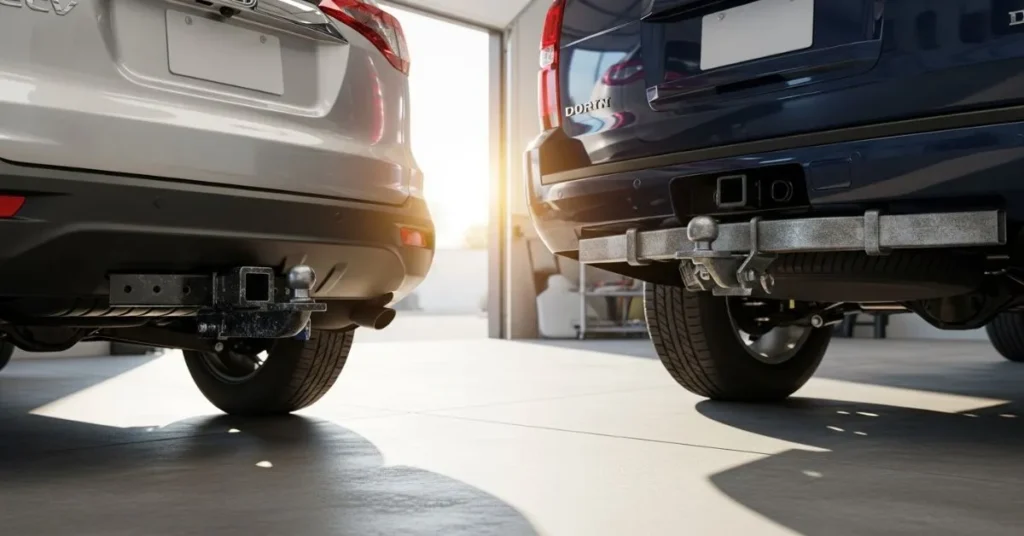
The first step to select the appropriate towing system is to know the Difference between a class 2 vs 3 hitch. The two hitches may resemble each other, but they are both intended to serve different purposes. The principal variations are in the size of receivers, towing ability, compatibility with the vehicle, and durability. Choosing the wrong one may lead to the loss of your safety, the destruction of your vehicle, or the process of towing should be much more challenging than it is. This guide will highlight the most significant distinctions with clarity and practicality. With this knowledge, you are able to select the appropriate hitch that fits your car.
Before the detailed breakdown, here are the key specifications side by side:
| Specification | Class 2 Hitch | Class 3 Hitch |
|---|---|---|
| Receiver size | 1.25 inches | 2 inches |
| Max gross trailer weight (GTW) | Up to 3,500 lbs | Up to 8,000 lbs |
| Max tongue weight | Up to 350 lbs | Up to 800 lbs |
| Best vehicle type | Sedans, crossovers, small SUVs | Trucks, full-size SUVs |
| Typical use | Bike racks, small trailers, cargo carriers | Campers, boats, utility trailers |
| Cost range | $80 – $200 | $150 – $400 |
| Installation complexity | Lower | Moderate |
Always verify your specific vehicle’s towing capacity the hitch rating and your vehicle’s tow rating are both limits, and the lower of the two always applies.
1. Receiver Size: Small vs Large
The biggest distinction and the main aspect of the difference between class 2 and class 3 trailer hitches is the receiver size. Class 2 hitches. With a receiver size of 1.25 inches, most of these hitches can be used with light towing objects such as small trailers, bike racks, or cargo carriers. Class 3 hitches, however, have a 2-inch receiver, which is capable of supporting larger and heavier towing equipment and is more stable, and provides flexibility.
The fact that it has a larger receiver is not only that it can adjust to larger mounts, but also the fact that it can support heavier loads and take the strain off your vehicle frame. Class 2 hitches are more manageable and require less weight to install, thus they are ideal in small cars. Having the right size receiver will help to make your towing system safe, balanced, and correctly aligned to the load that you intend to carry.
2. Towing Capacity: Light-Duty vs Heavy-Duty
One of the most vital differences in comparing Class 2 and Class 3 hitches is towing capacity. Class 2 hitches usually support a maximum weight of up to 3,500 pounds, and this is suited to the small trailers, lightweight boats, or weekend camping equipment. They are packaged and are to be used occasionally during towing, and also in the light loads that do not strain your car much.
Class 3 hitches, on the other hand, can pull up to 8,000 pounds or more and are therefore appropriate in heavy-duty activities such as large campers, utility trailers, or heavy boats. A heavier weight on a Class 2 hitch may overload your vehicle, cause unwanted sway, and may even break the hitch or the frame. The choice of the appropriate capacity will provide the safety of towing, improved handling, and assurance on long trips or hilly roads.
3. Vehicle Compatibility: Smaller Cars vs Trucks and SUVs
Vehicle compatibility is another major difference. Class 2 hitches tend to be applied to sedans, crossovers, and small SUVs. The fact that they are made lighter does not affect the ride, handling, or fuel efficiency of the smaller vehicles. They suit those drivers who pull or carry lighter loads.
Class 3 hitches are supposed to fit trucks, full-size SUVs, and heavier cars. These are hitches that are designed for the weight and pressure that come with bigger loads and are made to be more stable and stable. A proper hitch to fit your car model will serve in more safe towing, less swaying, and a more comfortable experience in driving experience, especially on a long journey or when pulling heavy trailers.
4. Cost: Affordable vs Premium Investment
Another important factor when evaluating the difference between class 2 and class 3 trailer hitches is cost. Class 2 hitches tend to be cheaper and, therefore, are a good option for light towing or low frequency of use. Their construction is lighter and smaller in size, which makes the cost cheaper, and yet safe to tow the corresponding loads.
Class 3 hitches are a high-quality investment that are used in heavy-duty towing and are used regularly. Although this makes them a little more expensive initially, it is justified by the increased towing capacity, material, and the trucks and SUV owners who have to access a large towing capacity regularly. A Class 3 hitch would help you save on expensive repairs or accidents due to overloading a smaller hitch in the long-term benefits and safety.
Also Know About: Trailer Hitch vs Receiver Hitch: Shocking Differences Revealed
All Hitch Classes Explained: Class 1, 2, 3, and 4 Compared
If you’re deciding between classes, it helps to see the full picture. Here’s how all four main hitch classes compare:
| Class | Receiver Size | Max GTW | Max Tongue Weight | Best For |
|---|---|---|---|---|
| Class 1 | 1.25 inches | 2,000 lbs | 200 lbs | Small cars, very light loads, bike racks |
| Class 2 | 1.25 inches | 3,500 lbs | 350 lbs | Crossovers, small SUVs, light trailers |
| Class 3 | 2 inches | 8,000 lbs | 800 lbs | Trucks, full-size SUVs, campers, boats |
| Class 4 | 2 inches | 10,000 lbs | 1,000 lbs | Heavy-duty trucks, large trailers |
Class 1 vs Class 2: Both use the same 1.25-inch receiver, but Class 2 has a higher weight rating. If your vehicle supports Class 2, there’s little reason to choose Class 1; the receiver size is identical, and Class 2 gives you more flexibility.
Class 3 vs Class 4: Both use a 2-inch receiver. Class 4 is rated for heavier loads and is typically found on heavy-duty trucks (F-250, Ram 2500, Silverado HD). Most light-duty truck owners (F-150, Silverado 1500, Ram 1500) max out at Class 3 based on their vehicle’s tow rating, even if a Class 4 hitch could physically mount.
The key rule: Your vehicle’s tow rating is the ceiling that the hitch class can never exceed what your vehicle is rated to pull. A Class 3 hitch on a crossover rated for 2,000 lbs doesn’t give you 8,000 lbs of towing capacity. Always check your owner’s manual for your vehicle’s specific tow rating before choosing a hitch class.
Common Mistakes to Avoid When Choosing a Hitch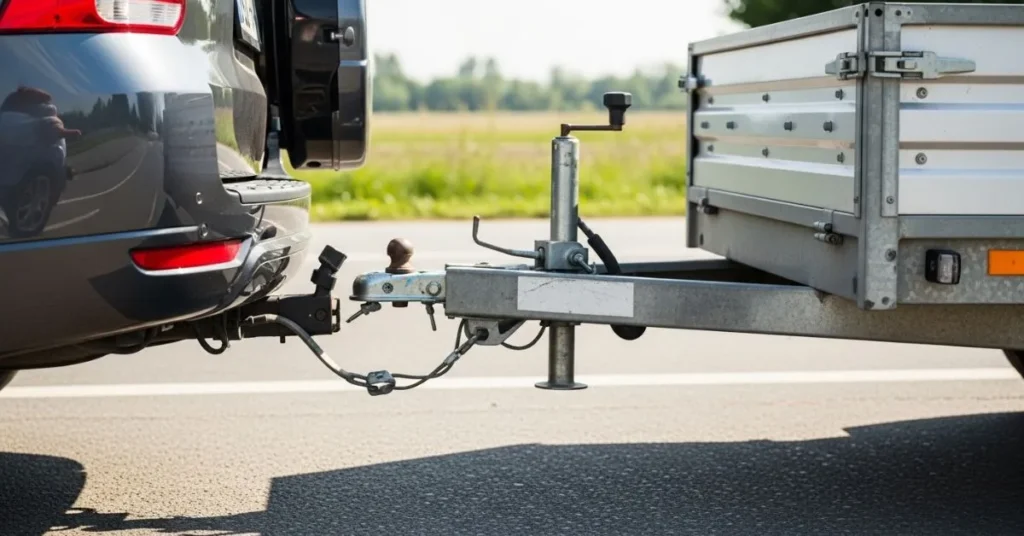
Using a bad hitch can lead to unsafe towing, vehicle damage, or unnecessary costs. It is unknown to the drivers that Class 2 vs Class 3 hitch decisions are confined not only to size, but also to the type of vehicle and the right installation. Being aware of the pitfalls can make sure that you avoid them, and you will experience the towing process in a safer and easier way.
- Overloading the Hitch: This is one of the most common mistakes, which includes going beyond the capacity of the hitch. The heavy trailers can strain the vehicle and even break the frame under the Class 2 hitch. Always make sure that you check the towing capacity, and this should be equal to the weight of your trailer or cargo.
- Ignoring Vehicle Limits: The hitch may be as good as it can be, but it will not make your vehicle have a higher towing capacity. Maximum towing capacity applies to all cars or SUVs, and exceeding towing capacity can result in an accident or mechanical issues. Do not overload your vehicle or its specifications.
- Choosing the Wrong Receiver Size: Selecting an incorrect receiver size will cause your hitch to be unstable or unable to fit accessories. Class 2 hitches have a 1.25-inch receiver, and Class 3 using 2-inch receiver. Choosing the incorrect size may not allow the correct trailer or rack to be connected.
- Skipping Professional Installation: It is common that many drivers attempt to install a hitch on their own so as to save money, but when such is done poorly, it can prove to be risky. The professional installation will make sure that there is appropriate alignment, stable installation, and appropriate torque. In Gresham 4 Wheel Drive, we ensure that all the hitches are installed in a safe manner, which will ensure their durability in performance.
- Overlooking Tongue Weight: This is the force the trailer has on your hitch, and it is the downward force. Failure to attend to it may result in poor handling, swaying, or even hitching failures. The weight of the tongue should always be calculated and kept to the boundaries of your Class 2 vs Class 3 hitch.
What Class Hitch Do I Need?
Use this quick guide to match your towing need to the right hitch class:
Choose Class 2 if:
- You drive a sedan, crossover, or small SUV (Honda CR-V, Toyota RAV4, Subaru Outback)
- You’re towing a small utility trailer, kayak trailer, or small pop-up camper under 3,500 lbs
- You primarily use your hitch for bike racks, cargo carriers, or ski racks
- Your vehicle’s tow rating is 3,500 lbs or under
Choose Class 3 if:
- You drive a full-size truck (F-150, Silverado 1500, Ram 1500) or full-size SUV (Tahoe, Expedition, Suburban)
- You’re towing a boat, travel trailer, camper, or utility trailer between 3,500 and 8,000 lbs
- You plan to tow regularly or on long trips
- Your vehicle’s tow rating is above 3,500 lbs
When to consider Class 4:
- Heavy-duty truck (F-250, Ram 2500, Silverado HD) with tow ratings above 8,000 lbs
- Towing construction equipment, large horse trailers, or heavy fifth-wheel setups
One important check before buying: Look up your vehicle’s tow rating in the owner’s manual or on the door jamb sticker. This is the hard limit buying a Class 3 hitch for a vehicle rated at 2,000 lbs doesn’t change what that vehicle can safely pull. The hitch class and vehicle tow rating must both be appropriate for the load.
Also Explore: Cost to Install a Tow Hitch: Ultimate Price Guide
Why Choose Gresham 4 Wheel Drive to install a hitch?
When it comes to towing, there is no more important thing than safety. At Gresham 4 Wheel Drive, we are focused on professional hitch installation, which means that we fit all Class 2 vs Class 3 hitches to your car to the perfect fit. A well-installed hitch does not just make your trailer safe, but it also helps to keep your car, SUV, or truck in good condition, which would otherwise need to account for any new wear and tear.
Our qualified technicians do not rush through any of the steps, including the choice of the appropriate hitch, accurate mounting, and adjusting. We know that all the vehicles are unique, and that is why we take into consideration your towing needs, receiver size, and weight requirement, and then we install them beforehand. This one-to-one treatment will ensure that your hitch works safely, regardless of the environment in which you are towing a small trailer or a massive camper.
With Gresham, 4 Wheel drive is a matter of peace of mind. We will also offer advice on towing safety, tongue weight, and load balance in addition to the expert installation, avoiding the most common mistakes that can hamper your system. Your Class 2 or Class 3 hitch will be prepared with our services to provide worry-free towing, favorable in all journeys, and enjoyable.
Conclusion
Choosing between a class 2 vs class 3 hitch comes down to matching the hitch’s capacity to your actual towing needs and your vehicle’s rated tow capacity. Class 2 is the right choice for light-duty use bike racks, small trailers, and occasional cargo hauling on sedans, crossovers, and small SUVs. Class 3 is built for trucks and full-size SUVs pulling campers, boats, and heavy utility trailers up to 8,000 lbs.
The most common mistakes, such as overloading, wrong receiver size, and skipping professional installation, are entirely avoidable when you start with the right class for your vehicle and use case. Always check both the hitch rating and your vehicle’s tow rating, and use the lower number as your limit.
At Gresham 4 Wheel Drive, we install Class 2 and Class 3 hitches for all vehicle types across Gresham and the Portland, Oregon area with proper mounting, torque to spec, and guidance on the right setup for your specific towing needs.
📞 Call us at 503-400-7646 for a free hitch installation consultation or stop by, and we’ll help you find the right class for your vehicle and towing setup.
FAQs
Q. What’s the easiest way to check my vehicle’s actual tow rating?
You can find your vehicle’s tow rating in the owner’s manual or on the door jamb sticker inside the driver’s side door. This number is the hard limit that no hitch class can override, regardless of what the hitch itself is rated for. Checking this before purchasing prevents buying the wrong hitch size.
Q. Does installing a bigger hitch class improve my vehicle’s overall performance?
No, installing a Class 3 hitch on a vehicle rated for less towing capacity doesn’t improve performance or increase what the vehicle can safely pull. The vehicle’s engine, frame, and braking system are what determine actual towing capability, not the hitch alone. A hitch simply provides the connection point within your vehicle’s existing limits.
Q. Are Class 2 and Class 3 hitches interchangeable with the same accessories?
No, since Class 2 uses a 1.25-inch receiver and Class 3 uses a 2-inch receiver, accessories like ball mounts and cargo carriers must match the specific receiver size. Using an incorrect size can prevent proper fitting or compromise safety. Always confirm your accessory’s receiver size matches your installed hitch class.
Q. How do I know if my current hitch is overloaded?
Signs of an overloaded hitch include trailer sway, difficulty controlling the vehicle, or unusual stress on the frame during towing. Always compare your actual trailer or cargo weight against your hitch’s rated towing capacity before hauling. Staying within the rated limits prevents hitch failure and vehicle damage.
Q. Can weather conditions like snow or ice affect how a Class 2 or Class 3 hitch performs while towing?
Yes, slippery road conditions increase stopping distances and reduce traction regardless of hitch class, making trailer sway more likely on icy or snow-covered roads. A properly rated hitch doesn’t compensate for reduced grip, so extra caution and slower speeds are needed in winter conditions. Ensuring your hitch, ball mount, and trailer connections are free of ice buildup before towing also helps maintain a secure connection.