Key Takeaways
- Towing is not only about how much your vehicle can pull, but also about how the weight is balanced. Poor balance can lead to instability, steering issues, and trailer sway.
- A weight-carrying setup is simple and works best for small trailers and light towing tasks, but it can cause rear sag if overloaded or used beyond limits.
- A weight-distributing hitch spreads load across the vehicle axles, improving balance, braking, steering control, and overall towing safety on highways.
- Knowing towing capacity and tongue weight helps prevent overloading and ensures your setup stays within safe operating conditions.
- Choosing the right system based on load and driving conditions reduces risks like sway, poor control, and suspension stress, making towing safer and smoother
Quick Answer: Weight-carrying vs. weight-distributing hitch comes down to how the trailer’s weight is handled. A weight-carrying hitch places the full tongue weight directly on the vehicle’s rear, suiting small trailers and light loads. A weight-distributing hitch uses spring bars to spread that weight across both axles, improving balance, steering, and braking for heavier trailers, campers, or boats. Choosing correctly prevents rear sag, trailer sway, and unsafe towing conditions.
Some people might have an easy time towing, but when you are on the road, you can see trouble on you within no time. Suspension in your truck can begin to sag, steering can be light, and the trailer can even sway a bit. It is about that time that the majority of drivers come to understand that towing is not only about pulling weight, but also about balance and control. Here is where knowledge of weight-carrying vs. weight-distributing hitches comes in with a great difference.
When you have ever searched for trailer hitch types explained or have asked yourself, what is the best hitch to tow a trailer, you are on the right track. The kind of hitches that you make is the one that has a direct impact on the safety of towing, on the brake power, and generally on the balance. Others disregard factors such as tongue weight vs towing capacity, yet such minor factors may result in huge problems if your setup is not correct.
In this guide, we’ll break down weight-carrying vs. weight-distributing hitch in easy basics so that you can select the appropriate one to suit your purposes. With occasional or frequent tow, being prepared with the right setup is important. And in case you want it done right, Gresham 4 Wheel Drive will be there to provide you with a safe, stable, and dependable experience in towing.
What is a Weight-Carrying Hitch?
The easiest form of towing arrangement is a weight-carrying hitch. It supports the full weight of a trailer tongue directly on the rear part of your vehicle and does not distribute it in any other way. This is because the weight is concentrated on the suspension at the rear. Simply stating it, when your trailer is pressing against the hitch, it transfers that weight to your truck or SUV, as it is.
Light towing. This kind of hitch is applied to light towing applications, such as small trailers, bike racks, or light utility loads. It is okay provided the weight falls under your car’s towing capacity, but you can experience the possibility of rear dropping or loss of stability when you overstep your towing capacity. This is why it is necessary that you know tongue weight vs towing capacity to drive safely and achieve greater towing safety.
Weight carrying vs weight distributing hitch compares the two, which are simpler and cheaper than the heavy loads, and long highway movements are not an option. In case you are uncertain about the safety of your system or whether or not you have the right type of setup for your car, Gresham 4 Wheel Drive can assist you in finding and installing the optimal towing system that will give you greater control and stability.
What Is a Weight Distributing Hitch?
A weight-distributing hitch is a towing system that is used to even out the weight between your vehicle and your trailer. It does not cause the entire weight of a trailer tongue to be placed on the back of your truck, but rather uses spring bars to balance the weight of the tongue evenly on your front and back axles. This will assist in maintaining the levelness of the vehicle during towing.
In comparison between the weight-carrying vs. weight-distributing hitch, this kind of hitch is primarily associated with carrying heavier loads. It enhances safety in towing by reducing rear sag, enhancing steering direction, and maintaining improved tire grip on the road. This also aids in trailer sway, particularly over highways with higher speeds.
As not all the burden is on the wheels, your car’s performance is improved, and it brakes more consistently. This is why many drivers are researching what a weight distribution hitch is preferred for large trailers, campers, and boats. It represents a more effective solution to safer and more controlled towing.
Also Know About: How To Choose A Weight Distribution Hitch (2026 Guide)
Weight-Carrying vs. Weight-Distributing Hitch (Key Differences)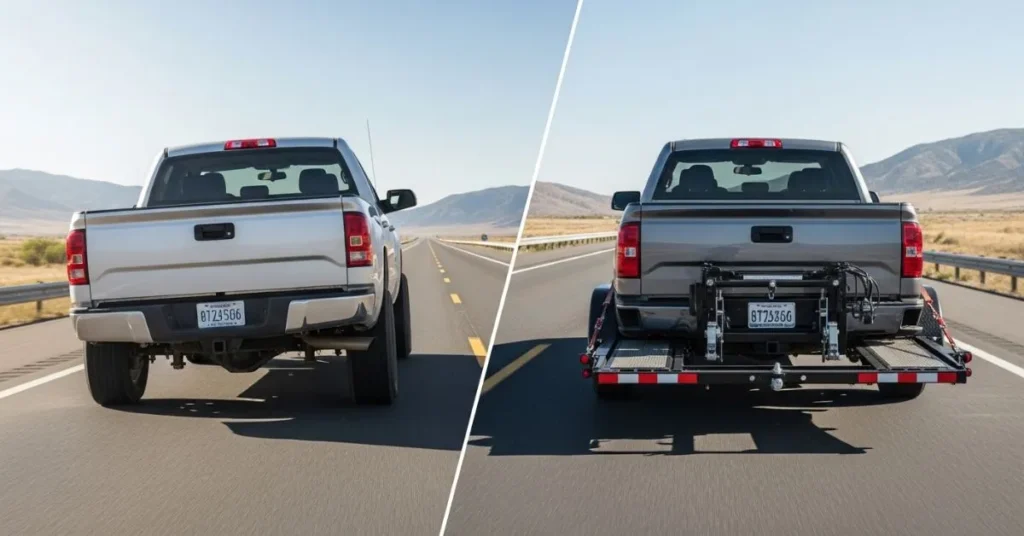
Choosing the correct type of hitch system is one of the biggest choices when you begin towing trailers. Initially, both alternatives might appear to be quite alike. The actual distinction is not in design, but in the way in which each system ensures weight and stability. One made it easy, whereas the other is made to tower and stand the distance. To explain the differences, we shall discuss the main differences in a simplistic manner so that you can easily be aware of which one fits your towing requirements.
1. Load Distribution
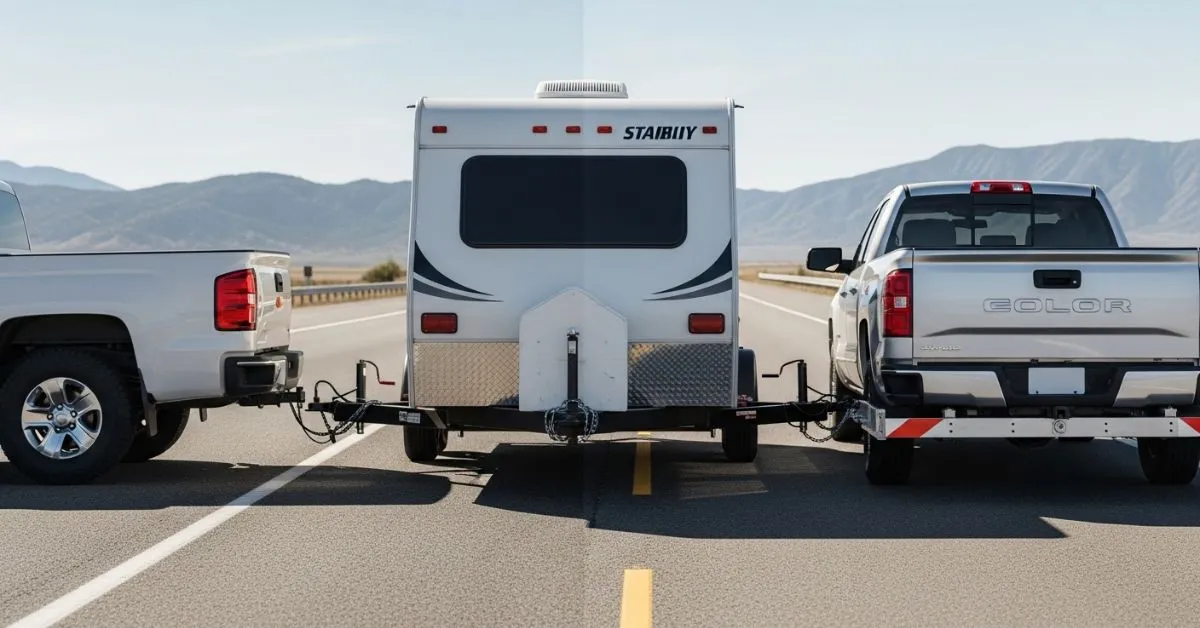
The operation of a weight-carrying hitch is very simple. All the weight of the tongue of the trailer is concentrated on the back of your car. This implies that the rear suspension supports the entire weight alone without sharing with the front wheel and the axes of the trailer. This arrangement is satisfactory with small and light trailers, but with heavier trailers, it may cause the rear of the vehicle to be noticeably sagging.
The working principle of a weight-distributing hitch is to distribute the load more equally. It has spring bars to take part of the weight on the front wheels of the car, and it also balances the axles of the trailer. This gives the whole system an even load and puts less load on the rear suspension. The outcome is smoother towing and road contact.
2. Vehicle Stability and Control
Stability may also be decreased by having a weight-carrying hitch, as the trailer becomes heavier. The back of the car folds down, and this is able to raise the front a bit. This influences the steering and can cause the car to be light on the front. This configuration may also present the possibilities of swaying trailers on a highway or in certain situations.
A weight-distributing hitch enhances stability as it maintains a level front-back position of the vehicle. This will assist in ensuring steering control and improved braking reaction. The tires are more balanced on the ground and thus have more confidence when driving, particularly during long journeys or when dragging heavy loads.
3. Towing Capacity Usage
A weight-carrying hitch is typically applied in cases of lightweight towing applications that do not exceed the normal towing capacity of the vehicle. Small utility trailers, light campers, or other short-course hauling are best suited to it. Nevertheless, operating it near capacity may impact performance and safety.
A weight-distributing hitch is the type of hitch to use with heavier loads. As you approach higher towing capabilities, you require a weight-distributing hitch. It enables your car to carry a heavier weight at a safe time since the weight is distributed throughout the whole system. This also contributes to its success as it is suitable for bigger trailers, boats, and long highway properties where there is the most need for stability.
4. Ease of use and installation
The weight-carrying hitch is easy to install, and it does not entail additional adjustments and fitments. You can fix it hassle-free and begin towing without excessive arrangement. This ease of use has made it a favourite among everyday towing.
A distributing hitch weight is more improved and needs an appropriate arrangement to function. The spring bars will have to be changed according to the weight of the trailer and the size of your vehicle. Otherwise, it may cause performance, rather than, and this is why lots of users seek the assistance of professionals when installing it.
Also Explore: How to Install a Trailer Hitch: Step-by-Step Detailed Guide
How to Choose the Right Hitch for Your Vehicle
The selection of the appropriate hitch is highly critical since it directly influences the extent of safety and stability in the event that your towing occurs. Even a minor error during the process of selection may cause poor balance, trailer swings, or additional load on your vehicle. This is why learning about weight-carrying vs. weight-distributing hitch will make you prevent problems before they even begin. Each combination of vehicles and trailers is unique, and the appropriate decision will be made according to your actual requirements for towing.
- Check Your Vehicle’s Towing Capacity: Before choosing a hitch, you have to first find out how much weight your vehicle is manufactured to be able to carry. The manufacturer provides this information, and it must be followed as long as safety is concerned. Exceeding this speed limit may cause harm to your engine, brakes, and suspension over time. Use of a safe towing limit would translate to better performance and control on the road.
- Understand Your Trailer Weight: It is essential to know the weight of your trailer when fully loaded. It all weighs in when you place it inside, and not the weight of the empty trailer. It is an error of many people and a minimization of the actual load. This information can assist you in deciding on a hitch that will be capable of withstanding the actual towing pressure.
- Know Your Tongue Weigh: This is the force of the tongue downward, exerted on the hitch ball. Failure to balance this weight is likely to cause instability in your car when driving. Excessive tongue weight may influence driving and braking. A right balance is responsible for maintaining a smooth and safe towing experience.
- Think About Your Towing Frequency: In case you only tow once in a while, a basic installation can be all that you require. However, in the event you are a heavy tower, or you cover a lot of distance, a more constant and regulated system will be required. Often, towing places an additional burden on your vehicle, and thus, better support is also extremely necessary. This will contribute to less wear and more general safety.
- Match Hitch Type to Load Requirements: Light loads typically can be used with a simple weight-carrying hitch without additional parts. But the heavier trailers require an improved balance of weight to be in control on the road. Here, the weight carrying vs weight distributing hitch comes in very. Making the right choice will provide more stable and safer driving.
- Consider Your Driving Conditions: It is also important to think about where you drive and how you drive, as it determines the choice of hitch, as well. Light-loaded city driving is not as challenging and is less demanding on your car. Safety needs more balance and control on the highway or over long distances. The history of the roads and speed may also determine how secure your trailer is.
Also Explore: Class 2 vs Class 3 Hitch: The Ultimate Showdown
Common Towing Mistakes People Make When Choosing Hitch Type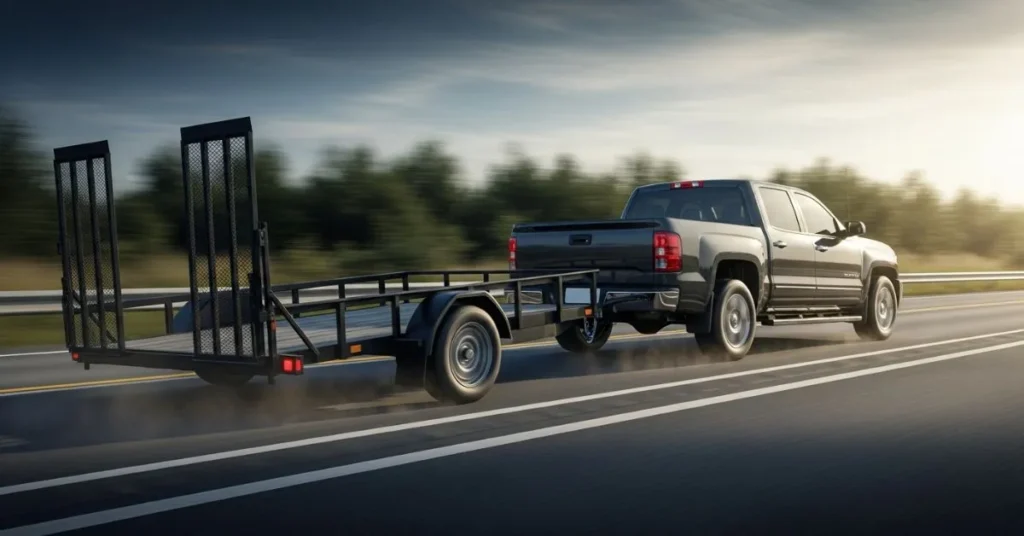
Some hitch errors are so small that they are committed by many drivers, but errors have a significant effect on the safety of the road. In the majority of cases, it occurs due to the lack of complete knowledge of vehicle limits, the weight of trailers, or the functioning of various hitch systems. Resolving the weight-carrying vs. weight-distributing hitch will mean that you will be able to tow safely and avoid these kinds of problems.
- Ignoring Vehicle Towing Capacity: Failing to review the towing capacity of a vehicle prior to connecting a trailer is one of the main errors. Each vehicle also has a fixed capacity which must not be exceeded. Leaving it may harm the engine, brakes, and suspension in the long run. It also makes it harder to be safer and more in control while driving.
- Choosing the Wrong Hitch Type: A wide variety engages a simple hitch when it is actually too heavy. This causes the back of the vehicle to drop and also decreases the stability. It may also render steering and braking ineffective. It is important to select the proper hitch for the load.
- Not Understanding Tongue Weight: Tongue weight is a crucial part of balance that is neglected. Unless it is right, the trailer may be difficult to drive. Excessive or deficient weight has an impact on steering and the risk of sway. Balance is good to ensure towing is safe.
- Overloading the Trailer: Putting too much weight in the trailer is another big mistake. It exerts an added pressure on the hitch tires and the braking system. Control and gaining distance are also reduced by overloading. Not even a stiff hitch is able to correct overloads.
- Skipping Proper Setup: It does not matter how good a right hitch may be; it will never work very well when it is improperly set up. It is installed by many people without properly adjusting it to their load. This decreases the performance and stability. It should be properly installed to be safer when towing.
- Ignoring Driving Conditions: Driving conditions and the type of road are also important, but people fail to consider them. Homes or wind and slopes may alter the behaviour of the trailer. What works in city driving may not be safe during long-distance journeys. Always consider where you drive most.
Also Explore: Pintle Hitch vs Ball Hitch: Best Option for Heavy Loads?
Get Your Towing Setup Done Right with Gresham 4 Wheel Drive
Setting up your towing arrangements is not just about picking; it is a matter of ensuring everything fits with one another to be secure. Balance, trailer sway, or uneven load is a constant problem with many drivers due to not having a good match with their setup. This is where professional assistance comes into play, particularly in determining weight carrying vs weight distributing hitch preferences.
At Gresham 4 Wheel Drive, we concentrate on preparing your car to be safe and stable in case it has to be towed. Checking your suspension setup level, proper wheel alignment, and all that is done with actual road safety in mind. This helps reduce the common towing problems like rear sagging, braking loss of control and untrustworthy pulling up heavier loads.
The right fit will ensure that your vehicle can be used to its fullest, either towing a small trailer or carrying a heavy load. A properly mounted and fixed hitch system enhances balance, handling, and confidence in driving. With the correct guidance and a professional setup, you can tow safely without making guesses or taking risks on the road.
Conclusion
The selection of the correct hitch is a serious matter since it has a direct impact on your safety, control, and feel of the road. In this guide, we have understood the reasons why weight carrying vs weight distributing hitch is different, and how each one has its own presence based on the weight and the type of vehicle. Minor factors such as tongue weight, towing power, and correct configuration can have huge implications on the way your vehicle moves on the road.
When towing light items, a basic setup may be sufficient, though when you need to pull heavier items or the trailers are longer distances, the higher balance and stability are also frequently a major factor. The knowledge of these differences will enable you to avoid some of the most common mistakes like trailer sway, poor braking, and stress on the suspension. Ultimately, you should always make the correct decision based on the kind of vehicle that you have and your actual towing requirements.
When you have a well-selected and well-fitted hitch, you are sure whenever you get on the road. And in case you have doubts, having professional advice makes your towing system safe, steady, and prepared to handle any trip.
FAQs
Q. What is tongue weight, and why does it matter?
Tongue weight is the downward force the trailer’s tongue exerts on the hitch ball, and it plays a major role in towing stability. If tongue weight isn’t properly balanced, it can negatively affect steering and braking and increase the risk of trailer sway. Knowing your tongue weight relative to your towing capacity helps ensure a safer setup.
Q. How do I know if I need a weight-distributing hitch?
If you’re towing heavier trailers, traveling long distances on highways, or noticing rear sag and reduced steering control, a weight-distributing hitch is likely necessary. It becomes especially important as your load approaches your vehicle’s maximum towing capacity. For light, occasional towing of small trailers, a weight-carrying hitch is usually sufficient.
Q. Can using the wrong hitch type cause trailer sway?
Yes, using a weight-carrying hitch for a load that’s too heavy can cause the rear of the vehicle to sag and the front to lift slightly, increasing the risk of trailer sway, especially at highway speeds. A weight-distributing hitch helps prevent this by keeping the vehicle level and improving overall control. Choosing the correct hitch type for your load is key to avoiding sway-related accidents.
Q. Is a weight-distributing hitch harder to install than a weight-carrying hitch?
Yes, a weight-distributing hitch requires more setup since the spring bars need to be adjusted according to the trailer’s weight and the vehicle’s specifications. A weight-carrying hitch, on the other hand, is simpler and can usually be installed without extra adjustments. Because of this added complexity, many people prefer professional installation for weight-distributing systems.
Q. What happens if I exceed my vehicle’s towing capacity?
Exceeding your vehicle’s towing capacity can cause serious strain on the engine, brakes, and suspension, leading to long-term damage and reduced performance. It also compromises safety, making the vehicle harder to control, especially while braking or maneuvering. Always check your manufacturer’s towing capacity before selecting a hitch or loading a trailer.