It may not be so difficult to start towing a trailer, but then, as soon as you are on the road, everything begins to go wrong. Your car might front-end up, the back might end up, and steering could get. This is typically when they begin providing information on how to choose a weight distribution hitch, as an improper towing configuration makes driving unsafe and unfortunate.
The reality is that towing is a matter of balance. Unless your tongue weight, gross trailer weight (GTW), and towing capacity are correctly matched, your vehicle will find it difficult to control and brake. Here, a correct hitch on weight distribution and even a trailer sway control hitch may be put into play. They assist in distributing the weight equally on your axles, thus making it stable and less swaying when on the road.
We will simplify the process of selecting who you want to distribute weight on a hitch in this guide. It doesn’t matter the kind of truck or SUV you drive; proper setup is essential, and that is what people like Gresham 4 Wheel Drive do daily. At the end, you’ll have a clear idea of how to select the right weight distribution hitch to make up-to-date towing smoother and safer.
What Is a Weight Distribution Hitch
When you hook up a trailer, and you can see the rear of your car sinking and the front alone rising, then you know there is an imbalance of weight. This is by a weight distribution hitch that evenly distributes the tongue weight across all axles. It prevents placing the entire pressure on the back, thus keeping your vehicle in balance and level.
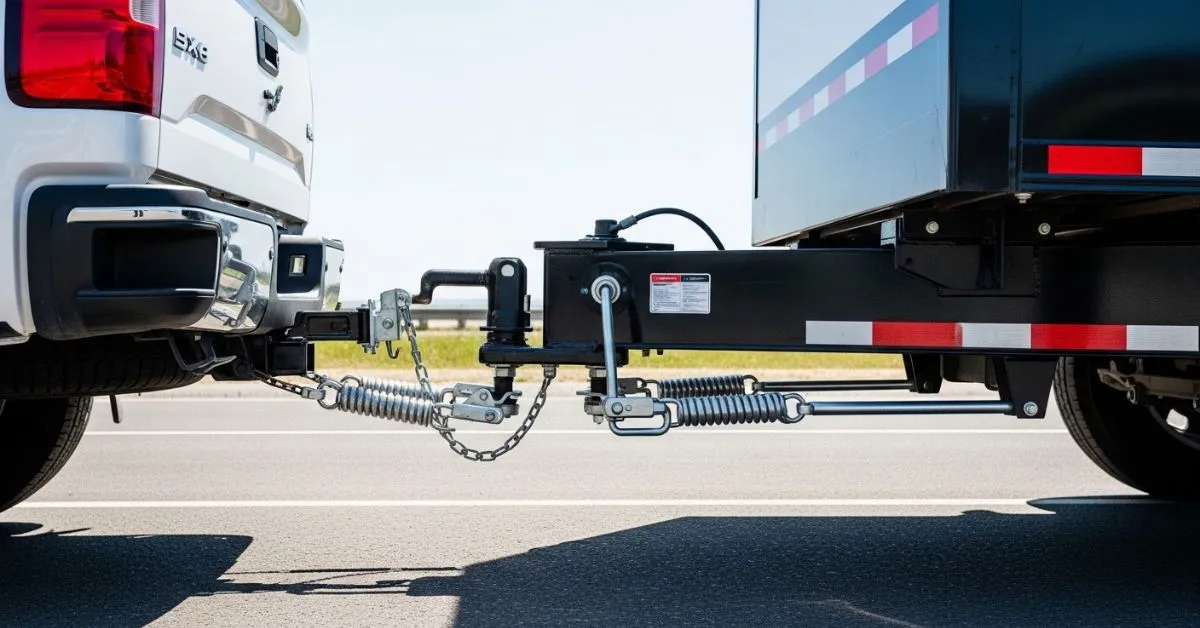
This system applies spring bars in distributing the load, enhancing your vehicle’s towing stability, steering, and braking capabilities. In the absence of a proper weight distribution hitch system, you can have poor handling, increased braking distances, and even trailer sway on the highway. This is why a lot of drivers use it along with a trailer sway frame hitch to make the hitch even safer.
The first step in learning to determine how to choose a weight distribution hitch is to understand it. It is not only about towing, but it is also about control and confidence in driving. At Gresham 4 Wheel Drive, professionals will advise you on the appropriate arrangement depending upon your vehicle and trailer to have a better and safer towing experience.
Also Know About: How to Install a Trailer Hitch: Step-by-Step Detailed Guide
Types of Weight Distribution Hitches Explained
There are no uniform towing configurations, and because of this, there are various types of weight distribution hitches. The process of selecting the appropriate one will get significantly simpler. Starting to learn to decide upon a weight distribution hitch, they discover that the kind of hitches they select directly influences the aspects of road safety. There are basic and simple ones, so as to provide an additional level of safety on the highway in heavy traffic and on heavy loads.
1. Round Bar Weight Distribution Hitch
It is among the most popular and cheap models. It consists of curved spring bars that will be attached to the hitch head and will assist in the tongue weight of the trailer with the rest of the vehicle. It is used in light to medium towing work and has less difficulty in installing and modifying. This option is chosen by many beginners as it provides an easy weight distribution-hitch arrangement with not excessive complexity. It might, however, lack the capability to prevent extreme loads and extreme sway of trailers as better systems do.
2. Trunnion Bar Weight Distribution Hitch
This one is provided with straight spring bars, rather than curved, providing a higher ground clearance and increased functionality in drawing heavier trailers. It is more powerful and stable, particularly for trucks and SUVs that are frequently used in towing. This option is usually taken by the drivers when they are learning how to choose a weight distribution hitch to travel long distances or with heavier loads.
3. Weight Distribution Hitch with Built-in Sway Control
It is an advanced suspension system that integrates weight distribution and sway control in a single system. It is also actively working to minimize side-to-side movement of the trailers, which is among the greatest risks when towing. It is a good kind of trailer hitch to use in big trailers, travel trailers, and highway towing, as the winds and speed may lead to unsteadiness. Various experts, such as Gresham 4 Wheel Drive, highly suggest the use of this type to some of the drivers who desire the highest level of safety and control without having to keep changing the arrangement.
Also Know About: Types of Hitch Receivers: Simple Guide for Beginners
Benefits of Weight Distribution Hitches
As you begin towing, you will soon discover that power is not the only thing you need to keep balance as an important factor. A weight distribution hitch is not merely it is a safety enhancement to your whole towing system. A lot of drivers who are to learn how to choose a weight distribution hitch would want to know why they would even require one. The solution is an easy one; towing is a safer, smoother.
- Better Vehicle Stability: A weight distribution hitch will distribute the tongue mass evenly on each axle and will make your vehicle level. This makes the process of towing more stable and results in the reduction of rear-end crashes. Balancing also helps your tires to keep contact with the ground, and this is necessary in high-speed driving.
- Better Steering Control: There will be no pressure in the front tires, and steering will be light or unsteady until the weight is equally distributed. The correct weight distribution hitch will recreate that pressure, which allows you to have more control of direction. It matters especially when it comes to driving higher center of gravity vehicles like trucks, SUVs, or lifted vehicles.
- Reduced Trailer Sway: Trailer sway is probably the biggest safety concern as far as towing is concerned, especially when there is wind or on the highway. A weight distribution hitch is used with friction or integrated sway control systems to reduce movement about the side and help keep your trailer ahead of your car.
- Shorter Braking Distance: With the correct balance of weight, braking performance is more efficient. The load is distributed over all the wheels as opposed to pushing all the force over the rear axle. This minimizes the overall stopping distance and enhances proper road safety on the whole, particularly in the case of loads.
- Safer Long-Distance Towing: For long trips, instability may arise as a significant issue on long journeys. A weight distribution hitch will help distribute the pressure on your driver and car; everything is stabilized. This ensures that highway towing is less predictable as well as less taxing.
- Protects Your Vehicle and Tires: Uneven weight may reveal wearing of tires and suspension damage. A hitch allows you to balance the load to extend the life of your tires, suspension system, and parts of the frame, which will save you money in the long run.
Also Explore: Class 2 vs Class 3 Hitch: The Ultimate Showdown
How to Choose a Weight Distribution Hitch for Different Vehicles
There is no one tool to fit the world. The most crucial thing to know when learning how to choose a weight distribution hitch is that all vehicles behave differently when towing. Depending on their construction, a light SUV, a heavy-duty truck, or a lifted 4×4 will require a different weight distribution hitch setup. Otherwise, these differences might make you create poor stability. This is why it is always important to optimize the hitch to your type of vehicle in order to achieve a secure and comfortable towing operation.
- For SUVs: SUVs typically are less powerful in towing, and thus a lighter round bar weight distribution hitch is mostly effective. Pay special attention to tongue weight to prevent rear and have proper steering control.
- For Pickup Trucks: Pickup trucks have heavier loads, and therefore a heavier trunnion bar hitch is typically more ideal. It has improved ground clearance and stability, particularly during the towing of trailers over long routes.
- For Lifted Trucks (4×4 Vehicles): Lifted trucks require special consideration, as with towing angles and balance, due to suspension height changes. Well-adjusted weight distribution hitching will help any angle and also maintain towing level and safety.
- For Heavy-Duty Towing Vehicles: Heavy-duty vehicles need large capacity hitches capable of supporting trailer weight (GTW) with a large gross weight. These systems are frequently provided with elaborate sway control to ensure stability at all times on the highway through towing.
- For Light Trailers and Casual Use: A simple weight distribution hitch might work on small trailers, with no special features. Nevertheless, it is always recommended that it should not exceed your towing strength, otherwise it may seem unnecessary and overly stress the vehicle.
Also Explore: Pintle Hitch vs Ball Hitch: Best Option for Heavy Loads?
Common Mistakes People Make When Choosing a Weight Distribution Hitch
Most people make a mistake and disregard key towing considerations when they learn about how to choose a weight distribution hitch. This could lead to unsafe driving, unbalanced and unnecessary transfer of the vehicle. By yourself with these myths, you will be able to select the right weight-distribution hitch system, after which you will have the benefit of a new level of towing stability and safety.
- Selecting the Wrong Weight Rating: Tongue weight and gross trailer weight (GTW) are not the two ratings that should be determined by some drivers before they purchase hitches. When the rating is low, the load can not be carried by the hitch, and this leads to the distribution of weight. This causes instability in towing and unsafe driving along highways and rough routes.
- Ignoring Sway Control Features: Some individuals believe that a simple hitch will do the job and place importance on trailer sway control. In its absence, the trailer may begin to swing across the tracks in case of wind or high-speed driving. This lowers the level of control and the chances of accidents during towing.
- Not Matching Hitch to Vehicle Type: Differing kinds of vehicles, like the SUVs, trucks, and lifted 4×4 do not match in terms of towing. The failure to maintain this difference can impact steering feedback and brake action. It is significant to do a proper matching to ensure safe and constant towing under all conditions on the road.
- Incorrect Weight Distribution Setup: No good hitch will work correctly when installed and adjusted incorrectly. All will result in imbalanced load transfer and an additional load on the rear axle. This can help decrease stability and render towing unsafe despite the appropriate equipment.
- Choosing Cheap Over Quality: When selecting low-cost over quality, hitches made of low-quality material prone to breaking may be in use. They can be worn easily and under pressure during extended journeys. High-quality hitching results in durability, safety, and reliable performance in the long term.
Also Explore: Cost to Install a Tow Hitch: Ultimate Price Guide
Get a Professional Weight Distribution Hitch Setup at Gresham 4 Wheel Drive
It is important to pick the correct weight distribution hitch by learning how to pick the right system, but it is also important to get it correctly installed. Even a quality weight distribution hitch can be ineffective even when it is not adjusted to the tongue weight of your vehicle and the towing ability. This is why it is so critical to be set up correctly to ensure safety and comfort when driving.
At Gresham 4 Wheel Drive, we will ensure that your hitch is fitted and properly balanced to fit your type of vehicle, be it an SUV, pickup truck, or a lifted 4×4. The correct weight distribution hitch design ensures a minimal sway of the trailer, enhances the steering response, and makes your vehicle stable on the road despite the heavy loads.
A professional service means getting everything just right at the beginning, as opposed to taking chances that the towing is safe. You can have more confidence when you pull your trailer out on the road with the Gresham 4 Wheel Drive expertly installed to provide you with better towing stability, better handling, and confidence.
Conclusion
Knowing how to choose a weight distribution hitch is not simply a matter of selecting a hitch for your towing based on the accessory you actually picked, but ensuring that your driving is safer, smoother, and in control, as well as the amount you need to carry with your trailer; all these steps are significant to the overall towing stability. These issues, including trailer sway, improper steering, and uneven tire wear, may soon become evident on the road when such factors can be neglected.
The highlight is that the optimal-weight-distribution hitch system enhances safety, balance, and confidence during towing. You are driving an SUV, a pickup truck, or a lifted 4×4; either way, selecting the right system assists in safe your car as well as your trailer with each trip.
With proper professional assistance, it can make a difference to excellence. Gresham 4 Wheel Drive can install and set it up, and you know everything is set correctly and ready to go on the road. When properly selected and fitted, a hitch not only enhances performance but also provides peace of mind whenever towing.
FAQs
Q. What size weight distribution hitch do I need?
Depends on the tongue weight and the gross trailer weight (GTW) of your trailer. When selecting a hitch, you should never rely on the hitch above its listed rated capacity, but rather on the weight of the fully loaded trailer. An accurate match means proper road safety.
Q. Do I need sway control with a weight distribution hitch?
Yes, on the towing, sway control is strong, particularly on highways and when there is. It assists in having fewer side-to-side trailer movements and enhances general control. Most present-day weight distribution hitch configurations include built-in trailer sway control to enhance safety.
Q. Are weight distribution hitches hard to install?
They are not very tough; however, a good hitch installation involves suitable measurements and corrections. When it is installed in an incorrect manner, it may interfere with the steering, braking, and balance. This is the reason why most drivers choose to use professional fitting by specialists such as Gresham 4 Wheel Drive to have the set correctly fitted.
Q. Do I really need a weight distribution hitch for my trailer?
Yes, you should have a trailer, which will act as a rear support or provide a steadfast support should your trailer be large enough to swing the rear or be unbalanced. It enhances balance by spreading weight on all the axles. This ensures towing is more controlled, safer, and smoother, particularly in long-distance traveling.