The majority of drivers are convinced that a flat tire can only occur due to nails, glass, or poor roads. The latter are also just, but not the only reasons. It is not known to many that tires can be gradually damaged due to poor maintenance of the vehicle. Here, a good question arises, and it is whether a flat tire can be caused by a wheel alignment. This knowledge will help you avoid unexpected tyre misfortune.
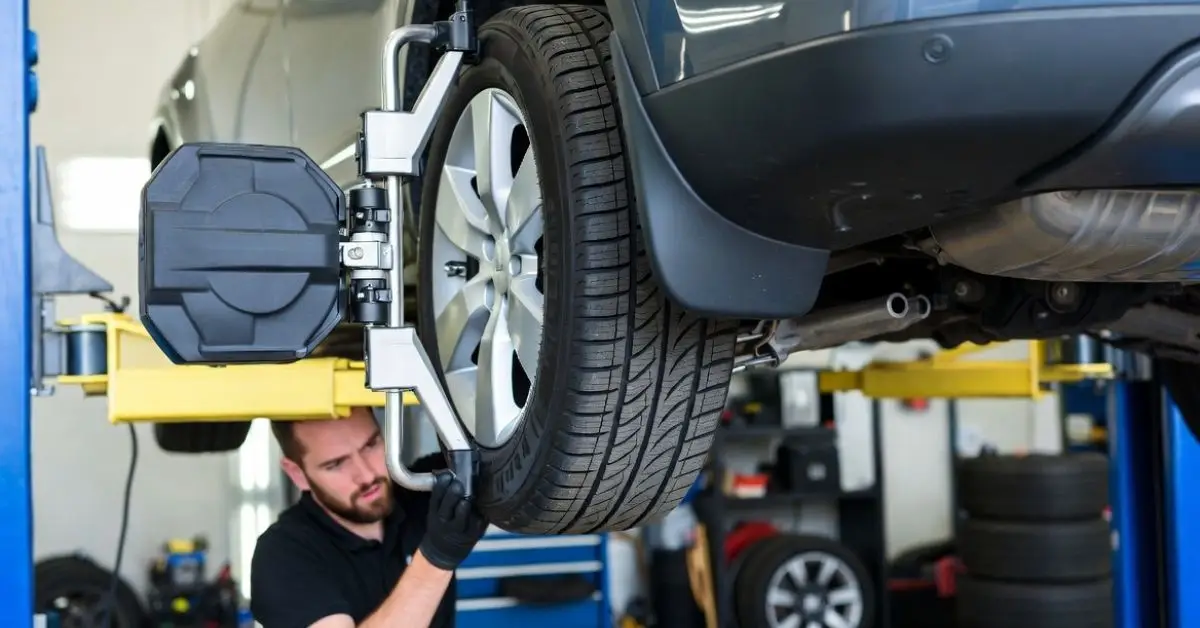
The centering of wheels determines how well your tires will work on the road. When the wheels are not mounted in the right manner, tires do not move in a straight and even manner. Instead, they pull or lean at the right angle, and this causes imbalanced wear. As time moves on, this extra strain weakens the rubber of tires. It has been found that the unsynchronized wheels can decrease the tire’s life by 20 to 25 percent, thereby exposing tires to failures.
With trucks and SUVs, especially when they have lift kits or are used for off-road purposes, alignment is even more paramount. A minor misalignment might not be really noticed initially, but the damage accumulates silently. The risk of air loss can be increased with the help of thin tread, overheated rubber, and strain on the sidewall. That is why many drivers raise such a question: can a wheel alignment cause a flat tire, and is the answer yes or no?
Why Wheel Alignment Matters
The importance of wheel alignment is that it determines the manner in which your car moves, the wear of your tires, comfort, and safety during your daily commuting. The majority of drivers do not pay much attention to the issue of alignment until the moment when something is going wrong; by that point, the process has already begun. At this stage, we have the question: Can a wheel adjustment lead to a flat tire?- especially when the tires have been changed several times without the actual cause being determined.
And the reason why alignment of the wheels is important is as follows:
- Even Tire Contact and Weight Distribution: The four tires are in correct contact with the road. There is evenly allocated vehicle weight, and no tire is overloaded. The steering is also easy, and the stability of the vehicle is maintained at every speed.
- Eliminates Abrasion and overheating: Misaligned tires can be harder workers with one side abrading quicker. Unnecessary friction will produce heat, which will deteriorate tire rubber as time goes by. Weak tires are prone to air loss and flats.
- Increases Fuel Efficiency and Control of the Vehicle: Misalignment may decrease fuel efficiency up to 10 percent because of tire drag. Dragging makes it harder with more tread worn out. Tires become more susceptible to danger on the road due to worn tread.
- Critical to Trucks, SUVs, and Lifted Vehicles: Suspension modifications have the capacity to modify the original angles of alignment, resulting in tires being worn out quickly and developing thin spots. Weak areas are areas where flats are more likely to take place, mostly on highways or rough roads.
- Issues with Safety and Protection of Vehicle Components: When wheels are not properly aligned, extra forces are exerted on the suspension, steering mechanism, and wheel bearings. Correct positioning will avoid expensive repairs other than tires. It enhances braking in case of abrupt stops or sharp turns, and you are safe on the road.
The alignment of the wheels is not only a matter of comfort. It is one of the main factors in tire fitness, car durability, and lifetime economies. Alignment negligence causes tire wear and weakness, and therefore, the question of whether or not a tire can go flat is a very pertinent issue to any motorist.
How Wheel Alignment Could Lead to Tire Issues
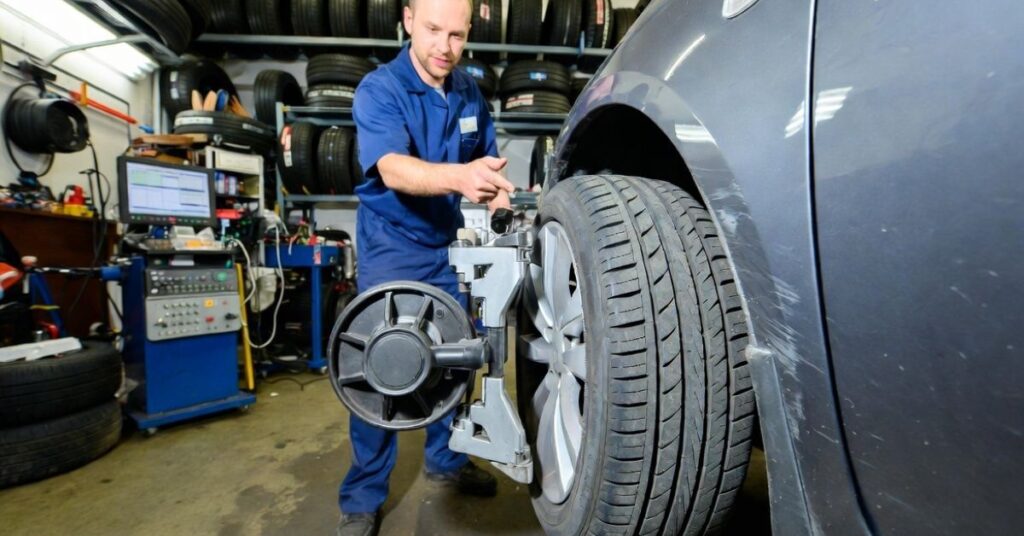
People who listen to the question Can a wheel alignment cause a flat tire will usually anticipate a yes or no answer. As a matter of fact, the process is slow. A wheel alignment is not like a bad wheel creating a hole in your tire, but it causes steady stress that gradually destroys both the inside and the outside of your tire. This wear is accumulative in the number of miles covered, particularly when the automobile is used every day or on uneven streets.
Wheels that are not in position cause tires not to lie flat on the road. Rather, a part or one side of the tire is overweight. This contact becomes uneven, resulting in some parts wearing much faster than others. These thin spots become hot faster with time as the driver drives. One of the largest tire rubber enemies is heat. It has been found that tires that are overheated have a high probability of failure, particularly during highway use (40 percent).
The other issue that results from poor alignment is tire scrubbing all the time. The tire does not roll in a straight manner, but drags slightly off the direction. This wears tread, undermines the sidewalls, and may even destroy the inner structure of the tire. As soon as the inner layers are undermined, the tire is more exposed. A flat may then be caused by a little nail, a sharp stone, or even low air pressure.
The following are some of the typical problems with tires related to poor wheel alignment:
- Lop-sided tread wear or uneven.
- Hair baldness is developing a lot earlier than anticipated.
- Overheating of tires when driving over long distances.
- High chance of air leakage and puncture.
This is particularly grave for trucks, SUVs, and lift-kit vehicles. Suspension modifications disorient more quickly than regular cars. Unless tires are checked periodically, they may appear good on the surface, but become soft on the inside. That is why most drivers finally find out that a flat tire can be caused by a wheel alignment, which is not a theory, but a fact.
In simple terms, lack of alignment does not damage your tires immediately, but rather prepares them for failure by a slow process. Early alignment repairs will stop these covert tire complications and will assist you in avoiding the unforeseen flats on the highway.
Explore About: Driving with Bad Wheel Alignment: How to Fix It
Common Causes of a Flat Tire Unrelated to Alignment
Not all flat tires occur due to wheel alignment. In fact, most of the falls happen due to day-to-day accidents or care-related problems. Knowing these causes will ensure that drivers establish the real problem in order to avoid wasting time blaming the alignment.
The most noticeable reasons are the following:
- Road Debris: Screws, nails, broken glass, and sharp pieces of metal may cause punctures to tires. Flats can occur slowly or abruptly and even on small objects, such as highways and construction zones.
- Poor Tire Pressure: An Underinflated tire will overheat and wear unevenly, making it prone to flats. Overinflated tires are harder and more apt to crack or burst. Temperature changes will always be natural in pressure, particularly in cold conditions.
- Damage to the valve stem: Air leakage may be due to the destroyed or ruptured valve stem. At times, do not consider this matter when examining tires frequently.
- Potholes and Curbs: Contact with potholes, sharp edges, and hard surfaces may cause damage to the sidewalls of tires. Blows may cause the internal tire structure to be weak and cause the sudden loss of air.
- Worn-Out or Old Tires: tires generally become old; the rubber is hardened, and the inner linings are weaker. The tires do not last longer than six years, and therefore, they are more likely to fail even when they appear normal on the treads. The hoisting of off-road vehicles or trucks is extremely vulnerable to impact damage.
- Defects in manufacturing (Rare): Tires can sometimes be defective and therefore likely to form a flat. It could be identified early to reveal some of the weak points when it is checked regularly.
These are the most common issues that may be avoided with the assistance of routine check-ups, inflating tires, and sufficient driving so that your tires are in good condition.
Read More About: Why Your Steering Wheel Is Still Crooked After Alignment
How to Properly Maintain Tires and Alignment
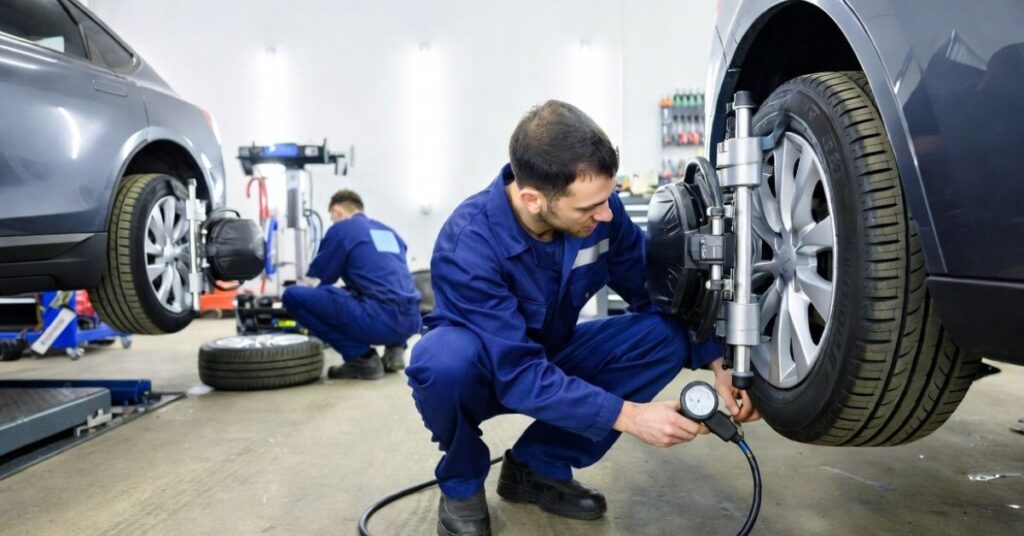
The greatest question many drivers pose to themselves is: Can a wheel alignment cause a flat tire? The eventual wear of tires may be achieved by the alignment, but the majority of the flat tires happen because of the factors that do not relate directly to the angles of the wheels and the suspension parameters. The awareness of such factors, despite the long-term wear of the tires that may be a result of the alignment, most of the flats are caused by daily problems. Can avoid the unjustified accusation of the alignment and find out the real issue.
Common reasons for flat tires not associated with Alignment:
- Road Debris: Nails, screws, fragments of glass, and sharp metal objects tend to be found on highways and construction sites.
- Even minor debris can bring about air leaks with time: According to tire safety reports, puncture is the cause of almost 60 percent of all flat tires.
- Low Tire Pressure: Low tire pressure compromises sidewalls and could result in overheating. Expanded tires would become rigid and are more likely to crack or burst. Pressure reaction to temperature pressure is naturally lower in cold weather, which elevates the risks of flat tires.
- Damage to the Valve Stem: Cracked or broken valve stems may also result in the escape of air. When carrying out normal tire checks, it is normally overlooked.
- Age and Wearing: tires that are above 6 years old have a high chance of failure, although they might appear to have a certain tread. Old or dry-rotted tires have weak inner layers, and they will deliver unanticipated flats.
- Impact Damage: Splashing into potholes, curbs, and other impediments may damage tire structure. Off-road vehicles are especially vulnerable to unexpected impacts on flat tires, particularly lifted trucks.
The causes of flat tires vary widely, as they may be due to some daily hazards, or even as a result of the lack of maintenance, or even the aging of tires, rather than just being due to a wheel alignment. Routine tire checks, correct inflation, and replacement of worn and tattered tires are not only important for checking the alignment but also for the prevention of flats.
Read About: Average Wheel Alignment Cost: What You Need to Know
Conclusion: Can a Wheel Alignment Cause a Flat Tire
Ultimately, this is the answer to the question whether a wheel alignment can produce a flat tire, yes and no, but mostly yes, it is about prevention. When you have poor wheel alignment, it does not cause an instant hole in your tire. Rather, it gradually erodes the tread, undermines the sidewall, and leaves thin areas that expose tires to flats as time goes by. Overlooking the problem of alignment will make a small issue a surprisingly costly one.
The main solution to these problems is proper maintenance by a professional service like Gresham4wheeldrive. Routine checking of alignment, rotation of tires, inflation, and driving at a steady speed all decrease the pressure on your tires. The problem of alignment is even more critical in the scenario of lifted trucks, SUVs, or vehicles operating off-road, as the suspension change might contribute to the acceleration of tire wear-outs. Through some of the warning signs in the initial stages, you would be able to notice such problems as uneven tread, pulling on one side, or vibrations that would allow you to rectify the situation before it ruins your tires.
One of the most important aspects of vehicle safety, performance, and efficiency is tires. The tire life, steering, braking, and fuel economy are also influenced by alignment. The answer to this is to ensure that you retain your alignment and tires by keeping them in good condition so that you decrease the chances of flat tires, ensure a safe drive, and save on your journey. Research on the relationship between a flat tire and wheel alignment, and the fact that prevention is always better than cure, leaves the question of whether a wheel alignment causes a flat tire unanswered.