You are on a straight road with your 4×4, but the steering wheel is not in the right frame of mind. The car also jerks to a side sometimes, and it also begins to shake as you gain momentum. A lot of drivers do not pay attention to such signs, believing that it is normal wear and tear. Yet at the same time, these minor issues become larger and more costly. This is when one normally comes across two confusing terms, which are wheel balancing and alignment. The actual misunderstanding comes in when they attempt to get a grasp of the difference between wheel alignment and wheel balancing.
There is a common question amongst most vehicle owners about whether such services accomplish the same task. Others even believe that when they select one service, all the problems related to the wheels will be solved. As a matter of fact, they are two extremely different processes, and each of them can solve a different type of problem. One is the way towards which your wheels turn, and the other is the way towards which the wheels turn evenly. When you select the wrong service, you might end up wasting money and yet driving away with the same problem.
This is further complicated by the fact that 4×4 cars are even more likely to get confused. Leviathan kits, large tyres, suspension modifications, and off-road driving place more strain on wheels and steering. According to industry reports, automobiles with bad wheel configuration may lose up to 10 per cent of fuel efficiency, along with accelerated tyre treads. Knowing what your car requires can help you prevent such issues at an early stage.
We are going to discuss each concept step by step in a way that is easy to understand in this guide. At the end of it, you will be able to concretely know what these services are, why they are important, and how to make a decision on what your vehicle actually needs.
What is Wheel Alignment?

Wheel alignment is all about ensuring that your wheels are facing the right direction. Imagine your feet when you walk, think of your wheels. When your feet are pointing in or out, walking is not comfortable and tiring. And the same thing is the case with your car when the wheels are misaligned. The alignment of wheels is done to ensure that your tyres touch the road in a straight and constant direction.
Wheel alignment involves three main angles, which include camber, caster, and toe. Camber determines the way the tyre tips either inwards or outwards. Caster interferes with steering balance and the ease with which the wheel can be centred. The toe determines whether the tyres will be pointed slightly inward or outward, as one sees them above. These angles are supposed to collaborate so that they drive smoothly. Even the slight rotation of one angle can lead to problems that can be observed.
In the case of 4 x 4 cars, the alignment of the wheels is even more critical. The lift kit installations elevate the vehicle and alter the geometry of the suspension. This has an automatic influence on the angles of alignment. When the problem of alignment is not fixed following a lift, the tyres may wear unevenly in a few thousand miles. You can also experience the steering being pulled to one side, or the steering wheel may be sitting crooked when you are straight.
Such typical indicators that your car requires wheel alignment are:
- Uneven or rapid tyre wear
- Carm is pulling to the left or right.
- Steering wheel not centred
- Unstable or sloppy steering.
It is not only comfort that matters as far as alignment is concerned. The correct alignment is important it enhances the life of tyres, handling, and fuel consumption. It also decreases the stress on steering and suspension components. In the case of lifted and off-road cars, alignment inspections should be conducted on a regular basis to ensure that everything is in smooth operation.
Also Explore: Why Your Steering Wheel Still Crooked After Alignment
What is Wheel Balancing?
The balancing of the wheels is concerned with the smooth rotation of the wheels. Even a new tyre may have some minor variation in weight all over the tyre. In case these differences in weight are not addressed, the wheel will spin out of balance. You might not feel anything at a slow speed. However, the faster it goes, the more pronounced the imbalance.
Suppose you have a spinning fan that has one heavier blade. The faster it spins, the more it starts shaking. Such is precisely the case with unbalanced wheels. The solution to this problem is achieved through wheel balancing, whereby a small amount of weights is attached to certain areas of the wheel in order to make it spin freely.
Vibration is the most frequent symptom of a bad wheel balance. You can feel it in the steering wheel, in the sea, or on the floor, particularly at 60-100km/h. In the long run, such vibration leads to uneven tyre wear and results in additional load to the suspension components, such as shocks and bearings.
Balancing is particularly crucial following:
- Installing new tyres
- Off-road driving in uneasy conditions.
- Hitting potholes or curbs
- Rotating tyres
Modern cars tend to be highly dynamically balanced, i.e, they correct vertical and side-lateral imbalance. Balancing is more difficult and significant for 4×4 vehicles that have large tyres. Larger tyres exaggerate an imbalanced situation, and vibrations are more significant unless the problem is effectively resolved.
Balancing of wheels does not influence steering as alignment does. Rather, it provides a comfortable and smooth ride. Ignoring balancing problems might not be an important matter initially, but, in the long run, it contributes to an acceleration of the wear of tyres and loss of comfort during driving.
Difference Between Wheel Alignment and Wheel Balancing
This is where most of the drivers eventually notice the real difference. Although the terms wheel alignment and balance are similar, they correct two issues that are entirely different. This can be best explained by comparing them point by point.
What Each Service Controls
The direction that your wheels point is controlled by wheel alignment. It ensures that the four wheels are in the correct position and they coordinate with one another during the forward movement of the vehicle. When the wheels are not in alignment, the car finds it hard to remain on a straight course, even on a straight street.
Balancing of wheels, on the other hand, regulates the evenness of your wheels turning. It does not take a turn at all. Rathe, it stabilises the weight distribution in the wheel and tyre, thus preventing vibration.
Briefly, the alignment controls the direction, and the balancing controls the rotation.
Driving Symptoms You Feel
Whenever there is an imbalance in the wheel alignment, the issue is reflected in the way the car performs on the road. The vehicle can draw towards one side, the steering wheel can be out of alignment, or the car can have a wobbly feeling when driving straight. These are factors that can be readily observed when driving in a normal city.
The issues of balance to the wheel are different. They tend to occur with an increase in speed. The steering wheel can shake, the seat can vibrate, or the floor can be rough. All things might be alright at low speeds, and that is why balancing problems are not taken seriously by many drivers.
How Tyres Wear Over Time
Lack of appropriate wheel alignment leads to uneven wear of tyres. The wear on one side of the tyre can exceed that on the other side, or alternatively, the edges can be worn out with the centre appearing good. This type of wear reduces the life of tyres in a very short time.
Lack of balancing in the wheels results in patchy or cupped tyre wear. The tyre receives small high and low spots due to the lack of even spinning of the tyre. This causes noise, vibrations, and premature replacement of tyres in the long run.
The two issues destroy tyres but not in the same manner.
The Way Every Service is Performed
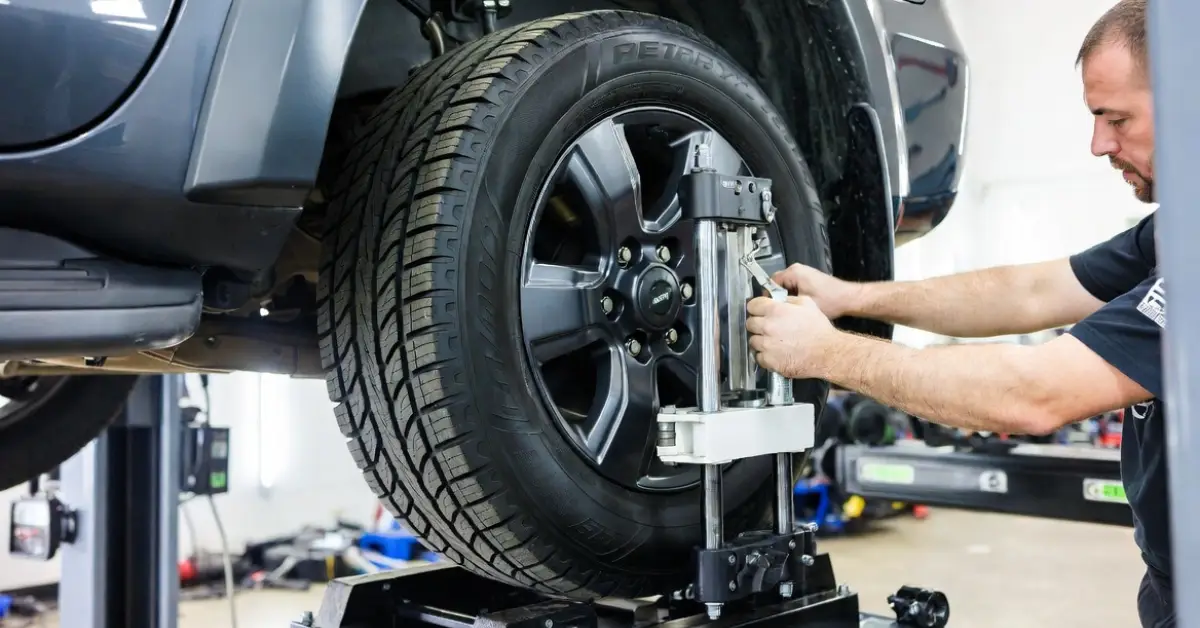
Alignment of the wheel is performed through the adjustment of the suspension and steering parts. Technicians adjust angles such as camber, caster, and toe to restore the movement of wheels to the proper position. Such work has to be accurate, particularly when it comes to raised or customized cars.
The balancing of the wheels is done through rotating the wheel in a machine and attaching small weights to eliminate the imbalanced weight. These are weights that contribute to the rotation of the wheel at any speed.
The methods are different, and therefore, one service cannot repair the other.
When You Generally Need Each of Them
Wheel alignment is normally required following the installation of a lift kit, changing of the suspension components, striking of potholes, or steering pull. Alignment is influenced by any alteration of suspension geometry.
Wheel balancing is normally required when new tyres have been installed, rotating tyres, off-road driving, or when vibration has been experienced at a higher speed. Balance is usually disrupted by changing tyres and wheels.
Both of the services are often required in combination, particularly in 4x4s, yet they have to be carried out separately.
What Takes Place When You Miss Either of the Services?
Failure to do wheel alignment may result in:
- Rapid and uneven tyre wear
- Ineffective management and steering.
- Increased fuel usage
- When the balancing of the wheels is omitted, it may cause:
- Vibrations during the entire time on the road.
- Additional pressure on the suspension and wheel bearings.
- Reduced driving comfort
By knowing these differences, you are able to explain the problems well to the professionals and select the correct service rather than making guesses. You save the tyres, your suspension, and your driving experience when you are aware of what every service entails.
Also Explore: Wheel Alignment vs Steering Alignment: Avoid Costly Repairs
Why Professional Wheel Alignment & Balancing Matters for 4×4 Vehicles
The 4×4 cars are not constructed in the same way as ordinary cars. They are higher and heavier, and they are made to go over rough roads, off-road trails, and heavy loads. This is the reason why their wheels and suspensions are under a lot of stress. This renders the process of wheel alignment or balance both very sensitive and very crucial as compared to the case of normal cars.
The question that many individuals ask themselves is whether it is possible to do wheel alignment and balancing at home. The truth of the matter is that basic checks may be performed, but proper alignment and balancing are impossible to perform without professional machinery. In the case of normal cars, minor mistakes are not noticed. In the case of lift 4×4s, a slight error is enough to create big trouble.
The Reason Why DIY Alignment is not Sufficient for 4 x 4 Vehicles
At home, you might be in a position to have a visual examination of whether tyres appear distorted or the steering wheel is misplaced. Others attempt to use simple string techniques or use their eyes to measure angles. Such ways may be used to identify an issue, but they will not correct it in the right way.
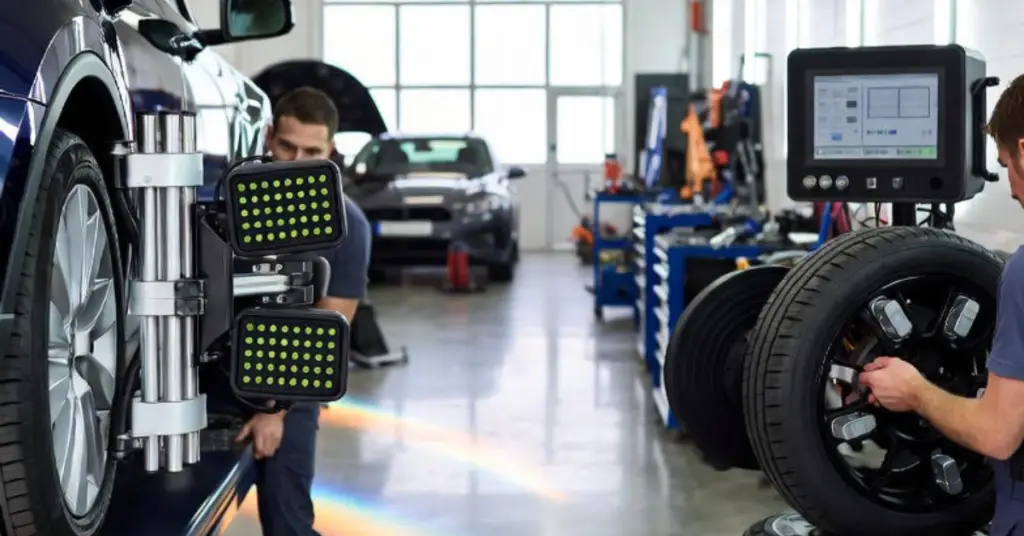
To align the wheels presently, one needs:
- Alignment machines based on laser or camera.
- Precise readings of camber, caster, and toe.
- Car-specific information, particularly lifted applications.
After the lift kit installation, the angles of the factory alignments are altered. Suspension geometry is no longer a standard. These angles cannot be brought to safe limits by any means other than professional alignment tools. Misadjustments made during DIYs can result in bad handling and extremely quick wearing of tyres.
The Essentials of Professional Alignment Following a Lift Kit
Lift kits alter the seat and movement of the suspension components. This has a direct influence on steering stability and road contact with tyres. At Gresham 4 Wheel Drive, a professional service centre knows the behaviour of lifted suspensions and how to make changes to them.
Advanced alignment systems employed by the specialist technicians serve modified vehicles. They understand the relationships between tyre size, suspension height, and mode of driving. The industry statistics indicate that professionally-suited vehicles have the potential to extend the tyre life up to 30 per cent (particularly 4x4s).
The Reason Why Wheel Balancing Requires Professional Tools is Also Explained
Balancing of wheels is even more difficult without proper machinery. Large off-road tyres are also heavier and are harder to balance properly. Minimal errors in weight that may not pose any significant difference when used on standard tyres can lead to severe vibration in a 4×4.
Lack of proper balancing may result in:
- Vibration at the steering wheel on highways.
- Additional load on the bearings of the wheels.
- Quickly worn shocks and suspension components.
Professional balancing machines rotate the wheel at a particular speed and identify precise weight variations. This is a degree of accuracy that cannot be accomplished at home.
Why Choosing a Specialist Like Gresham Matters
Not all alignment shops understand 4×4 vehicles. A specialist like Gresham works with lifted trucks, off-road tyres, and suspension upgrades every day. This experience matters. It helps in alignment and balancing, done properly with your particular setup, rather than the factory settings.
Professional service guarantees:
- Precise adjustment of lifted and modified cars.
- Balancing of large off-road tyres.
- On- and off-road safer handling.
- Tyres and suspension repairs will save money long-term.
Professional wheel alignment and balancing are not one of the remaining optional services for 4×4 owners. They provide the necessary security to your tyres, suspension system, and general driving safety.
Which One Do You Need? Alignment, Balancing, or Both?
The ability to know whether your car requires wheel alignment, wheel balancing, or both depends on the way it feels during the process of driving. Your car expresses definite indicators that something is flawed in it, but most drivers do not understand how to interpret them. Making sense of these signs can help you not waste your time and money trying to service your car unnecessarily.
When your steering wheel drifts to one side on a straight road, it is likely to be a problem with the alignment. Out-of-alignment wheels cause the vehicle to correct itself every time and, in most cases, will result in uneven wear of tyres. When your car is smooth at slow speeds and when the car starts shaking with speed, then the problem is more inclined towards wheel balancing. Inequality in the distribution of weight on the wheel and the tyre causes these vibrations.
The two services are complementary in most instances. Balancing of new tyres is necessary, and lift kits, changing the suspension, and off-road driving frequently influence the alignment. A professional check is done as opposed to guessing where the right service is done at the right time. Sound decisions can help avoid premature wear of tyres, enhance your safety, and ensure your 4 x 4 runs smoothly on its wheels on and off the road.
Explore More: Does Wheel Alignment Affect Steering? Find Out Why!
Final Words
Once you understand the difference between wheel alignment and wheel balancing, you are in control of the health of your car. Such services may be close, but they address entirely different problems. One of them has your wheels pointed in the right place, and the other one has them turned round.
Even in the example of 4×4 vehicles, it is valuable information. The lift kits, larger tyres, and off-road usage necessitate the need of having a proper setup. Once done correctly, your vehicle will be performing well, your tyres will be lasting longer, and you will be feeling more certain.
You ought to listen to your car and act early enough before it is too late, rather than guessing or waiting. The right service, right time saves money, increases safety, and keeps all the drivers comfortable in the driveway or off-road.