Key Takeaways
- Yes, wheel alignment directly affects steering feel, control, and stability.
- Misalignment causes pulling, loose steering, and off-center wheels.
- Lifted trucks and 4WDs are more sensitive to alignment changes.
- Poor alignment can reduce tire life by up to 25% and hurt fuel efficiency.
- Regular professional alignment keeps steering smooth, safe, and predictable.
If your steering wheel pulls to one side, sits off-center, or just doesn’t feel as precise as it used to, you’re probably asking the same question most drivers ask: Does Wheel Alignment Affect Steering?
Quick Answer: Does wheel alignment affect steering? Yes, directly and significantly. It adjusts the angles that control how your tires contact the road and how your steering system responds. About 60% of steering complaints trace back to alignment issues rather than mechanical failures. Since alignment costs just $65–$175 compared to $100–$1,000+ for steering repairs, checking alignment first is almost always the right call.
About 60% of steering complaints at auto service shops trace back to alignment issues rather than mechanical failures. That’s important because alignment is a $65–$175 service, whereas replacing steering components can cost $100–$1,000 or more. Checking alignment first is almost always the right call.
For lifted trucks and 4WD vehicles, this is even more critical, as any suspension modification changes steering geometry, and without realignment, steering problems develop quickly. At Gresham 4 Wheel Drive, we provide professional alignment for daily drivers, trucks, Jeeps, and lifted 4×4 vehicles across Gresham and the Portland, Oregon area.
What Wheel Alignment Really Means
Wheel alignment is just the process of aligning your wheels to the right position so that your car can run straight and feel stable. When the steering wheel is aligned, it remains in the middle, turns in any direction without difficulty, and does what you anticipate. When turned off, steering is the first thing that does not feel right. That is why most drivers ask this question: Does wheel alignment influence steering?
The alignment controls the contact of your tires on the road. The slightest alteration of wheel angles may lead to the steering wheel pulling, being loose, or even sitting awkwardly when driving in a straight line. The majority of alignment correction consists of three simple angles, namely, camber, caster, and toe, and you do not have to get into the technical aspect to discern the impact. When these angles are not correct, then your steering must work extra hard to ensure the vehicle is moving in a straight direction.
In the case of 4WD and lifted cars, alignment is even more important. A lift kit alters the suspension height, and steering angles are altered as well. In the absence of correct alignment thereafter, steering may become unstable, particularly at high velocity. Actually, according to the data provided by the auto service, approximately 30 percent of all problems with steering are not caused by a broken steering component, but by bad wheel alignment.
In simple words, the foundation of good steering is wheel alignment. Steering becomes effortless and smooth when it is in a straight line. When not, steering issues manifest themselves early on when the tires are not yet damaged.
Does Wheel Alignment Affect Steering on Lifted Trucks and 4WD Vehicles?
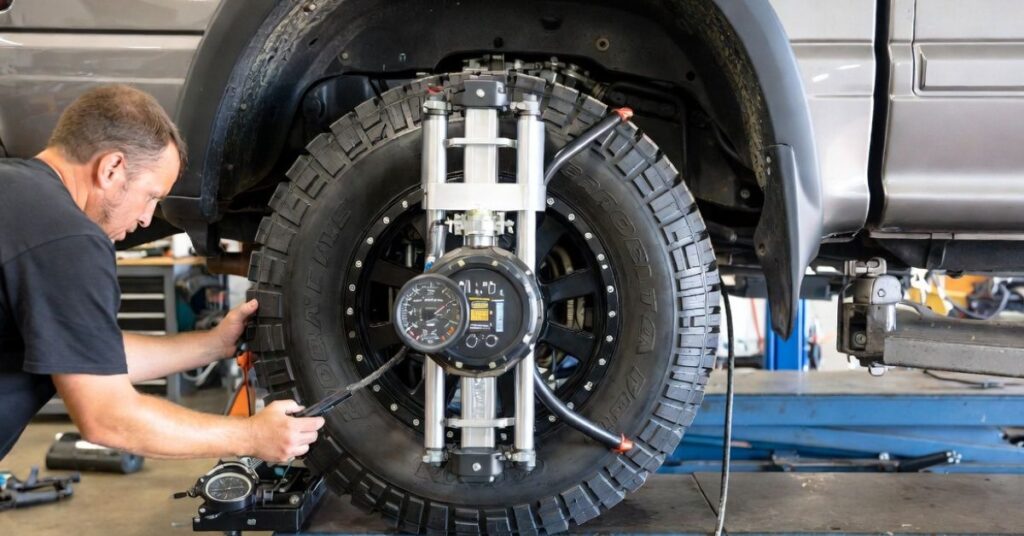
Yes, it does, and more so than on ordinary automobiles. As a truck or a 4WD is raised, the suspension height varies. This also varies the angle of the wheels and steering components. When steering is not re-aligned after the lift, stability begins to be lost very rapidly. It is the reason why a lot of lifted truck owners start noticing steering issues soon after installation and begin to ask, Does wheel alignment affect steering?
Lift kits alter the position of the front wheels and their movement. This may make the steering wheel loose, difficult to control, or slow in returning to its centre following a turn. On highways, the car can be deviated, or it seems that it requires an ongoing adjustment. In the off-road, poor alignment may cause unpredictable steering, which is tiring, particularly on rough surfaces.
The 4WD cars are designed to cope with harsh environments, and this also implies that they are more stressed. Roughly laid roads, rocks, and rough ground are capable of knocking the wheels off track at a quicker rate than normal driving. And the lack of alignment results in steering components that wear out faster, as well as tires that lose grip and control.
Lifted vehicle studies indicate that without changing the vehicle alignment after suspension modifications, lifted automobiles are prone to experience steering problems up to 40 percent of the time. This is the reason why professional wheel alignment is not an option, but it is a mandatory requirement to drive safely and with confidence.
Simply, lifted trucks and 4WD shop Hollybrook Gresham require proper alignment. When properly done, steering is solid and predictable. When neglected, steering issues seem quick and only deteriorate over time.
Read About: How Long Does a 4 Wheel Alignment Take? Shocking Truth!
Why Does Steering Feel Loose After an Alignment?
If your steering feels looser after an alignment than it did before, something went wrong during the service, or there’s an underlying issue the alignment revealed.
Most common causes:
- Worn tie rod ends discovered during alignment: When a technician adjusts the toe during alignment, they manipulate the tie rods. If the tie rod ends are worn, this process can loosen them further or reveal play that was previously masked by poor alignment. The alignment itself didn’t cause the looseness; it exposed a component that was already failing. Solution: replace the tie rod ends and re-align.
- Steering rack not centered properly: If the steering rack wasn’t centered before the toe adjustment was made, the steering wheel will sit off-center, and the steering may feel imprecise or loose in one direction. This is a technician error. Return to the shop and have them redo the centering step.
- Caster angle changed: Caster affects steering return-to-center and straight-line stability. If the caster was adjusted incorrectly or left out of spec, steering can feel loose or unresponsive at highway speeds. Check your alignment printout caster should be within the manufacturer’s spec, equal to or within 0.5° side to side.
- Alignment done on worn suspension components: If ball joints, control arm bushings, or wheel bearings have play in them, an alignment can’t produce stable results, as the measurements shift as the worn components move. The car may feel loose because the alignment isn’t holding. Solution: inspect and replace worn components, then re-align.
What to do: Request your alignment printout from the shop it shows the before and after angles for all four wheels. If the before and after numbers look correct but steering still feels loose, the issue is mechanical, not alignment-related. If the numbers look off, the alignment wasn’t completed correctly and should be redone.
Benefits of Proper Wheel Alignment
Wheel alignment in the proper manner not only ensures your tires are straight, but also But also but also But also, it has a huge influence on the sensation of your vehicle, its safety on the road, as well as the life cycle of certain essential components. In case you ever happen to ask yourself Does wheel alignment affect steering, these advantages make it very easy to know the answer.
- Improved Steering Control: With proper alignment of wheels, the steering wheel will be able to respond smoothly and remain in the middle. It is not pulling left or right; therefore, driving in such a vehicle is easier and comfortable.
- Better Vehicle Safety: Full contact of your tires with the road is achieved through proper alignment. This enhances stability in making turns, braking, and abrupt changes in lanes.
- Even Tire Wear: When tires are not placed properly, they wear out unevenly and at a more rapid rate. Proper alignment contributes to the even wear of all tires, which also increases the lifetime.
- Greater Driving Composure: A well-aligned car is stable and is particularly felt at highway velocities or in lengthy trips.
- Increased Fuel efficiency: Straight-wheeled vehicles do not make the engine work as much. This lowers the rolling resistance and conserves fuel over time.
- Extended Life of Steering and Suspension Components: The correct positioning decreases the amount of stress on steering and suspension parts and decreases the likelihood of premature repair.
- Stable Handling More Stable Handling of Lifted and 4WD Vehicles: Lifted trucks and 4WDs can be very dependent on alignment to provide adequate steering geometry, particularly following suspension modifications.
Wheel Alignment vs Steering Problems: How to Tell the Difference
The fact that your car does not turn in the right direction is enough to make you think that something is terribly wrong with it. Most of the drivers believe that they require expensive steering repairs immediately. However, in most situations, matters are much more straightforward. This is the point where human beings begin to wonder, does the steering change with the wheel alignment, or is it a steering issue?
The misalignment of wheels will normally manifest gradually. When driving, you can observe the steering wheel being drawn to one side, not being in a straight position, or having to constantly correct yourself on the road. The steering is still operative, but is off. The problems usually become increasingly severe with time, particularly when they hit a pothole or drive on uneven roads or when they fit a lift kit.
Steering issues, in their turn, are more mechanical and abrupt. The steering wheel can become very loose, noisy when turning, or difficult to turn at low speeds. In other instances, the steering does not react immediately, a situation that is not very safe. These problems are normally due to worn or damaged components such as tie rods, power steering parts, or the steering rack.
The difference can be easily found in the following manner:
- In case the car is pulled to the right or left, it is probably a problem of alignment.
- When the steering wheel is not straight, and the car is okay in operation, then it is probably due to alignment.
- When steering is stiff, loud, or unresponsive, then it is probably a steering system problem.
Auto service data indicates that approximately 60 percent of the steering complaints are an alignment issue as opposed to a mechanical failure of the steering components. That is why it is possible to save time and money by checking alignment beforehand.
Quite simply, alignment problems touch on the manner in which the vehicle follows the road, whereas steering problems touch on the manner in which the wheel turns. Being aware of the difference will make the difference between fixing a problem and making unnecessary repairs.
Also Explore: Driving with Bad Wheel Alignment: How to Fix It
What Happens If You Ignore Wheel Alignment Steering Issues?
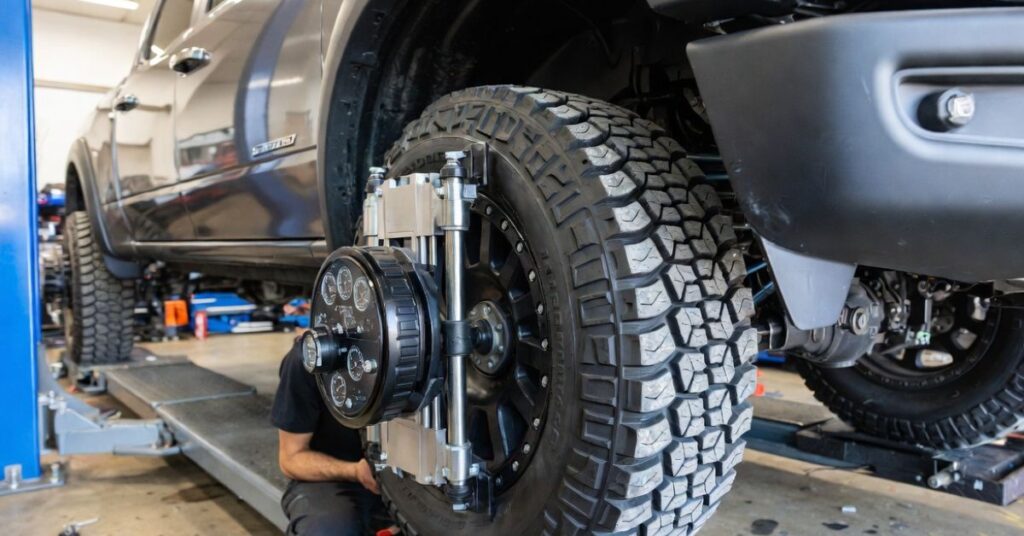
Such negligence towards the issue of wheel alignment might not appear as an issue at hand. The steering is still functioning, and the vehicle is still in motion. Nevertheless, small-scale problems become larger over time. This is the reason why drivers who keep on postponing alignment end up rephrasing, Does wheel alignment affect steering, once things go wrong.
Uneven tire wear is the most noticeable issue of the first problem observed by most people. Wheels are not straight, and tires do not roll straight. Rather, they slide a little on the road. This leads to one side of the tire being worn at a faster rate, and this ends up reducing the life of the tires. Research indicates that when tires are poorly aligned, they may lose life by as much as 25 percent (i.e., they are changed earlier than anticipated).
Control of the steering also becomes difficult. A car that is not well aligned usually pulls to the right or the left, and you are always maneuvering the steering wheel. This, in the long run, leads to fatigue among drivers, particularly during long journeys or on highways. Slowed steering response may be a factor that contributes to accidents in cases of emergency.
Another invisible cost is fuel efficiency. The misaligned wheels cause additional resistance, which causes the engine to work more. The automotive statistics show that the problem of alignment may reduce the level of fuel efficiency up to 2.10, which is a significant sum of money in a few months of driving.
In lifted trucks and 4WD vehicles, alignment should not be disregarded at all. Mismatch causes additional loads on steering and suspension components, which wear out prematurely and cost a lot to fix.
Simply speaking, not fixing wheel alignment problems not only causes a problem with tires, but gradually kills your steering, safety, comfort, and your wallet.
Read More About: Difference Between Wheel Alignment and Wheel Balancing
Professional Alignment Service Matters
One should not do the wheel alignment by guesswork. The alignment service is professionally provided to get your wheels in the right order so that your car turns easily and has stability. When steering is properly aligned, a lot of steering issues are eliminated, and this is the answer to the question: Does wheel alignment influence steering?
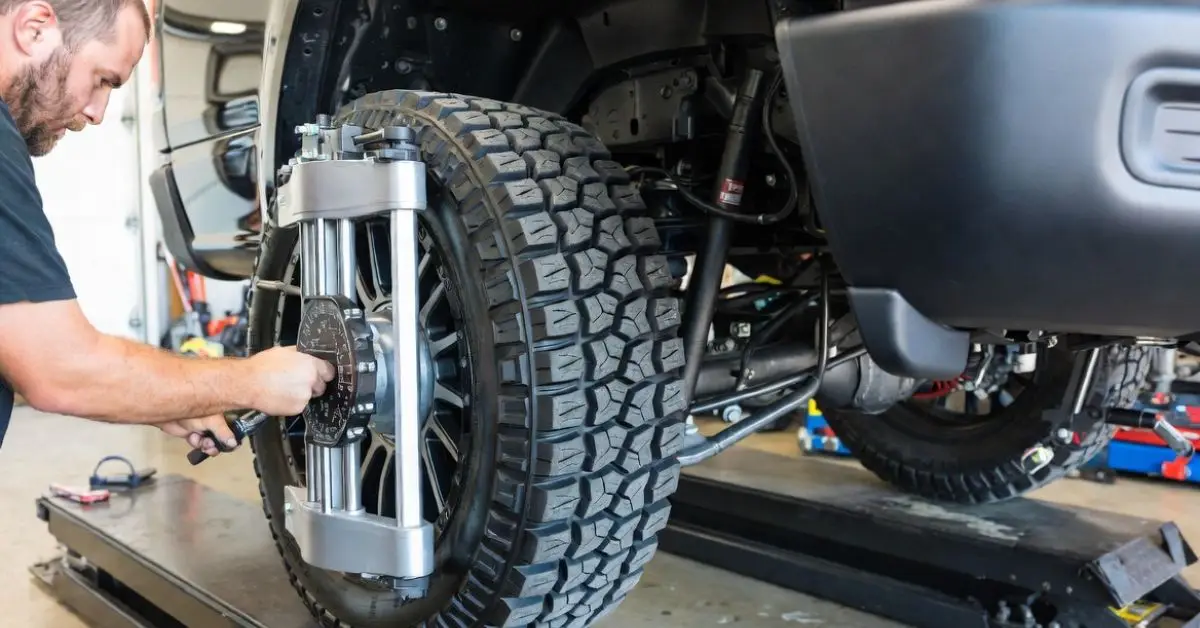
Professional shops use advanced alignment equipment to make precise adjustments, especially for 4WD and lifted trucks. Suspension modifications and lift kits can alter steering geometry, causing the vehicle to pull, drift, or feel unstable at higher speeds if alignment is not performed correctly. For drivers seeking 4WD repair Wood Village OR, choosing a shop with experience in both repairs and alignment services is essential to maintaining proper vehicle handling and performance.
In the case of Gresham4WheelDrive, the trained technicians deal with wheel alignment, and they are familiar with lifted and off-road vehicles. They pay attention to correct steering handling, even tire usage, and safety in the long term. Professional service is a choice that will safeguard your tires, steering parts, and driving comfort.
Conclusion
Does wheel alignment affect steering? Absolutely, and it’s usually the first place to look when steering doesn’t feel right. Pulling, off-center steering wheel, vague response at highway speeds, and post-lift handling problems are all alignment issues that a professional service corrects. About 60% of steering complaints resolve with alignment alone, making it the most cost-effective first step before replacing any components.
Where alignment won’t help is when the looseness comes from worn mechanical parts, such as tie rods, ball joints, steering rack play, or worn bushings. These need to be addressed before alignment can hold correctly. A professional shop will inspect these components before starting the alignment, not after.
For lifted trucks and 4WD vehicles, regular alignment checks are non-negotiable because every suspension modification changes your steering geometry, and the effects compound over time without correction.
At Gresham 4 Wheel Drive, we provide professional wheel alignment for daily drivers, trucks, Jeeps, and lifted 4×4 vehicles across Gresham and the Portland, Oregon area with a full suspension inspection before every alignment and a before-and-after printout on every job.
📞 Call us at 503-400-7646 for a free alignment estimate or stop by, and we’ll check your steering and alignment at no charge.
FAQ’s
Q1: Is wheel alignment the same as tracking?
Yes, “tracking” and “wheel alignment” refer to the same service. “Tracking” is the term more commonly used in the UK, Australia, and some parts of Europe, while “wheel alignment” is the standard term in the US. Both describe the process of adjusting your wheel angles, specifically toe, camber, and caster, to manufacturer specifications. If a shop offers “tracking” as a service, it’s the same procedure as a wheel alignment. The only difference is the terminology, not what’s being adjusted.
Q2: Will an Alignment Fix Loose Steering?
It depends on what’s causing the looseness. Alignment fixes steering pull, an off-center steering wheel, and vague highway handling. These are angle issues corrected by adjusting toe, camber, and caster. However, alignment won’t fix looseness caused by worn tie rod ends, a damaged steering rack, worn ball joints, or failing power steering components. These are mechanical failures that need replacement before alignment can hold correctly. If your car pulls consistently to one side or the wheel sits off-center, start with alignment. If steering feels physically loose or has noticeable play, have the steering components inspected first.
Q3: Can bad wheel alignment damage my steering components over time?
Yes, misaligned wheels put continuous uneven stress on tie rods, ball joints, and control arm bushings. These components are designed to operate within specific load ranges; when alignment forces them to work at incorrect angles, they wear faster than their normal service life. On lifted trucks, especially, this accelerates significantly because the suspension geometry is already operating further from factory spec. Catching and correcting alignment early is almost always cheaper than replacing the steering components that wear out from prolonged misalignment.