Key Takeaways
- A trailer hitch and receiver are different components; the hitch provides strength, while the receiver adds flexibility for accessories.
- Choosing the correct hitch type, class, and receiver size is essential for safe and stable towing.
- Always match your setup with your vehicle’s towing capacity to avoid damage and accidents.
- Compatibility of accessories (like ball mounts, bike racks) with the receiver size is crucial for safety.
- Proper installation and regular maintenance ensure long-term reliability and safe towing performance.
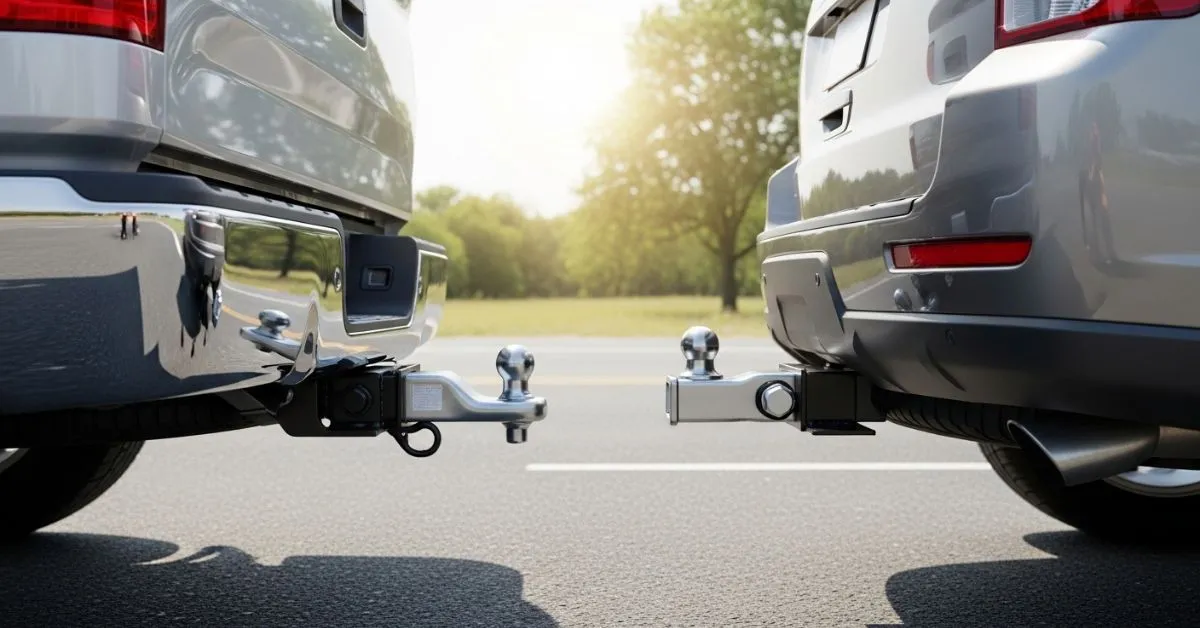
Quick Answer: Trailer hitch vs receiver hitch: what’s the difference? A trailer hitch is the heavy metal component mounted on your vehicle that provides strength and stability for towing. A receiver hitch is a specific type of trailer hitch with a square tube opening that lets you attach accessories like ball mounts, bike racks, or cargo carriers. The hitch provides strength, while the receiver adds flexibility.
When you have tried to install your car to be towed, you must have questioned the trailer hitch or receiver. People believe that they are identical, but they are components of a towing system. When one starts doing research on the receiver hitch sizes, towing accessories, and the type of hitch, it is quite easy to get lost, especially for a new person.
Regardless of whether you are intending to use a small trailer, bike rack, or even a camper, it is important to understand the distinction between a trailer hitch vs receiver hitch to ensure that you are safe and at its best functionality. The inappropriate decision would not only impact your towing ability but might also give inappropriate fitment, as well as damage your car. That is why it is important to know the fundamentals of a good truck towing arrangement.
Customers coming to Gresham 4 Wheel Drive are confused when it comes to deciding on the types of receiver hitch or trailer hitch to use. With this guide, we are going to make everything simple so that you can be sure of the correct setup for your vehicle.
What Is a Trailer Hitch?
A trailer hitch is a heavy metal component that is installed on the back of your car, giving you the capability to pull trailers, bike racks, or other weights. It serves as the primary point of connection in your towing. This is the initial area that people have to learn about trailer hitch vs receiver, since this is the foundation of the whole system.
Types of trailer hitches are varied depending on their purposes. As an illustration, some examples of rear receiver hitches are used in normal towing, whereas fifth-wheel hitches are used in heavy loads such as big trailers or RVs. There is a certain towing capacity attached to each hitch, and this is why it is worthwhile to select the appropriate one in terms of safety and performance.
In Gresham 4 Wheel Drive, we would always explain to customers that a trailer hitch is not a piece of metal but the part that makes towing safe and stable. When you see this, you can find it much easier to work with other parts, such as the receiver hitch.
What Is a Receiver Hitch?
A receiver hitch is a particular kind of trailer hitch that has a square tube hole called the receiver. This refers to the procedure of installing all kinds of towing accessories, like a ball mount, bike rack, or cargo carrier. In the case of the trailer hitch vs receiver, consider the receiver hitch as being the bit that makes your towing arrangement more flexible and easy to operate.
There are various receiver hitch sizes, including 1.25-inch, 2-inch, and larger receiver hitches that can be used in heavy-duty trucks. The sizes are important since all towing accessories need to match the receiver opening to fit in. This is the reason why individuals tend to examine the size of their hitch receivers prior to purchasing any towing gear. It assists in achieving a safe connection and superior towing stability.
A receiver hitch is diverse, and this is one of the greatest benefits. You can use various towing accessories instead of having to use them in a single way. The receiver hitch also makes it easy, whether it is towing a trailer or hauling additional gear. This is one reason why the difference between hitch and receiver.
Compare Trailer Hitch vs Receiver Hitch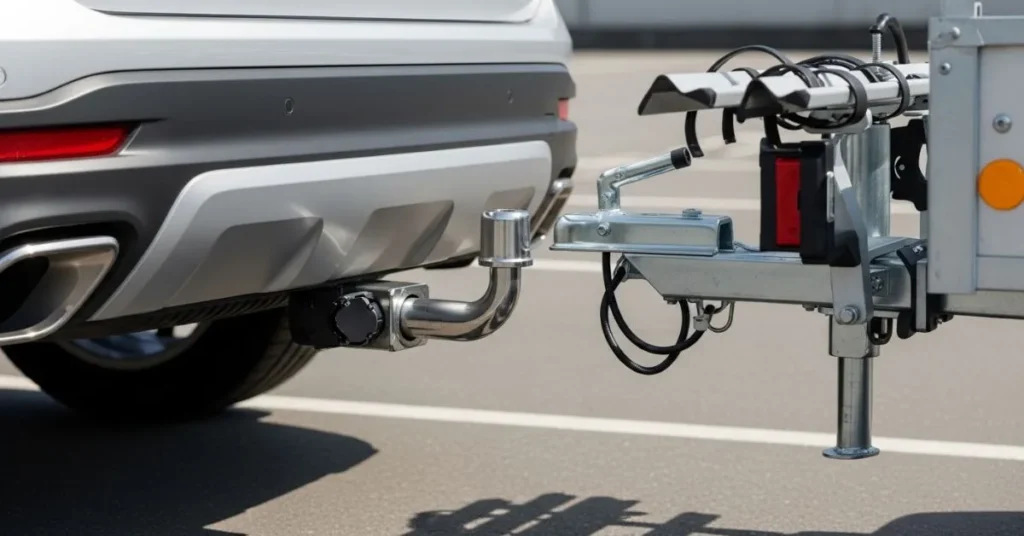
Trailer hitch vs receiver causes confusion to many individuals when towing is concerned. Although the two are very important elements of a tow hitch vs receiver system, their functions are not similar, and they are used to ensure the safety and efficiency of towing. These differences can be learned to prevent errors, increase stability, and select the appropriate setup that suits your car.
1. Function
Trailer hitches are the primary loading tool of towing, which can support the entire weight of trailers or heavy objects. Stability, safety, and correct distribution of weights during driving, be it on the smooth highway or a rough off-road trail: they can do it. The hitch is a fundamental component of every towing job, as it forms the basis of every towing operation.
Receivers are made in a way that offers flexibility to your towing system. They give the square hole that contains different towing accessories firmly. Your trailer hitch could only be attached in one way without a receiver, and this limits the flexibility of your hitch to other tasks, such as transporting cargo, bikes, or attaching other trailers.
2. Design
Trailer hitches consist of heavy metal structures that are attached to your car permanently. They have been designed to withstand heavy stress, bending, and provide a long-lasting towing foundation. Their construction is such that your vehicle will safely be able to carry heavy loads without affecting the performance and safety.
On the other hand, receivers are square tube openings created on the trailer hitch. Their size is determined by their size, like 1.25-inch, 2-inch, or 2.5-inch, which identifies the suitable accessories. The design of the receiver is centered on flexibility, with the option of easily attaching or detaching various towing devices as per your requirement at the given moment.
3. Usage
A trailer hitch is a permanent item that provides the foundation of a towing system. In the movement of trailers, campers, boats, and other heavy equipment, it is needed. The right hitch will ensure that your vehicle will be able to cope with weight safely and will not ruin its frame or suspension.
You can attach towing accessories to the receivers depending on the needs. They are capable of rapid switching between ball mounts, bike racks, or cargo carriers. This adaptability ensures that receivers are a convenient product to those who drive their cars to different towing jobs.
4. Flexibility
Though a trailer hitch makes it strong and more stable, it can only be as strong as its structure allows. In the absence, there will be limited choices in towing, and the exchange of accessories will be inconvenient or even dangerous. The hitch in itself cannot fit various tasks effectively.
Receivers enhance the flexibility of your towing system. They enable you to change trailers, cargo carriers, or bike racks without the need to re-install the hitch. This renders the system versatile, convenient, and good enough to use in everyday towing, which explains why the topic of the difference between hitch and receiver is such a big issue.
Also Explore: Pintle Hitch vs Ball Hitch: Best Option for Heavy Loads?
How to Choose the Right Setup for Your Vehicle
The selection of the proper towing structure may be a process when you have no idea whether to use a trailer hitch or a receiver. The kind of load you carry, the towing requirements of your vehicle, and the type of vehicle you have are all factors that will determine the ideal system. Choosing the right configuration makes it safe, stable, and a smooth process whenever towing.
- Check Your Vehicle’s Towing Capacity: There is a maximum towing capacity for all vehicles, and in many cases, it is stated in the owner’s manual. Ensure that your trailer hitch or receiver is equal to this weight so that the hitch is not overloaded. The weight limit is meant to be broken, as it will not only hurt your suspension but also cause accidents on the road.
- Determine the Type of Load You’ll Tow: It depends on the type of trailer, camper, or cargo you are going to tow. Heavy-weight needs a better-grade hitch, whereas less weight can possibly be supported on a Class I or II one. Knowing your type of load will enable you to determine the appropriate pairing of hitch and receiver of the trailer.
- Select the Size of Receiver: Receiver openings come in universal sizes of 1.25-inch, 2-inch, or 2.5-inch. The correct size will be selected in such a way that the towing accessories, ball mounts, or cargo carriers will not be overloaded. An improper size will result in unstable towing or destruction.
- Consider Hitch Classes and Their Applications: There are five types of hitches (Classes I to V), and these depend on the amount of weight that can be carried. Classes I and II would suit light towing, and Classes III to V would deal with heavier loads. The performance of towing is safe when you match the hitch class with your vehicle and load.
- Think About Versatility and Accessories: It is necessary to think about accessories and what you want to use, as you may change your towing needs with time. The right receiver is required in the bike racks, cargo carriers, and various ball mounts. Flexible setup ensures that your system remains flexible for future work.
- Professional Installation for Safety: Even the correct parts will not work well if they are installed incorrectly. Professional installation guarantees that it is correctly aligned and balanced in weight and that it is properly connected. This makes your vehicle wear less, and towing is safe under any circumstances.
Also Explore: Class 2 vs Class 3 Hitch: The Ultimate Showdown
Common Mistakes About Trailer Hitch vs Receiver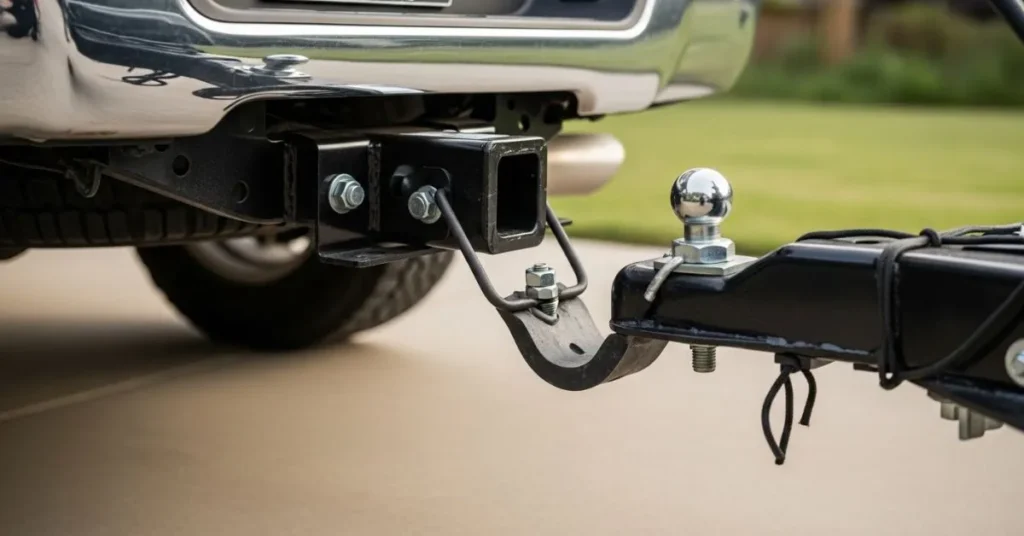
Most car owners commit errors in trailer hitch vs receiver when installing a towing system without even noticing it. Incorrect hitch, disregard of weight limits, and incorrect installation of parts can be the cause of unsafe towing. Being aware of such pitfalls will save you the time and money you would spend fixing your vehicle.
- Ignoring Vehicle Towing Capacity: It is actually one of the gravest errors that people make, as it is best to select a hitch or a receiver that is smaller than the towing limit of the vehicle. All trucks, SUVs, and Jeeps have their maximum weight. The neglect of this can put a strain on your suspension, brakes, and even break the frame over time.
- Choosing the Wrong Receiver Size: This is the mistake that most people commit, and they end up selecting the wrong receiver without checking the correct size based on their towing accessories. Using the wrong receiver, which is 1.25-inch, 2-inch, or 2.5-inch, can cause the vehicle to be unstable and unsafe during towing. Do not use smaller accessories than the size of the receiver you want to use.
- Not Considering Hitch Class: There are Hitch classes of Class I to Class V, depending on towing capacity. It is dangerous to use a lower-class hitch to carry heavy loads, and it may bend or even break. The hitch class should always be equal to your load to be safe and durable.
- Improper Installation: The correct trailer hitch and receiver will break down when installed improperly. Towing when there are loose bolts, misalignment, or missing hardware may be dangerous. Professional installation leads to adequate fitting, alignment, and the ability to tow safely.
- Neglecting Towing Accessories Compatibility: There are individuals who overlook the fact that they should check the compatibility of their accessories, such as bike racks or cargo carriers, with the receiver. The accessories may move or fall off during the drive, leading to accidents or damage. It is advisable to always ensure that the accessories fit before towing.
- Overlooking Maintenance: Trailer hitch and receivers have to be regularly inspected and maintained. Worn components, lost bolts, and rust may decrease the strength and safety. Periodic inspections are recommended to avoid a breakdown and prolong the life span of your towing system.
Which One Do You Actually Need?
When it comes to towing, a trailer hitch and a receiver will depend on what you are going to haul and the number of times you are going to tow. Knowing the requirements of your car and how you pull will help you make the correct choice. We will assist our customers in selecting the setup that fits their lifestyle and makes them safe on the road.
A high-quality trailer hitch would be necessary in case you are pulling heavy trailers, campers, or other large cargo with a lot of frequency. It gives the stability required to carry weight in a safe manner and ensures that your load stays put even during long-distance travels. A hitch that is durable and made by Gresham 4 Wheel Drive would help avoid wear and tear to your vehicle and enhance towing efficiency in general.
There are those drivers who are fortunate to have a well-matched trailer hitch with a matching receiver of the right size. This is the most stable, and at the same time, your towing system is flexible to a wide range of work. In Gresham 4 Wheel Drive, we would make sure every installation would fit your towing capacity and your needs.
Also Explore: Cost to Install a Tow Hitch: Ultimate Price Guide
Get the Perfect Towing Setup with Gresham 4 Wheel Drive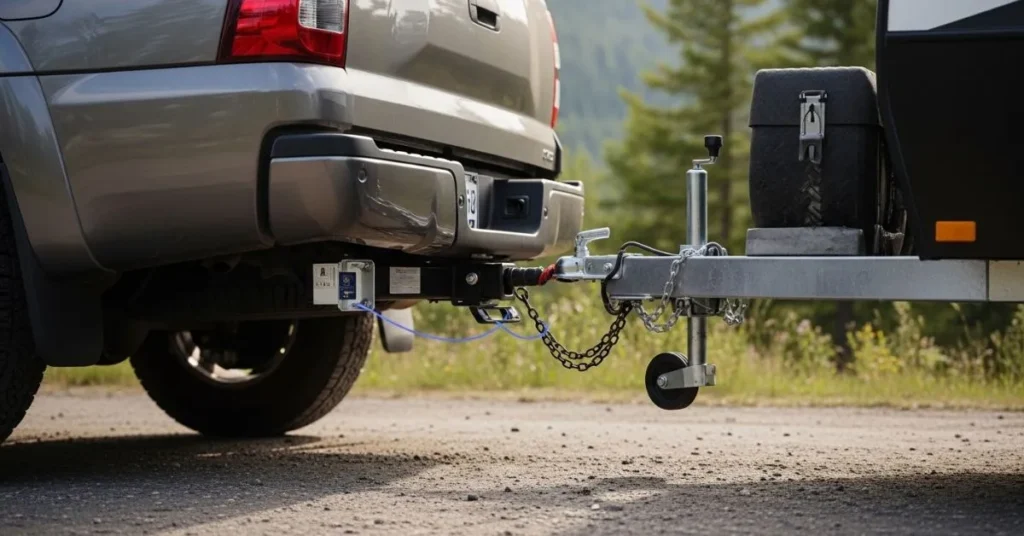
If you want a safe and reliable towing system, Gresham 4 Wheel Drive is your go-to expert. We have experts for installing hitches, trailer hitches, receivers, and other towing accessories to suit the requirements of your car. Each installation would be aimed at optimal truck, SUV, and off-road vehicle performance, stability, and towing safety.
Professional fitting of the correct trailer hitch vs receiver hitch combination takes place in our team. We inspect hitch type, receiver size, and ensure it is securely mounted, we check so you can tow with confidence. You can be towing trailers, campers, and cargo carriers, but you will always be set up and prepared to carry whatever you are towing.
At the Gresham 4 Wheel Drive, we also see you through the best accessories for your lifestyle. We fit everything to perfection, not just ball mounts and cargo carriers but bike racks. Your towing system will be secure, and up to any adventure with our knowledge.
Conclusion
To have safe and efficient towing, it is important to understand the difference between a trailer hitch vs receiver hitch. The trailer hitch ensures strength and stability, besides the receiver ensures diversity in terms of accessories. When selecting the appropriate mix, you are guaranteed that your car is capable of carrying any weight and can be safely driven on the road.
When the right towing gear is installed, you are sure that trailers, campers, or other cargo will be transported safely and without harm. Caution on the hitch class, size of receiver, and correct installation is the key to smooth towing.
Gresham 4 Wheel Drive will guide you in choosing and installing the ideal system for your car. Professional services, guidance, safe installation, and our knowledge of the towing system will provide you with a good, strong, and flexible system that will deal with any adventure or job requirement.
FAQs
Q. Is a fifth-wheel hitch the same as a receiver hitch?
No, a fifth-wheel hitch is a different type specifically for heavy loads like large trailers or RVs, while a receiver hitch uses a square tube opening for various towing accessories. Fifth-wheel hitches mount differently, typically in the truck bed, rather than at the rear bumper area. Each type serves distinct towing purposes based on load size and vehicle setup.
Q. Can I switch between a bike rack and a cargo carrier without reinstalling anything?
Yes, this is one of the main advantages of having a receiver hitch system. As long as your accessories match the receiver’s size, you can swap between a bike rack, cargo carrier, or ball mount quickly without any reinstallation of the hitch itself.
Q. Can I install a bigger receiver size than what my hitch class requires?
It’s important to match your receiver size to your specific hitch class and towing accessories rather than assuming bigger is always better. An incorrect size pairing, even if the receiver is larger, can create instability or improper fitment. Always follow the manufacturer’s recommended size for your specific hitch class.
Q. What’s the risk of using a Class I hitch for heavier loads?
Using a lower-class hitch for loads beyond its rated capacity risks the hitch bending or breaking during towing. The hitch class should always match or exceed your actual load weight for safety and durability. Attempting to save money with an underrated hitch can lead to costly accidents or vehicle damage.
Q. Can installing a receiver hitch affect my vehicle’s ground clearance or approach angle?
Yes, a rear-mounted receiver hitch typically extends slightly below the bumper line, which can marginally reduce your vehicle’s rear approach or departure angle. This is usually a minor consideration for daily driving but can matter more for off-road use over steep inclines or departure points. Removable or swing-away hitch designs are available for drivers who want to minimize this impact when not actively towing.