Key Takeaways
- Proper setup of an equalizer hitch is essential for safe towing, stability, and reducing trailer sway on the road.
- Correct weight distribution improves steering control, braking performance, and reduces strain on your vehicle’s suspension and tires.
- Small setup mistakes, like wrong hitch height or incorrect spring bar tension, can cause serious handling and safety issues.
- Choosing the right hitch depends on your trailer weight, vehicle type, and required sway control features.
- Professional installation and alignment, like at Gresham 4 Wheel Drive, ensures accurate setup and long-term towing safety.
Quick Answer: Setting up an equalizer hitch involves measuring vehicle and trailer height, installing the hitch head at the correct height, attaching spring bars, and adjusting tilt for proper weight distribution. This weight distribution hitch with sway control spreads the trailer’s tongue weight across both axles, keeping the vehicle level and improving steering, braking, and stability. Correct spring bar tension and a final test drive ensure safe towing.
Towing a trailer may be an easy task, but it’s all wrong when you fail to do it right in the beginning. Trailer sway, loose steering of the car, or unbalanced handling is observed by many drivers on the road, and in most cases, all it takes is a poor weight distribution hitch system. This is the reason why it is so necessary to learn how to set up an equalizer hitch in order to be able to tow safely and smoothly.
An equalizer hitch (also known as a weight distribution hitch with sway control) assists in evenly distributing the weight of the trailer across your car. This enhances the stability of towing, ensures the level of your car, and as well minimizes the strain on suspension and tires. However, when you align your hitch or a spring bar, you have to be very careful because one slight error can cause severe control and safety problems.
In this orientation, we are going to describe the process of installing an equalizer hitch in a simple and practical manner so that it can be understood by anybody. And when you ever feel doubtful or need professional assistance, Gresham 4 Wheel Drive is there to ensure that your set-up is done correctly to achieve optimal performance and safety.
What Is an Equalizer Hitch
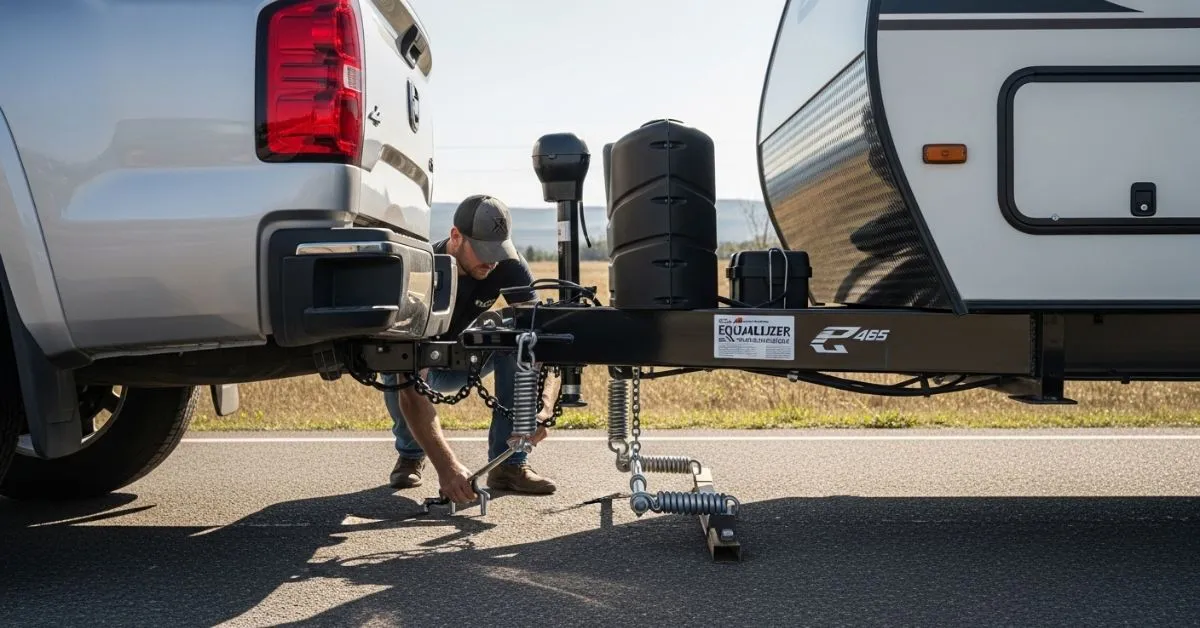
An equalizer hitch or weight distribution hitch is a towing system to even out the weight between your vehicle and trailer. As opposed to all the weight being concentrated on the back of your vehicle, the weight is distributed on all axles. This enhances stability during towing, ensuring that the vehicle is straight and level and making driving much easier and safer.
It operates with such parts as a hitch head and spring bars, which would create a certain tension and thus raise and spread the load throughout the piece. This eliminates improper hitch attachment and can have embedded sway control to reduce swaying of trailers on highways or off roads. With it all adjusted, your steering, braking, and overall handling become a lot easier.
One should learn how to set up an equalizer hitch; however, one needs to know how it functions. An installed system can totally transform your towing experience. And when you need the expert services, ensure that it is all perfectly balanced; the Gresham 4 Wheel Drive can do the setup in an attentive manner.
Why Equalizer Hitch Matters
Towing a trailer with improper installation means that the majority of the load will push the back of your car down. This is capable of causing the front end to be light, take away from the steering control, and make it stop further. That is where a weight distribution hitch comes into play. It facilitates the distribution of the load and enhances towing stability, and balances your vehicle on the road.
Even a well-tuned equalizer hitch has a significant contribution to safety. The built-in sway control helps in reducing the sway of the trailers, particularly during high speeds or when there are strong winds. Correct spring bar tension and alignment of the hitch will assist in maintaining a stable contact of your tires with the road, which enhances braking and handling. Actually, a lot of the towing problems are caused by weight distribution and not the trailer.
And that is why it is essential to know how to install an equalizer correctly. Not only does it cushion your car against additional straining but it also ensures that you have confidence when driving. And when you need to know that all is in place to make your system work just right, Gresham 4 Wheel Drive can make sure that you will have the best performance and safety with your towing system.
Also Know About: Weight-Carrying vs. Weight-Distributing Hitch: Smart Choice
Tools and Equipment You Need Before Setup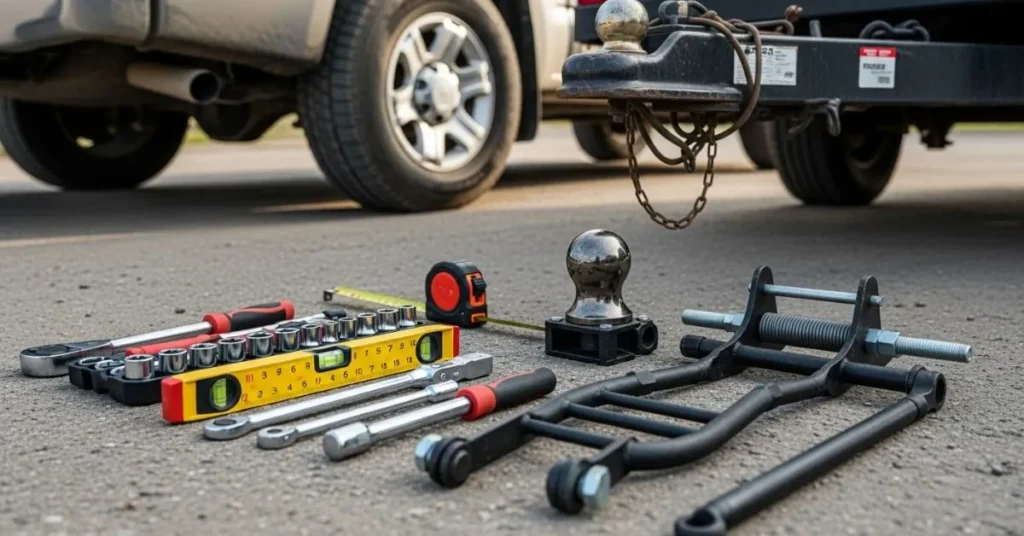
The first thing to consider before learning about how to install an equalizer hitch is that you need to make sure that the tools and parts are on hand. Most towing issues arise not due to the failure of people but due to a few details overlooked during setups. Proper equipment will provide hitch alignment, proper hitch height setting, and ensure safe installation at the start.
The following are the minimum tools and items that you will require to have a proper weight distribution hitch set up:
- Torque wrench (to tighten bolts to specifications)
- Socket and wrench set.
- Tape measuring (to measure vehicle and trailer height)
- Level (to achieve trailer leveling)
- Hitch ball (Check correct size and weight rating)
- Equalizer hitch system (hitch head, spring bars, brackets)
- Wheel chocks and safety gloves.
All these help in achieving the correct spring bar tension and achieving the correct balance of your vehicle and trailer. As an example, the use of a torque wrench may result in loose or tightened bolts, which will impact performance and safety.
Also Explore: How to Install a Trailer Hitch: Step-by-Step Detailed Guide
Step-by-Step Guide: How to Set Up an Equalizer Hitch
Installing a hitch correctly is what will determine a good drive and a terrible towing experience. Grabbing a few small details will alter your vehicle handling on the road in a great way; not everyone takes time to adjust the height of the hitch, the degree of tension on spring bars, and the volume of hitch rectitude. That is why such a step-by-step approach to how to set up an equalizer hitch is so vital, since it is necessary to be secure and in control.
- Step 1: Measure Vehicle and Trailer Height Before Installation: Before carrying out the actual work, you have to have a flat space where you will be placing your vehicle and trailer to ensure that you can measure them. Find the height of the front and the rear of the vehicle and match it with the trailer to set the well-balanced level of the trailer. This is to enable you to know the distance that the hitch of the correct weight distribution would have to lower.
- Step 2: Install the Hitch Head and Set the Correct Height: Slide the hitch head on and adjust to an appropriate height. This is to keep the height of the trailer when towing it with the car, which increases the stability in towing it with less movement on your suspension. This helps in placing the hitch in a good position to achieve control and ease on the road.
- Step 3: Attach Spring Bars and Connect the Trailer: Once the hitch head is completely secured, move on to connecting the trailer that links the trailer to the hitch ball and securing it. Next, grab the spring bars and place them on the hitch and hook them on the trailer brackets. These bars serve to distribute the weight and provide the appropriate spring bar tension to balance it.
- Step 4: Adjust Tilt and Weight Distribution for Balance: To fine-tune the location of the brackets, change the tilt of the hitch head to get a fine weight distribution. This will aid in ensuring that some of the load is distributed to the front axle, so that its steering forces and braking strengths are increased. The hitch of the correct weight distribution will make sure that you do not have to leave the back of your car sagging because of weight.
- Step 5: Level the Trailer and Check Overall Alignment: After doing these adjustments, come out and ensure that your trailer is in line with the floor. A correctly leveled trailer enhances truck pulling stability and minimizes the effect of trailer movements during transportation. It is also when all the connections should be checked and when the alignment of the hitch should be checked.
- Step 6: Tighten All Components and Safety Checks: Tighten up all bolts using a torque wrench as per the specifications of the manufacturer. Before moving, check the lock, safety chains, and electrical connections twice. The last thing that you can do is to inspect your setup and make sure that you have done all the required steps in the process of equalizer hitch installation.
Explore More: Cost to Install a Tow Hitch: Ultimate Price Guide
Common Mistakes People Make When Setting Up an Equalizer Hitch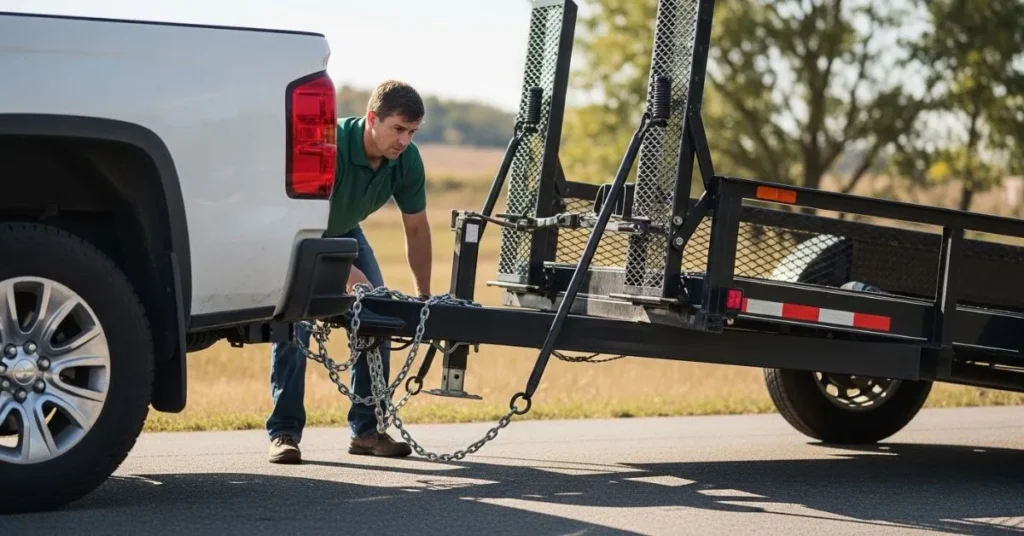
Even when I have attempted to follow the instructions, a little slip in the installation may cause towing issues. Poor weight distribution, improper hitch setup, improper hitch positioning, or improper spring bar tension can cause the loss of safety, and the drive could turn unstable. Now that you have learned how to set up an equalizer hitch, you can avoid damage by knowing about these mistakes, preventing unstable towing, and making the most of your installation.
- Incorrect Hitch Height Adjustment: This is perhaps one of the most frequent mistakes: they may adjust the hitch head. The high or low height of the trailer will make it load unevenly, and this will be a matter of balance and levelling of trailers. The error causes bad control, symmetrical tire wear, and loss of control when driving.
- Over-Tightening or Under-Tightening Spring Bars: A lot of users either over-tighten or under-tighten spring bars. Excessive tightness may cause a rigid ride and may over-stress the frame, whereas tightness may result in less weight transfer and wander at the end of the trailer. The proper tension of spring bars is a crucial factor in determining the performance of towing in a smooth and safe manner.
- Ignoring Torque Specifications on Bolts: Leaving out correct torque settings is another critical error. Loose bolts may move during the process of driving, and tightened bolts may harm the hitch system. Using the correct torque values guarantees good hitch alignment and overall durability of your weight distribution hitch.
- Not Testing the Setup After Installation: Failure to do a road test of the setup after installation is a big mistake on the part of many people. Without a test, you are not able to verify that a good balance or problems such as sway or uneven weight are not present. A test ride is a brief road practise that can assist in ensuring that your hitch process has been successfully and safely executed.
Also Explore: Class 2 vs Class 3 Hitch: The Ultimate Showdown
How to Choose the Right Equalizer Hitch Setup
The proper selection of an equalizer hitch is not merely a matter of selecting any towing equipment. It is based on the type of vehicle you have, the weight of the trailer, and how you intend to use it on the road. A proper weight distribution hitch system enhances the towing stability, decreases stresses on your suspension, and makes it easy to drive. In learning to install an equalizer hitch, choosing the appropriate setup is as important as the installation process.
- Match Hitch Rating To Your Trailer Weight: Your first step would be to determine the loaded weight of your trailer and then pick the correct hitch rating. It can be that when the hitch is too weak, it will give way under stress, and when the hitch is too strong for your arrangement, it will not suit. Safety in the distribution of loads and equal effective towing requires proper matching.
- Consider Your Vehicle Type and Suspension: Not every vehicle is suitable to carry a weight in the same manner, especially that of a truck, its lift kit, or its suspension. A lifted vehicle may need some additional modifications to experience proper trailer hitch elevation. By understanding how your car is configured, you will need to use that knowledge to determine a hitch that should get you a fluid and controlled towing experience.
- Select the Spring Bar Capacity: Spring bars come in different weight capacities, and finding the right one is one of the key elements of their safe usage. In cases where individuals make the bars extremely light, they will fail to hold the weight in the manner that they are supposed to, and in cases where the bars are made too heavy, then they can lead the ride to become rigid. The proper tension of the spring bars provides smooth handling and enhanced road control.
- Check Sway Control Features for Safety: Recent equalizer hitches have new built-in sway control mechanisms. The given features contribute to decreasing turned movement of trailers due to wind or sharp turns. A proper arrangement, where there is proper control over the sway, is better in towing power, particularly on a highway or long-distance travel.
Also Explore: Pintle Hitch vs Ball Hitch: Best Option for Heavy Loads?
Why Choose Gresham 4 Wheel Drive for Equalizer Hitch Setup & Alignment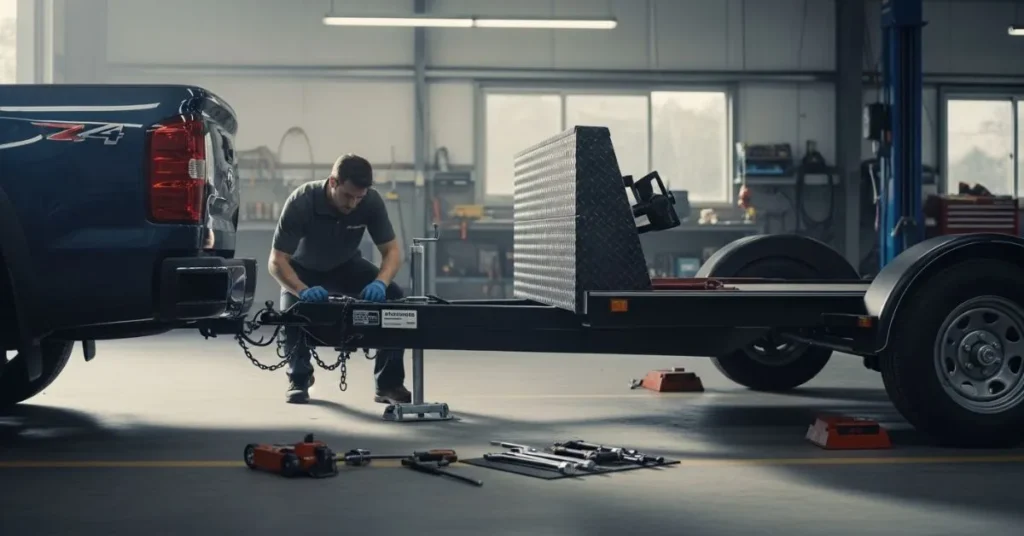
Proper towing setup is not merely a matter of installation; it is about accuracy and even safety. Even the slightest wrong movement in hitch placement, weight distribution, hitch installation, or spring bar tension can entirely alter the way your vehicle feels on the street. This is why it is important when learning how to set up an equalizer hitch to select professionals with experience to help in the proper hitch.
All of the setups at Gresham 4 Wheel Drive are done with accuracy and real-world towing performance in mind. No matter which type of truck it may be, regular or lifted 4×4, the team makes sure that the hitch is properly adjusted, the trailer is even, and that the weight is evenly distributed so that it can be driven safely. Suspension systems and towing stability are also one of their professional areas, which can help prevent such issues as trailer sway, symmetrical tire wear, and braking hesitation.
It is even more trustworthy because they consider the performance of the vehicles comprehensively. They also handle hitch setup, as well as wheel alignment, suspension upgrades, and lift kit installation, all of which are directly related to towing behavior. This implies that your whole system functions collaboratively rather than a single piece being on its own. It’s not an in-a-minute installation.
More simply, selecting Gresham 4 Wheel Drive simply implies that when towing, you have done it with a natural touch, experience, and a keen eye, so when you apply what you have learned, setting up an equalizer hitch to it, you get the confidence, control, and long-term safety in every trip.
Conclusion
Not only is it a technical process to learn how to set up an equalizer hitch, but it is also an issue that has a direct bearing on your safety on the road. Provided the hitch arrangement types used in distributing weight are organized in an appropriate manner, your vehicle will remain level, steering will feel easier, and towing stability will be enhanced significantly. Even small factors such as the proper spring bar tension, hitch position, and correct height adjustment all combine to ensure that you have maximum control during towing.
Most problems with towing are caused by disregarding in setting up procedures or rushing. Common issues that normally arise due to improper installation include bad braking, swaying of the trailer, and worn tires. That is why you need to take each step with a lot of care, especially when transferring weights or when you need to travel a long distance.
Finally, all makes travelling easier and safer with a correctly fitted equalizer hitch. And should you require any professional help to make sure that everything will be in harmony and coordination, Gresham 4 Wheel Drive could always be at your aid to make sure towing will be less, more comfortable, and safe.
FAQs
Q. Can I switch between a weight-carrying and weight-distributing hitch on the same vehicle?
Yes, many vehicles can use either type of hitch depending on the trailer being towed at the time, as long as the hitch receiver is compatible with both setups. However, you’ll need the appropriate weight-distributing components, like spring bars, on hand whenever you switch to a heavier load. It’s important to confirm your hitch receiver class supports both configurations before switching between them.
Q. Can weather conditions affect how a weight-distributing hitch performs?
Yes, windy conditions, rain, or icy roads can affect trailer stability even with a weight-distributing hitch, since the spring bars only manage weight distribution, not external forces like crosswinds. Reduced traction from wet or icy roads may also compromise braking performance regardless of hitch type. Adjusting your speed and driving cautiously in poor weather remains essential even with a properly set up hitch.
Q. Can a weight-distributing hitch be used with any type of trailer?
Not all trailers are compatible with weight-distributing hitches, particularly trailers with certain frame designs or those already equipped with their own leveling systems. It’s important to check the trailer manufacturer’s guidelines before pairing it with a weight-distributing setup. Using an incompatible combination can lead to improper weight transfer and reduced towing safety.
Q. Is a weight-carrying hitch ever unsafe, even for light loads?
A weight-carrying hitch is generally safe for light loads, but it can become unsafe if the trailer’s actual loaded weight is underestimated or if it’s used near the edge of the vehicle’s capacity. Overestimating what counts as a “light load” is a common mistake that leads to rear sag and reduced control. Always verify the trailer’s fully loaded weight rather than relying on its empty weight.
Q. Does the type of vehicle I drive limit my choice between these two hitch types?
Yes, smaller vehicles or those with lower towing capacities may be limited to weight-carrying hitches simply because they aren’t built to handle the added stress of heavier, distributed loads. Trucks and larger SUVs with higher towing ratings typically have more flexibility to use weight-distributing systems for bigger trailers. Checking your vehicle’s manufacturer specifications helps determine which hitch types are realistically suited to your setup.