The appropriate hitch configuration is as crucial when towing a trailer as the towing capacity. High or excessively low trailers may impact the stability of trailers, braking, steering, and overall towing safety. This is the reason why knowing how to measure hitch drop is also a significant measure to be taken before attaching any trailer to your truck or SUV.
The proper hitch drop will keep your trailer even, and it will balance the weight of the tongue. The amount of drop hitch required may be indicated by factors like receiver hitch height, trailer coupler height, suspension upgrades, and lift kits, among others. In the absence of the right hitch height measurement, you are likely to have trailer sway, unequal inflation, and poor towing performance.
The hitch drop is very simple to measure when you are aware of the correct process. In this guide, you will learn how to measure hitch drop, understand common hitch drop sizes, and avoid common towing mistakes. At Gresham 4 Wheel Drive, we help drivers improve their towing setup with professional lift kit installation, wheel alignment services, and expert 4×4 solutions for safer towing on and off the road.
What Is Hitch Drop
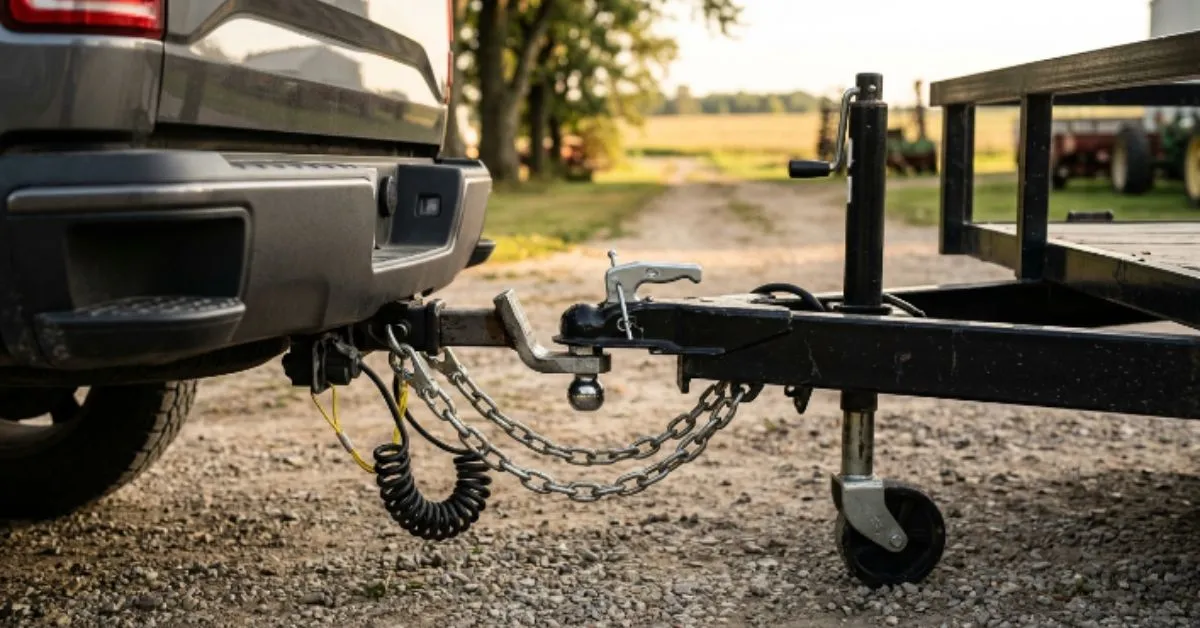
Hitch drop is the amount a ball mount lowers the hitch ball below the type’s receiver hitch. It assists in aligning your vehicle with the trailer coupler in such a way that the trailer will level during towing. The proper size of the drop hitch is based on the distance between the receiver hitch and the trailer coupler.
It is crucial to understand how to measure hitch drop since a trailer can affect towing safety and towing performance. A high or a low trailer can result in a lack of proper weight distribution, Gresham 4 Wheel Drive trailer sway, and wear and tear on tires. This may render towing less secure, particularly on highways or on roads that are not good.
A hitch drop properly measured assists in providing even towing, enhances the trailer stability, and gives it better handling. When driving a pickup truck, SUV, or lifted truck, it will certainly be more appropriate to select the right ball mount and make your towing experience safer and more comfortable. In Gresham 4 Wheel Drive helps drivers achieve the right setup with better accuracy and performance.
Why Does It Matter?
It is desirable to use the right hitch drop, as with it, your trailer is kept at a steady level during towing. Level Trailer enhances the safety of towing and road stability. With a correct placement of the trailer in terms of height, the load is better distributed between the tow car and the trailer.
The hitch drop is capable of being misaligned to result in either a nose-up or a nose-down of the trailer. This may raise trailer swing, decrease braking ability, result in unequal tongue weight, and cause speedy tire tread wear. It may also cause a lot of added strain on your suspension and towing gear over time.
This is the reason why understanding how to measure hitch drop is a vital component of a towing system. The balanced hitch height is used in order to enhance the balance of the trailer, towing safety, and the confidence of the driver in towing either a camper, boat, utility, or work equipment.
Also Know About: Trailer Hitch vs Receiver Hitch: Shocking Differences Revealed
Tools You Need Before Measuring Hitch Drop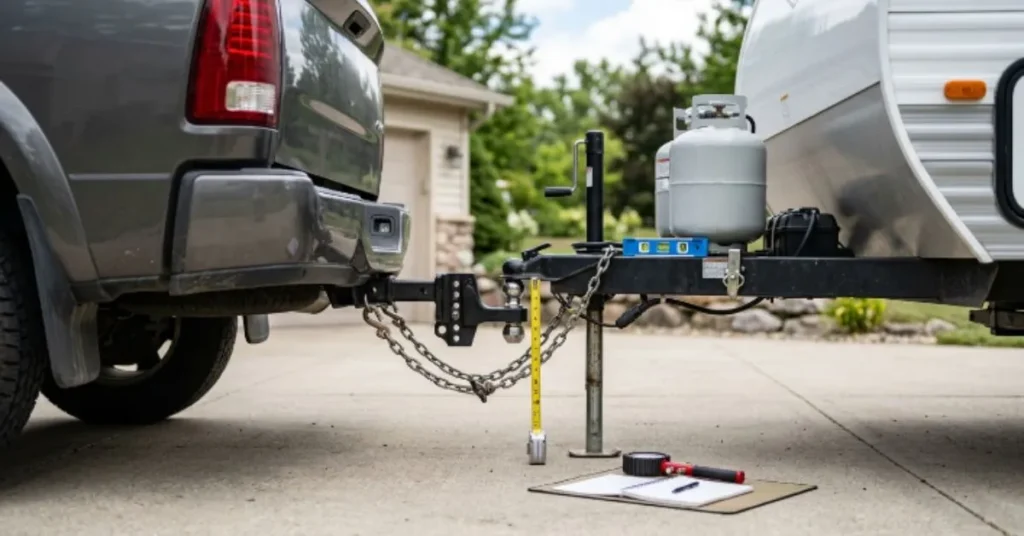
Before learning how to measure hitch size and determine the correct hitch drop, you need to assemble a few basic tools to ensure accurate measurements. The right equipment will assist you in getting the correct measurements and selecting the right drop hitch that fits your towing rig. It can easily be done without the need for a set of special tools.
Here are the tools you will need:
- Tape measure
- Level surface for parking
- Notepad or smartphone to record measurements
- Tow vehicle with the receiver hitch installed
- Trailer in a loaded or ready-to-tow condition
These, along with the hitch height of the receiver, allow measurement of the hitch height of the trailer coupler. The time invested in making sure that we obtain correct measurements will help ensure that we have level towing, greater stability of the trailer, and greater road safety when towing.
Also Explore: Class 2 vs Class 3 Hitch: The Ultimate Showdown
How Much Hitch Drop Do You Need for Different Vehicles?
If you are wondering what size trailer hitch do I need, the answer depends on your vehicle type, suspension setup, tire size, towing capacity, and the kind of trailer being pulled. No one-size-fits-all solution exists, as any towing configuration varies. The most suitable method for the proper drop hitch is to refer to the hitch height of the receiver to the height of the coupler of the trailer.
Most pickup trucks and SUVs can generally use a 2 to 4-inch drop hitch, which provides level towing. Most lift packs, bigger tires, or suspension modifications come in vehicles with or present a 6-inch to large hitch drop to balance the trailer. Conversely, smaller SUVs and crossovers might require a small amount or no drop at all with a higher trailer height.
One of the most important tips on measuring hitch drop is to make sure that you select the correct ball mount to fit into your particular vehicle and your particular trailer combination. An effective hitch drop solution enhances the stability of the trailers, minimizes the trailer sway, promotes proper distribution of weight on the tongue, and contributes to a safer towing experience on every journey.
Step-by-Step Guide on How to Measure Hitch Drop 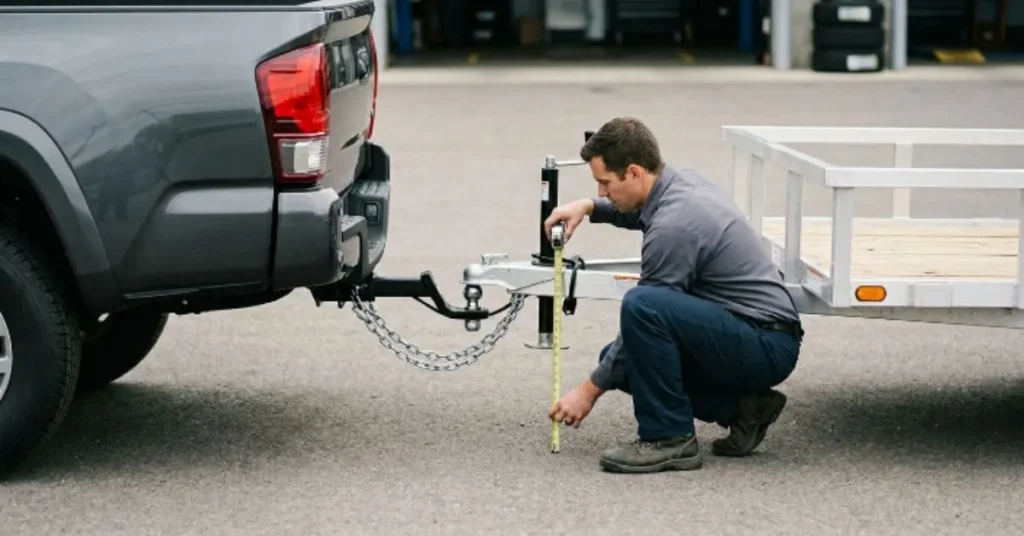
If you wish to be able to have a safe and level towing setup, measuring the hitch drop is important. It is easy and will only take a few minutes and a tap measure. By making appropriate measurements, you will be able to select the appropriate drop hitch and enhance the stability of the trailer, performance as it is towed, and safety.
- Step 1: Park on a Level Surface: Before measuring anything, ensure that you can park your tow vehicle and trailer on a level surface. This assists in the achievement of correct measurements and prevents errors in measurements. The essential surface is the level surface to give the correct hitch height measurement.
- Step 2: Measure the Receiver Hitch Height: Determine the height of the receiver Hitch opening to be made so that you can measure the distance between the ground and the top of the receiver Hitch opening. Note this amount, which you can compare in the future. The height of your towing set is indicated by this measurement.
- Step 3: Measure the Trailer Coupler Height: Hold the trailer on the ground and use a measuring rod to measure from the ground to the bottom of the trailer coupler. Here is where the hitch ball will attach to the trailer. Proper measurements can assist in attaining level towing.
- Step 4: Compare Both Measurements: Subtract the height of the hitch from the height of the coupler. The difference between these two numbers will determine how much hitch drop you require. The formula will assist you in deciding on the right ball mount.
- Step 5: Select the Right Drop Hitch: Select a suitable drop hitch that is almost similar to the difference in measurements. This is to make sure that the level of the trailer is the same as that of the vehicle. Hitching a properly matched trailer also helps in decreasing sway and enhances safety in towing.
Explore More: Cost to Install a Tow Hitch: Ultimate Price Guide
Common Hitch Drop Sizes and Their Uses
Hitch drops come in various sizes to fit a wide variety of towing configurations. The most popular ones are 2-inch, 4-inch, 6-inch, and 8-inch drop hitches. Selecting the appropriate size also helps to make the trailer flat and enhances towing safety.
Some common hitch drop sizes include:
- 2-inch drop: Ideal for many stock SUVs and pickup trucks
- 4-inch drop: Common for larger trucks and medium-sized trailers
- 6-inch drop: Often used on lifted trucks and off-road vehicles
- 8-inch drop or more: Best for heavily lifted vehicles and specialized towing setups
The proper size will depend on your receiver hitch height and trailer coupler height. Rather than making assumptions, understanding how to determine the extent of hitch drop guarantees that you make the correct ball mount choice, enhance the steadiness of the trailer, decrease the trailer sway, and be safer on the roads as you deem to be at level towing.
Mistakes to Avoid When Measuring Hitch Drop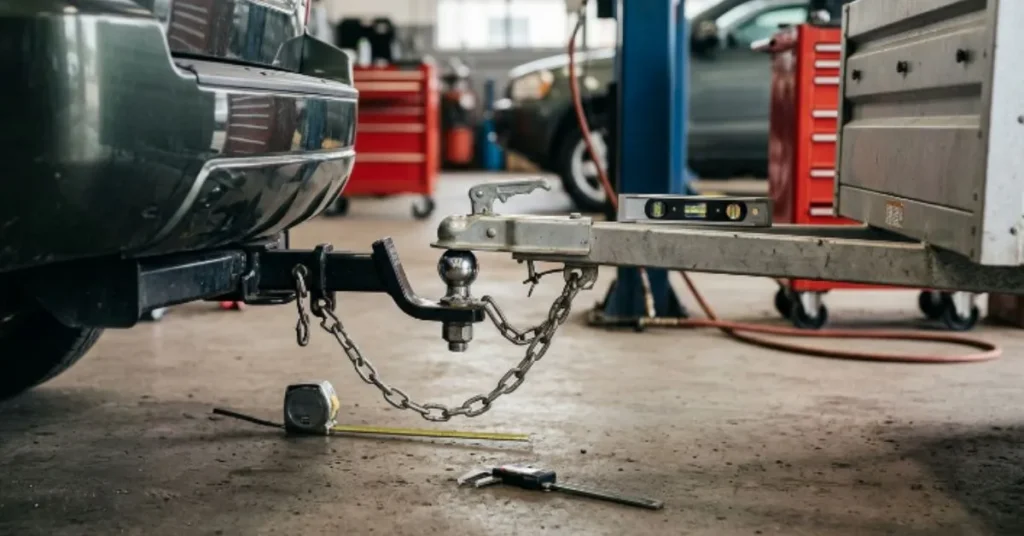
Although the drop of a hitch is an easy course of learning, any slight error may result in the incorrect selection of a hitch. A wrong hitch drop may impact the performance of the trailer, towing safety, and vehicle handling in general. The presence of these errors should be avoided, as they will assist in guaranteeing a more precise measurement of the hitch height and the desired application.
- Measuring on Uneven Ground: A measurement on a surface with a slope or on a non-even surface may give wrong measurements. Making measurements before attempting to place the vehicle and trailer on level ground is always a good idea. This helps ensure the correct hitch drop calculation.
- Ignoring Trailer Load Weight: Many people measure their trailer when it is empty and forget that the height can change when loaded. Cargo can affect trailer coupler height and tongue weight. Measuring in a ready-to-tow condition provides more accurate results.
- Guessing Instead of Measuring: It is common to meet drivers who use a drop hitch based on what it looks like instead of what the measurements show. This may cause an unsymmetrical trailer and ineffective towing behaviour. The appropriate hitch drop is to use a tape measure.
- Overlooking Suspension Modifications: receiver hitch height can be altered greatly by lift kits, bigger tires, and suspension upgrades. When these modifications are not taken into consideration, there is the possibility of the incorrect choice of the ball mount. Always measure after any vehicle upgrade.
- Choosing the Wrong Hitch Size: When a hitch is selected that is either excessively high or excessively low, what results is trailer sway and an awkward weight distribution. This is aimed at obtaining level towing to produce maximum stability. Taking accurate measurements helps you choose the proper hitch setup.
Also Explore: Class 3 Hitch vs A Class 4 Hitch: Powerful Towing Breakdown
Professional Hitch Setup and Towing Solutions from Gresham 4 Wheel Drive
Getting the right hitch setup is not just about picking the correct part; it is about making sure your entire towing system works safely together. Since the lift kits and suspension change can all have an impact on your hitch height and towing balance. This is why professional assistance can do a lot for performance and safety.
At Gresham 4 Wheel Drive, these are the solutions to a full towing package, such as installation of lift kits, wheel alignment, and suspension change, which directly affect the handling of the vehicle regarding a trailer. Such upgrades can alter the height of your receiver hitch, and thus, appropriate gauging and installations are crucial in safe towing.
When you do not know how to measure hitch drop properly or select the proper hitch setup, expert advice can prevent a lot of errors, such as trailer sway, diminished balance, and inappropriate weight distribution. With an appropriately installed hitch system, you can tow easily, have more control, and have a safer ride in any direction.
Conclusion
To achieve a safe level and stress-free towing, the most important thing is knowing how to measure hitch drop. With the right amount of hitch drop, you will have a balanced trailer, which improves stability, braking power, and overall road control. It contributes to reducing such common issues as trailer sway and uneven wearing of tires as well.
Each towing configuration is unique when you use a pickup truck, SUV, or lifted car. This is why it is so essential to measure both the reception hitch height and the trailer coupler height prior to deciding on the ball mount. Even minor errors made can cause huge safety concerns, and hence, accuracy is always important.
Towing can become much easier and safer by taking the correct actions and not committing typical errors. A correctly fitted hitch system will improve your confidence when on the road and will keep the combination of your vehicle and trailer moving well every time you tow.