Key Takeaways
- Running boards improve accessibility, safety, and vehicle protection, making it easier to enter and exit trucks and SUVs while shielding the lower body from road debris.
- Different Types of Running Boards are designed for different needs, including daily driving, off-road adventures, work trucks, and lifted vehicles.
- Choosing the right material and style matters, as aluminum, stainless steel, and heavy-duty steel each offer unique benefits in durability, weight, and corrosion resistance.
- Proper installation is essential to ensure secure mounting, long-lasting performance, and safe everyday use.
- Avoid common buying mistakes by considering vehicle compatibility, ground clearance, weight capacity, and functionality instead of focusing only on appearance.
Quick Answer: Running boards come in several types: flat (daily use), cab-length (front/rear door access), wheel-to-wheel (extends to truck bed for cargo), power (auto-deploying), aluminum (lightweight, rust-resistant), stainless steel (durable, polished), solid steel (heavy-duty, off-road), hoop step (single-step, lifted trucks), and molded plastic (budget-friendly). Each style suits different needs, from everyday commuting to off-road use or heavy-duty work trucks, offering varying levels of durability, protection, and accessibility.
Running boards are among the most popular truck and SUV upgrades, as they provide style as well as functionality. They enhance the height of vehicles and facilitate access and exit of those higher vehicles by enhancing the safety of the passengers and protecting the lower body from dirt, rocks, and road debris. Today, there are so many Types of Running Boards that it is a hard task to decide which one to purchase unless one is aware of what each of the styles brings.
Starting with truck and SUV running boards, side steps, power running boards, and running boards for lifted trucks, each choice is purpose-oriented. Others fit well for routine or daily driving, whereas others are designed to be used in off-road or serious jobs. Being aware of the differences will assist you in locating the most suitable one in relation to your car, life, and cash.
This guide will address the Types of Running Boards, their role, the most popular styles, installation, and common mistakes to avoid before purchase. Be it to upgrade your vehicle to make it more convenient or to add some practical truck accessories, Gresham 4 Wheel Drive is there to assist you in deciding and installing the appropriate running boards that will last a long time.
What Are Running Boards?
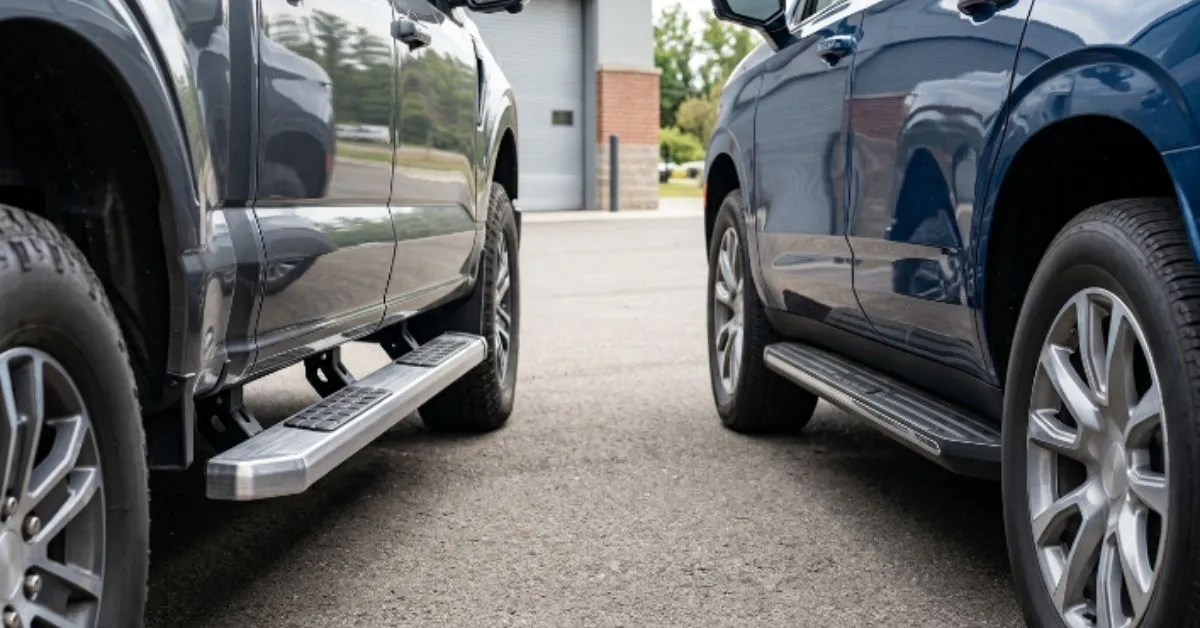
Running boards, also known as truck running boards, are durable steps attached to the truck and SUV sides to facilitate entry and exit. They give a very large level platform to stand on and are primarily applicable to lifted trucks and families with kids or older passengers. In addition to enhancing accessibility, truck running boards also enhance a sleek and sophisticated appearance to your car.
These convenient truck accessories are of various types, such as aluminum, stainless steel, and steel with a slip-resistant surface to make them easier to hold in any weather conditions. Several drivers use SUV running boards not only due to convenience, but also to ensure that the lower sides of their vehicle are not harmed by rocks, mud, or other normal debris found on the roads.
Now that you know about the Types of Running Boards, you see that each design is unique, whether it be in day-to-day commuting, off-road expeditions, or just when it happens to be heavy-duty. At Gresham 4 Wheel Drive, technically skilled employees would assist drivers in selecting superior running boards that fit their vehicles, perform according to their driving styles, and provide a sound fit with durable wear and tear.
What Is the Purpose of a Running Board?
A running board is for your truck or SUV. It has various practical functions enhancing comfort, safety, and daily convenience. Whether you drive a family SUV, a work truck, or a lifted truck, the right running boards will not only make your driving experience more enjoyable but will also help you to protect your vehicle. Knowing what they are supposed to do will also be helpful, so you know the various Types of Running Boards that will match your needs.
Some of the main benefits of installing running boards include:
- More Accessible Vehicles: They also offer a safe way to step in and out of the taller trucks and SUVs quite easily.
- Enhanced Passenger Safety: In case of slip-resistant surfaces can prevent the occurrence of slipping, particularly during rainy or snowy seasons.
- Guard against Road Debris: Running boards are used to guard the lower part of your vehicle against rocks, mud, and small scratches.
- Added Comfort for Families: Children, the elderly, and passengers with limited mobility should have an easier way of getting in and out of the vehicle.
- Increase in Vehicle Appearance: The truck running boards make your vehicle look cleaner, rugged, and more customized.
- Daily and Off-Road Use Support: Running boards bring additional convenience to various driving situations, so whether you have to travel every day or enjoy off-road drives, they will suit you.
The right running boards suited to your vehicle, driving skills, and way of life. At Gresham 4 Wheel Drive, we are the team that will assist truck and SUV owners in choosing tough truck accessories that are not only functionally applicable but also long-lasting in their performance, so you can derive maximum benefit from your upgrade.
Also Know About: Nerf Bars vs Running Boards: The Ultimate Comparison
What Are the Different Types of Running Boards?
Not every running board is made similarly, and, because of that, it is better to select the proper style. The currently existing Types of Running Boards will suit various vehicles, lifestyles, and interests. Some are oriented toward common comfort; others are oriented toward off-road performance, heavy work, or a high level of convenience.
1. Flat Running Boards
Flat boards that run flat are the most popular among daily drivers due to an extensive and uniform stepping platform running the length of the vehicle. They give great footing for passengers of every age and come in various materials, which makes them a good choice for both trucks and SUVs.
2. Cab-Length Running Boards
Cab-length running boards are the safest ones as they extend below the passenger vehicle and are best suited to those drivers whose key requirements are to have easy access to the front and rear doors. Their neat design enhances comfort without introducing any extra length, thus being a common choice in daily cars.
3. Wheel-to-Wheel Running Boards
Wheel-to-wheel running boards extend from the rear doors and into the truck bed, providing you with an added step when loading tools, equipment, or cargo. They particularly come in handy with work trucks when access to the bed is so fast and safe, and it is a normal occurrence in everyday activities.
4. Power Running Boards
Power running boards automatically deploy when a door is opened and retract when the door is closed. The design not only provides a smooth look, but also increases clearance on the ground during driving and provides a convenient step only when necessary.
5. Aluminum Running Boards
Aluminum running boards are simple to maintain since they are rust-resistant, lightweight, and have excellent driving performance during wet or snowy seasons. They are extremely strong and will not add much weight to the car.
6. Running Boards of Stainless Steel
Stainless steel running boards are characterized by their strength and smooth, polished finish. They do not rust easily; they can resist daily wear, and they are quite practical among all drivers who desire to use a mixture of durability and high-end style in their vehicle.
7. Solid Steel Running Boards
Careful attention is paid to setting heavy-duty steel running boards designed to handle tough work and off-road use. Their heavyweight is capable of supporting greater weight loads and rough surfaces, so when utilized in work trucks and by off-road lovers, they will be perfect.
8. Hoop Step Running Boards
Hoop step running boards have a single step on each door for access and exit. They also offer additional grip, which makes them a good option for lifted trucks and vehicles that need a lower stepping point.
9. Molded Plastic Running Boards
Another option that drivers can look into is molded plastic running boards because they are affordable and do not cost much, but offer minimal functionality. They are light, cleaning is easy, and they can be used in daily driving, but are usually not as durable as the metal ones.
Installation Tips for Running Boards
The installation of running boards might be a basic upgrade, but correctly fitting the running boards will be necessary for safety, durability, and longevity. Even good running boards on trucks may present a lot of instability or minimize their lifespan unless fitted properly. By simply taking time to install them properly, one would be indirectly helping to keep them safe and ensure desired performance.
- Confirm Vehicle Compatibility Before Installation: Always make sure the running boards are compatible with your vehicle’s make, model, and year. A proper fit ensures the mounting brackets are installed correctly, providing a secure fit and long-lasting stability.
- Install the Right Mounting Hardware: Install all the manufacturer-supplied bolts, brackets, and fasteners. With the suggested hardware, the running boards are sure to be firmly in place even during an ordinary drive or when it’s on a rough road.
- Tighten the Hardware Evenly: Do not fully tighten one side before the other. Instead, tighten all fasteners evenly and gradually to keep the running boards properly aligned and securely mounted.
- Check Alignment Before Final Tightening: Before securing all parts, check the placement of the running boards on either side of the vehicle. When aligned properly, it enhances the looks and provides a comfortable footing for passengers.
- Stability Tests After Installation: It is essential to perform this test after installation by getting onto each running board to ensure that the board is sound and not changing positions or vibrating. The last inspection guarantees that the installation is safe and engineered for daily use.
Common Mistakes to Avoid When Choosing Running Boards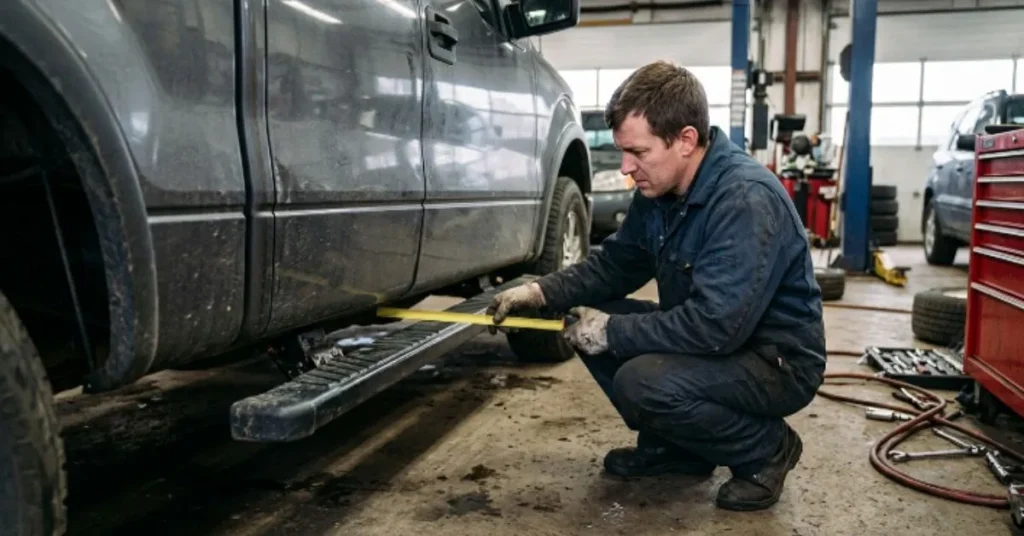
Selecting proper running boards is the same thing as installing them correctly. Most drivers are concerned with how it looks and do not consider the key aspects, such as compatibility, material, and how it will be used. These are some of the mistakes that you need to avoid in order to ensure you see improved performance, better safety, and value over the long-term of the investment.
- Choosing Style Over Function: Style, however, can make a running board a very stylish one, but it should be appropriate to your daily driving mission. Select the design to ensure that it brings the right comfort, life cycle, and functionality, and is not purely concerned with its look.
- Ignoring Vehicle Compatibility: Not all running boards fit all trucks or SUVs. To be on the safe side, remember to verify the make, model, and year of the vehicle to make sure that it fits and is not installed incorrectly.
- Overlooking Material Quality: Material can determine strength, rust resistance, and durability. Installing high-quality aluminum or stainless steel running boards of high quality would give greater performance and industry life.
- Forgetting About Ground Clearance: Running boards are not all at the same height and thus may be lower, and therefore reduce ground clearance. When you frequently go off-road or when your truck is lifted, select a style that suits your needs on the road.
- Buying Without Considering Weight Capacity: Choose running boards that can safely support the weight of everyone using them. It is always beneficial to determine the weight rating when purchasing to ascertain whether they would oscillate and balance during day-to-day use without failure.
Why Choose Gresham 4 Wheel Drive for Running Board Installation?
Choosing the right running boards is only part of the upgrade. Professional installation is just as important. We install truck and SUV running boards with precision to ensure a secure fit, reliable performance, and a clean, factory-style finish.
Our team of experienced members assists you in choosing the most appropriate one on the basis of your car, the purpose of driving, and your expenses. Should you require running boards on lifted trucks, heavy-duty step boards, or day-to-day side step boards, we ensure that they are fitted appropriately, which results in long-term safety and viability.
Gresham 4 Wheel Drive & Alignment will take care of all of the expertise and professionalism needed and will ensure quality workmanship and responsible customer care service. We assist you in upgrading your vehicle with a lot of certainty because you can now have enhanced convenience, protection, and style that can last for many years to come.
Conclusion
The Types of Running Boards selected assist in making your vehicle safe, convenient, and looking good. There are so many styles around that it is essential to find the one keeping in touch with your truck or SUV, your driving habits, and daily requirements.
Truck running boards, side steps, or power running boards- which one suits best? They can be used to make it easier to enter and exit your vehicle, as well as to protect your vehicle from daily road junk food items, etc. Quality running boards will provide your car with functionality as well as value in the long run.
Gresham 4 Wheel Drive will assist you if you are willing to upgrade your truck or SUV. Our team members will suggest the best running boards for your car and offer professional services to fit them, to ensure the boards are well attached and have good performance.
FAQs
Q1. Do running boards make a difference?
Running boards do indeed come with some distinct differences, with a step into bigger vehicles and SUVs, which is taken more safely and more comfortably. They also assist in guarding all the lower sides of the vehicle against road debris as well as decreasing interior damage since it will become easier to enter, in addition to giving the vehicle a more fashionable look.
Q2. Do running boards hurt gas mileage?
Running boards could cause a very insignificant change in fuel economy since they can cause a small amount of additional wind resistance, and some weight is added. Nonetheless, to the common driver, the variation in gas mileage is very insignificant; it may not be evident in most cases during normal driving.
Q3. Why do people remove running boards?
Running boards are removed by some drivers to provide more ground clearance in off-road driving, decrease the total weight of the vehicle, or attain a cleaner, sportier appearance. Other users can also substitute factory-mounted running boards with improved truck running boards or power running boards that are more in line with their needs and driving style.