Quick Answer: The carbon-fiber ceramic vs. ceramic brake pads choice depends on your vehicle and driving style. Ceramic brake pads are ideal for daily driving because they offer quiet, smooth braking, low dust, and lower costs. Carbon fiber ceramic pads handle higher temperatures and resist brake fade, making them better for aggressive driving, heavy towing, and performance use. They cost much more and typically require matching high-performance rotors.
Stand behind the counter at any brake shop long enough, and you’ll hear the same question in different ways: “Which brake pads should I actually get?” Lately, that question has taken a new turn, with more drivers asking specifically about carbon-fiber ceramic vs. ceramic brake pads. Both names sound similar, and both promise smoother stops, but neither box on the shelf tells you which one your truck, SUV, or daily driver really needs.
Here’s what most people don’t realize until someone explains it plainly: these two options aren’t just two flavors of the same pad. They’re built differently, they handle heat differently, and they’re made for very different kinds of driving. One is built for the daily grind, while the other comes from a world of high heat, high speed, and high performance.
At Gresham 4 Wheel Drive, this is one of the most common questions we help drivers sort out. In this guide, I’ll break down exactly what separates carbon fiber ceramic and ceramic brake pads in plain language, so you know which one fits your driving style, budget, and vehicle.
What Are Ceramic Brake Pads?
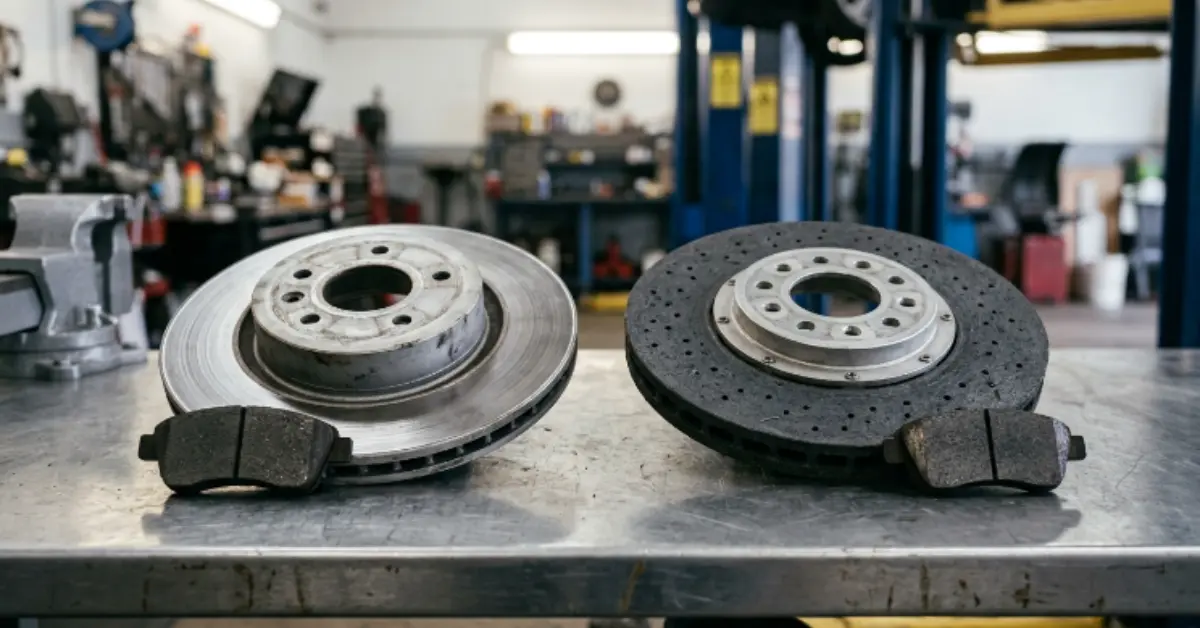
Ceramic brake pads are one of the most common types of brake pads found on cars, SUVs, and light trucks today. They’re made from a mix of ceramic fibers, filler materials, and small amounts of copper or metal fibers that help carry heat away from the brake surface. This blend gives them a smooth, quiet feel compared to older pad types, which is why most manufacturers use them as the factory-fitted choice.
On the road, ceramic pads offer a smooth, predictable pedal feel with gradual, consistent braking, exactly what you want in daily traffic, school runs, or long highway drives. They also produce very little brake dust, run quieter, and are gentle on your rotors, which keeps your overall maintenance costs down.
At Gresham 4 Wheel Drive, we recommend ceramic pads for most everyday drivers. If your driving is mostly city commuting, highway travel, or normal daily use, ceramic pads are usually the smart, low-maintenance choice for reliable, everyday performance.
What Are Carbon Fiber Ceramic Brake Pads?
Carbon fiber ceramic brake pads are built for a different job entirely. Instead of the standard ceramic blend, they use a carbon-fiber-reinforced ceramic matrix, a material that handles much higher temperatures without losing braking power. This technology started on the racetrack, where brakes take a serious beating under repeated, hard stops.
Worth clearing up: in most performance braking systems, it’s really the rotor that’s carbon-fiber ceramic, paired with a high-performance pad compound built to match it. Together, they resist brake fade, stay lighter in weight, and hold their performance at temperatures that would wear down standard ceramic pads.
At Gresham 4 Wheel Drive, we mostly see this setup on sports vehicles, high-performance vehicles, and heavily modified trucks built for aggressive driving. We only recommend it when a vehicle’s driving demands actually call for it, since it comes with a higher price tag and more specific maintenance needs.
Carbon-Fiber Ceramic vs. Ceramic Brake Pads: Side-by-Side Comparison

Once you understand what each pad is made of, the real differences start to make sense. The comparison below breaks down how carbon-fiber ceramic vs. ceramic brake pads stack up across the things that actually matter to drivers: heat handling, noise, cost, and everyday comfort.
1. Heat Resistance and Brake Fade
Ceramic pads handle everyday braking heat just fine, absorbing the friction from regular stop-and-go traffic without much trouble. But under sustained hard braking, like a long mountain descent or repeated heavy stops, they can start to lose some bite as heat builds up faster than they can dissipate it.
Carbon fiber ceramic pads are built specifically to resist this kind of fade, staying effective even after repeated hard stops. This is exactly why they show up so often in performance and racing applications, where consistent stopping power matters far more than everyday comfort.
2. Noise and Brake Dust
Ceramic pads are known for being quiet and producing minimal dust, which is a big reason daily drivers love them so much. Less dust means cleaner wheels for longer, and the quiet operation means no annoying squeal every time you slow down at a light.
Carbon fiber ceramic setups also run relatively quietly under normal conditions, but they can experience more wear in stop-and-go traffic, where they are not designed to operate at their best. Neither option is harsh on the ears, but ceramic still edges ahead for pure everyday comfort.
3. Rotor Compatibility and Wear
Standard ceramic pads pair well with regular or OEM rotors and cause very little extra wear over time. This makes them a convenient, low-maintenance choice since you don’t need to worry about matching specialized components to keep everything working smoothly together.
Carbon fiber ceramic components, however, usually need matching high-performance rotors to work properly. Mixing them with standard rotors can actually cause faster wear on both parts, so this pairing really only makes sense as a complete system rather than a simple pad swap.
4. Weight and Driving Feel
Carbon-fiber ceramic brake components are noticeably lighter than standard brake components, and that lighter weight can genuinely improve how a vehicle handles, especially at higher speeds. Less rotational mass at each wheel means quicker response and less strain on the overall suspension.
Ceramic pads are heavier by comparison, but for normal commuting and highway driving, that weight difference is barely noticeable to most drivers. It only really becomes a meaningful factor once a vehicle is being pushed hard or driven aggressively.
5. Lifespan Under Normal Use
Under typical daily driving, ceramic pads tend to last a long time, wearing down gradually and predictably with regular use. Their consistent wear pattern also makes it easier to plan ahead for replacement instead of being caught off guard.
Carbon fiber ceramic pads can wear faster if they’re used outside their intended high-heat environment, since they’re simply not built for constant low-speed, low-heat stops. Matching the pad to the actual driving style makes a real difference in how long either option truly lasts.
Carbon Fiber Ceramic and Ceramic Brake Pads Cost
Price is often what settles the debate once drivers see the real numbers side by side. Comparing carbon fiber ceramic and ceramic brake pads isn’t just about the sticker price at install; it’s about understanding just how far apart these two options really sit financially, especially when you consider the cost of changing brake pads for standard brake service.
Key cost points to keep in mind:
- Ceramic brake pads typically cost $60 to $150 per axle for parts alone, and $150 to $300 per axle installed at a shop, with premium low-dust ceramic pads reaching the top of that range
- Full ceramic pad-and-rotor jobs generally run $250 to $500 per axle, depending on vehicle size and shop rates
- Carbon fiber ceramic pads alone can run $1,000 to $1,500 per axle, since they’re built for far more demanding performance use
- Carbon ceramic rotors are the biggest cost driver, often priced between $1,500 and $3,500 per rotor on performance and luxury vehicles, and a complete carbon-fiber ceramic brake job can easily exceed $15,000
- Carbon fiber ceramic components generally can’t be resurfaced like standard rotors, so once worn, the entire rotor typically needs replacing
- Ceramic pads pair easily with affordable standard rotors, keeping total repair costs predictable and manageable
When you line up these numbers, the gap between the two isn’t small; it’s often the difference between a routine maintenance bill and a major investment. For nearly all daily drivers, ceramic pads deliver dependable performance at a fraction of the cost, while carbon fiber ceramic components only make financial sense on vehicles truly built around that level of performance.
How to Choose the Right Pad for Your Vehicle
Choosing between carbon fiber ceramic and ceramic brake pads really comes down to how and where you actually drive. The right pad isn’t about which one sounds more advanced; it’s about matching the pad to your daily routine, your vehicle type, and your driving habits. Once you break it down by these factors, the decision usually becomes pretty clear.
- Your Daily Driving Style: If most of your driving involves city traffic, short trips, or regular highway commuting, ceramic pads are built exactly for that kind of use. They offer smooth, predictable braking without demanding any extra thought or maintenance from you.
- The Type of Vehicle You Drive: A standard sedan or daily-use SUV rarely needs the extreme heat handling that carbon fiber ceramic pads offer, since it just isn’t part of normal driving. Heavier trucks or performance vehicles, on the other hand, may benefit from the added stopping power under demanding conditions.
- How Often You Tow, or Haul Heavy Loads: Frequent towing or hauling puts extra strain on your braking system, generating more heat than typical daily driving. In these cases, it’s worth considering pads with stronger heat resistance to avoid fade during long, heavy stops.
- Your Budget for Upfront and Long-Term Costs: Ceramic pads make more financial sense if you want lower upfront costs and minimal ongoing maintenance. Carbon fiber ceramic pads require a bigger investment both at installation and over time, so your budget should factor into the decision.
- Whether You Drive Aggressively or on Rough Terrain: Spirited driving, mountain roads, or off-road use puts more repeated stress on your brakes than typical commuting does. If this sounds like your regular driving pattern, the added heat resistance of carbon fiber ceramic pads may genuinely be worth it.
Common Mistakes Drivers Make When Choosing Brake Pads
Picking the wrong brake pad is more common than most drivers realize, and it usually happens for simple, avoidable reasons. A lot of these mistakes come down to guesswork instead of actually matching the pad to the vehicle and driving style. Here are the ones I see most often.
- Choosing Based on Price Alone: Going for the cheapest option without considering driving habits often leads to pads that wear out faster or perform poorly. The lowest price upfront doesn’t always mean the lowest cost over time.
- Ignoring Rotor Compatibility: Pairing the wrong pad with the wrong rotor type is one of the most overlooked mistakes drivers make. This mismatch can cause faster wear on both the pads and rotors, leading to more frequent replacements.
- Assuming All Ceramic Pads Are the Same: Not all ceramic pads are built to the same quality standard, even though they’re labeled the same way. Lower-quality ceramic pads can wear rotors faster and offer less consistent braking performance.
- Overlooking Actual Driving Conditions: Many drivers pick pads based on what sounds “better” rather than what actually suits their driving. Someone who mostly commutes doesn’t need the same setup as someone who tows heavy loads regularly.
- Skipping Professional Inspection: Installing new pads without checking the rotors, calipers, or overall brake system condition can lead to bigger issues down the road. A quick inspection often catches problems before they turn into costly repairs.
Which Brake Pad Is Better for Daily Driving?
For the average driver, the answer is clear: ceramic brake pads are the better choice for daily driving. Most people aren’t pushing their vehicle to extreme temperatures every day; they’re commuting to work, running errands, and driving in regular traffic, exactly what ceramic pads are built for. They offer smooth, consistent braking without harsh grabbing or fade, while producing very little dust and going easy on your rotors.
Carbon fiber ceramic pads, while impressive on paper, aren’t really designed for this kind of driving. They perform best under sustained high heat, which simply doesn’t happen during typical commuting or highway trips, so using them daily can mean more wear and less real benefit.
At Gresham 4 Wheel Drive, this is one of the most common recommendations we give: unless your driving genuinely involves heavy towing, aggressive driving, or performance use, ceramic pads will serve you better, longer, and at a lower overall cost.
Why Choose Gresham 4 Wheel Drive & Alignments for Brake Service?
Choosing the right brake pad is only part of the equation; getting it installed and set up correctly is just as important. At Gresham 4 Wheel Drive, we work on brake system service every day across all kinds of vehicles, from daily commuters to heavily modified trucks, so we know exactly what different driving styles actually need.
We don’t just sell you a pad and send you on your way. Every brake service includes a full check of your rotors, calipers, and overall braking system, so you’re not left dealing with a problem that shows up again a few weeks later. If your vehicle also has a lift kit or has recently been aligned, that matters too, since changes to ride height and suspension geometry can affect how your brakes perform.
Our team gives honest, straightforward recommendations based on how you actually drive, not just what’s most expensive on the shelf. Whether you need standard ceramic pads for daily driving or a performance setup for a heavier or modified vehicle, we’ll help you choose what genuinely fits and install it right the first time.
Conclusion
Choosing between carbon-fiber ceramic vs. ceramic brake pads really comes down to understanding how you actually drive, not just which option sounds more advanced. Ceramic pads offer smooth, quiet, low-maintenance performance that suits the vast majority of daily drivers, while carbon-fiber ceramic pads shine in high-heat, high-performance situations that most everyday commutes simply don’t call for.
There’s no one-size-fits-all answer here; it depends on your vehicle, your driving habits, and how much you’re willing to invest upfront versus over time. What matters most is matching the pad to the job it’ll actually be doing, rather than picking based on price or reputation alone.
If you’re still unsure which option is right for your vehicle, the team at Gresham 4 Wheel Drive is happy to walk you through it. From brake inspections to full installations, we’ll help you make a confident, informed choice, so you can drive knowing your brakes are set up exactly the way your vehicle needs.
FAQs
Q1. Do driving habits affect brake pad wear?
Yes, driving habits play a big role in how fast any brake pad wears down. Frequent hard braking, towing, or aggressive driving generates more heat and puts extra strain on the pads, speeding up wear over time. Smooth, consistent driving with fewer hard stops helps any pad, ceramic or carbon fiber ceramic, last closer to its full lifespan.
Q2. What are ceramic brake pads made of?
Ceramic brake pads are made from a blend of ceramic fibers, filler materials, and small amounts of copper or metal fibers. This combination helps them handle heat, provide smooth and consistent braking, produce less brake dust, and operate more quietly.
Q3. What maintenance do carbon ceramic brake pads require?
Carbon fiber ceramic pads need more frequent inspection than standard ceramic pads to catch wear early. They also perform best with matching high-performance rotors, since mismatched components can lead to faster wear and higher costs.