Probably you own a 4×4 or a lifted truck, and you have realised how important it is that your wheels are aligned perfectly. However, when it comes to the subject of vehicle maintenance, a lot of the drivers are confused about camber alignment vs wheel alignment. As much as the two terms are frequently used interchangeably, they emphasise various components of your car in regard to suspension and handling. The difference between the two is significant because it will assist in not only keeping your truck safe but also prolonging the lifespan of your tyres, as well as ensuring that you can drive both on and off the road.
The alignment of the wheels is not a choice but a need. Bad alignment could even cause uneven wear of the tyres, low fuel efficiency, and even steering difficulties that will leave the process unpleasant and unsafe. Camber alignment, however, is more accurate and addresses the angle of your wheels in reference to the road. This small angle can cause a massive difference in the ability of your tyres to stick to the surface, whether on a corner or on a rough road.
In the case of lifted trucks and vehicles with customised suspension systems, standard 4×4 suspension adjustment and lift kit wheel adjustment is even more important. Failure to take such adjustments into consideration may cause significant issues such as early tyre treads, instability in the handling, and off-road capability. This guide will deconstruct the distinction between camber alignment and wheel alignment, give you reasons why both are vital, and demonstrate how good alignment can save you money and improve safety and performance.
What is Wheel Alignment?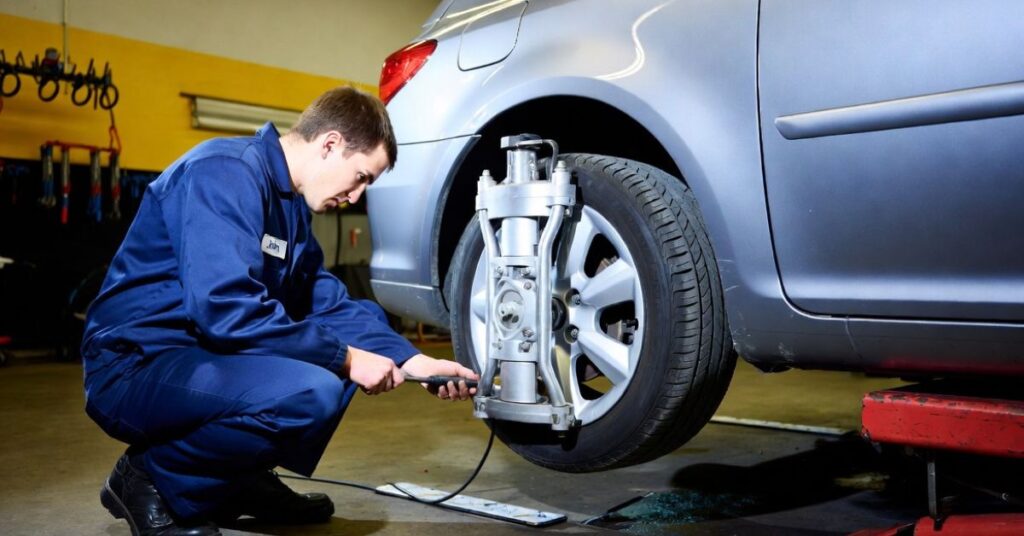
One of the most critical services in keeping any vehicle is its wheel alignment, which is even more important when it comes to the purchase of 4x4s and lifted trucks. To put it simply, the alignment of your wheels is required to ensure that you have the four tyres in the right place relative to the other tyres on the vehicle and to the road. Proper positioning will affect how your tyres are in contact with the road surface, and this will affect the handling of your vehicle, fuel consumption, and the life of your tyres.
The car may start pulling to one side, the steering wheel may become lopsided, or the tyres may become lopsided when the wheels are not perfectly aligned. These are not mere inconveniences; they may affect the safety, and make the cost to keep your 4×4 higher. Steering performance slows or becomes erratic with misaligned wheels, and this is quite dangerous when one is on a highway or an off-road route.
There are three angles, namely, camber, caster, and toe, which are mainly concerned with wheel alignment.
- Camber is the angle of the wheels inwards or outwards as viewed facing the front of the car.
- A caster is a wheel angle that helps to straighten your wheels after turning.
- Toe is used to determine the degree to which the front of the wheels are inwards or outwards facing.
Wheel alignment also ensures that your suspension geometry is within check, and this would help avoid unnecessary wear and tear on your tyres and suspension parts. In the case of the lifted trucks or cars with adjusted suspension, standard 4×4 suspension adjustment and lift kit wheel adjustment are necessary. In the absence of these adjustments, even simple off-road driving or heavy loads will cause your alignment to be thrown out of shape, resulting in uneven wear of your tyres, poor handling, and steering problems.
Most of the drivers are not aware of the frequency of checking the alignment of the wheels. Professionals suggest once a year (or when you notice pulling, vibrations, or unusual tyre wear patterns). An accurate wheel alignment not only ensures that your car is safe but also will save you money in the long run, as now your tyres will last longer and also have a smooth and reliable handling.
Also Explore: Average Wheel Alignment Cost: What You Need to Know
What is Camber Alignment?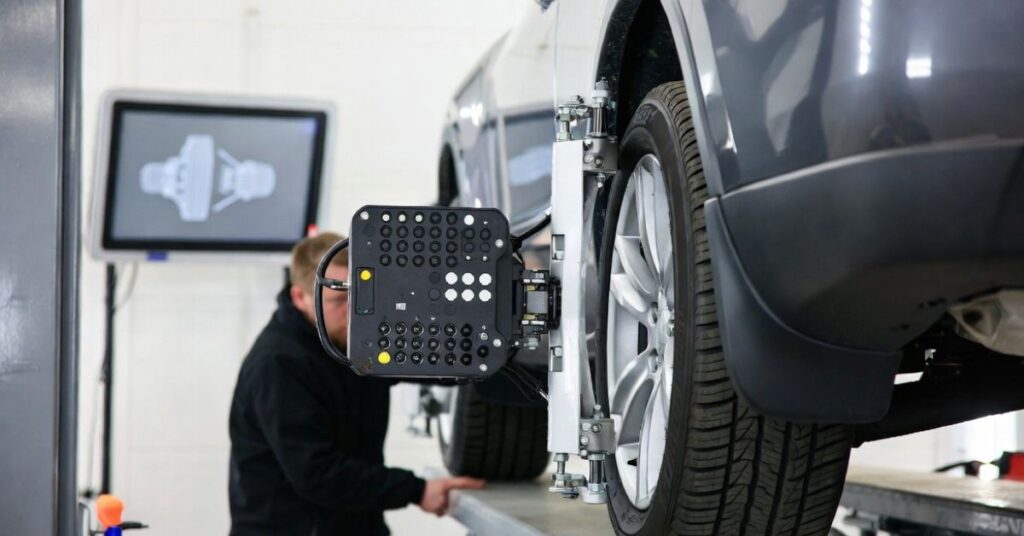
This particular type of wheel adjustment is called camber alignment, and it concerns the angle between the wheels and the road. Camber alignment, unlike full wheel alignment, only focuses on the tyres being tilted inwards or outwards at the top, as opposed to what full wheel alignment changes in your suspension (in relation to the rest of the car). This is a very small angle that may not appear to be a big issue; however, it makes a tremendous difference in relation to tyre wear, vehicle handling, and overall driving performance.
Camber has two broad categories, namely positive camber and negative camber.
- Positive camber: Positive camber is obtained when the tops of wheels are tilted outwards. It can simplify the work of steering and can decrease tyre grip when turning corners.
- Negative camber: The negative camber occurs when the top of the wheels slopes inwards. This has been associated with more tyre contact with the road in the case of turns, and enhances grip and performance in corners.
Camber alignment is of particular significance in lifted trucks and off-road vehicles. An upward lift-kit on a vehicle alters the geometry of the suspension, which can result in inappropriate tilt of the wheels, either too much inwards or outwards. This may cause uneven tyre wear, poor off-road performance due to improper camber alignment, as well as poor handling when travelling faster.
By changing the angle of camber, you can be sure that your tyres have a good tyre contact patch with the road. This not only maximises the traction but also extends the life of your tyres. One of the major reasons behind premature tyre wear is poor alignment of camber, particularly of 4x4s that are exposed to excessive off-road usage.
Frequently, a prudent measure that should be undertaken by an individual who drives a customised car is checking the camber alignment. You stay stable and in control and make your lifted or off-road truck safe in all conditions by keeping the proper camber angle. When adjusted correctly, proper camber with complete wheel alignment provides the optimum handling, tyre life, and overall performance of your vehicle.
Key Differences Between Camber Alignment vs Wheel Alignment
The distinction between camber alignment and wheel alignment should be known so that you can maintain your 4×4 or raised truck running at its optimum performance. Although the two categories of alignment are considered as the suspension system in your vehicle, they are targeted at different parts and address different issues. We shall deconstruct it in easy terms so as to make it easy to understand.
Purpose
- Wheel Alignment: This establishes a range of angles of the suspension, camber, caster angle, and toe-in to have each of the four wheels in the correct position relative to each other and the road. It is mainly designed to benefit vehicle control, steering quality, and the life of tyres.
- Camber Alignment: Specialises in the tilt of the wheels (camber angle) to make tyres have the best tyre contact patch on the road, which results in better grip, cornering, off-road, and stability.
Impact on Tires
- Wheel Alignment: Verifies against skewed wear of tyres in all tyres and reduces the loads on the suspension parts.
- Camber Alignment: This is the alignment that is commonly used to the inside or outside of the tyres. Bad camber can lead to early wear of the tyres, especially in elevated trucks.
Vehicle Handling
- Wheel Alignment: Improves the vehicle handling by making the steering process easier, reducing drag, and making the vehicle more stable even at higher speeds.
- Camber Alignment: Increases cornering and traction through the perfect fitment of the tyre along with the road, and this is essential in off-road driving as well as aggressive driving.
When Each Is Needed
- Wheel Alignment: It should be done annually, or when you suspect that you are pulling, vibrating, or replacing your suspension.
- Camber Alignment: It is required when you are installing lift kits, replacing parts of the suspension, or noticing patterns of uneven tyre wear.
Both camber alignment and wheel alignment are important to 4x4s, which have been lifted. The negligence of either will result in irregular tyre treads and improper handling, as well as loss of off-road vehicle stability. Having both completed simultaneously will make sure that your car can work safely and efficiently on highways, urban streets, or on rough roads.
Explore More: Wheel Alignment vs Steering Alignment: Avoid Costly Repairs
Signs You Need a Camber or Wheel Alignment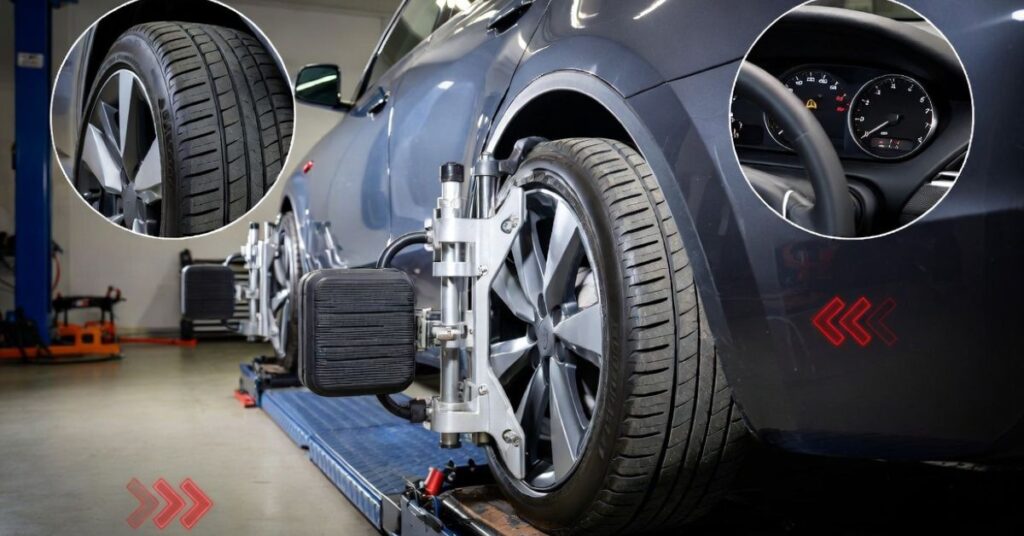
The ability to understand when your car should undergo camber alignment, as opposed to wheel alignment, will save you unnecessary spending of money replacing your tyres and enhance driving safety. Most drivers do not give much thought to alignment matters until they develop serious trouble, but by being keen to notice the early signs, your 4×4 or lifted truck will be in good condition. The following are the most widespread indicators:
Uneven or Rapid Tire Wear
Uneven tyre wear is one of the initial indicators that the wheels are not in their correct position. In case the edges of your tyres wear off more quickly than the centre or one side of the tyre wears faster than the other, then it is often a camber problem. Wheel misalignment also has the tendency to result in some generalised accelerated tyre wear, and so frequent wheel alignment tests are paramount to lift kit wheel alignment arrangement.
Vehicle Pulling to One Side
When you are on a straight road, and your truck is drifting to the left or to the right, then this is an indicator that there is something wrong with the alignment of your truck. Pulling can be an indication of an issue with either the wheel alignment or the camber angles. And letting it go could lead to friction in your suspension and other unequal tyre wear.
Steering Wheel Off-Centre
When the steering wheel is not in the centre when one is driving straight, it is a typical indication of the condition of wheel alignment. It may render driving unpleasant and unsafe, particularly when driving at high speed or over a rugged off-road environment.
Vibrations While Driving
When your steering wheel or car body feels a vibration that is weird to touch, this means that your wheels are not fitted correctly. The misalignment will change how your tyres touch the road, hence you will shake or wobble when accelerating or turning.
Difficulty Handling Corners or Off-Road Trails
Lack of proper camber alignment impacts cornering and traction. A camber check is suggested when you realise that your car is finding it difficult to hold on to the road when making turns, or your 4×4 is not steady on tracks.
After Suspension Modifications
Whenever you are adding a lift kit or doing any suspension modifications, you must have the wheel and camber alignment done. Alteration to suspension geometry to create a vehicle lift alters the suspension geometry and can create steering issues, even wear patterns on tyres, and a lack of off-road ability when not correctly set up.
By keeping these warning signs in mind and having regular alignment services, you would be in a position to last longer with your tyres before you have to change them, enhance your vehicle handling, and allow you a safe driving environment on the roads, whether in an off-road adventure or not.
Explore More: Does Wheel Alignment Affect Steering? Find Out Why!
Professional Wheel and Camber Alignment Services
Professional wheel and camber alignment services will be essential when it comes to keeping a lifted truck or 4×4 in good condition. Whereas a few alignment tasks are performed at home or with a simple set of tools, an accurate alignment is performed under specialised equipment and personnel. Professional services assure that not only the camber alignment vs wheel alignment are carried out correctly, but also the safety, handling, and the length of the tyres are enhanced.
Why Professional Alignment Matters
- Accuracy and Precision: The current alignment machines have the ability to discern angles as tiny as a few degrees. This accuracy makes your suspension fine-tuning so that it behaves optimally.
- Lifted Trucks Specific: Lifted trucks have changed suspension geometry. Professional technicians understand how to manipulate camber, caster, and toe to make changes in lift without destabilising the vehicle.
- Lengthens the Tyre life: Correct alignment will make sure that your tyre wears evenly and will not have to be replaced too soon, which will save you some cash in the long run.
- Improves Vehicle Handling: Accurate steering is smooth, there are no pulls or vibrations, and it is better in handling off-road.
- Safety First: Wheels that are not aligned are likely to affect the braking system, cornering, and stability. Professional services ensure that your 4×4 is not unsafe in any conditions.
What to Expect During a Professional Alignment
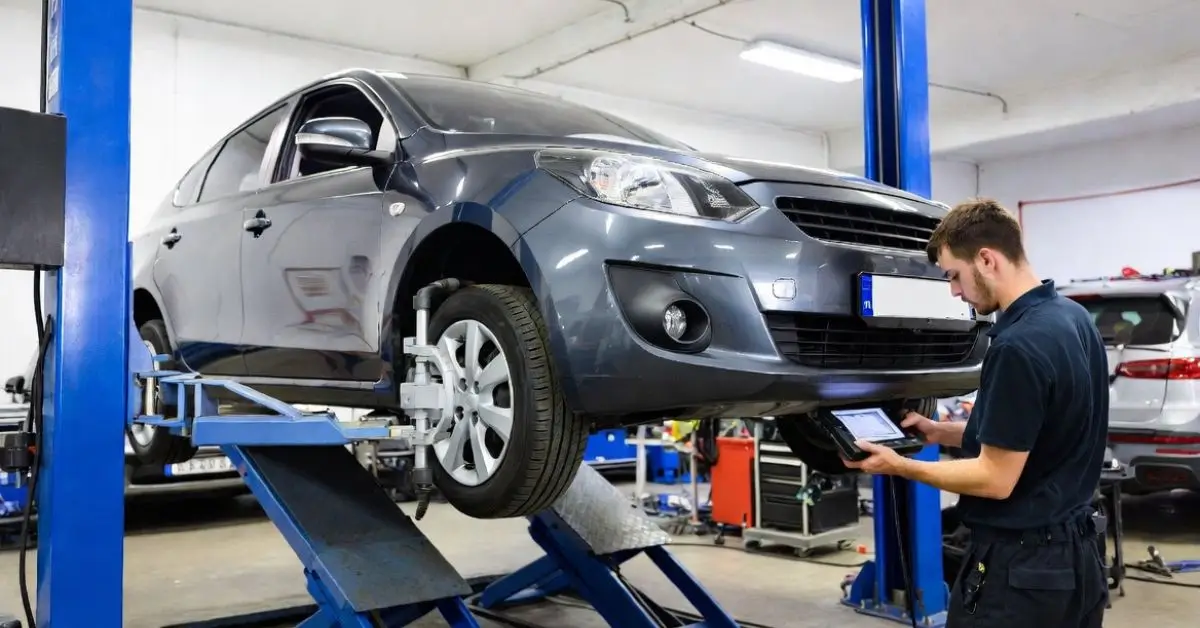
- Computerised Measures: Laser or camera-based measures of camber, caster, and toe angles are taken by technicians.
- Modifications Depending on Vehicle Type: Lifted trucks, off-road vehicles, and regular 4x4s need varying settings of alignment to maintain the suspension geometry and tyre contact.
- Test Drive and Final Check: The test drive is taken after the vehicle has been adjusted to test handling and stability.
Selecting the appropriate Service Provider
In the search for a professional service, one should select a shop that is familiar with lift kit wheel alignment and 4×4 cars, such as Greesham4wheeldrive. They ought to provide high-tech machines, professional technicians, and an appropriate explanation of the change undertaken. Combination services involving camber and complete wheel alignment services are desirable, and your vehicle is well adjusted to fit the daily use as well as off-road activities.
Consistent professional alignment checkups not only help keep your investment in tyres and suspension upgrades safe but also help improve the driving experience. With the 4×4, it is safer, smoother, and more reliable whether it is on the streets of the city, on the highway, or on the rocky road.
Read More About: How Long Does a 4 Wheel Alignment Take?
Conclusion
It is important to know the difference between the camber alignment and the area of the wheel alignment, as any 4×4 or lifted truck owner would know. Wheel alignment is required to provide overall stability and easy steering, whereas camber alignment is used to adjust the angles of the wheels to help them have improved grip, cornering, and contact with the tyres.
Disregard of alignment may result in imbalanced tyre wear, steering issues, and poor handling. Checks and professional services such as lift kit, wheel alignment, or 4×4 suspension alignment also ensure the safety of your vehicle, improve performance, and increase the life of your tyres.
Watch out for unusual indicators, including uneven tyres, pulling, or vibrations, and solve alignment problems immediately. Correct alignment will make your car travel smoothly, handle safely, and even work both on the road and off the road.
Alignment is not only maintenance, but it is also a guarantee of your tyres, your suspension, and your driving experience.