
You may not consider a steering wheel alignment tool a very important tool, but it has a significant role in ensuring that your vehicle is moving in the right direction and that it has a sense of balance. Most motorists believe that alignment of the wheels means the position of the tyres; however, the position of the steering wheel also matters. When the wheel is not centred during the alignment, the vehicle may drift towards one side or become off balance when driving, even when the tyres are in a perfectly aligned form.
They include a steering wheel lock, and some wheel and suspension adjustments are done. In so doing, it makes the steering wheel lie exactly straight during a drive. In the case of trucks, SUVs, and lifted cars in particular, the steering wheel alignment tool is critical, as the variation of the suspension may influence the steering geometry.
In this manual, we will discuss all the details about the steering wheel alignment tool: how it works, what its advantages are, when you need it, step-by-step instructions, and tips to take into consideration during its maintenance. By the conclusion, you will realize why this basic tool is the key to proper alignment of a wheel, safer driving, and easier vehicle operation.
What is a Steering Wheel Alignment Tool?
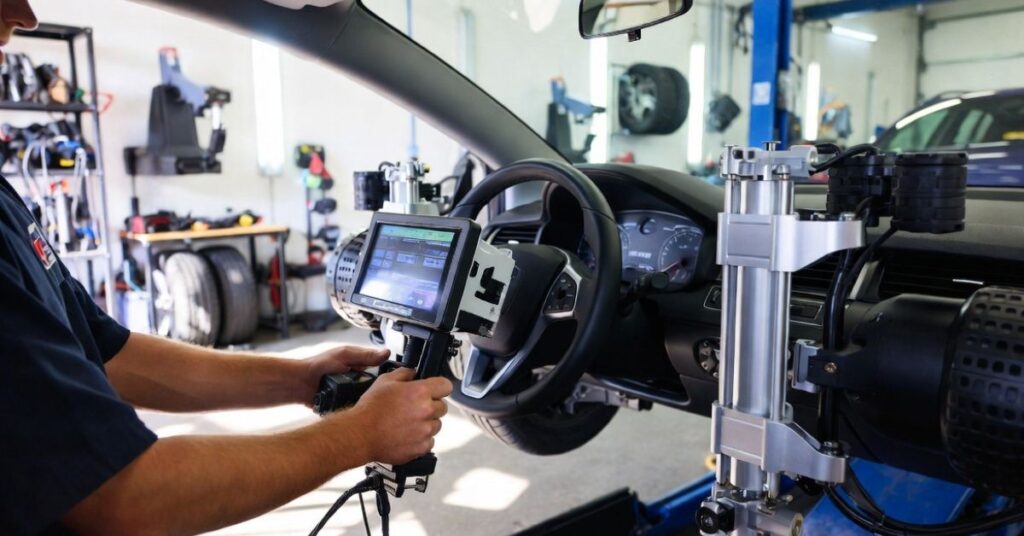
The steering wheel alignment tool is a simple tool that is used when having a wheel alignment service to ensure that the steering wheel is straight and central. When a vehicle is in the process of alignment, the wheels are tilted to the right direction; however, when the steering wheel moves in the process, it may leave the vehicle in a crooked position even when the wheels are aligned straight. This is a tool that ensures that the steering wheel is held in position, thus remaining in the same position as long as the journey continues.
The instrument is normally fitted to the steering wheel and secured between the driver’s seat and the floor to ensure that it does not move. Technicians are able to adjust the steering angles as well as the suspension by locking the steering wheel in the proper position. This is very useful to make sure that when you are driving straight, the steering wheel is also straight, so that you feel that the vehicle is balanced, hence easy to control.
A steering wheel alignment tool is highly essential in the case of trucks, SUVs, and, in particular, lifted vehicles. Steering geometry can be influenced by lift kits and suspension modifications, and even a slight steering wheel displacement could create pulling, uneven steering feel, or discomfort for the driver. With this tool, it is easy to provide a steady and smooth ride; the alignment work is performed correctly.
Read About: Wheel Alignment vs Steering Alignment: Avoid Costly Repairs
Benefits of Using a Steering Wheel Alignment Tool
A steering wheel alignment tool is one of those minor measures that will bring a significant difference to the feel of your vehicle once you have been to a wheel alignment shop. Most drivers believe that the wheels are the only things that need to be aligned, whereas the position of the steering wheel matters equally. When the alignment procedure is not performed by holding the steering wheel straight, the vehicle can always pull, be out of balance, or appear lopsided when pulling straight. That is why specialists tend to use this tool to obtain correct and sustainable outcomes all the time.
The specific advantages of the application of a steering wheel alignment tool are as follows, in a simple and straightforward manner:
- Holds the steering wheel in the middle position: The greatest advantage is that the steering wheel is locked in its absolute centre. This will mean that when your alignment is done, your steering wheel remains straight when in motion, thus making it more comfortable and confident.
- Enhances the general stability during the driving process: Once the steering wheel is placed in the right position, the car will have a higher response to the driver. It results in easier handling, controlability at high speeds, and an easier driving experience on highways.
- Avoids lumpy or disorienting steering feel: A steering wheel alignment device will ensure that the car does not experience the steering wheel being somewhat tilted, even when the car is straight. This device removes such a problem, and steering becomes natural and balanced.
- Helps to make the correct adjustments to the wheels: The technicians can make the suspension and toe adjustments in an accurate manner when the steering wheel is fixed in one position. It will lead to a higher alignment and save factory specifications.
- Education on irregular tyre treads: A curved steering wheel could lead to tyres wearing irregularly in the long run. The tool is also in a position to save the cost of prematurely changing tyres by making everything focused on further increasing the life of tyres.
- Enhances the safety of driving in day-to-day life: The steering wheel is where the driver needs it to be, and the driver can therefore react to an emergency in the most efficient and assured way. It improves the general safety of the roads, especially during a sharp turn or braking.
- Lift kits, suspension upgrades, and steering geometry modifications: these are mandatory parts of the lifted and modified vehicles. A steering wheel alignment tool is an even greater necessity in such instances to prevent pulling, drifting, or erratic handling.
Accomplishes long-term enduring results: With this tool, the alignment job will be performed once, and that too will not have to be performed again and again, and will guarantee satisfaction to the customers.
Concisely, a steering wheel alignment device can be used to transform a simple wheel alignment into a professional and accurate service that enhances comfort, security, and vehicle touring.
Read More About: Why Your Steering Wheel Still Crooked After Alignment
Signs You Need a Steering Wheel Alignment
There are clear warning signals that the steering wheel is not aligned with the car, and your vehicle provides them, but the majority of drivers neglect them until the situation deteriorates. The issue of steering wheel misalignment not only influences the comfort, but also safety, the life of tyres, and general control. The next list indicates the most frequent indicators that your steering wheel is not in the correct position, elaborated using very clear subheadings to make you understand what has occurred and why this is important.
The Steering Wheel Is Not Straight When Driving Straight
Some of the most striking ones are when you have a slight tilt of your steering wheel, either to the left or to the right, when the vehicle is straight. This is a common indication of the wheels being in a straight line, and the steering wheel was not aligned at the same level. This may be inconvenient and disorienting during the process of driving, particularly over long routes. It is anchored in the proper position of the steering wheel.
Vehicle Pulls to One Side
When you are on a straight road that is level and realize that your car is drifting right or left, that is a good sign that there are some problems with the fit. It is because its wheels are not turned the same way. The slightest imbalances will result in pulling, something that requires you to keep correcting the steering, which makes you tired and lose control.
Uneven or Rapid Tire Wear
Lack of alignment between the steering results in uneven wear of tyres. You can find that one side of the tyre is wearing out more than the other, or that rough tyres are rough at the edges. This is costly and unsafe as well. Having a properly balanced steering wheel position will guarantee a balanced tread of tyres, which will also increase their life, together with traction.
Sudden and Shaky Steering.
The steering wheel may be slack, wavy, or nonresponsive if the steering alignment is not straight. You can have the car drifting at faster rates or slight corrections. This makes driving a stressful and unsafe experience, especially on highways. The correct fit restores stiff, correct steering.
Vibrating Steering Wheel When Driving.
The other side effect of the alignment problems may be the steering wheel vibrating, especially at certain speeds. Though tyre balancing can also be a source of vibrations, in most cases, it is caused by their misalignment. The act of correcting steering wheel alignment will make the ride of the car smoother, and it will not overload the suspension components.
Recent Suspension Work or Lift Kit Installation
Alignment problems are almost certain in case you have recently installed a lift kit, a replacement of part of the suspension, or hit a pothole or curb hard. The suspension changes also have an impact on steering angles, and unless these are properly adjusted, your car might not straighten or be stable. The steering wheel alignment is necessary after any kind of suspension change.
The lack of attention to such signs can result in ineffective handling, accelerated tyre wear, and a decreased level of safety. In case any of these problems are observed, it is always cheaper to have a steering wheel alignment done at an early stage so that your vehicle can continue to drive smoothly and safely.
How to Use a Steering Wheel Alignment: The steering
A wheel alignment tool is just an easy but essential part of a wheel alignment service. It can keep the steering wheel in the middle during the time of making changes, and the vehicle is going straight and feels stable once the task is accomplished. This instrument enhances precision and will, in the future, weed out steering problems if it is used correctly.
Park the Vehicle on a flat surface.
Start by parking the car in a smooth and flat area. Make sure the tyres are inflated and the car is in a straight forward position. Turn off the engine and put on the parking brake. This gives a stable ground where one can do alignment work, and the vehicle will not move as this is being done.
Centre the Steering Wheel
Get into the driver’s seat and steer the car straight. The additional spokes or logo of the wheels must be flat. This is a crucial step since the steering wheel alignment tool will put the wheel in the position where it is clamped. Any error in this case may make the steering wheel sit cockedly after adjusting.
Attach the Steering Wheel Alignment Tool
Install the steering wheel alignment tool on the steering wheel. The majority of the tools are made to be hooked over the top or side of the wheel and pushed downwards towards the seat or floor. Set the tool in such a way that it fits closely enough and does not allow the steering wheel to rotate in either direction.
Secure the Tool Firmly
Once this is done, the tool should be held in position by pressing it against the driver’s side seat or hooking the tool to the seat, depending on the design of the tool. The following are the procedures to be followed to make sure that the steering wheel does not turn to the left or right. An instrument that is well fixed will ensure that the steering wheel stays within the centre of the entire alignment process.
Perform the Wheel Alignment
The steering wheel is now fixed, and the wheel adjustment can be made. At this stage, technicians usually manipulate the toe, camber, and caster angles. Since the steering wheel cannot be moved, all the adjustments are performed correctly without moving the steering wheel.
Remove the Tool and Test Drive
Once the steering wheel alignment has been done, meticulously take away the steering wheel alignment tool. Make a short test drive on a straight road. The steering wheel should be held straight now, and the car should be driven without swinging up to either side.
The correct use of a steering wheel alignment device will encourage professional finishing, increase the comfort of the drive, and aid in the saving of tyres and suspension components in both raised trucks and 4×4 models.
Choosing the Right Steering Wheel Alignment Tool

In order to ensure that the steering wheels are properly aligned, it is always nice to select the right steering wheel alignment tool in order to have a comfortable drive. The tools are not all equal, and it is extremely important to pick the tool and make sure that it fits your car, and it is not going to slip out of the way during alignment. An effective tool ensures that the steering wheel is in the middle, which aids in avoiding pulling and uneven steering after the service.
When choosing a steering wheel alignment tool, consider fit, strength, and convenience. The tool ought to fit your steering wheel size and shape, particularly when you drive a truck or a lifted car. It has to be made of a strong material so that it does not bend or slip during alignment. The adjustable design is better than ever since it gives a tight and firm fit on various vehicles.
Also, think of how frequently you are going to use the tool. A more sophisticated and powerful tool is worth the cost in case of professional use or frequent use. A simple yet well-built tool will work well even when it is used occasionally or for DIY purposes. The alignment of the steering wheel is made easier and more accurate with the right choice of the steering wheel alignment tool, and it is more reliable.
Also Explore: Average Wheel Alignment Cost: What You Need to Know
Maintenance Tips for Steering Wheel Alignment Tools
The general rules of maintenance in respect of Steering Wheel Alignment Tools. To maintain the steering wheel alignment tool to be accurate, safe, and long-lasting, maintenance is required. Some important tips will be listed in the form of bullet points, and they are as follows:
- Clean After Use: Wipe up the steering wheel alignment tool after use to eliminate dust, grease, and debris. This helps to avoid accumulation, which may influence accuracy and facilitate easy operation at the next alignment.
- Inspect Wear and Damage: Look at the tool before and after use, checking it against cracks, bends, or other loose parts. Even a small amount of damage may decrease the accuracy and give inaccurate steering alignment measurements.
- Check Adjustable Parts Often: Check clamps, arms, and locking mechanisms to see that they slide and are securely attached. Rigid or flexible adjustable components may result in alignment errors in installation.
- Oil Moving parts: Lubricate moving parts with a dab of lubricant to decrease friction and wear. Be careful not to over-lubricate; too much grease is a source of dirt and performance.
- Keep the Tool Clean: When not in use, the tool should be stored in a secure place that is also dry. It is kept in proper storage to keep off moisture, corrosion, bending, and accidental damage.
- Always Keep It Clean: Do not drop, pressurize, or cause undue force to the tool. The impact of this rough handling is that the tool may be kicked out of calibration and its alignment accuracy may be compromised.
- Install Replacement Parts Instantly: In case any part has signs of excessive wear or damage, install it immediately. The replacement of parts in time is a guarantee of the overall accuracy and the increase in the lifespan of the tool.
These maintenance measures help maintain your tool in a good state and offer the correct steering wheel alignment each time.
Conclusion
Although a steering wheel alignment tool can be considered a simple accessory item, it will have a significant effect on the proper alignment of the wheels and a comfortable and safe driving experience. Whether it is to maintain your steering wheel at the centre or to avoid the occurrence of undue wear and tear on your tyres and enhance your vehicle’s performance in the wilderness, this is a big tool in your everyday driving as well as off-roading.
Some of the most appropriate tools, used correctly and maintained regularly, will guarantee professional-level results at all times. Driving a regular car, a truck, a lifted 4 x 4, or a correctly used steering wheel alignment gauge will ensure your vehicle drives better, feels much more stable, and lasts longer. Gresham 4 Wheel Drive ensures each alignment is tailored to the vehicle’s setup and driving conditions.
Spending a few minutes to pick and take care of your alignment tool will reward you with safer and more comfortable drives, as well as a longer life of your tyres and suspension. Being perfectly aligned does not only concern the wheels, but the whole driving experience, and the steering wheel alignment tool is the secret to doing it right.