Key Takeaways
- 5th wheel hitches are ideal for RVs and long-distance towing because they offer a smooth, stable ride with better weight balance.
- Gooseneck hitches are better suited for heavy equipment, livestock, and flatbed trailers because of their high capacity and tight turning radius.
- Your truck’s bed length, towing capacity, trailer weight, and turning needs should guide your hitch choice.
- Avoid choosing a hitch based only on price; proper fit, weight rating, height, and installation are important for safe towing.
- Professional hitch installation and alignment or suspension checks can help ensure your truck is properly prepared for heavy towing.
Quick Answer: A 5th wheel hitch is best for RVs, campers, and long-distance towing because it offers a smoother, more stable ride. A gooseneck hitch is better for heavy equipment, livestock, and job-site hauling because it provides higher towing capacity, tighter turns, and more usable truck-bed space.
If you’ve ever stood in a hitch shop staring at two very different metal contraptions, wondering which one actually belongs on your truck, you’re not alone. I get this question almost every week from truck owners who are ready to start towing a camper, a horse trailer, or heavy equipment, but aren’t sure where to start.
The truth is, the 5th wheel vs gooseneck hitch debate isn’t about which one is “better.” It’s about which one fits your truck, your trailer, and your towing needs. Both mount inside your truck bed, and both handle serious towing capacity that a regular bumper hitch can’t match. But that’s where the similarities end: one is built for smooth, stable RV towing, while the other is built for heavy-duty hauling and tight turns.
In this guide, I’ll walk you through how each hitch works, where they differ, and how to pick the right one without wasting money or risking safety on the road. And if your truck needs a professional hitch installation or towing upgrade afterward, that’s exactly what we do every day at Gresham 4 Wheel Drive.
What Is a 5th Wheel Hitch?
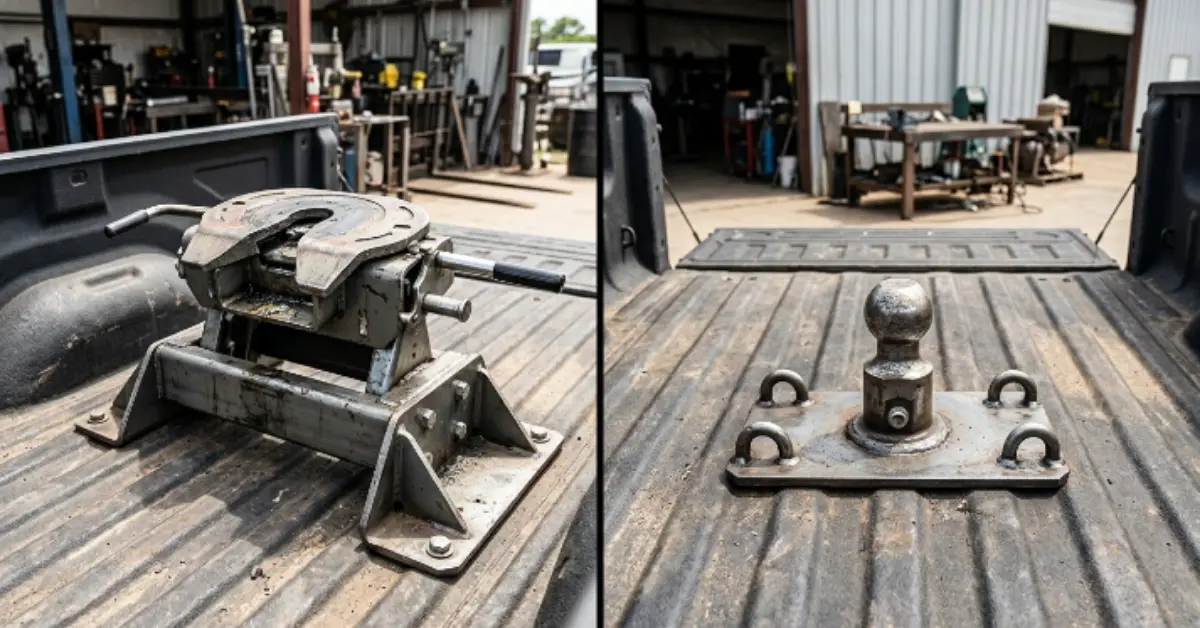
A 5th wheel hitch is a heavy-duty towing setup that mounts inside your truck bed, usually right over the rear axle. Instead of a ball and coupler, it uses a horseshoe-shaped jaw that locks onto a kingpin sticking out from the trailer’s nose. This is exactly what you’ll find on most large RVs, travel trailers, and toy haulers.
Because the hitch sits directly above the rear axle, it spreads weight more evenly and offers a lot of stability service at highway speeds. There’s less sway, less bounce, and a smoother ride overall, especially when hauling something tall or top-heavy like a camper.
This hitch type works best with pickups that have a full-size bed, since the trailer needs enough clearance to turn without hitting the truck cab. If you tow often, especially for long trips or full-time RV living, this is usually the setup experienced haulers prefer, and it’s one we install and inspect regularly at Gresham 4 Wheel Drive.
How Does a 5th Wheel Hitch Work?
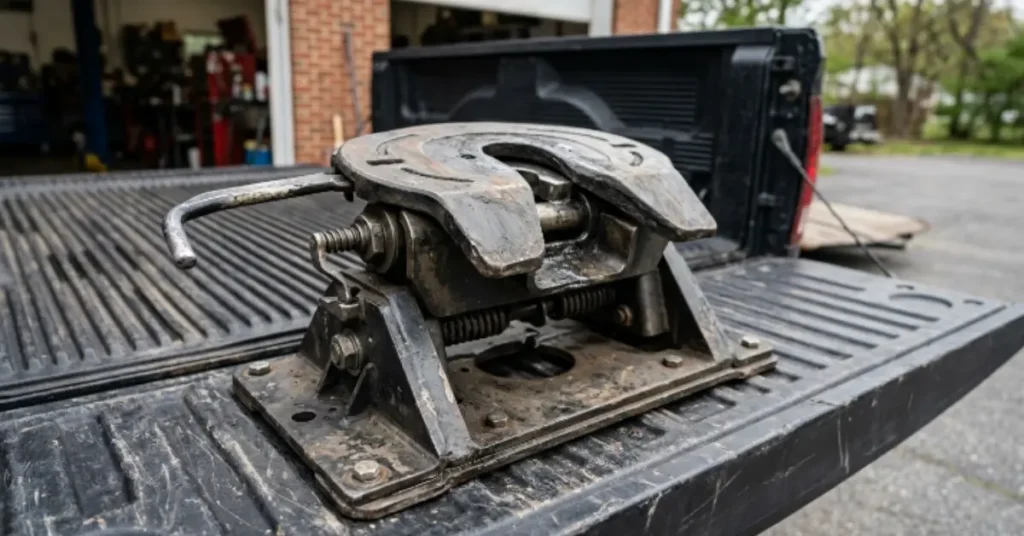
A 5th wheel hitch works by locking the trailer’s kingpin into a horseshoe-shaped jaw mounted on a plate in the truck bed. Once the kingpin drops in, the jaw closes around it, creating a strong pivot point that lets the trailer turn while staying securely connected.
This pivot point sits directly above the rear axle, which is what gives 5th wheel setups their smooth, stable ride. As the truck turns or hits bumps, the connection point moves with the axle instead of pulling from behind, reducing sway and keeping the load balanced.
Here’s a quick breakdown of how it functions:
- Kingpin and jaw connection: The trailer’s kingpin locks into the hitch’s jaw for a secure hold
- Pivoting motion: The hitch allows the trailer to pivot smoothly during turns
- Weight distribution: Positioned over the rear axle for better balance and control
- Locking mechanism: A safety latch keeps the kingpin from releasing while driving
- Height adjustment: Most hitches allow height changes to match different trailer levels
At Gresham 4 Wheel Drive, we always double-check this connection and height alignment during installation, since even a small setup error can affect towing stability.
The right hitch also depends on how much weight you tow, so compare weight-carrying vs. weight-distributing hitches before choosing one.
What Is a Gooseneck Hitch?
A gooseneck hitch also mounts inside the truck bed, but it works differently from a 5th wheel setup. It uses a ball mounted low near the center of the bed, which connects to a coupler on the trailer’s neck that curves up and over the tailgate, hence the name.
This design is common with horse trailers, livestock trailers, flatbeds, and equipment haulers. Farmers, ranchers, and contractors like it because the coupler allows a tighter turning radius, making it easier to maneuver in tight spaces like barns or job sites.
Gooseneck hitches also handle very high towing capacity, often more than 5th wheel setups, and since the ball takes up less space, you keep more usable bed space, something we often explain to customers at Gresham 4 Wheel Drive.
How Does a Gooseneck Hitch Work?
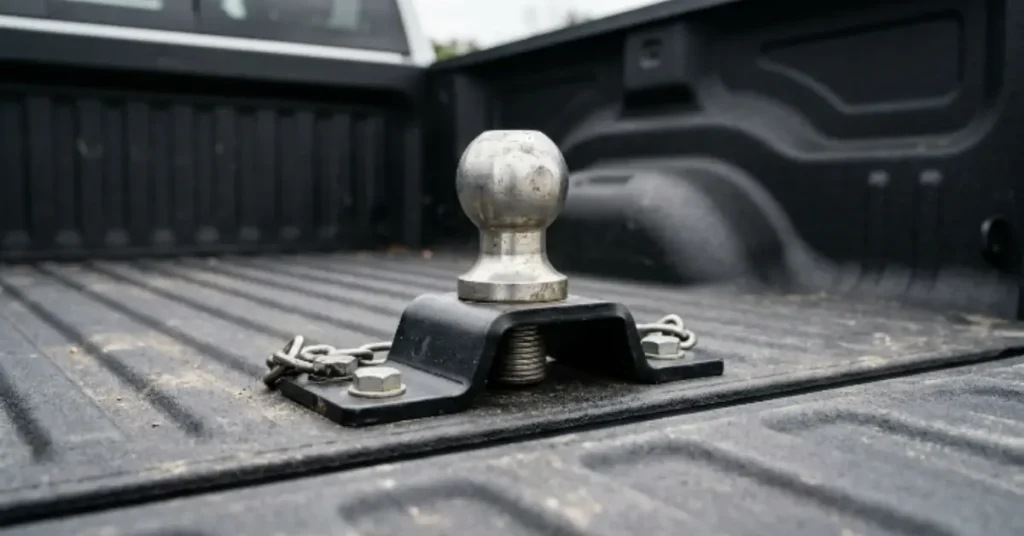
A gooseneck hitch works by connecting the trailer’s coupler to a ball mounted low in the truck bed, near the center between the cab and rear axle. The coupler drops over the ball and locks in place, creating a single pivot point that lets the trailer swing freely during turns.
Because the ball sits closer to the truck’s center, the trailer has more room to pivot sharply without hitting the cab. This is what gives gooseneck setups their tight turning radius, making them easier to back up and maneuver in small spaces.
Here’s a quick breakdown of how it functions:
- Ball and coupler connection: The trailer’s coupler locks directly onto the hitch ball
- Central mounting position: Placed near the center of the bed for a tighter turn radius
- Pivoting action: Allows sharp, controlled turns without cab interference
- Locking latch: Secures the coupler onto the ball to prevent accidental release
- Height adjustment: The ball height can be adjusted to match different trailer necks
At Gresham 4 Wheel Drive, we make sure the ball height and locking mechanism are properly set during installation, since incorrect alignment here can lead to unstable towing or hitch wear over time.
If your trailer sits too high or low, learn how to measure hitch drop for maximum towing safety and keep your setup level.
5th Wheel vs Gooseneck Hitch: Key Differences At A Glance
Now that you know how each hitch works, let’s put them side by side. On paper, both look similar since they mount in the truck bed and handle heavy trailers. But once you dig into the details, the differences become clear, and those differences are exactly what should guide your decision.
1. Towing Capacity
Gooseneck hitches generally handle higher towing capacity compared to 5th wheel setups, which is why they’re so common in agricultural and commercial towing. Farms, ranches, and construction crews often need to move heavy flatbeds or livestock trailers, and a gooseneck setup is usually built to handle that extra load without strain.
A 5th wheel hitch still manages serious weight, but it’s typically matched with RVs and campers rather than extremely heavy equipment. If you’re hauling near maximum weight limits on a regular basis, this difference alone can play a big role in which hitch makes more sense for you.
2. Stability and Ride Comfort
A 5th wheel hitch sits above the rear axle, which gives it a smoother, more stable ride, especially at highway speeds. This positioning helps reduce sway and keeps the trailer tracking evenly behind the truck, even during long stretches of driving or windy conditions.
Gooseneck hitches are stable too, but since the pivot point sits slightly forward of the axle, some drivers notice a bit more movement with very tall or top-heavy trailers. For long-distance RV travel, this stability difference is one reason 5th wheels remain the more popular pick among frequent travelers.
3. Turning Radius
Gooseneck hitches have a clear advantage when it comes to tight turns, thanks to their central mounting position in the bed. This makes them much easier to maneuver in barns, job sites, or crowded lots where space is limited and precision matters.
A 5th wheel hitch needs more room to turn without the trailer clipping the truck cab, which can be a challenge in tighter spaces. If you frequently back into small areas or navigate narrow driveways, this is a detail worth paying close attention to.
4. Bed Space Usage
Since a gooseneck ball takes up very little room, you keep most of your truck bed usable for hauling other items, even with the hitch installed. This makes it a practical choice for anyone who uses their truck bed for more than just towing.
A 5th wheel hitch, on the other hand, uses a larger plate that takes up more bed space, even when the trailer isn’t attached. If bed space matters for your daily use or work, this is worth considering before making a final decision.
5. Common Uses
5th wheel hitches are mostly paired with RVs, campers, and toy haulers built for comfort and long trips. Their stability and smooth ride make them a natural fit for anyone spending long hours on the road.
Gooseneck hitches are more common with horse trailers, livestock trailers, flatbeds, and heavy equipment. Knowing what you’ll be towing most often makes this comparison much easier to apply directly to your own situation.
Not sure which hitch fits your needs? Explore the types of trailer hitches to compare your options and find the right setup.
Common Mistakes When Choosing a 5th Wheel or Gooseneck Hitch
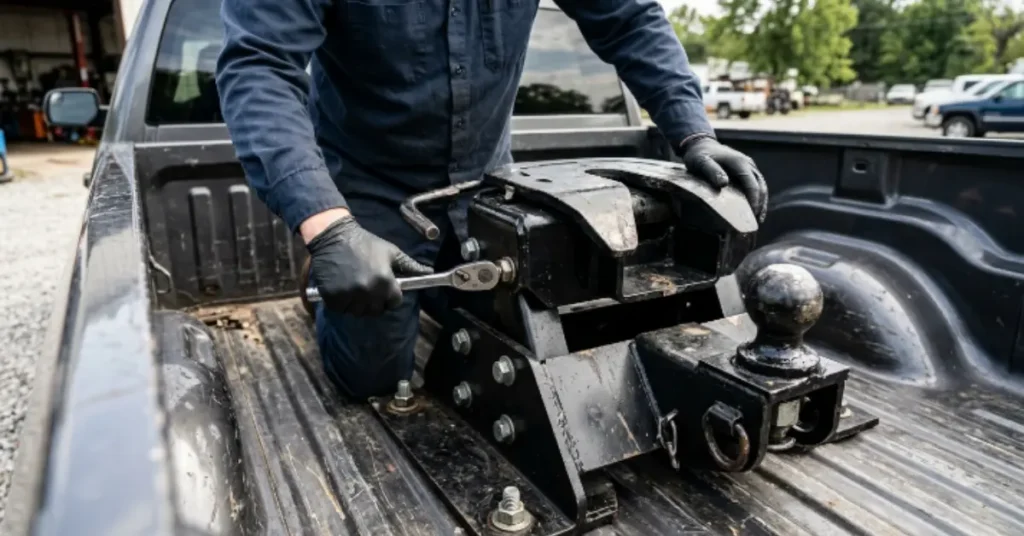
Picking between these two hitches isn’t just about specs on a page. A lot of truck owners make small mistakes early on that end up costing them time, money, or towing stability later. Here are the most common ones I see, and how to avoid them.
- Ignoring Your Truck’s Bed Length: Many buyers pick a hitch without checking if their truck bed offers enough clearance for the trailer to turn safely. A short bed paired with the wrong hitch type can cause the trailer to clip the cab during sharp turns.
- Choosing Based on Price Alone: Going with the cheaper hitch option often backfires when it doesn’t match the trailer’s weight or towing needs. A hitch that’s underrated for the load can wear out faster and become a serious safety risk.
- Skipping Weight Capacity Checks Some owners assume any 5th wheel or gooseneck hitch will work as long as it fits in the bed. Without checking the trailer’s actual weight and the hitch’s rated capacity, you risk overloading the setup entirely.
- Not Considering Turning Needs: If most of your driving involves tight spaces like barns, job sites, or narrow driveways, ignoring turning radius can make daily towing frustrating. This mistake is especially common among first-time trailer owners.
- Overlooking Proper Installation: Even the right hitch can perform poorly if it’s not installed and aligned correctly. Loose bolts, incorrect height settings, or poor alignment can lead to instability, noise, or long-term damage.
Which Hitch Is Right for You?
The right choice really comes down to what you’re towing and how you drive most often. If you’re hauling a large RV, travel trailer, or toy hauler, a 5th wheel hitch is usually the better fit thanks to its smooth, stable ride on long highway trips.
If you’re moving heavy equipment, livestock, or flatbeds, a gooseneck hitch tends to work better. Its higher towing capacity and tighter turning radius make it ideal for farm work, job sites, or anywhere you’re backing into tight spaces regularly.
And if bed space matters for your daily use, a gooseneck’s low-profile ball leaves more room than a 5th wheel plate. Still unsure which one fits your setup? That’s exactly the kind of decision our team at Gresham 4 Wheel Drive helps customers work through every day.
Once you know which hitch suits your vehicle, understanding the cost to install a tow hitch can help you plan your upgrade.
Why Choose Gresham 4 Wheel Drive & Alignments for Towing Upgrades?
Choosing between a 5th wheel and a gooseneck hitch is only half the job. Getting it installed correctly is what actually keeps you safe on the road, since a hitch that’s slightly off on height or alignment can lead to sway or uneven wear over time.
At Gresham 4 Wheel Drive, we’ve worked on countless trucks set up for both 5th wheel vs gooseneck hitches, from personal RVs to heavy-duty work trucks hauling equipment and livestock trailers. We pay close attention to the small details, like proper weight distribution and correct ball or kingpin height, that make a real difference in performance.
We also handle wheel alignment and suspension checks after installation, since towing heavy loads puts extra strain on your truck’s steering components. If you’re upgrading your setup or just want a professional opinion on which hitch fits your truck, our team is happy to help you get it right the first time.
Conclusion
At the end of the day, the 5th wheel vs gooseneck hitch decision isn’t about which one is objectively better; it’s about matching the hitch to your truck, your trailer, and how you actually tow. A 5th wheel hitch gives you a smooth, stable ride that’s perfect for RVs and long highway trips, while a gooseneck hitch offers quality services higher towing capacity and tighter turns, making it the better fit for heavy equipment, livestock, and job-site work.
Both hitches do their job well when they’re matched correctly to your needs and installed the right way. The real mistake isn’t picking one over the other; it’s rushing the decision without considering weight, bed space, or how often you’ll be maneuvering in tight spots.
If you’re still weighing your options, or you’ve already chosen a hitch and need it installed properly, that’s exactly what we help with at Gresham 4 Wheel Drive. From hitch installation to alignment and suspension checks afterward, we make sure your truck is ready to tow safely, mile after mile.
FAQs
Q. Can I convert a fifth-wheel hitch to a gooseneck hitch?
Yes, in most cases, you can convert between the two using an adapter or by swapping the hitch setup entirely. Some hitch brands even offer combo systems that let you switch between 5th wheel and gooseneck towing without removing the base plate. It’s best to have a professional check your truck bed and frame first, since not every setup supports both without modifications.
Q. Are gooseneck trailers more affordable than fifth wheels?
Generally, yes. Gooseneck trailers tend to cost less than comparable fifth wheels, mainly because they’re simpler in design and often built for utility rather than comfort. Fifth wheels usually come with living spaces, better insulation, and RV-style features, which add to the price. If you’re hauling equipment or livestock rather than living in the trailer, a gooseneck is usually the more budget-friendly option.
Q. Where can I buy high-quality gooseneck and fifth-wheel trailers?
You can find reliable options through trusted trailer dealerships, manufacturer websites, or certified used trailer marketplaces that inspect for safety and structural integrity. It’s a good idea to check reviews, inspect welds and frame quality in person if possible, and confirm the trailer’s weight capacity matches your towing setup before buying.