Key Takeaways
- Wheel alignment and suspension work as a team. Alignment sets the wheel angles, while the suspension supports the vehicle and absorbs bumps, so when one slips, the other suffers.
- Good alignment and suspension protect your tires and your safety. They keep tread wear even, improve steering and braking control, and help your tires last longer.
- Inspect the suspension before the alignment. A worn ball joint or bushing can undo a fresh alignment within weeks, so fixing the real cause first saves money.
- Watch for the warning signs. Pulling to one side, a crooked steering wheel, uneven tire wear, a bouncy ride, and clunking noises all mean it’s time for a check.
- Prevention costs far less than repair. Monthly tire checks, regular rotation, slowing down for potholes, and an alignment after a lift kit or tire changes keep both systems healthy.
Quick Answer: Wheel alignment and suspension are two connected systems that control how a vehicle steers, rides, and brakes. Alignment sets the wheel angles (camber, caster, and toe) so tires sit straight on the road, while the suspension, made of springs, shocks, struts, and control arms, supports the vehicle’s weight and absorbs bumps. Worn suspension parts can throw alignment off, and bad alignment wears suspension parts faster. Signs of trouble include pulling to one side, uneven tire wear, bouncing, and clunking noises.
You’re driving down a straight road and loosen your grip on the steering wheel for a second. Slowly, the truck starts to drift to one side. Most drivers blame the tires or the road, but in my experience, the real cause is usually underneath, in the wheel alignment and suspension.
So, what is wheel alignment and suspension? Wheel alignment is the setting of your wheel angles so your tires meet the road correctly. The suspension is the system of shocks, struts, springs, and control arms that holds your vehicle up and soaks up bumps. Together, they decide how your vehicle steers, rides, and brakes.
These two systems depend on each other. A worn suspension part can pull your alignment out of place, and a bad alignment can wear out your suspension faster. In this guide, I’ll explain how they work together, the warning signs to watch for, and how to avoid costly repairs. At Gresham 4 Wheel Drive & Alignments, we check both as a pair every time.
What Is Wheel Alignment and Suspension?
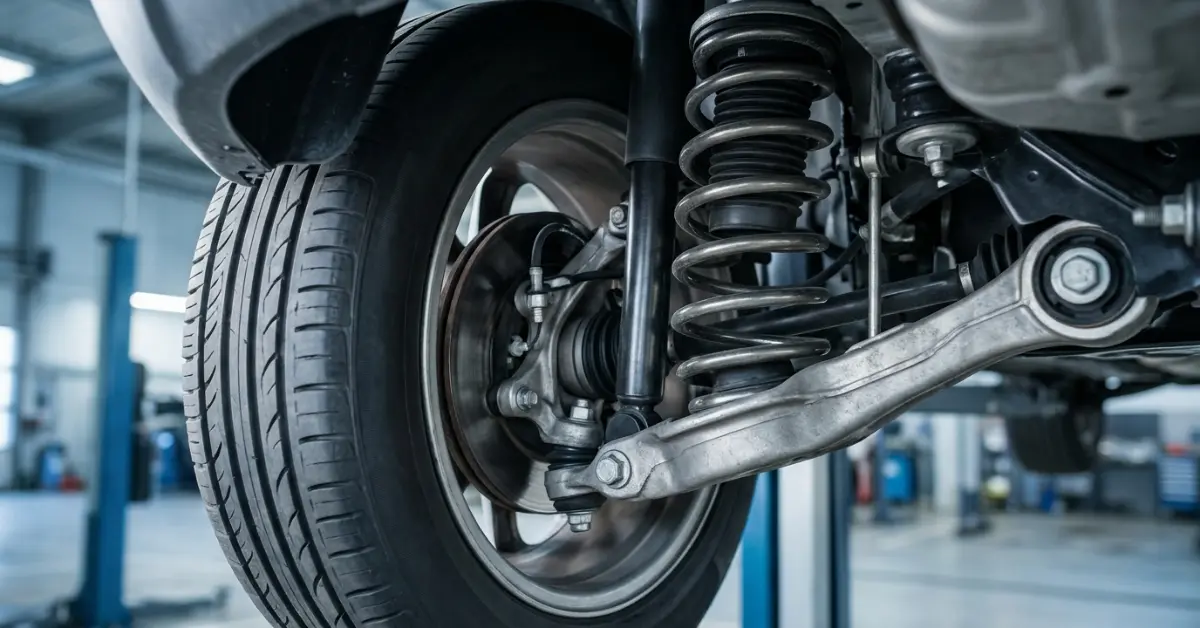
Wheel alignment and suspension are two connected systems that control how your vehicle steers and rides. Wheel alignment sets the angles of your wheels, called camber, caster, and toe, so your tires sit flat and straight on the road. The suspension, made of springs, shocks and struts, control arms, ball joints, and bushings, holds the vehicle’s weight and soaks up bumps.
Think of it this way: alignment controls direction, and suspension controls support and comfort. If one angle is off, you may notice your truck pulling to one side, a crooked steering wheel, or uneven tire wear. If a suspension part is worn, you will feel bouncing, clunking, or a rough ride.
Because the symptoms often overlap, many drivers fix the wrong thing. That’s why the team at Gresham 4 Wheel Drive & Alignments always inspects both systems together before suggesting any repair. Next, let’s look at why getting both right matters so much.
Why Is Proper Alignment and Suspension So Important?
Good wheel alignment and suspension protect your tires first. NHTSA says that regular alignment and tire maintenance help tires last longer, which saves you money. When your wheel angles are off, or a shock is worn, the tread wears unevenly. You end up replacing tires much earlier than you should.
Safety is the bigger reason. NHTSA also says a wheel alignment done by a qualified service is important for the safety of your vehicle. A healthy suspension keeps all four tires pressed to the road, so you get steady steering, firm braking, and better control in the wet or on rough trails. This matters even more on a lifted or heavily loaded 4×4, where the suspension works harder every day.
Comfort and cost follow from the same two things. A well-aligned truck tracks straight and rides smoothly. A neglected one wanders, shakes, and wears out other parts, like ball joints and bushings. At Gresham 4 Wheel Drive & Alignments, we often see small issues grow into big repair bills because nobody checked both systems early. To see why, let’s look at how the two systems work together.
Proper wheel alignment plays an important role in steering performance. Learn how wheel alignment affects steering and why correct alignment matters for vehicle control.
Wheel Alignment and Suspension: How They Work Together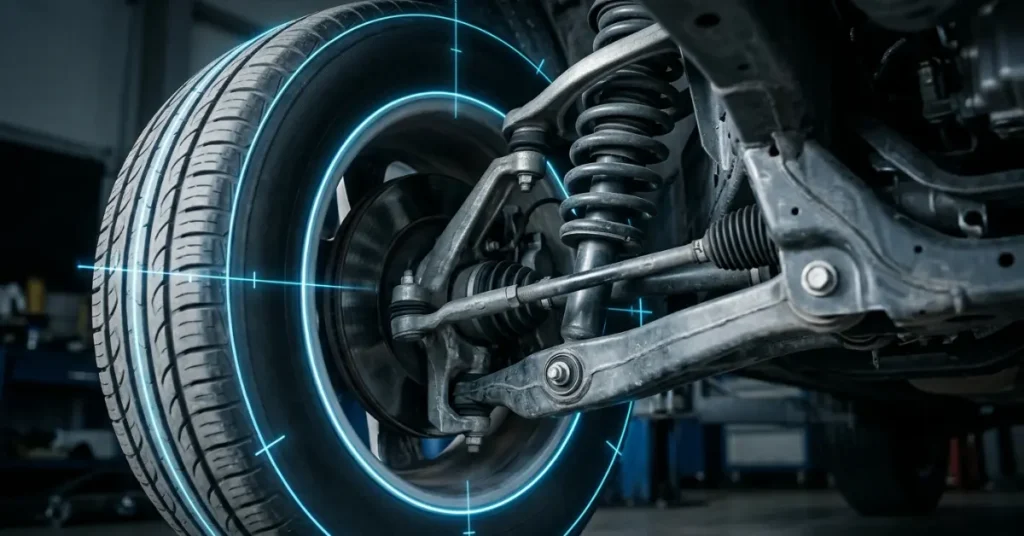
Here’s something I tell every customer: you can’t treat wheel alignment and suspension as two separate jobs. The suspension decides where your wheels sit and how they move. The alignment sets the angles those wheels should hold. When one slips, the other pays for it.
Here are the key points I see in the workshop every week:
- Worn parts change your angles. Loose ball joints, tired bushings, and worn control arms let the wheel shift out of position. Your camber, caster, and toe drift even if the alignment was perfect last month.
- Weak shocks and struts hurt tire contact. When a shock can’t control bounce, the tire hops over bumps instead of gripping. This causes cupping, which looks like wavy dips in the tread.
- A new alignment on worn parts won’t last. If the suspension is loose, the angles can’t be held. The truck may drive straight for a week, then start pulling again.
- Bad alignment wears out suspension parts early. Tires that fight the road send extra stress into the joints, bushings, and steering parts.
- Ride height changes the angles. A lift kit, a leveling kit, or bigger tires change the suspension geometry. The factory alignment settings no longer fit, so a fresh alignment is a must.
- Heavy loads and off-roading speed up the damage. Towing, hauling, and rough trails push springs and joints harder, so 4×4 owners should check both systems more often.
This is why, at Gresham 4 Wheel Drive & Alignments, we inspect the suspension before we touch an alignment angle. If a part is loose or worn, we tell you first. Then the alignment actually holds. Many drivers ask what all this costs, so let’s look at that next.
If you’re comparing options, our guide on types of leveling kits explains how each one changes your truck.
How Much Does Wheel Alignment and Suspension Repair Cost?
“How much is this going to cost me?” is the first thing most drivers ask. It’s a fair question, because the price of wheel alignment and suspension work can range from a small fee to a serious repair bill. The good news is that catching problems early keeps the numbers on the lower end.
Here are the cost points that matter most. The figures below are US estimates and will vary by vehicle and shop.
- Wheel alignment is the cheaper part: One national estimate puts the typical alignment at $70 to $250, depending on the vehicle.
- Four-wheel costs more than two-wheel: A front-end alignment runs about $70 to $130, while a full four-wheel alignment costs $120 to $250. Another source puts four-wheel alignments at $100 to $200 at most shops, taking about 30 to 60 minutes.
- Dealers often charge more. Dealer labour rates and high-cost cities can add $30 to $100 compared with independent shops.
- Suspension repair has a much wider range: Costs can run from $150 to over $2,000. Small parts like bushings and tie rods sit at the low end, while shocks, struts, and control arms cost more.
- Control arms are a bigger job: One estimate puts a control arm replacement at around $916 per arm, while replacing just the bushing is closer to $433.
- Replacing all four shocks adds up fast: The same source says the total could pass $4,000.
- Lifted and heavy-duty trucks can cost more: Bigger parts, extra labour, and special settings after a lift kit or levelling kit can raise the bill. Always ask for a written quote.
- Lifetime alignment plans can save money: These plans cost about $150 to $250 or more and cover repeat visits. They make sense if you drive a lot or go off-road.
There is one money-saving rule I give every customer. Get the suspension inspected before you pay for an alignment. If a worn ball joint or bushing is the real problem, an alignment alone is wasted money because the angles won’t hold. At Gresham 4 Wheel Drive & Alignments, we inspect first and quote clearly, so you only pay for work that fixes the cause. The sooner you spot trouble, the cheaper the fix, so let’s look at the warning signs next.
If you’re planning to modify your vehicle’s height, read our guide on choosing between a leveling kit and a suspension lift to understand which option suits your needs.
Warning Signs of Alignment and Suspension Problems
Your truck usually tells you something is wrong long before a part fails. You just need to know what to look and listen for. Here are the five signs I see most often with wheel alignment and suspension trouble.
- Your Vehicle Pulls to One Side: On a straight, flat road, your truck should hold its line without help. If it drifts left or right, your wheel angles are probably off, or a suspension part is worn.
- The Steering Wheel Sits Off-Centre: When you drive straight, the steering wheel should sit level. A crooked wheel, or one that shakes at higher speeds, points to bad alignment or loose steering and suspension parts.
- Your Tires Wear Unevenly: Run your hand across the tread and look at the inner and outer edges. Uneven wear is commonly caused by misalignment, wrong tire pressure, or worn suspension parts, so it’s a clue worth checking early.
- The Ride Feels Bouncy or Unstable: If your truck keeps bouncing after a bump, or the nose dips hard when you brake, the shocks and struts are likely worn. This also hurts your grip and stopping control.
- You Hear Clunks, Knocks or Rattles: Noises over bumps or when turning often come from worn ball joints, bushings, or control arms. Don’t ignore them, because loose parts also throw your alignment out. Spotting these signs early is the first step, but it also helps to know how the two systems differ, so let’s cover that next.
Planning an alignment service? Find out how long a four-wheel alignment takes and what factors can affect the service time.
What Is the Difference Between Wheel Alignment and Suspension?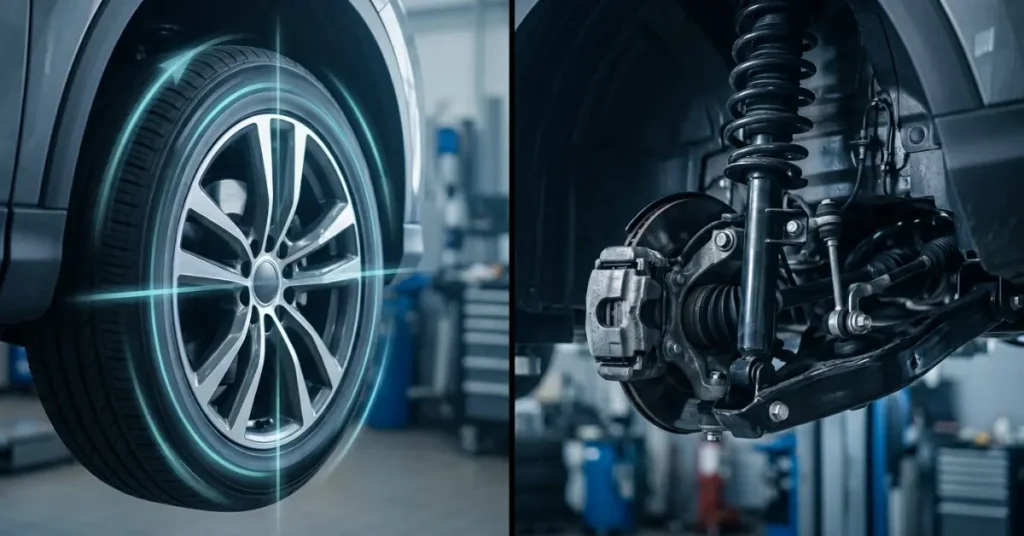
Many drivers use these two terms as if they mean the same thing, but they don’t. The difference between wheel alignment and suspension is easy to understand once you see them side by side. Here is how they compare in the areas that matter most.
1. What Each System Does
Wheel alignment is all about direction. It sets the angles of your wheels so the tires point straight ahead and sit flat on the road. When the angles are right, your truck tracks smoothly, steers where you point it, and wears its tires evenly.
The suspension is all about support. It carries the weight of your vehicle, absorbs bumps, and keeps the tires pressed firmly to the ground. Without it, every pothole and rough patch would shake through the cabin, and your tires would lose grip.
2. What They Are Made Of
Alignment is not a part you can hold or replace. It is a measurement of three angles, called camber, caster, and toe, which a technician adjusts to the maker’s settings. You can’t buy an “alignment” off a shelf, because it is a setting, not a product.
The suspension is a physical system built from springs, shocks, struts, control arms, ball joints, and bushings. Each of these parts can wear out, bend, or break over time. One is a setting you adjust, and the other is hardware you repair.
3. What You Feel When Each One Fails
Bad alignment shows up in your steering and your tires. The truck pulls to one side, the steering wheel sits crooked, and the tread wears down faster on one edge. These signs usually build slowly, so many drivers get used to them without noticing.
A worn suspension shows up in the ride. You feel bouncing after bumps, clunking over rough roads, and a loose, floaty feel in corners. Braking can also feel unstable, with the nose of the truck dipping hard.
4. How Each Problem Is Fixed
An alignment is fixed by adjusting the wheel angles on a computerised machine. The job usually takes under an hour, and you can drive away with a straighter, steadier truck. It is quick and fairly low in cost.
Suspension problems are fixed by repairing or replacing the worn parts, which often takes longer and costs more. That is why I always check the parts first. A loose ball joint or tired bushing can undo a fresh alignment within weeks.
5. Why You Still Need Both
Think of the suspension as your truck’s legs and the alignment as the way its feet are pointed. Strong legs with crooked feet still walk badly, because the tires scrub and wear out too fast. Straight feet on weak legs don’t last either, because the angles keep drifting.
When both systems are healthy, you get safer handling, longer tire life, and a smoother ride. Once you understand the difference, protecting them gets much easier. Let’s look at how to prevent problems next.
If your steering wheel remains off-center after an alignment, our guide explains why your steering wheel is still crooked after alignment and what could be causing the issue.
How to Help Prevent Alignment and Suspension Problems
You can’t avoid every pothole, but a few simple habits will protect your truck for years. Prevention costs far less than repair, and it keeps your wheel alignment and suspension working as they should. Here are the five habits I recommend to every driver.
- Check Your Tires Every Month: NHTSA advises checking your tire pressure and tread at least once a month. Look for wear on one edge, because it is often the first clue that something is off.
- Rotate Your Tires on Schedule: If your maker recommends it, rotate your tires every 5,000 to 8,000 miles, or sooner if uneven wear shows up. Regular rotation spreads the wear out and helps your tires last longer.
- Slow Down for Potholes, Curbs and Speed Bumps: Hard hits are the fastest way to knock your angles out of place and damage shocks, ball joints and bushings. Easing off the speed and steering around rough spots saves you real money.
- Fix Small Suspension Problems Early: A new clunk, a bouncy ride, or a slight pull is easy to ignore, but it rarely fixes itself. Repairing a worn bushing today is much cheaper than replacing a control arm and a set of tires later.
- Get an Alignment After Tire or Suspension Changes: Any time you fit new tires, repair a suspension part, or install a lift kit or levelling kit, the angles change. NHTSA says a wheel alignment by a qualified technician matters for both safety and tire life, so book one right after the work. Good habits take you most of the way, and the rest comes down to who inspects your truck, so let’s look at how we handle it in the workshop.
How Gresham 4 Wheel Drive & Alignments Approaches Alignment and Suspension Issues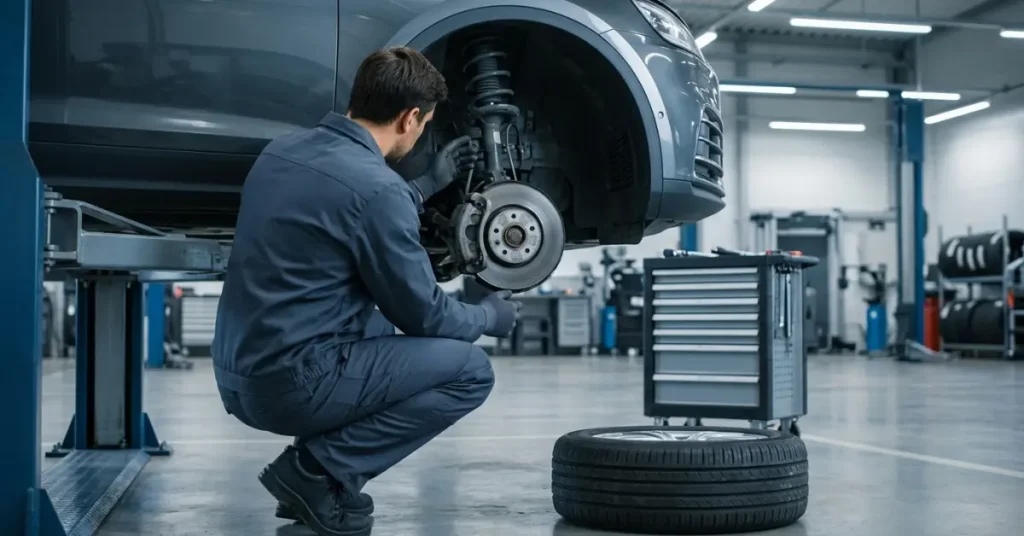
At Gresham 4 Wheel Drive & Alignments, we treat your truck as one complete system, not a single complaint. Every job on wheel alignment and suspension starts by listening to what you feel on the road, whether that’s a pull, a clunk, or a bouncy ride. Then we look for the real cause before we touch anything.
In suspension repair, first, we inspect the suspension, including the shocks, struts, ball joints, bushings, and control arms. Once the parts are sound, we measure camber, caster, and toe with computerised equipment and set each angle to your vehicle’s specs. This order matters, because a loose part can undo a fresh alignment within weeks.
We also work on lifted and levelled trucks, where lift kits, levelling kits, and bigger tires change the suspension geometry. We set the angles to suit your build, then explain what we found in plain English. With the full picture in place, let’s wrap everything up.
Conclusion
Wheel alignment and suspension work as a team, and your truck only drives its best when both are healthy. Alignment keeps your tires pointed straight, while the suspension carries the weight, absorbs bumps, and keeps your tires gripping the road. When one slips, the other soon follows, which leads to uneven tire wear, a rough ride, and bigger repair bills.
The smart approach is simple. Watch for warning signs like pulling, a crooked steering wheel, bouncing, or new noises, and keep up easy habits like monthly tire checks and regular rotation. Fix small problems early, and always get the suspension inspected before the alignment so the work actually lasts. This matters even more if you drive a lifted or levelled 4×4, because changes to ride height also change your wheel angles.
When you’re ready for a proper check, Gresham 4 Wheel Drive & Alignments is here to help. We inspect the full system, explain what we find in plain English, and set your angles so your truck drives the way it should. Book your inspection today and enjoy a steadier, safer, and smoother ride.