Key Takeaways
- Proper wheel alignment reduces tyre wear and improves fuel efficiency, saving long-term costs.
- Truck alignment cost varies by truck size, suspension type, lift kits, and alignment type.
- Four wheel alignment delivers the best handling, stability, and tyre life for 4WD and lifted trucks.
- DIY alignment is cheaper but less accurate than professional service, especially for heavy duty trucks.
- Early signs like uneven wear, steering pull, or vibrations should be fixed immediately
Quick answer: Truck wheel alignment costs $75 to $200 for most pickups, and $150 to $300+ for lifted or heavily modified trucks. Front-end (2-wheel) alignments start around $75, while a full four-wheel alignment runs $100–$200. Heavy-duty and diesel trucks sit at the higher end.
Now, having a truck, it is important to maintain it in good condition, and wheel alignment is a huge portion of that. The truck owners do not even consider alignment till they realize that there are issues with steering or asymmetrical tire treads. It is at this point that the truck alignment cost becomes an issue.
Wheel alignment for trucks is the process of positioning the wheels to ensure that they are straight in position and roll well on the road. At imprecision, your truck will either be pulled off-center, unstable, or a tire may wear out. Such minor problems may gradually transform into huge costs. Actually, it has been found that poor alignment diminishes tire life as much as 25% and fuel consumption as much as 10%, making you pay more to drive.
Truck wheel alignment cost will vary based on aspects such as the size of the truck, the type of suspension installed on the vehicle, lift kits, and driving conditions. Lifted trucks and 4WD vehicles also tend to require more specific adjustments, which may influence the price. Being aware of the how much does a truck alignment cost and reason behind alignment assists you in making superior choices on the safety, performance, and overall savings of your truck.
What Makes Truck Alignment Different
Truck alignment isn’t the same job as a passenger-car alignment and that’s the main reason it costs more. Trucks, especially 4WD, lifted, and heavy-duty pickups, carry far more weight over the front axle and often run modified suspension, larger tires, or a lift kit. All of that changes the factory geometry and demands more time, heavier-duty alignment racks, and precise caster and camber compensation that a standard car never needs.
There are also more angles in play. On a lifted or solid-axle truck, a technician has to correct for the altered ride height, recheck the thrust angle so the rear axle tracks straight behind the front, and often adjust or upgrade parts (like control arms) just to bring the numbers back into spec. A quick front-toe adjustment that works on a sedan simply won’t hold on a modified truck.
Because of this added complexity, truck alignment takes longer and requires a shop with the right equipment and experience which is what you’re paying for. For how wheel alignment works in general and standard car pricing, see our wheel alignment cost guide.
Truck Wheel Alignment Cost by Vehicle Type
Truck alignment cost is consistently higher than passenger car alignment, and for good reason. Trucks, SUVs, and 4×4 vehicles have heavier suspension systems, larger wheel assemblies, and in many cases, modified setups like leveling kits or lift kits that require specialized equipment and more hands-on adjustment time.
Here’s what to expect for truck and SUV alignment cost in 2026:
| Vehicle Type | Alignment Cost Range | Notes |
|---|---|---|
| Standard Pickup (F-150, Silverado, Ram 1500) | $90 – $160 | 4-wheel alignment recommended |
| Full-Size SUV (Tahoe, Expedition, Suburban) | $100 – $175 | Larger suspension geometry takes more time |
| Midsize Truck (Tacoma, Colorado, Ranger) | $85 – $150 | Similar to passenger car pricing |
| Diesel / Heavy Duty Truck (F-250, Ram 2500) | $120 – $200 | More complex suspension, higher labor time |
| Lifted Truck (2″ – 4″ lift kit) | $150 – $280 | Requires caster and camber compensation |
| Lifted Truck (4″+ lift, custom suspension) | $200 – $350+ | May require adjustable UCAs, specialist shop |
| Leveling Kit Installed | $130 – $220 | Alignment is required immediately after installation |
Why does truck alignment cost more than a car?
Three main reasons:
- Weight and size: Larger suspension components take longer to adjust and require heavier-duty alignment racks
- 4-wheel complexity: Most trucks need four-wheel alignment, not just front-end, because all four wheels carry a significant load
- Lift and leveling kit aftermath: If your truck has any suspension modification, standard factory alignment specs no longer apply. A technician must calculate new target angles based on your specific lift height a process that takes additional time and expertise
Important: If you’ve recently installed a leveling kit or lift kit, alignment isn’t optional; it’s critical. Running a modified truck without realigning will cause rapid, uneven tire wear and can create unpredictable handling. At Gresham 4 Wheel Drive, we specialize in truck and 4×4 alignment for both stock and lifted vehicles across the Gresham, Oregon area.
These are typical ranges your final cost depends on your truck’s condition, tire size, and whether any suspension parts need attention before the alignment. For an exact quote on your truck, contact Gresham 4 Wheel Drive for a estimate.
Types of Truck Wheel Alignments and Their Costs
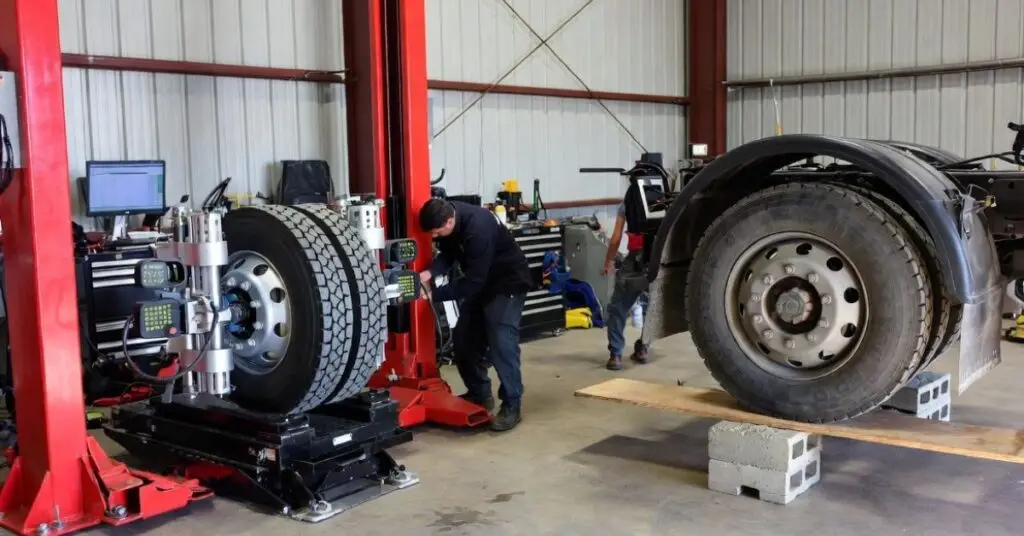
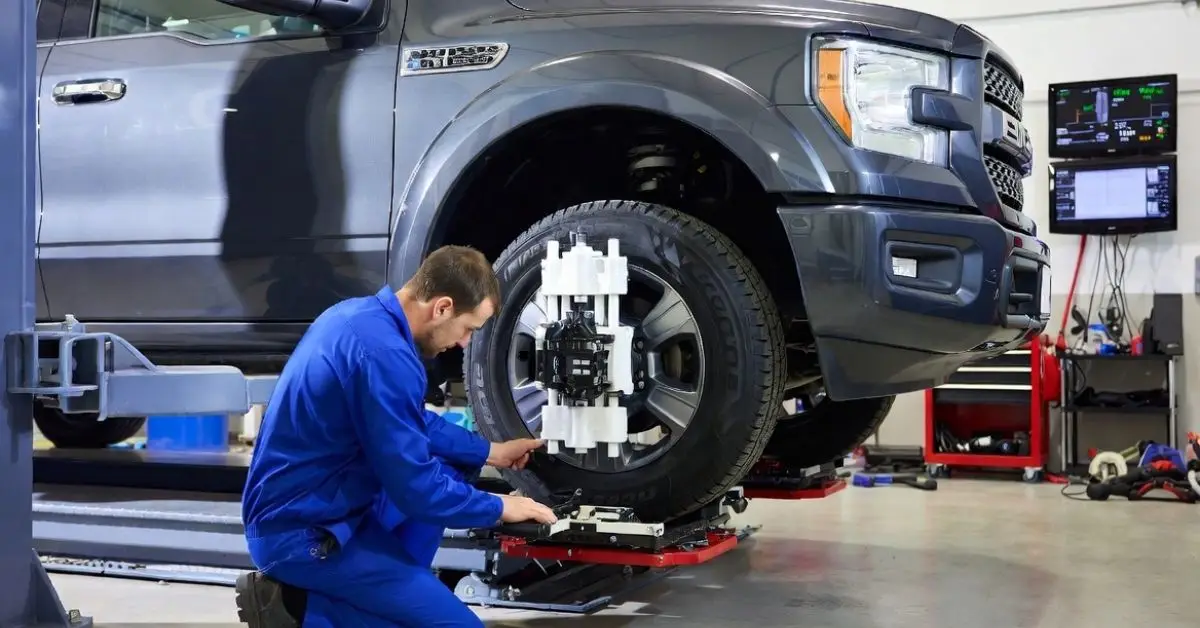
When individuals inquire about the cost of wheel alignment on a truck, one of the largest factors that makes the prices differ is the kind of alignment that the truck requires. Not all trucks do the same alignment service. Others only require some simple modifications, and certain ones, such as lifted or 4WD trucks, require a more comprehensive job. Knowing the various types of truck wheel alignments will enable you to know what you are paying and the reason why the price varies.
Front-End Alignment Cost
The simplest form of wheel alignment is front-end alignment, which is often performed in trucks with a solid rear axle. The alignment service is used to simply turn the front wheels straight back on the road and into a good tracking position. It is primarily concerned with the correction of toe and camber angles in the front suspension.
The reason behind this kind of alignment is usually the uneven wear of front tires or the fact that the steering wheel is bouncing. It, however, fails to rectify rear wheel positioning in that it may not eliminate handling problems in newer trucks as a whole. The front-end alignment truck wheel alignment figure normally ranges from 50 to 100 dollars. Since more labor and time adjustments are necessary when the truck is lifted or when it has bigger tires, the cost may be a little higher.
Thrust Alignment Cost
Thrust alignment is better than a primitive front-end alignment. It begins by ensuring that the back axle is in place with the middle of the truck. When the rear is positioned correctly, the front wheels are then adjusted so as to be aligned with the rear wheels. This assists the truck in moving straight as opposed to drifting or dog tracking along the road.
The given type of alignment is typically applied to the trucks that have solid rear axles and yet require improved overall tracking. It enhances front-end handling and stability in comparison with front-end alignment. The thrust alignment of the truck wheel costs are generally between 80 and 120 dollars, depending on the size and the suspension type of the truck. This may be more frequent in trucks that are used to haul or tow.
Four-Wheel Alignment Cost
The most complete and recommended option is a four-wheel alignment, which is recommended for modern trucks, 4WD vehicles, and lifted trucks. This adjustment of all four wheels gets them working in the right direction. It is able to adjust camber, caster, and toe angles throughout the entire suspension system.
This form of alignment is particularly necessary following the installation of a lift kit, replacement of suspension components, or replacement of larger tires. It assists in enhancing the life of the tires, steering control, and fuel efficiency. The average 4 wheel alignment cost for a truck is between 100 and 200 dollars or above, depending on the type of wheel alignment that is undertaken in a four-wheel alignment. Lifted trucks, off-road construction vehicles, and cars that have aftermarket suspension parts might be expensive because of the additional accuracy needed.
Custom or Performance Alignment Cost
The custom or performance alignment is created to suit the requirements of trucks that are utilized in off-road driving, heavy towing, and aggressive driving. Technicians also vary the alignment angles depending on the manner of truck utilization, instead of a factory setting. This form of alignment is more performance-oriented, more stable, and more in control, and not simply comfortable in driving. Since this service takes a longer time, experience, and fine-tuning, it is often the most expensive service. Custom or performance alignment of truck wheels usually begins at about 150-300 and higher, depending on the heavily modified truck.
The correct form of alignment will allow you to save on avoidable expenditure without compromising your truck in terms of safety and comfort on the streets. Knowing these options also helps in making easier decisions on which kind of alignment service actually suits your truck, just in relation to the type of driving.
Explore More: Wheel Alignment vs Steering Alignment: Avoid Costly Repairs
Factors That Affect Truck Wheel Alignment Cost
The wheel alignment rate, or the cost of truck wheel alignment, depends on a number of factors. Knowing these will enable you to budget your funds and play against an unexpected event in the auto shop. Here’s a clear breakdown:
- Truck Size and weight: These are large trucks and heavy-duty pickups and business trucks that demand more labor and, in certain cases, specialized equipment, which increases the heavy truck alignment cost. Larger trucks are generally more expensive to align than smaller pickups.
- Alignment required: Front-end alignment is less expensive than four-wheel alignment. 4WD, independent rear suspension, and lifted kits on trucks are more complex to work on and therefore more expensive.
- Lift Kits and Suspension Modifications: Lift kits or modifications of the suspension units normally require tailor-made changes, and the higher the lift or the larger the tires, the more accurate the adjustments made to the vehicle, which increases the cost.
- Tire Type and Size: Oversized or off-road tires may influence the settings of the alignment. Specialty tires can also take additional time to adjust, which increases the expense.
- Shop Location and Labor Rates: The costs are different depending on where you are residing. The stores in urban places or places with higher labor costs will charge more.
- Vehicle: Suspension components, control arms, or tie rods may be worn out or damaged and may complicate the alignment. When there are any repairs or replacements that should be done before alignment, this will increase the overall cost.
- Technology and Equipment: Computerized alignment machines are common in modern trucks. Advanced machinery can be very precise, but at the same time, it will be expensive compared to a simple alignment tool.
- Alignment frequency: The Frequency of maintenance makes costs less frequent. Long-distance trucks may need further adjustments, which are costly.
All this results in the reason why there is no set price for truck wheel alignment. Their familiarity enables truck owners to make wiser decisions and obtain maximum benefits from aligning their trucks.
Also Explore: Does Wheel Alignment Affect Steering? Find Out Why!
DIY vs Professional Truck Wheel Alignment
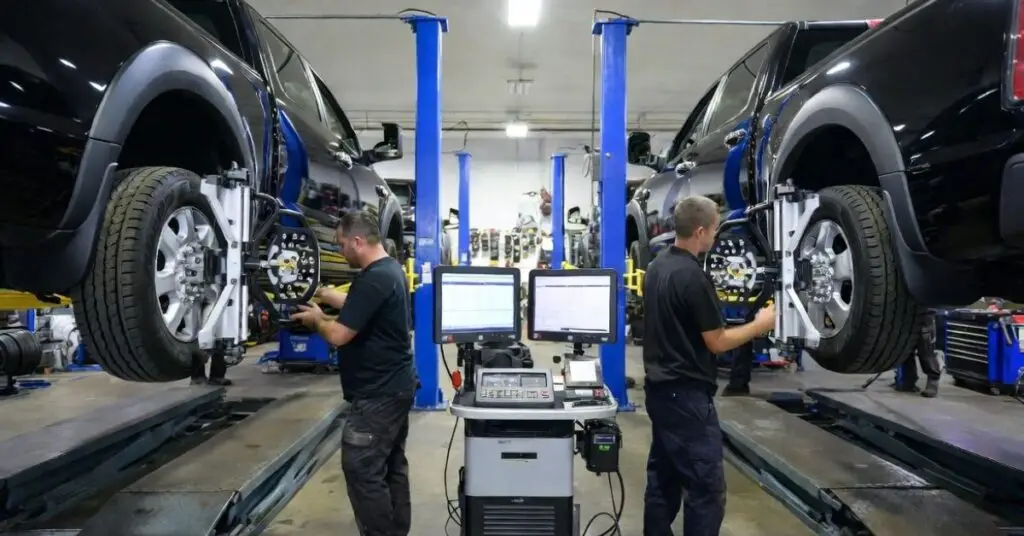
There are truck owners who find it cheaper to perform DIY alignment to save on the truck wheel alignment cost. Home kits are cheaper (between $50 and $150) and enable you to work at your leisure, but they are not always as accurate (lifted trucks, 4WD, heavy-duty pickups, etc.). Even minor mistakes are likely to result in unequal tire wear, poor handling, and even damage to suspension parts that may result in increased repair costs in the long term. Minor adjustments can be made on DIY, though it typically does not suffice when it comes to trucks that have changed their suspension or have bigger tires.
Professional alignment, which is more expensive at around 100-200 dollars on average, involves a four-wheel alignment, computerized devices, and professionally trained technicians, so that the camber, caster, and toe angle are aligned to the appropriate level. This guarantees the proper alignment of all four wheels in the control of the steering, fuel economy, and tire life. In the event of lifted, off-road, or heavy-duty trucks, professional alignment is required, and it will assist in preventing long-term damage and will become cost-effective in the long run. Generally speaking, spending on professional services is a promise of tranquility, efficiency, and safety on the road.
Signs Your Truck Needs a Wheel Alignment
Trucks show alignment problems a little differently than cars heavier loads, bigger tires, and lifted suspensions make the warning signs easier to spot if you know what to look for:
- Inner or outer edge tire wear after a lift or leveling kit: The most common truck sign. When a lift or leveling kit changes your suspension angles and the alignment isn’t reset, the tires wear unevenly on one edge often within a few thousand miles.
- The truck pulls or wanders when loaded or towing: If your truck tracks straight empty but drifts to one side under a load or while towing, the alignment (or a worn suspension component) is usually the cause.
- Steering wheel is off-center after hitting a curb or trail obstacle: Off-road driving, potholes, and curb strikes knock truck alignment out far more often than normal city driving. A crooked wheel on a straight road is a clear sign.
- Dog tracking (rear end sits off to one side): If the rear of your truck looks like it’s following slightly off from the front, the rear axle isn’t square a thrust alignment is needed.
- Vibration or “death wobble” on solid-axle trucks: On solid front-axle trucks (like many Super Duty and Jeep setups), alignment and caster problems can trigger a strong steering shake at speed. Get it inspected immediately it’s a safety issue.
- Faster tire wear on oversized or off-road tires: Larger, more expensive truck tires wear quickly when alignment is off, so catching it early protects a costly investment.
Catching these early on a truck matters more than on a car truck tires and suspension parts cost significantly more to replace.
Read About: How Important Is Wheel Alignment for Safety & Savings
How to Get the Best Value for Your Truck Wheel Alignment
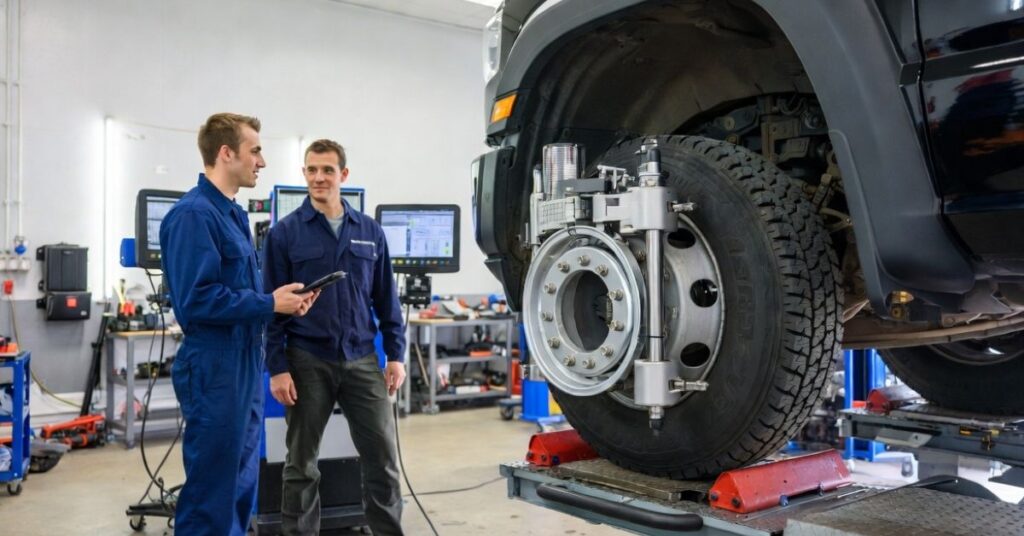
The cheapest truck wheel alignment cost is not the only way of finding the best value to save money, but a matter of quality, accuracy, and the cost saved in the long run. The following are some of the tips to make the most out of your alignment:
Choose a Professional Shop
It is important to choose a reliable store where skilled personnel work. In the case of lifted trucks, 4WD automobiles, and heavy-duty pickups, professional alignment can make sure that they are adjusted correctly. Gresham 4-Wheel Drive is a professional service provider involved in wheel alignment, lift kits, and installations of 4-wheel drive systems. They have trained technicians who run specialized machines to ensure that each truck is in the perfect position.
Check Certifications and Equipment
A dealership that has genuine technicians and computerized alignment equipment will make sure that your truck is properly aligned. Do not go to those that are manually adjusted, particularly to contemporary trucks or cars with suspension alterations.
Reflect On After-Sales Support
Certain stores provide after-sales checks. It is helpful in cases when your truck is recently modified or when it has heavy loads. Rechecking would help you to maintain your wheels in the right position.
Routine Repair Economical
Planned alignments will ensure that tires wear evenly, will result in better fuel economy, and will save on the cost of repairs in the long run. Maintenance keeps you ahead of the game, which reduces your total price of the truck wheel alignment as compared to having to deal with serious issues.
Inquire about Discounts or Packages
Numerous professional shops offer packages of alignment or are offered along with tire rotation or a check-up of the suspension. Such packages may be able to deliver better quality and value.
Through these procedures and by depending on those who have expertise in these matters, truck owners are assured of accurate alignment, extended lifespan of tires, and a secure drive, while achieving the most out of their money.
Conclusion
Wheel alignment is very crucial in the security of your truck, its performance, and the life of your tires. The truck wheel alignment cost is important to enable you to make wise decisions and prevent unnecessary costs. DIY alignment can be cheaper, but at the expense of accuracy, since professional service, such as the one provided by Gresham4Wheel Drive, is accurate and suitable in the case of lifted or 4WD trucks.
By observing such signs as tires wearing unevenly, the steering pulling, and vibrations, you will be able to correct faults at the first stage. Professional alignment will ensure your truck rides well on a regular basis, increase your fuel efficiency, and save on the lifespan of tires and suspension parts. The first and easiest measure to secure your truck and save money in the long run is to invest in proper alignment.
FAQ’s
Q. Does truck size affect alignment cost?
Yes, the cost of wheel alignment is greatly affected by the size of the wheels used in the trucks. In a nutshell, larger trucks are more expensive to align than smaller trucks or passenger vehicles. The reason behind this is that large vehicles take more time, effort, and precision during the alignment process, thus directly raising the costs of labor.
The other factor that is significant is the modification of the truck. Lift kit trucks, tires that are oversized or equipped with aftermarket suspension enhancements, need a more involved approach. These adjustments vary with the initial angles of alignment, and this makes the process more time-consuming and technical.
Factors that influence alignment cost:
- Vehicle size and weight
- Type of suspension system
- Lift kits or aftermarket modifications
- Tire size and wheel setup
- Labor time and equipment required
In summary, the larger and more customized your truck is, the higher the alignment cost will be. Keeping your truck close to factory specifications can help reduce these costs.
Q. What happens if I skip truck wheel alignment?
There may not be any issues with skipping the process of wheel alignment, although over time, troubling results that can disrupt the performance of your truck as well as your safety will emerge. Uneven wearing of tires is one of the immediate consequences. Misaligned tires lead to some parts of the tires wearing faster than others; this reduces the life of the tires in a great way.
Another aspect that is affected is fuel efficiency. This is because, if the wheels are not properly aligned, the truck will find it difficult to move forward, which will eat up more fuel. In addition, the misalignment will put other strains on the suspension and steering components that will cost them a fortune in terms of repairs in the event that they leave it long enough.
Negative effects of skipping alignment:
- Uneven and rapid wear of tires.
- Pulling over by the truck.
- Lack of Steering control and handling.
- Reduced fuel efficiency
- More wear on the suspension of the vehicle.
- Increased cost of maintenance and repair.
This can save even greater costs in the long term by not paying for a basic alignment service. Regularity of alignment will ensure road safety, comfort, and the general level of functioning of the car.
Q. What is the cost of a 2-wheel vs. a 4-wheel alignment for trucks?
The cost of the truck alignment depends on what type of alignment you would like to have: 2-wheel equilibrium or 4-wheel alignment. Only the front wheels are adjusted in a 2-wheel alignment, and are expensive.
It can fit old trucks or vehicles whose rear axle is solid, so the rear wheels cannot be turned. A 4-wheel alignment, on the other hand, is the manipulation of all four wheels so that they are aligned correctly with one another and the centerline of the vehicle. This kind of fit is more accurate and is suitable for most contemporary trucks, particularly with independent rear suspension or four-wheel drives.
Cost breakdown:
- 2-wheel alignment: $50-$100 (basic, faster adjustments)
- 4-wheel alignment: $100-$ 200 (more precise, more lengthy process)
The reason 4-wheel alignment works most of the time:
- Offers complete car stability.
- Increases stability and handling.
- Extends tire lifespan
- Makes sure that all wheels are correctly aligned.
The initial price of a 4-wheel alignment is higher, but it tends to be the more worthwhile long-term performance and safety project, particularly in the case of modern trucks.